
Beelink EQi 304 Launches With Intel Core 3 304, 10 GbE Networking, and $509 Starting Price
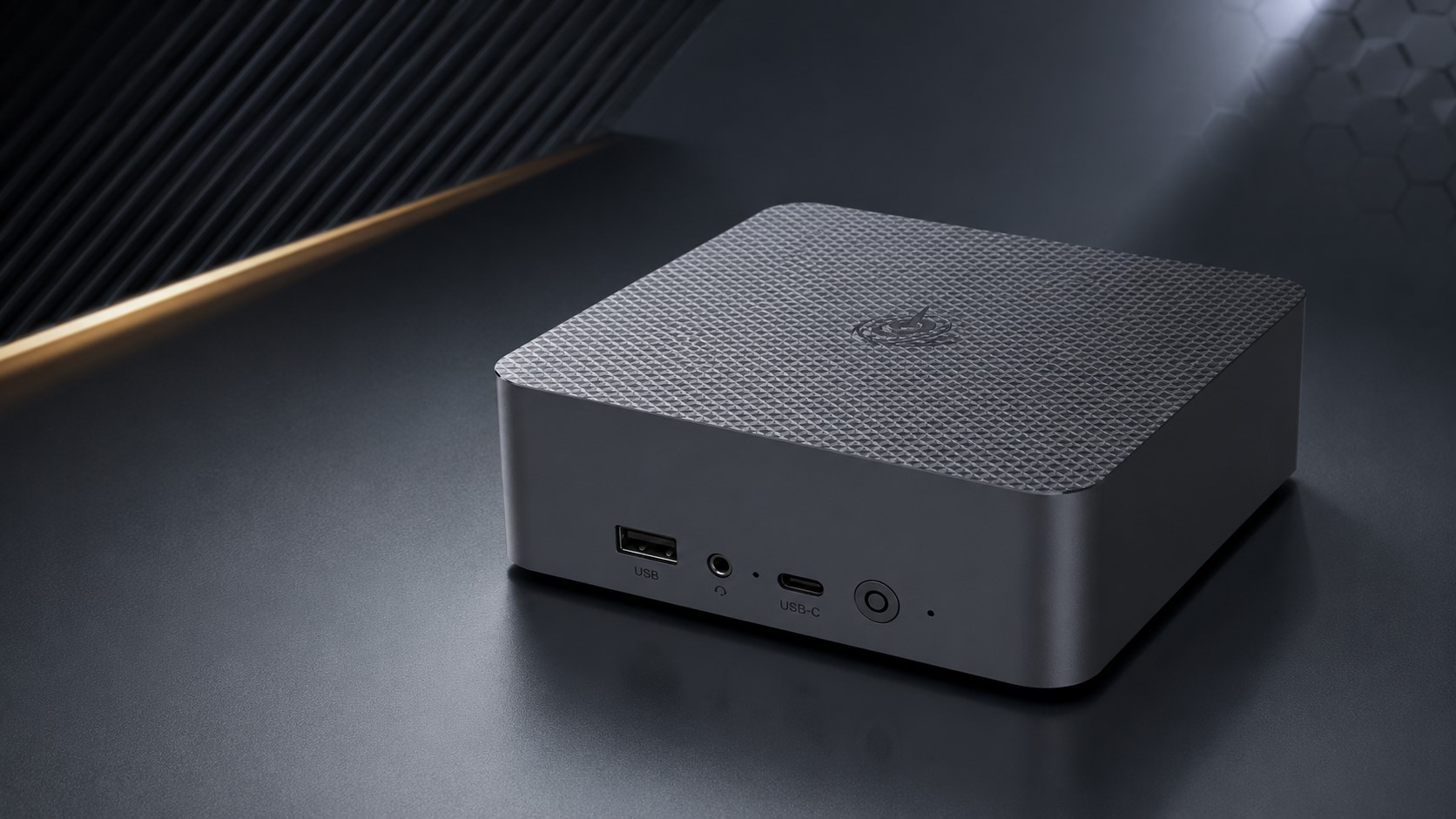
Beelink has officially launched the EQi 304, one of the first compact desktop systems built around Intel’s new Wildcat Lake platform. The new mini PC uses the Intel Core 3 304 processor and starts at $509 with 16 GB LPDDR5 memory and 512 GB UFS 3.1 flash storage, positioning it as an affordable productivity system with stronger connectivity than many entry level compact PCs. The system is now listed on the official Beelink EQi Wildcat Lake product page, where preorder shipping is estimated at approximately 35 days.
The Intel Core 3 304 is a 5 core and 5 thread processor based on Intel 18A manufacturing technology. Intel lists the chip with 1 Performance core, 4 low power efficiency cores, 6 MB Intel Smart Cache, a maximum turbo frequency of 4.3 GHz, 15 W processor base power, 35 W maximum turbo power, and 10 W minimum assured power. This is not a gaming class processor, but it is clearly designed for daily office work, browsing, media playback, edge computing, small business deployments, and low power desktop use.
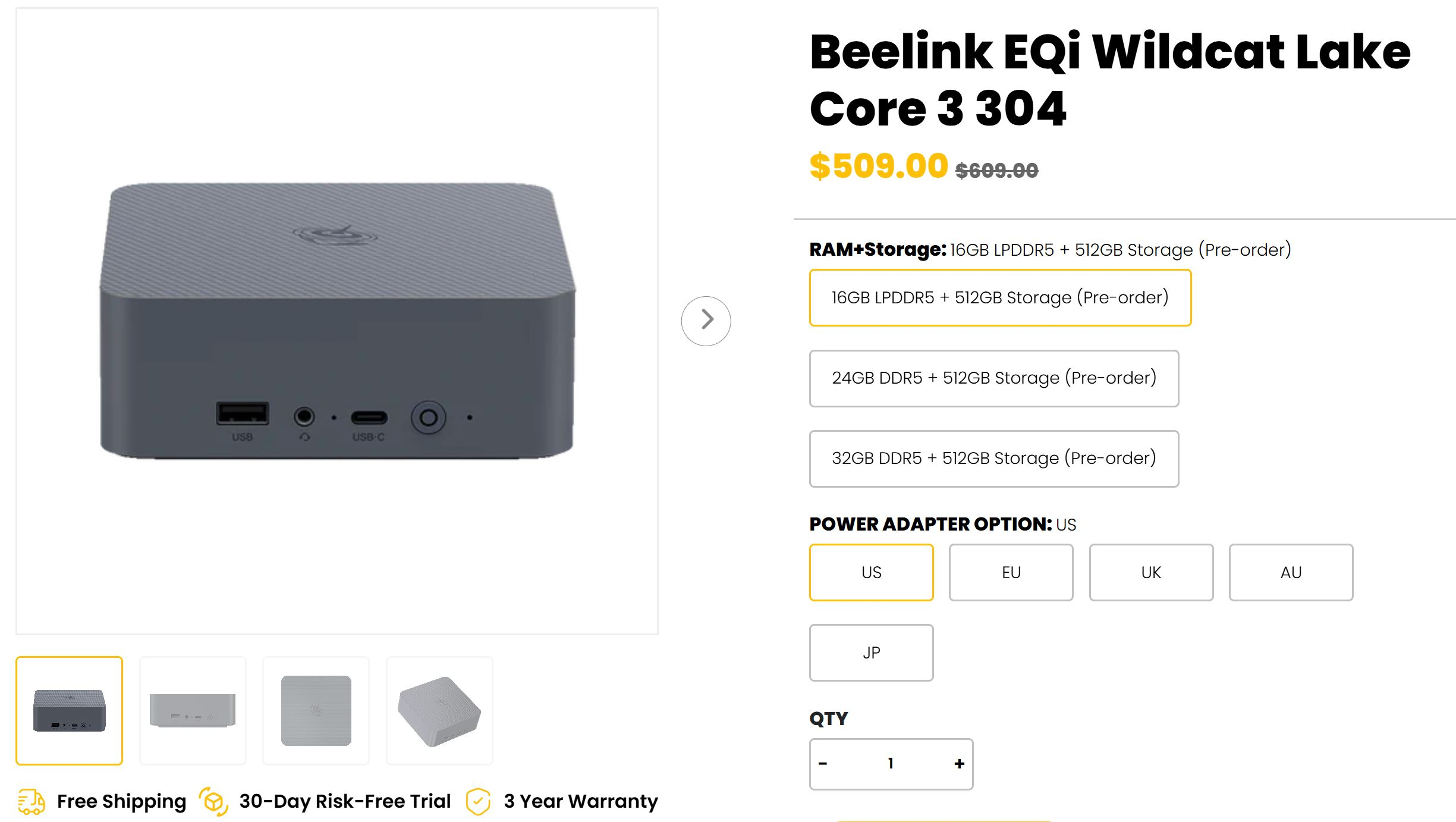
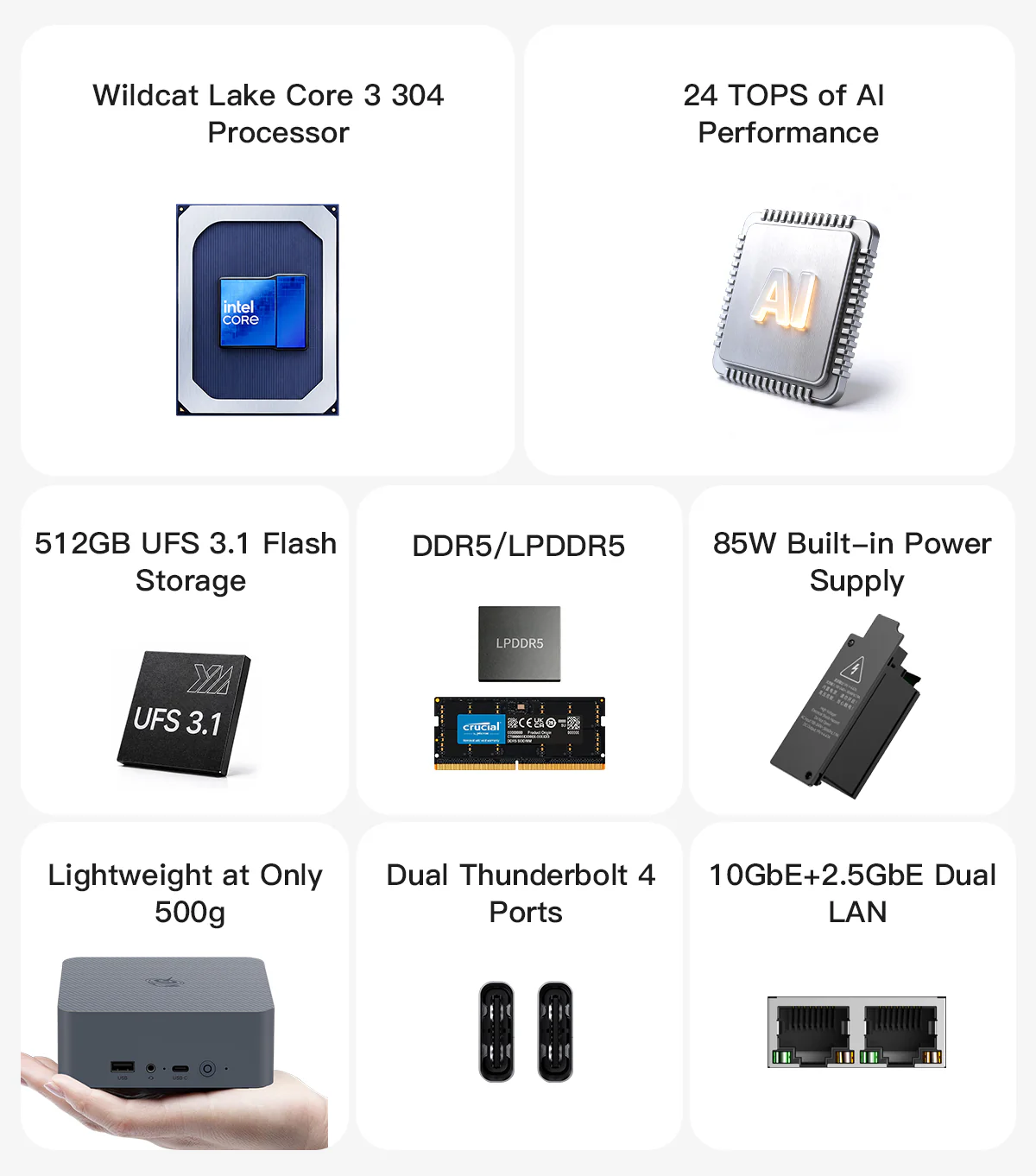
Beelink advertises the EQi 304 with 24 TOPS of local AI performance. Intel’s own specification separates that figure across the platform, with the Core 3 304 featuring a 15 TOPS NPU and integrated graphics rated at 9 TOPS for Int8 workloads. This means the EQi 304 can support lighter local AI tasks, Windows AI features, OpenVINO workloads, media enhancement, and basic inference use cases, but it should not be confused with higher end AI PC platforms designed for large local language models or heavy creator workloads.
The graphics side is handled by Intel Xe3 LPG integrated graphics with 1 Xe core and a maximum dynamic frequency of 2.3 GHz. Intel lists support for AV1 encode and decode, DirectX 12, OpenCL 3.0, and up to 3 displays, which fits the EQi 304’s role as a compact office and media machine rather than a gaming desktop. Beelink also lists triple display output through HDMI and dual Thunderbolt 4 ports, with HDMI supporting up to 4K at 60 Hz.
The chassis measures 126 x 126 x 44.2 mm and weighs 500 g, making the EQi 304 small enough for a desk, monitor mounted setup, living room media station, or light office deployment. Beelink also highlights a 32 dB operating noise level and a bottom intake airflow design that directs heat through the chassis to cool the CPU, memory, and storage.
Storage is where Beelink takes a more unusual approach. The default configuration uses 512 GB UFS 3.1 flash storage, which is more common in phones, tablets, and embedded devices than traditional desktop PCs. VideoCardz notes that UFS 3.1 is faster than eMMC, but still below modern PCIe 4.0 x4 NVMe SSD performance. Beelink partially offsets this by including 2 M.2 2280 slots, with support for up to 4 TB per slot. However, the slots are not full speed PCIe 4.0 x4 connections, with Beelink listing one at PCIe 4.0 x2 and the second at PCIe 4.0 x1.
Memory options are split between the entry model and the higher configurations. The $509 version uses 16 GB LPDDR5 memory with 512 GB storage, while the official product page lists 24 GB DDR5 and 32 GB DDR5 versions. VideoCardz reports the 24 GB DDR5 model at $659 and the 32 GB DDR5 model at $739. Beelink’s own page also says the DDR5 slot supports upgrades up to 64 GB, while the 16 GB LPDDR5 version is onboard memory.
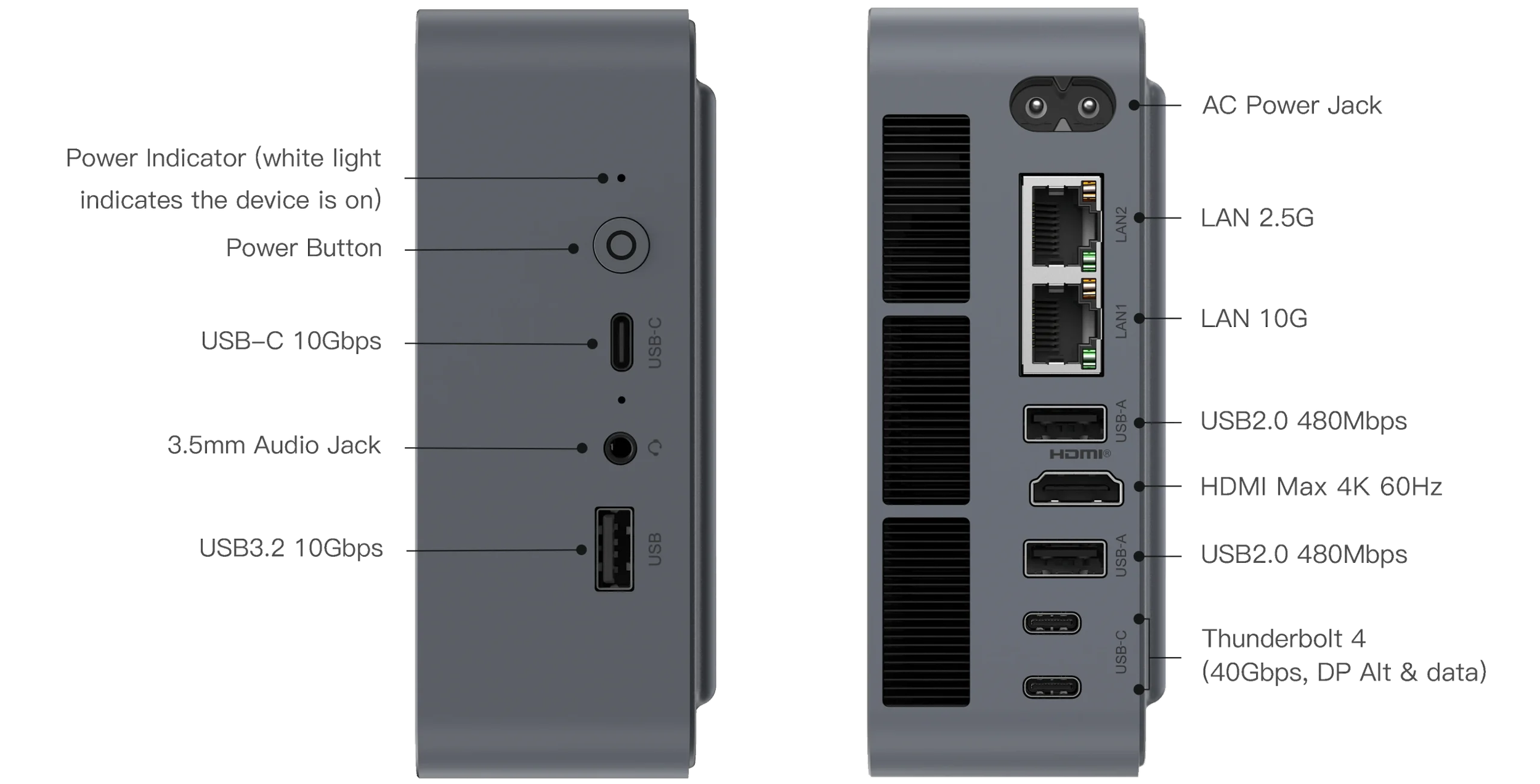
Connectivity is one of the EQi 304’s strongest points. Beelink includes 10 GbE and 2.5 GbE dual LAN, dual Thunderbolt 4 ports rated at 40 Gbps, HDMI, front USB Type C at 10 Gbps, front USB 3.2 at 10 Gbps, a 3.5 mm audio jack, WiFi 6, and Bluetooth 5.2. The 10 GbE port is especially notable at this price level because it makes the system more interesting for home lab users, small offices, NAS access, fast file transfers, network isolation, and lightweight server style deployments.
The EQi 304 also uses a built in 85 W power supply, which helps reduce desk clutter by removing the need for a separate external power brick. Beelink includes Windows 11 Pro and lists a 3 year warranty, adding to its practical appeal for users who want a ready to deploy compact PC rather than a barebones system.
The Beelink EQi 304 is not built to impress gamers or creators chasing raw performance. Its value is more strategic. Intel Wildcat Lake gives manufacturers a low power platform that can handle modern daily computing while keeping system size, thermals, and pricing under control. Beelink then adds features usually reserved for more expensive compact PCs, especially 10 GbE networking, dual Thunderbolt 4, dual M.2 storage expansion, and a built in power supply.
The use of UFS 3.1 storage will divide buyers. For normal office work, browsing, media playback, and lightweight AI tasks, it should be enough. For enthusiasts expecting full NVMe performance, it is clearly a compromise. The good news is that Beelink includes M.2 expansion, although the PCIe lane configuration still limits peak storage performance compared with higher end mini PCs.
The real opportunity is home lab and small office usage. A $509 mini PC with 10 GbE, 2.5 GbE, Thunderbolt 4, Windows 11 Pro, and low power Intel 18A silicon can become a practical compact workstation, soft router, media box, light NAS companion, or edge computing device. It is not flashy, but it is highly practical.
Would you use the Beelink EQi 304 as a compact daily PC, a small office machine, or a home lab system with 10 GbE networking?
