
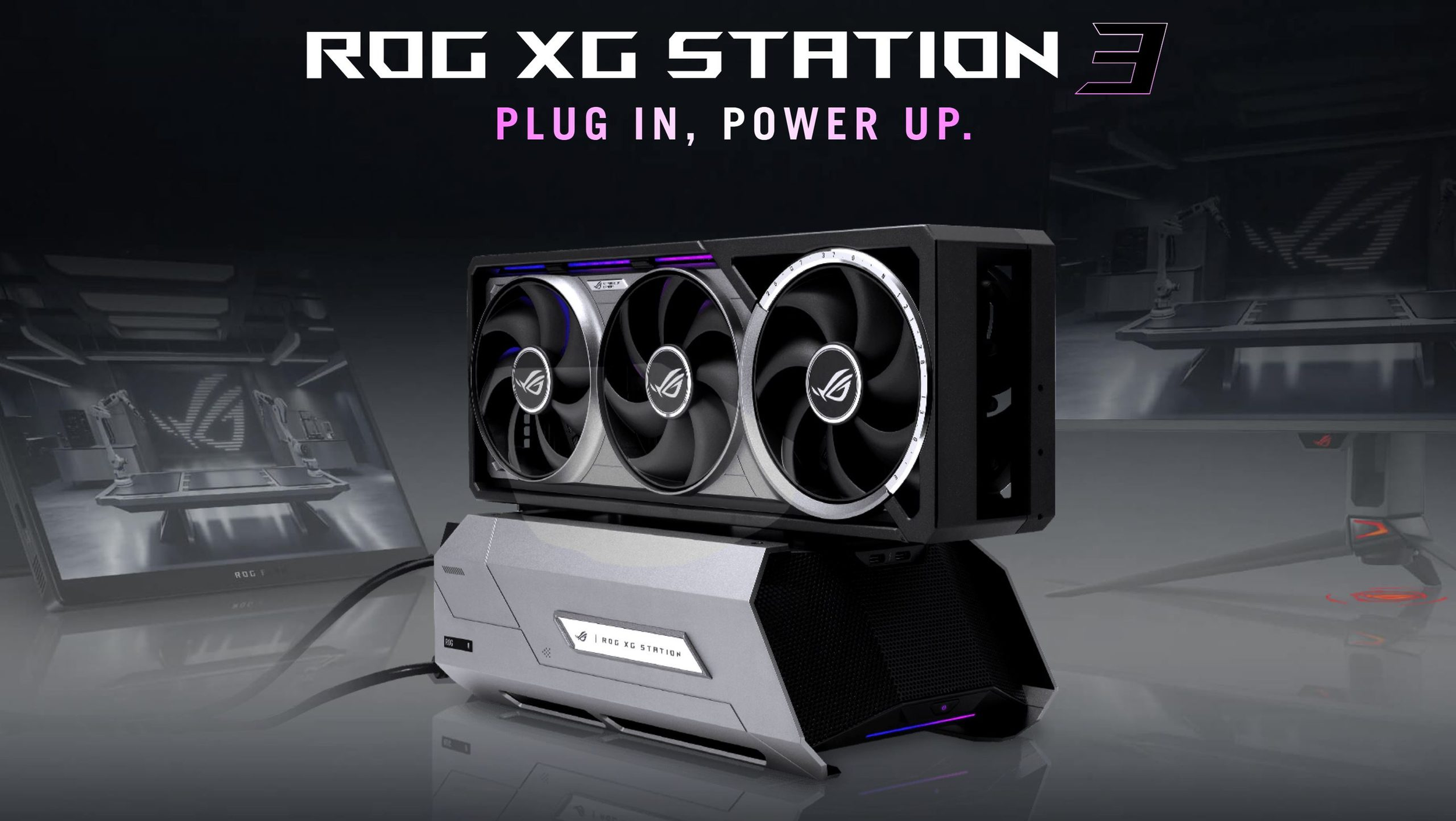
ASUS Republic of Gamers has officially introduced the ROG XG Station 3, a new external GPU docking station designed to bring desktop graphics performance to laptops and compact PCs through Thunderbolt 5 connectivity. Originally showcased at Computex 2025, the latest addition to the XG Station lineup delivers up to 80 Gbps of bidirectional bandwidth, doubling the maximum bandwidth of Thunderbolt 4, while supporting NVIDIA GeForce RTX 50 Series, RTX PRO 6000 Series, AMD Radeon RX 9000 Series, and Intel Arc graphics cards.
According to the official ASUS announcement, the dock supports Thunderbolt 5 Bandwidth Boost, increasing transfer bandwidth to 120 Gbps in one direction for demanding display workloads. However, this bandwidth is shared across the Thunderbolt connection and does not represent the dedicated PCIe bandwidth available to the GPU. Consequently, graphics performance will still depend on the installed card, laptop hardware, and application requirements.
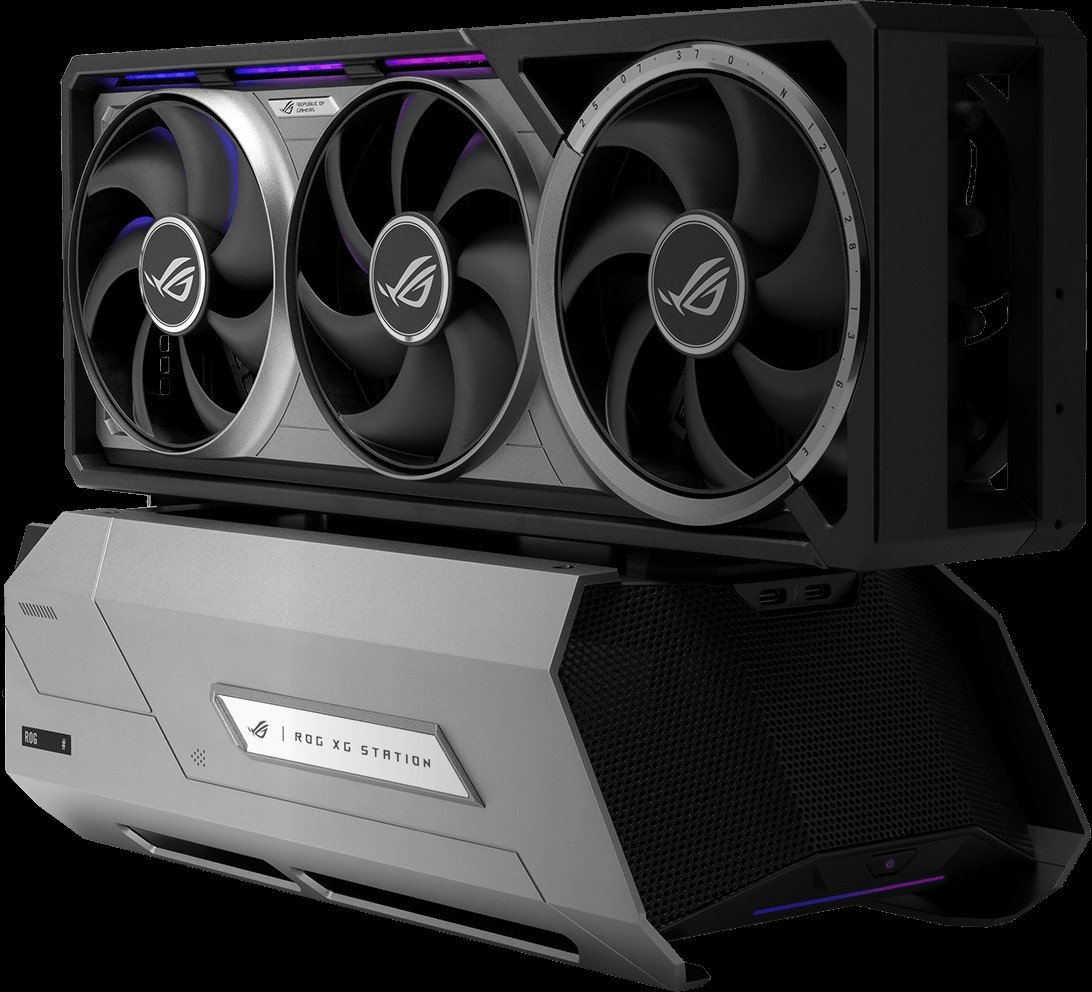
The ROG XG Station 3 adopts an open frame design, providing direct airflow to the installed graphics card rather than enclosing it inside a traditional external GPU housing. One of its most notable features is support for ASUS BTF graphics cards through the GC HPWR connector, allowing compatible GPUs to receive power without visible external PCIe power cables. This expands the functionality of the ASUS BTF ecosystem, although the dock remains compatible with conventional graphics cards using standard power connectors.
Connectivity is another major advantage, with 2 Thunderbolt 5 ports, 2 additional USB Type C ports, and up to 140W USB Power Delivery for compatible laptops. The secondary Thunderbolt 5 connection supports up to 36W of power delivery and can drive up to 3 external 4K displays through daisy chaining. ASUS also includes Aura Sync RGB lighting and backward compatibility with Thunderbolt 4 devices.
ASUS ROG XG Station 3 Specifications
| Specification | Details |
|---|---|
| Interface | Thunderbolt 5 |
| Maximum Bandwidth | 80 Gbps bidirectional |
| Bandwidth Boost | Up to 120 Gbps in 1 direction |
| Supported GPUs | NVIDIA RTX 50, RTX PRO 6000, AMD RX 9000, Intel Arc |
| GPU Connection | PCIe slot with ASUS BTF GC HPWR support |
| Maximum GPU Dimensions | 361 × 139.3 × 93.9 mm |
| Thunderbolt 5 Ports | 2 |
| Additional USB Ports | 2 × USB Type C, 10 Gbps |
| Laptop Charging | Up to 140W |
| Secondary Port Power | Up to 36W |
| Display Support | Up to 3 × 4K through daisy chaining |
| Power Supply | User supplied SFX or SFX L |
| Lighting | ASUS Aura Sync |
| Compatibility | Thunderbolt 5 and Thunderbolt 4 |
Unlike integrated external GPU solutions such as the MOREFINE G2, the XG Station 3 allows users to select and replace their own graphics cards. However, ASUS does not include a power supply, requiring customers to purchase a compatible SFX or SFX L unit separately. The graphics card is also sold separately, adding to the total investment. ASUS has not yet confirmed official pricing or retail availability.
The ROG XG Station 3 represents a welcome improvement in modular PC gaming, especially for laptop owners who want desktop graphics capabilities without replacing their entire system. Thunderbolt 5 significantly improves the viability of external GPUs, but it does not completely eliminate PCIe bandwidth limitations, meaning flagship cards may not deliver their full desktop performance.
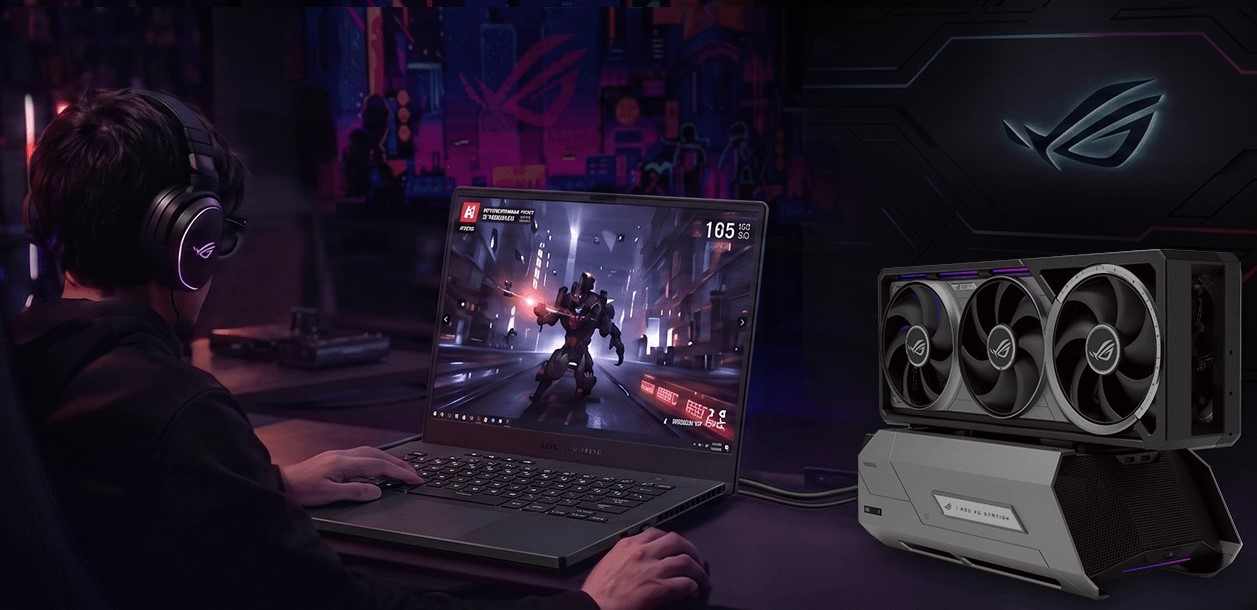
More importantly, ASUS allowing users to install standard graphics cards and power supplies is a positive step toward hardware ownership and upgradeability. The optional BTF connector adds convenience without forcing customers into proprietary graphics cards. Nevertheless, the lack of an included PSU raises concerns about overall value, particularly when factoring in the price of a modern GPU. Its competitiveness will ultimately depend on retail pricing and independent performance testing.
Would you consider upgrading your laptop with an external RTX 50 Series GPU through Thunderbolt 5, or would you rather invest in a dedicated desktop gaming PC?
