
ASUS Brings NitroPath DRAM To Mainstream X870 NEO Boards, Claiming Up To 400 MT per Second Higher DDR5 Headroom
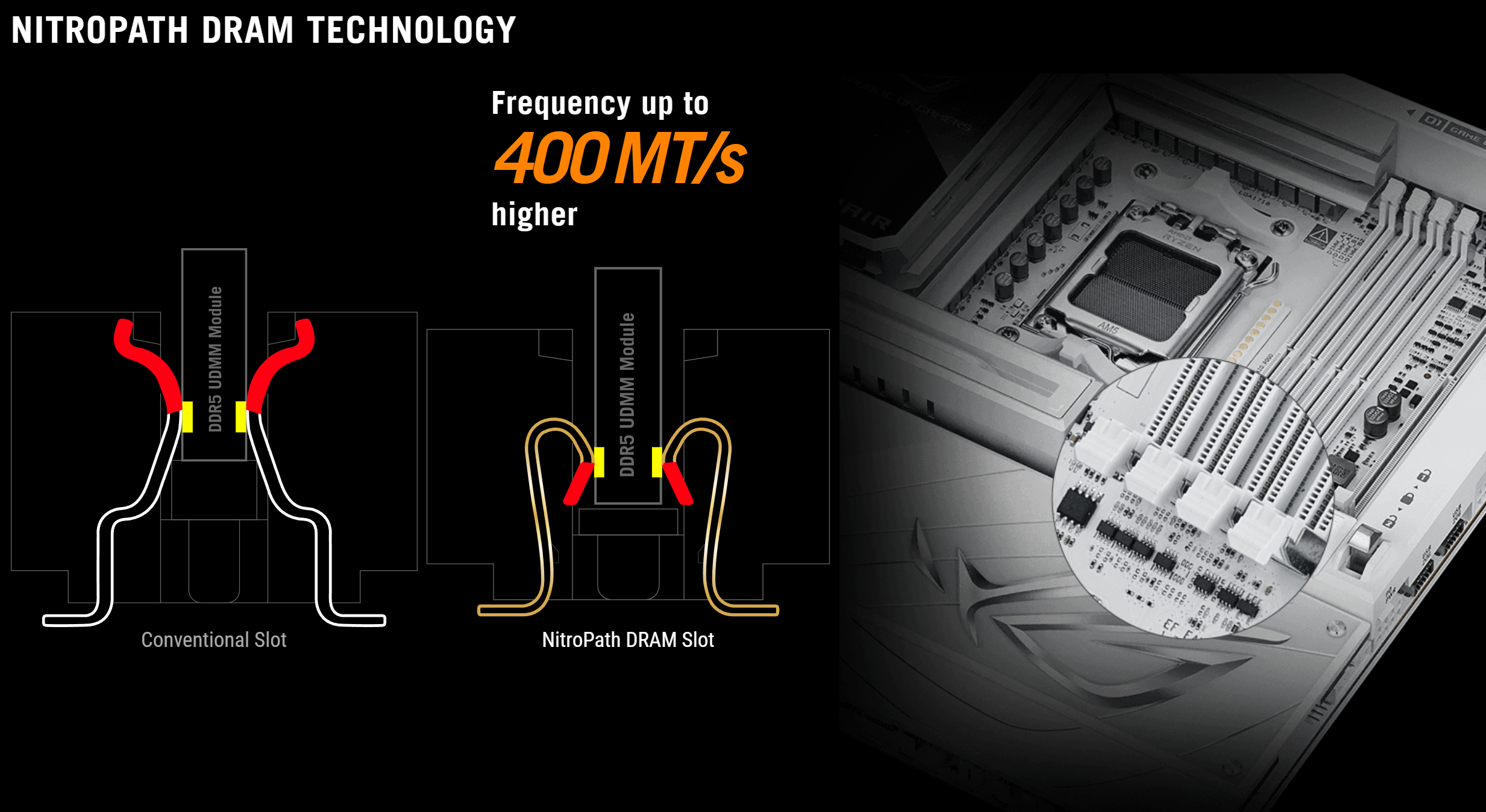
ASUS is continuing its CES 2026 motherboard momentum by pushing a previously premium memory feature into more mainstream AM5 options. After unveiling a wave of X870 and B850 NEO motherboards with refreshed IO, updated VRM configurations, and revised designs, ASUS is now confirming that its X870 NEO lineup will include NitroPath DRAM, a slot and signal path redesign aimed at improving DDR5 signal integrity and raising achievable memory speeds.
Until now, NitroPath DRAM was largely positioned as a high end differentiator on flagship platforms like X870E and Z890. With the NEO refresh, ASUS is effectively bringing that same memory focused engineering down market, which is a meaningful move for builders who want better DDR5 stability and overclocking headroom without paying for the top tier halo boards.
According to ASUS, NitroPath DRAM support will be available across the following boards:
ROG Crosshair X870E Glacial
ROG Crosshair X870E DARK HERO
ROG STRIX X870E E Gaming WiFi 7 NEO
ROG STRIX X870E A Gaming WiFi 7 NEO
TUF Gaming X870 PRO WiFi 7 W NEO
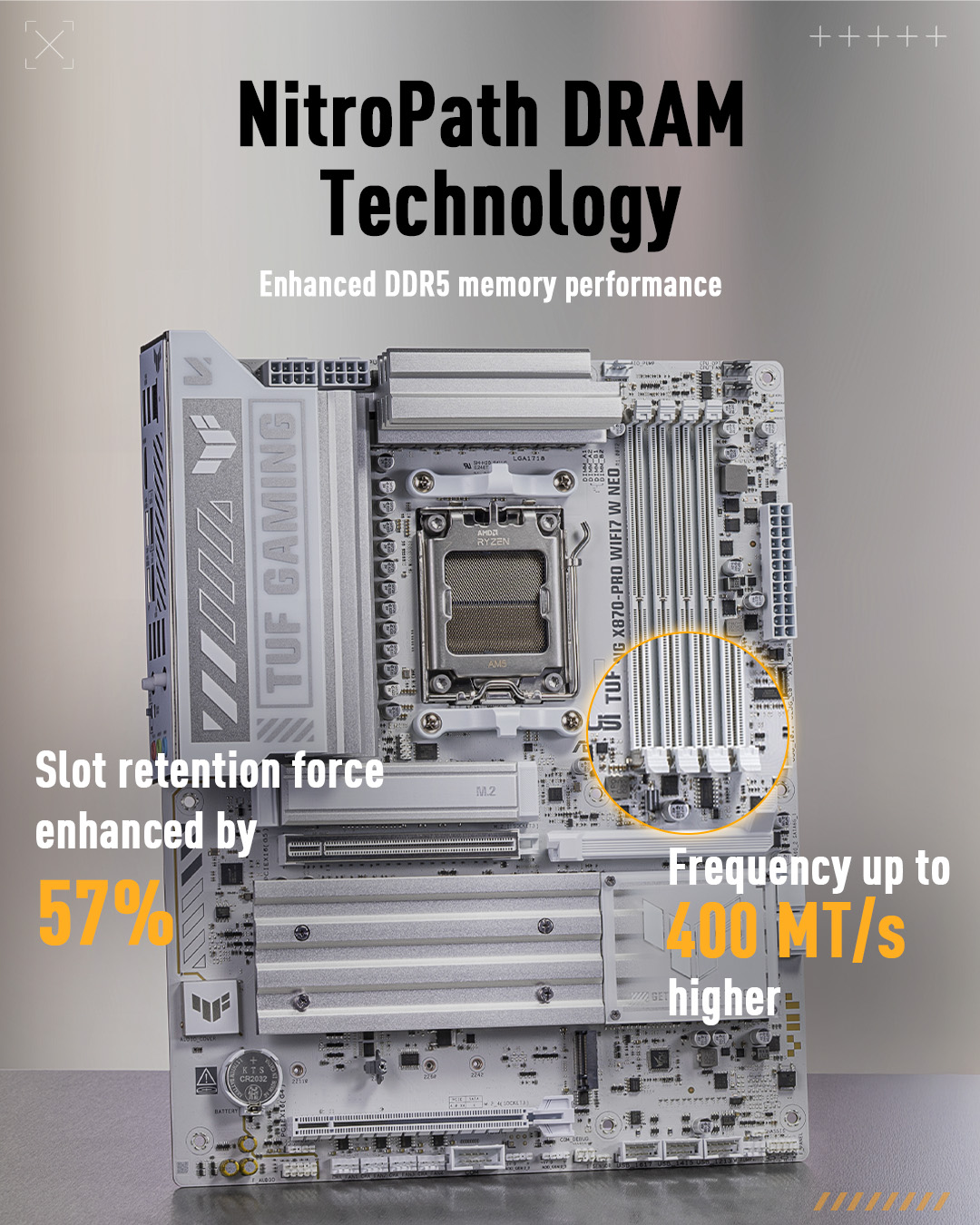
The most notable inclusion for mainstream buyers is the TUF Gaming X870 PRO NEO, since that class of board is often the volume choice for performance focused builds that still need strong stability, clean memory training, and reliable daily operation with higher speed DDR5 kits.
ASUS describes NitroPath DRAM as a combination of shorter contact geometry and an optimized signal pathway designed to improve data transfer quality between the memory slots and the CPU. The intended outcome is increased DDR5 stability, better signal integrity, and extra overclocking headroom. ASUS also claims boards equipped with NitroPath DRAM can boost achievable DDR5 frequency by up to 400 MT per second, with some cases potentially exceeding that, depending on the platform, memory kit, and overall tuning environment. In addition, the slot itself is reinforced, with ASUS stating retention force is improved by up to 57%, which is a practical durability upgrade for users who frequently swap kits for tuning, validation, or troubleshooting.
From a market perspective, this is exactly the kind of feature migration that matters in 2026. DDR5 tuning remains sensitive to board layout quality, slot behavior, and signal routing, especially as more users push higher density kits, tighter timings, and faster data rates across everyday gaming rigs and creator workstations. By standardizing NitroPath DRAM across X870 NEO, ASUS is betting that memory performance consistency is no longer a niche enthusiast concern, it is now part of the mainstream expectation for a premium AM5 build.
Do you think features like NitroPath DRAM will actually influence your next motherboard purchase, or do you still prioritize VRM, IO, and pricing first when choosing an X870 board?
