
ASRock Pushes 256 GB DDR5 CQDIMM to 7400 MT/s on Z890I Nova WiFi R2.0
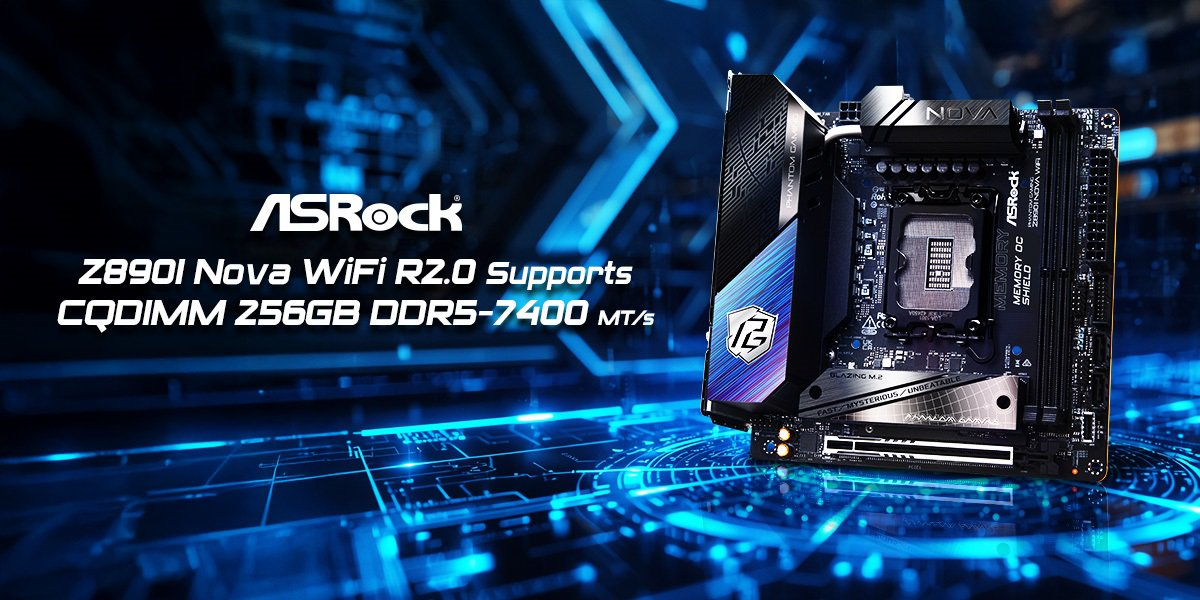
ASRock has demonstrated a notable step forward for high capacity DDR5 on consumer platforms, showing its Z890I Nova WiFi R2.0 running a 256 GB CQDIMM configuration at DDR5 7400 MT/s. According to ASRock’s official announcement, the result was achieved with 2 Kingston 128 GB 4 rank modules, pushing well beyond the DDR5 7200 level that the company describes as a more common ceiling for very high capacity memory setups.
That matters because memory scaling gets much harder as capacity rises, especially once 4 rank modules enter the equation. Larger DDR5 configurations place more pressure on signal integrity, timing margins, and overall stability, which is why high frequency results that look routine on 32 GB or 64 GB kits become far more difficult once total capacity reaches 256 GB. ASRock says CQDIMM helps address that bottleneck by placing a clock driver directly on the module, regenerating and distributing a cleaner reference clock rather than relying entirely on the CPU and motherboard trace quality alone.
The motherboard itself is also part of the story. ASRock specifically ties this result to the Z890I Nova WiFi R2.0 revision, saying the board received circuit optimization and deeper firmware tuning to support CQDIMM more effectively even within a compact Mini ITX form factor. That is a meaningful point because small form factor boards usually have tighter design constraints, making this kind of high capacity, high speed validation more impressive than it would be on a larger enthusiast overclocking board.
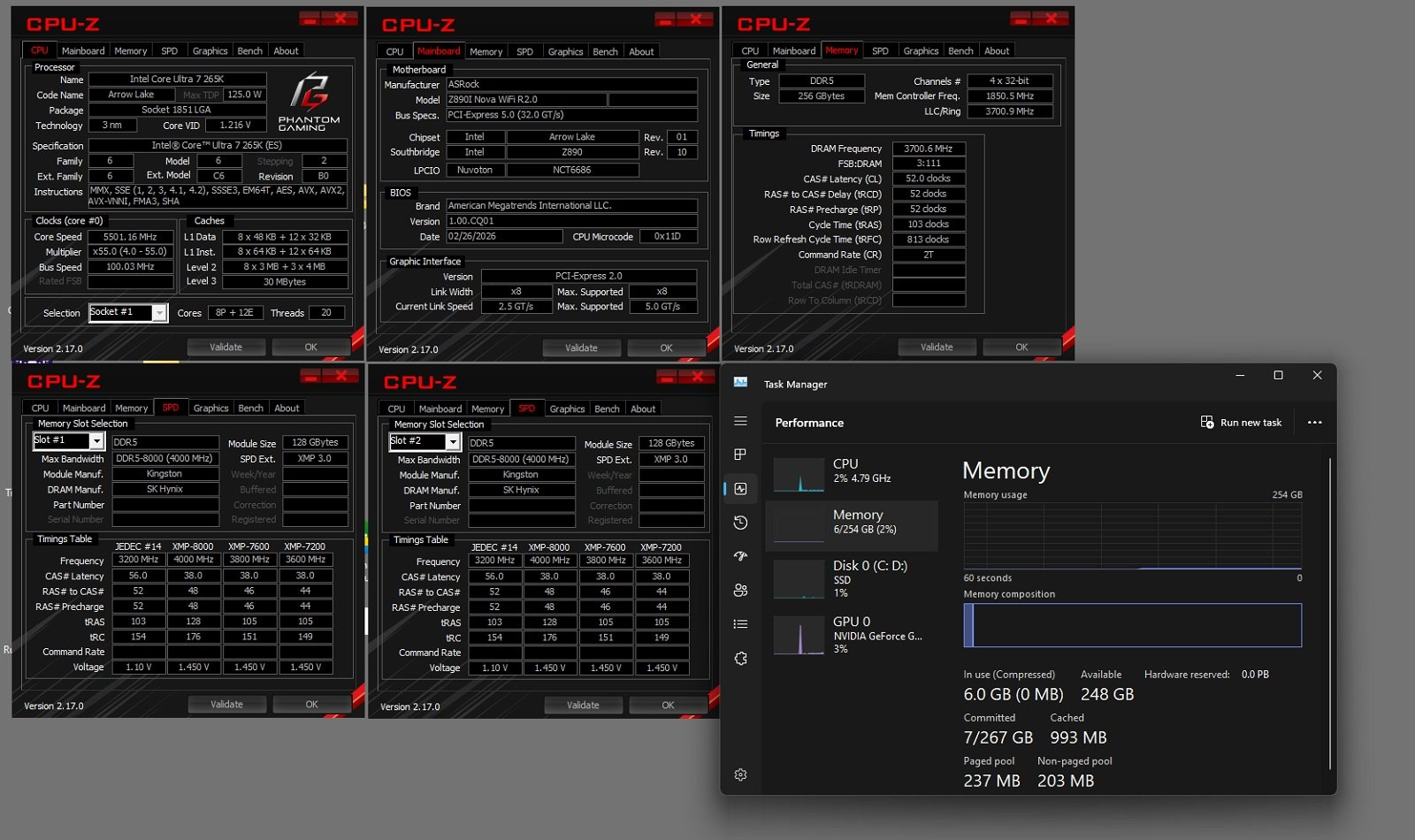
From a market perspective, this is one of the clearer signs that CQDIMM is starting to reshape what is possible on desktop DDR5 when capacity and bandwidth are both priorities. Earlier this year, GIGABYTE highlighted a 256 GB CQDIMM setup on its Z890 AORUS TACHYON ICE platform, and ASRock’s 7400 MT/s result now pushes that conversation even further. The practical audience here is not mainstream gaming alone. These kinds of memory configurations are increasingly relevant for AI workflows, heavy content creation, virtualization, and workstation leaning desktop builds that need more than just traditional gaming class memory capacity.
The bigger takeaway is that CQDIMM is starting to close one of DDR5’s most frustrating gaps on consumer platforms. For years, users generally had to choose between high frequency and very high capacity. Results like this suggest that tradeoff is beginning to soften, provided the memory, motherboard, and firmware are all tuned around the new module design. It does not mean every 256 GB setup will suddenly run at these speeds, but it does show where the platform is heading.
Do you think CQDIMM could become the next major turning point for high capacity desktop memory, especially for AI and creator focused builds?
