
AMD has officially released Adrenalin Edition 26.11.1, addressing the excessive SSD write bug that caused Radeon graphics drivers to continuously generate unnecessary storage activity, even when computers were idle. The optional update targets Radeon RX 7000 and RX 9000 graphics cards, potentially preventing further SSD wear caused by the problematic background process.
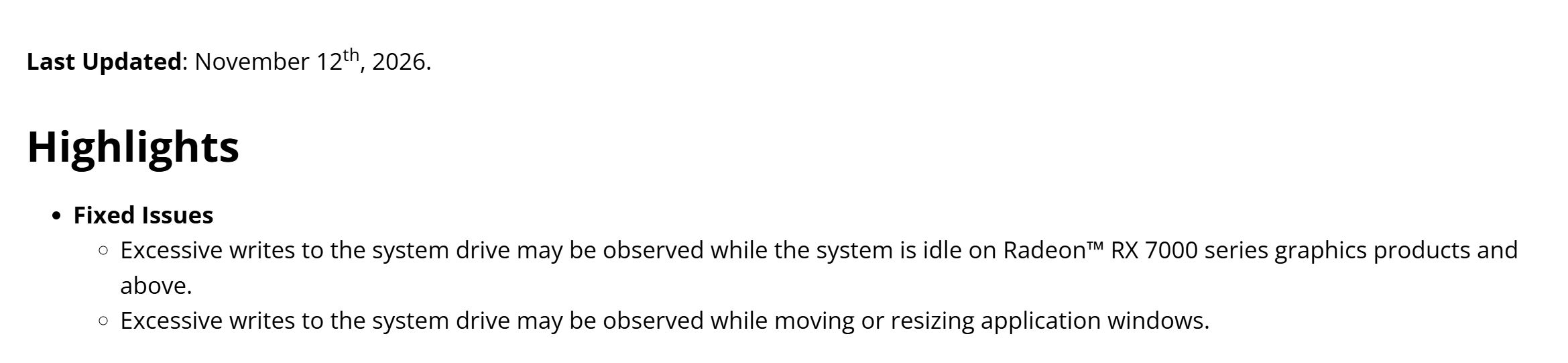
According to AMD's official release notes, the driver corrects 2 issues involving excessive writes to the system drive. The first occurs while affected Radeon systems remain idle, while the second triggers unnecessary storage activity when users move or resize application windows. The problem was linked to the AMD External Events Client Module, identified as atieclxx.exe, which could repeatedly generate disk writes without meaningful user activity.
The issue previously raised concerns after Radeon users reported continuous SSD writes and a potential 14% reduction in reported drive health. Community investigations recorded background activity ranging from 0.3 MB/s to 5 MB/s, potentially accumulating between 26 GB and 432 GB of unnecessary write activity daily under continuous operation. However, the actual impact on NAND endurance remains uncertain, and the reported health degradation has not been conclusively attributed to AMD's driver.
Before the official update, an independent developer introduced an open source utility that prevented repeated SSD writes without disabling FreeSync. Other temporary solutions involved disabling AMD External Events Utility or Resizable BAR, potentially affecting gaming performance and display functionality. With Adrenalin 26.11.1 now available, users have an official correction that does not require these workarounds.
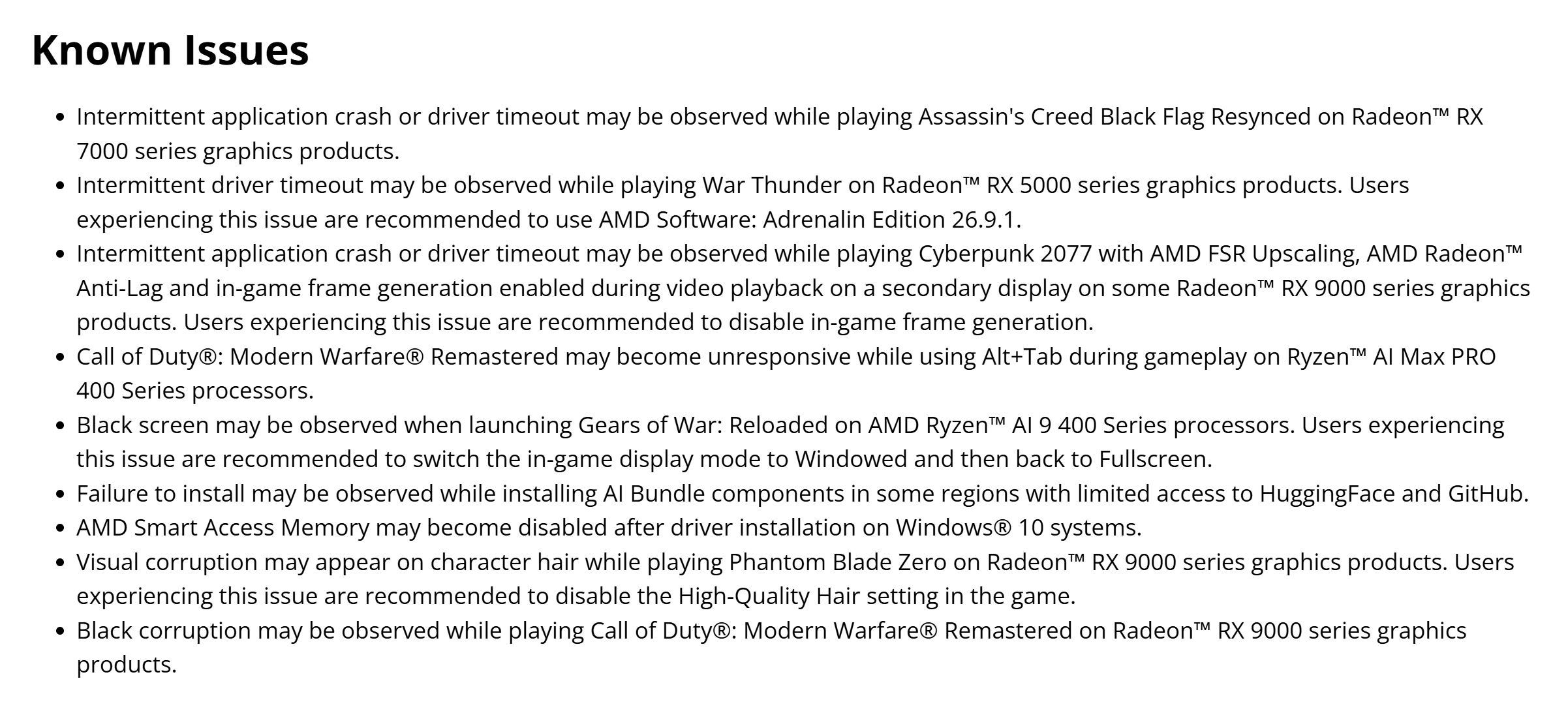
However, the update introduces no fixes for several outstanding gaming issues. AMD continues investigating crashes and driver timeouts affecting Assassin's Creed Black Flag Resynced, War Thunder, and Cyberpunk 2077, alongside graphical corruption in Phantom Blade Zero and Call of Duty: Modern Warfare Remastered. Windows 10 users may also encounter an issue where Smart Access Memory becomes disabled after installation.
Radeon owners can download Adrenalin Edition 26.11.1 directly from AMD. Users previously affected by excessive SSD activity should monitor disk writes through Windows Resource Monitor and verify their drive health using tools such as CrystalDiskInfo. The update is intended to prevent further unnecessary activity, but it cannot reverse any existing SSD wear.
AMD's official correction is welcome, but graphics drivers should never compromise the lifespan of unrelated hardware components. With SSD prices increasing and storage endurance remaining an important consideration for PC enthusiasts, unnecessary background writes are unacceptable, particularly when users have no reason to suspect their graphics software is responsible. AMD must improve driver validation to prevent similar issues and ensure future updates prioritize reliability alongside performance. Users should not have to sacrifice storage longevity, FreeSync functionality, or gaming performance because of a software defect.
Have you experienced excessive SSD writes with AMD Radeon drivers, and do you believe AMD should provide additional support to users who report storage damage?
