
AMD Prices Ryzen AI Halo Developer Platform At $3999, Targeting Local Agentic AI And NVIDIA DGX Spark
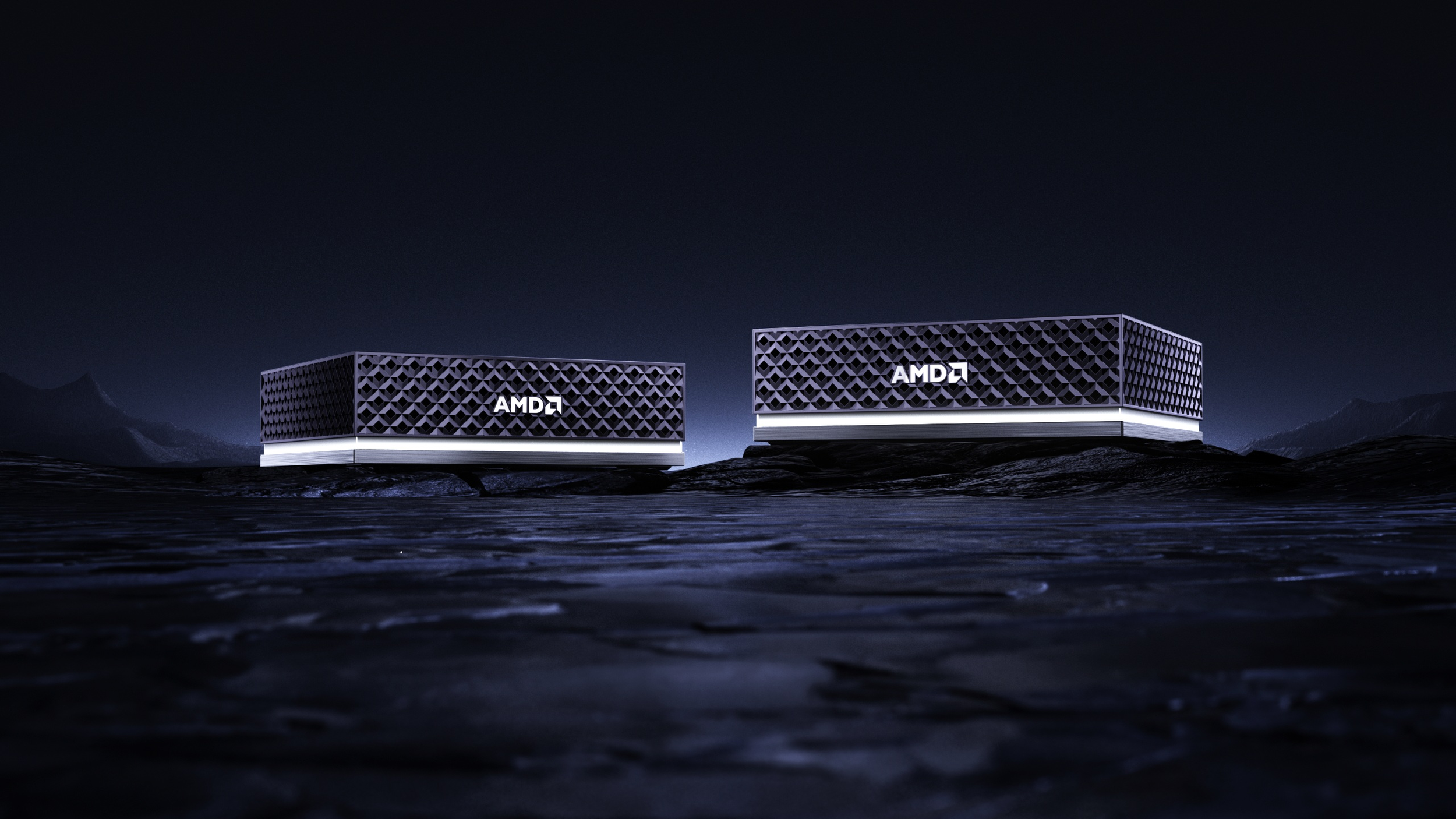
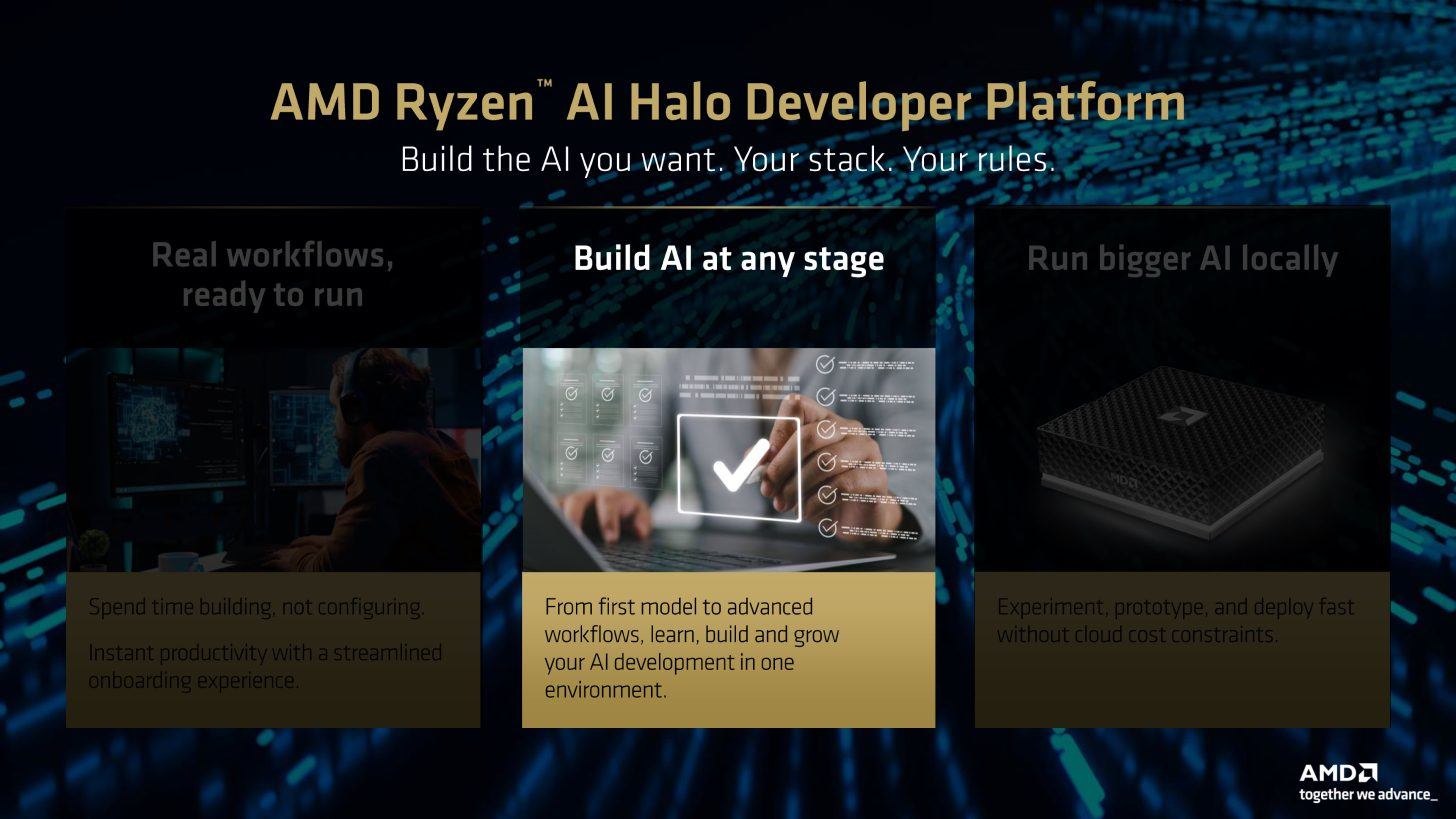
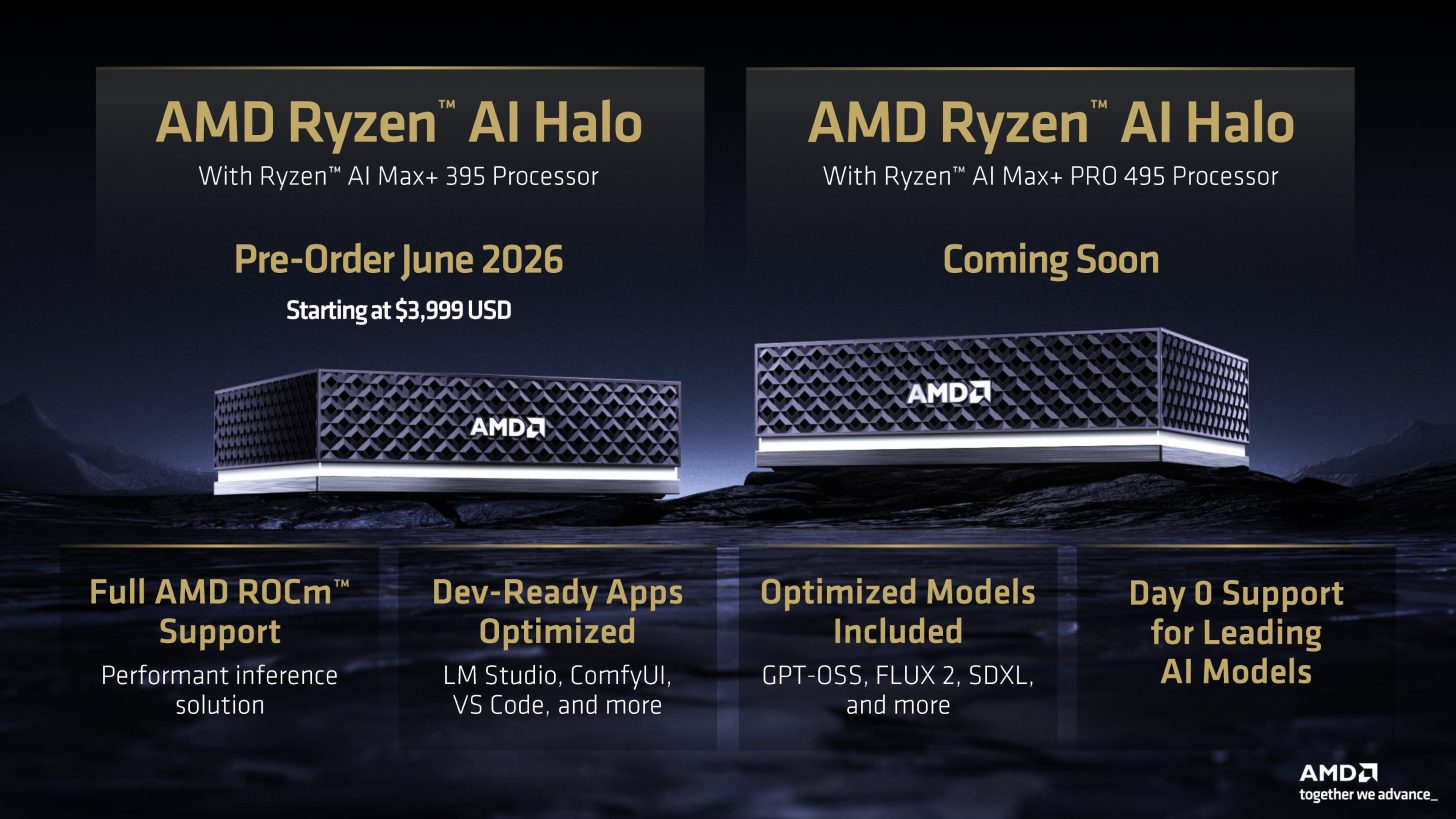
AMD has detailed pricing and availability for its Ryzen AI Halo developer platform, positioning the compact AI system as a local development machine for agentic AI workflows, large language models, generative AI, and professional workstation class tasks. First announced at CES 2026 and recently teased during AMD’s AI Dev Day, the Ryzen AI Halo platform will open for preorder in June 2026 at $3999. The platform is designed around AMD’s Ryzen AI MAX processor family and is being positioned as a compact local AI machine that can reduce reliance on cloud compute. AMD claims the system can run AI models with up to 200 billion parameters, giving developers the ability to build, test, and operate large agentic AI applications locally instead of sending every workload to remote servers.
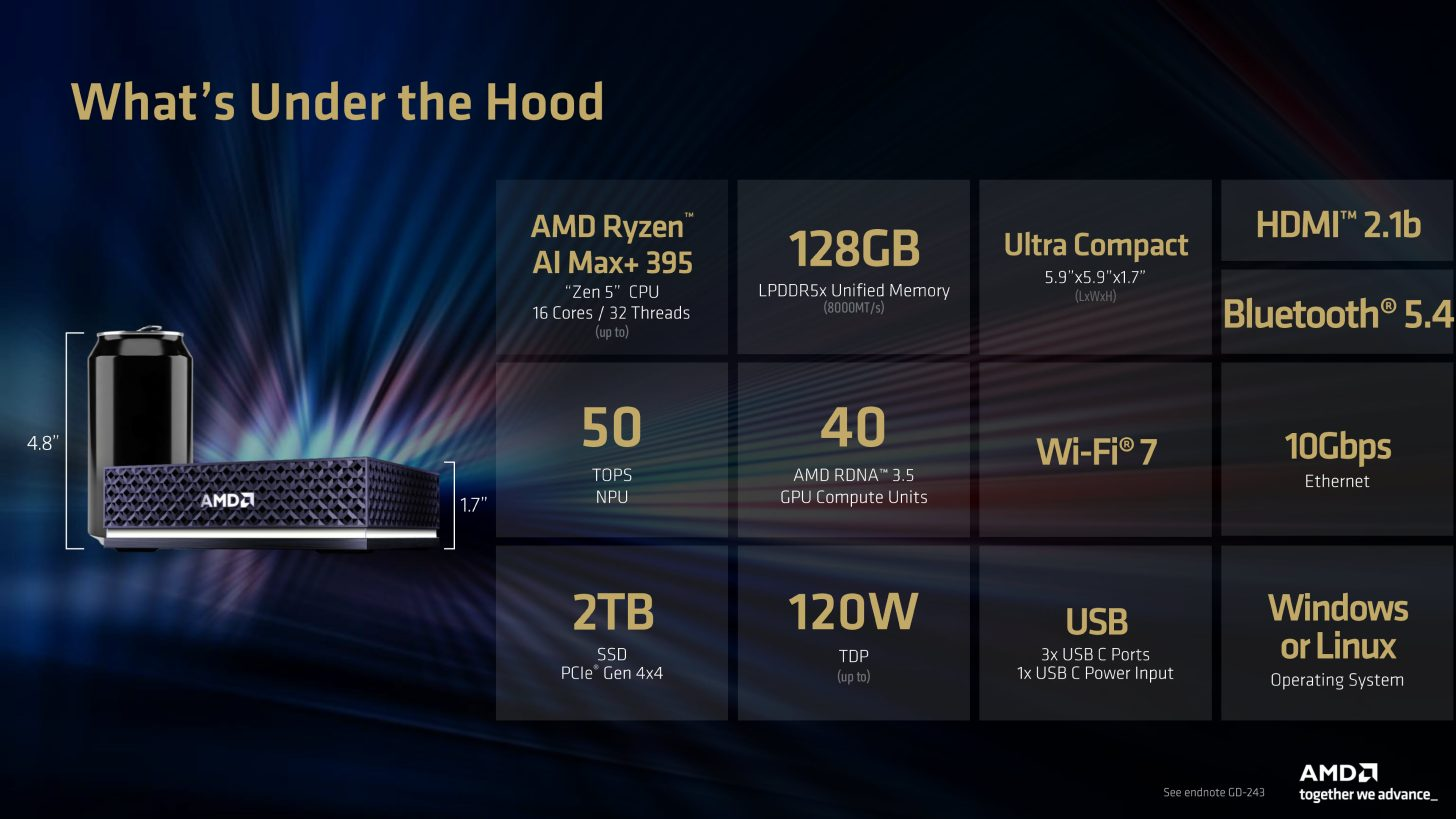
At launch, the first generation Ryzen AI Halo platform will use the Ryzen AI MAX+ 395, based on the Strix Halo family. This chip combines 16 Zen 5 CPU cores, 32 threads, Radeon 8060S integrated graphics with 40 RDNA 3.5 compute units, a 50 TOPS XDNA 2 NPU, and a power envelope of up to 120 W. The system also includes 128 GB LPDDR5X 8000 unified memory and 2 TB PCIe Gen 4x4 storage, giving developers enough capacity for large local models, AI coding tools, image generation workflows, and multi agent experimentation.
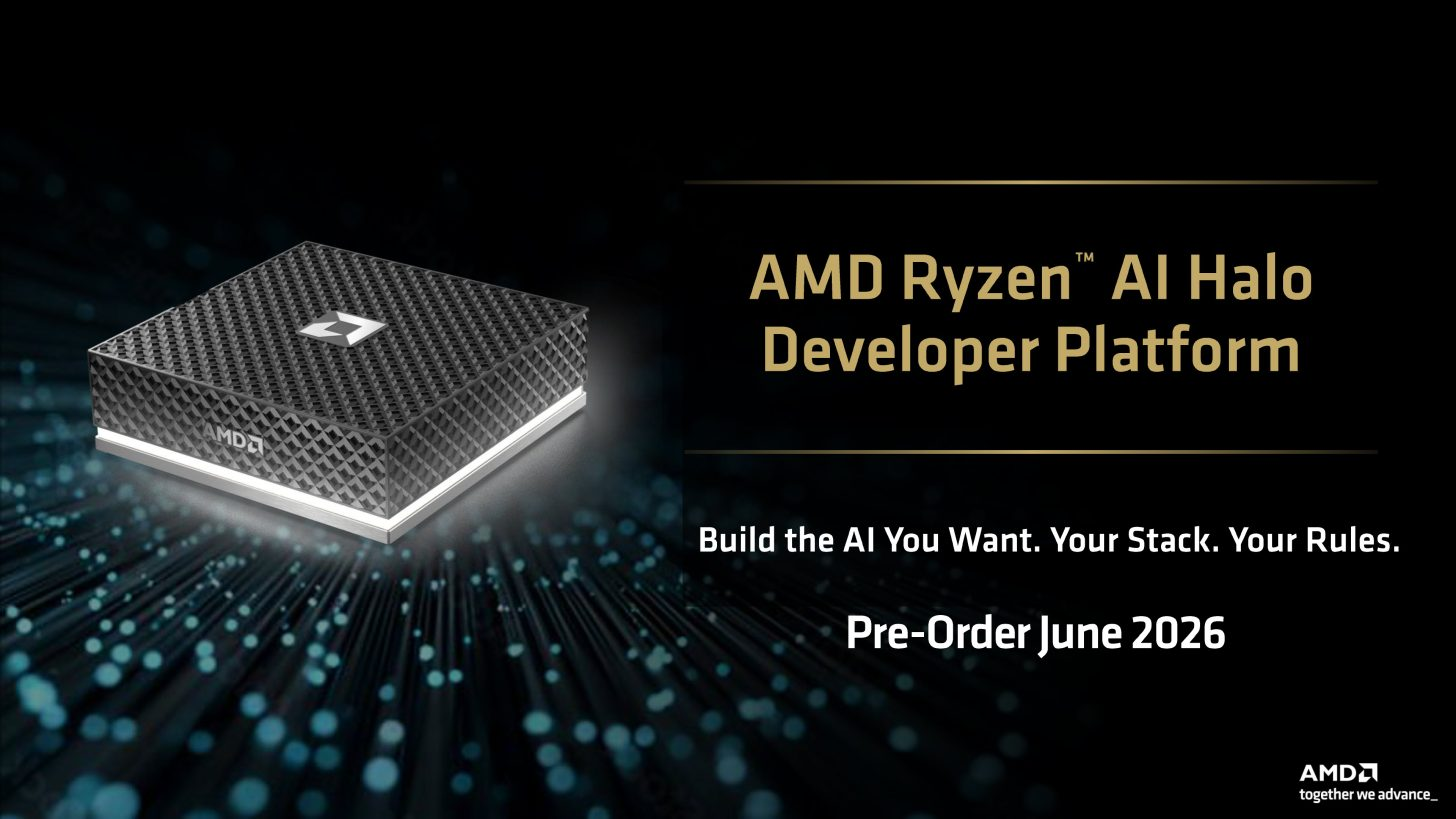
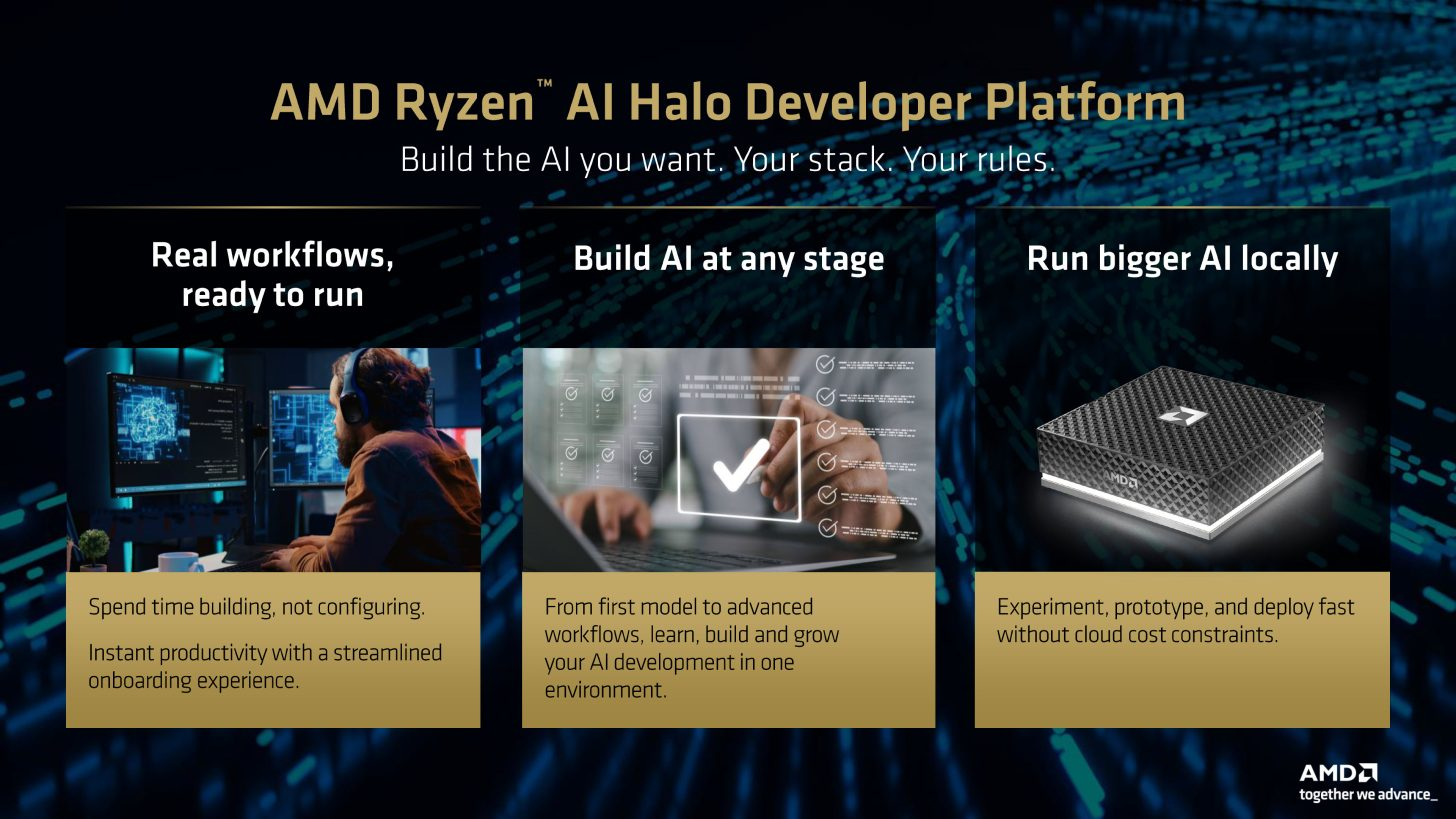
The hardware is also highly compact. AMD says the Ryzen AI Halo developer platform measures 5.9 inch x 5.9 inch x 1.7 inch, making it smaller than many conventional workstation class systems and shorter than Apple’s Mac Mini Pro with M4. Connectivity includes 3 USB Type C ports, with 1 used for power input, WiFi 7, Bluetooth 5.4, 10 Gbps Ethernet, and HDMI 2.1b.
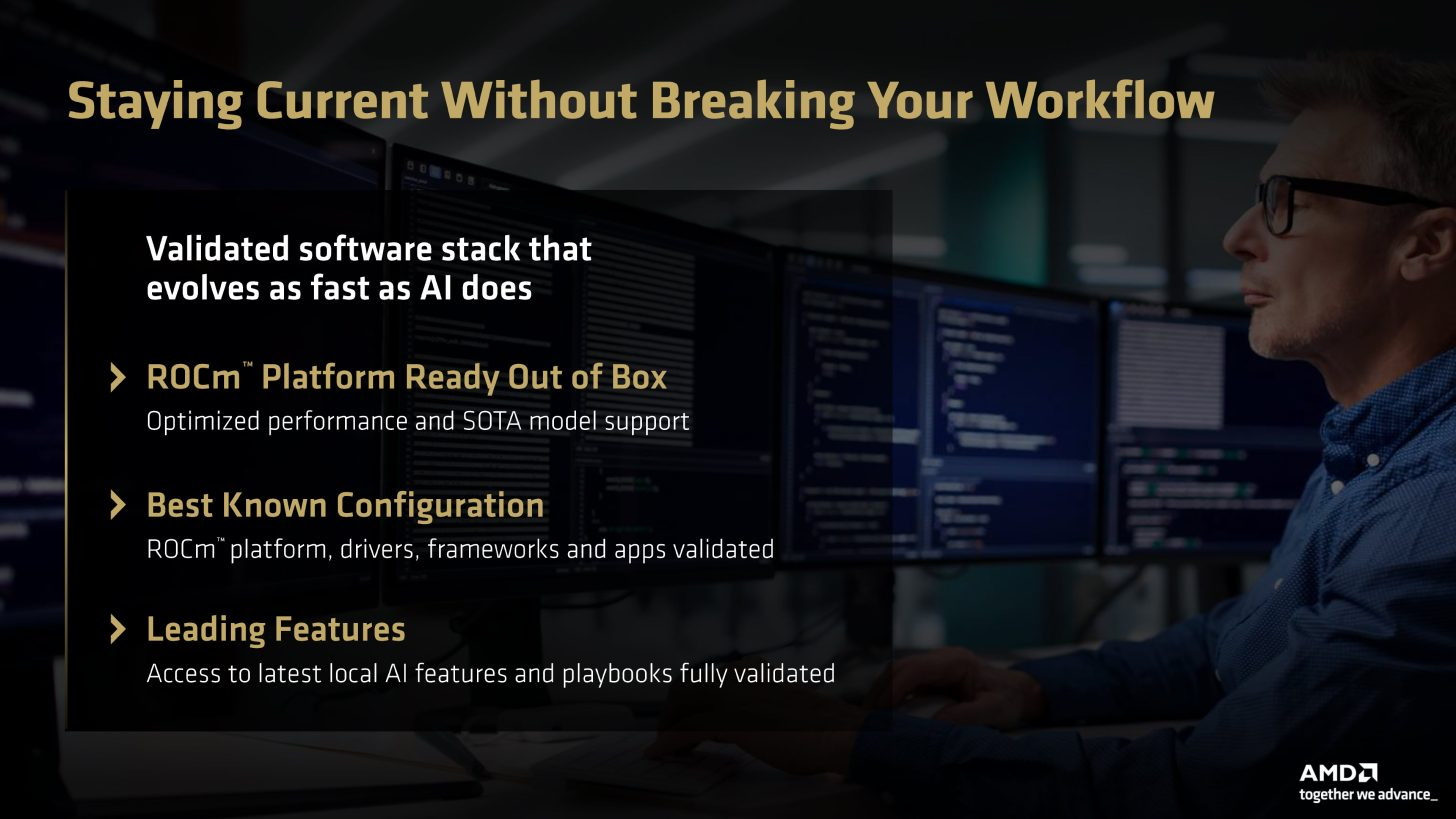
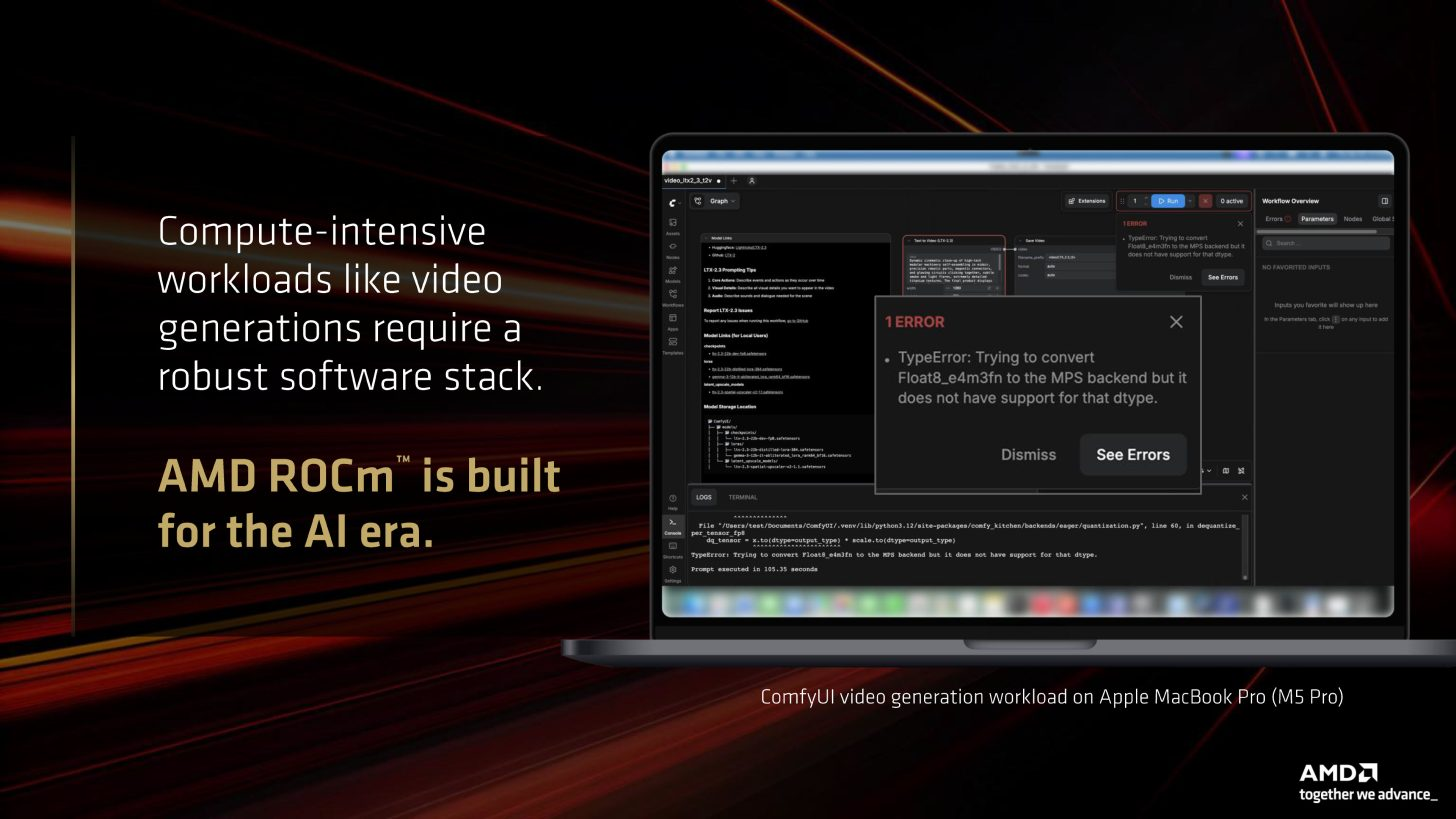
Software support is a major part of AMD’s pitch. The Ryzen AI Halo platform will include full AMD ROCm support, including the newly released ROCm 7.2.2 suite. AMD is also optimizing the device for developer ready applications such as LM Studio, ComfyUI, VS Code, and additional AI tools. The company says it will support models and workloads including GPT OSS, FLUX.2, SDXL, and more, with Day 0 support for leading AI models.
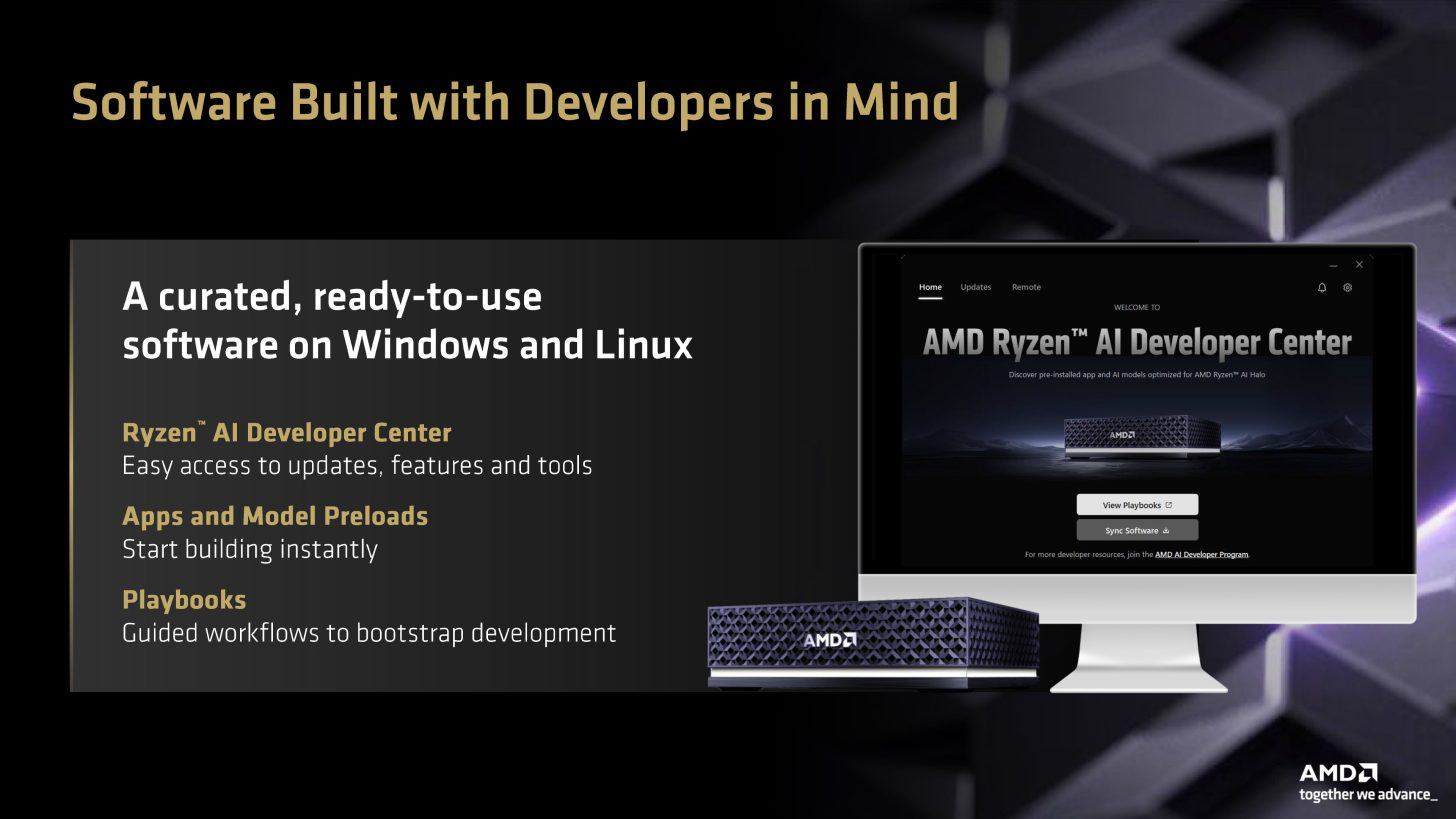
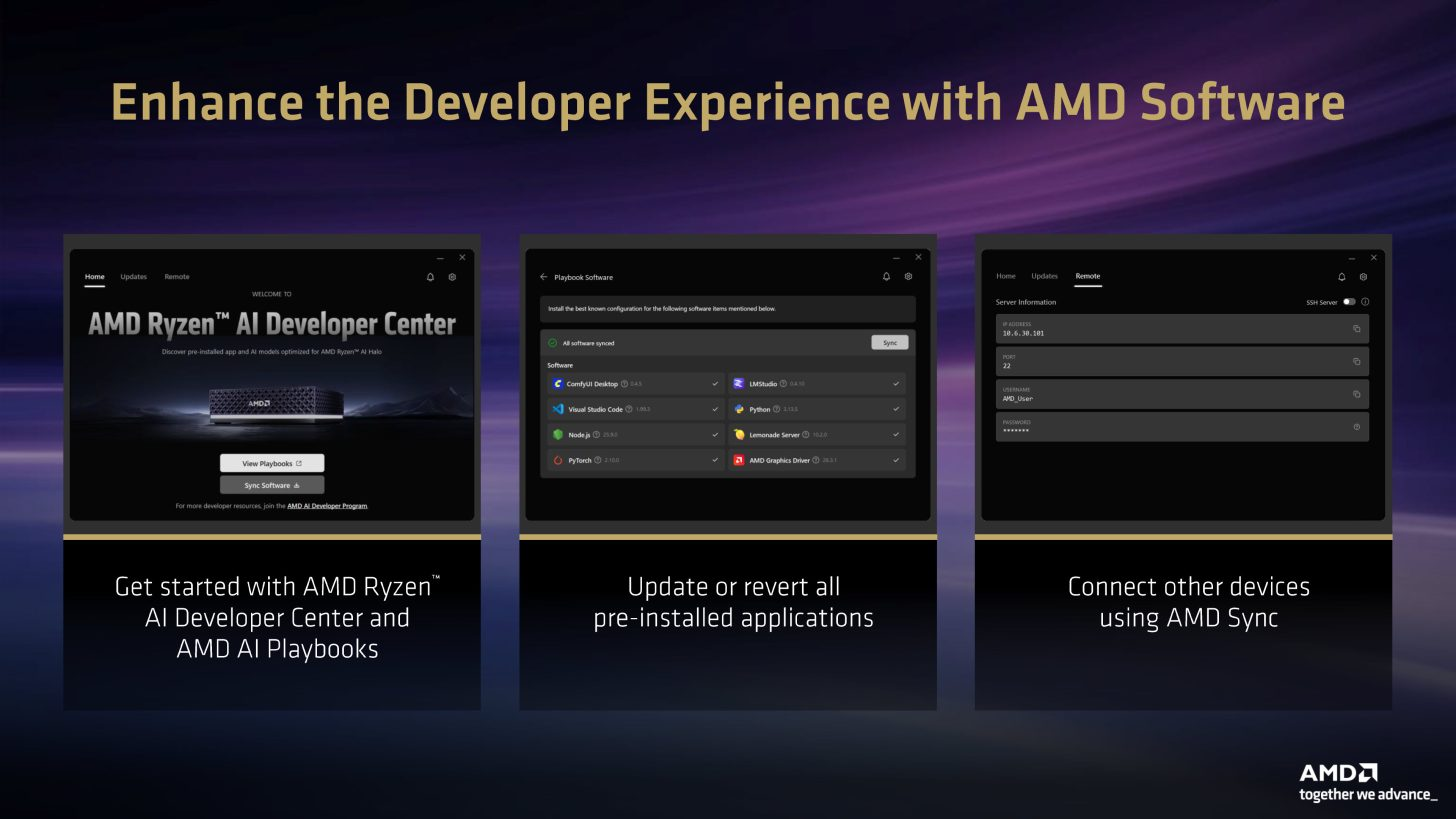
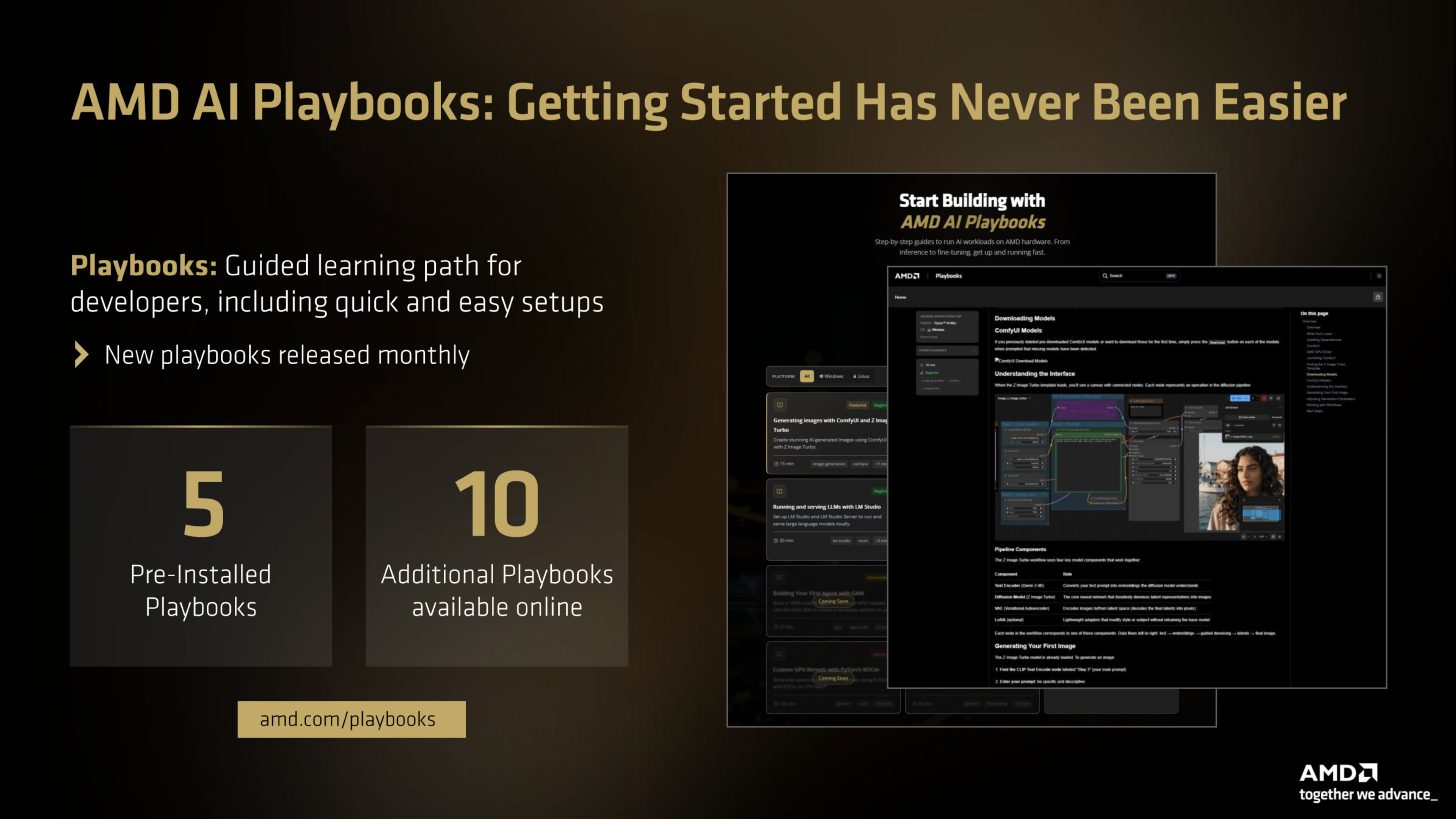
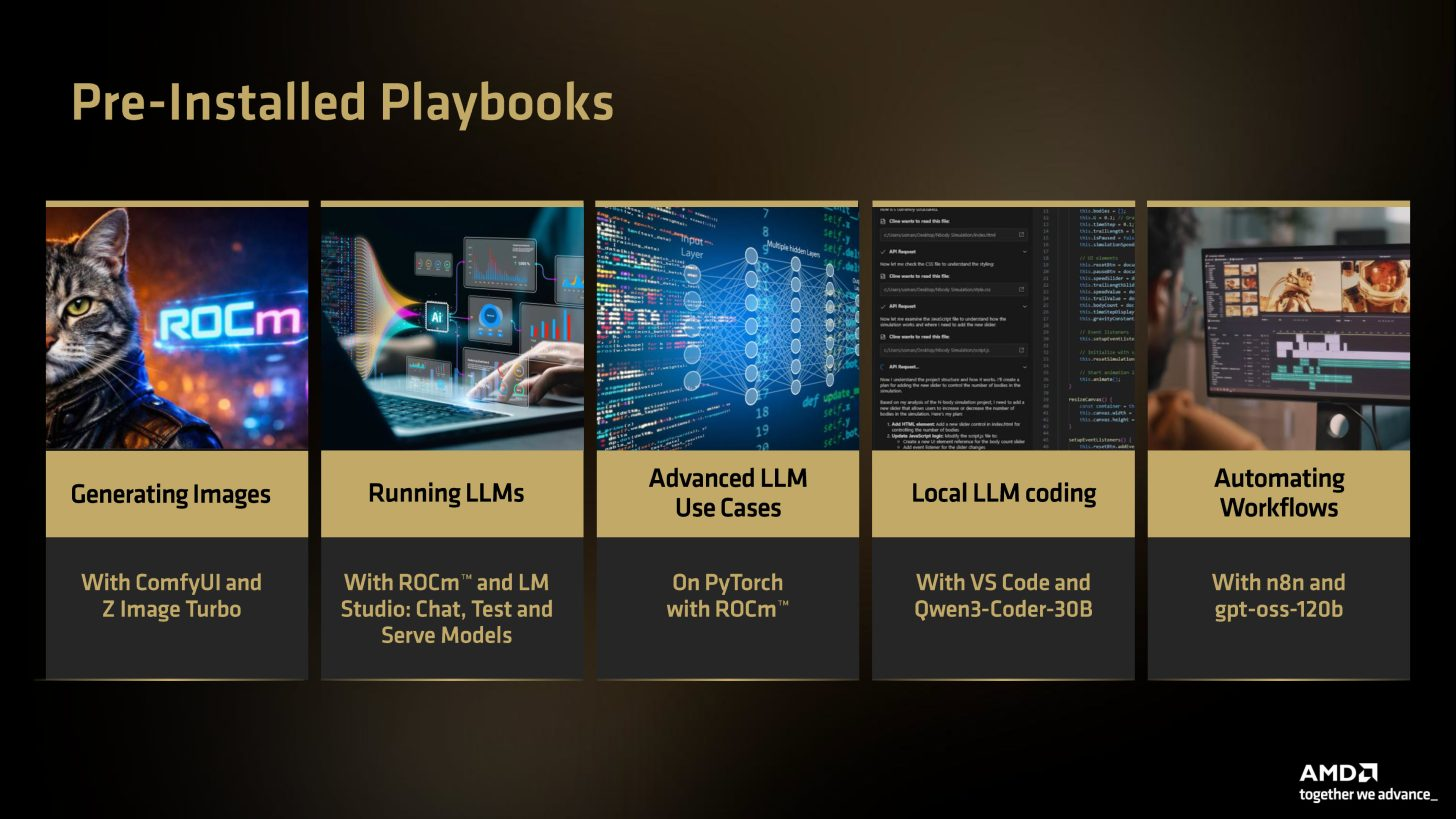
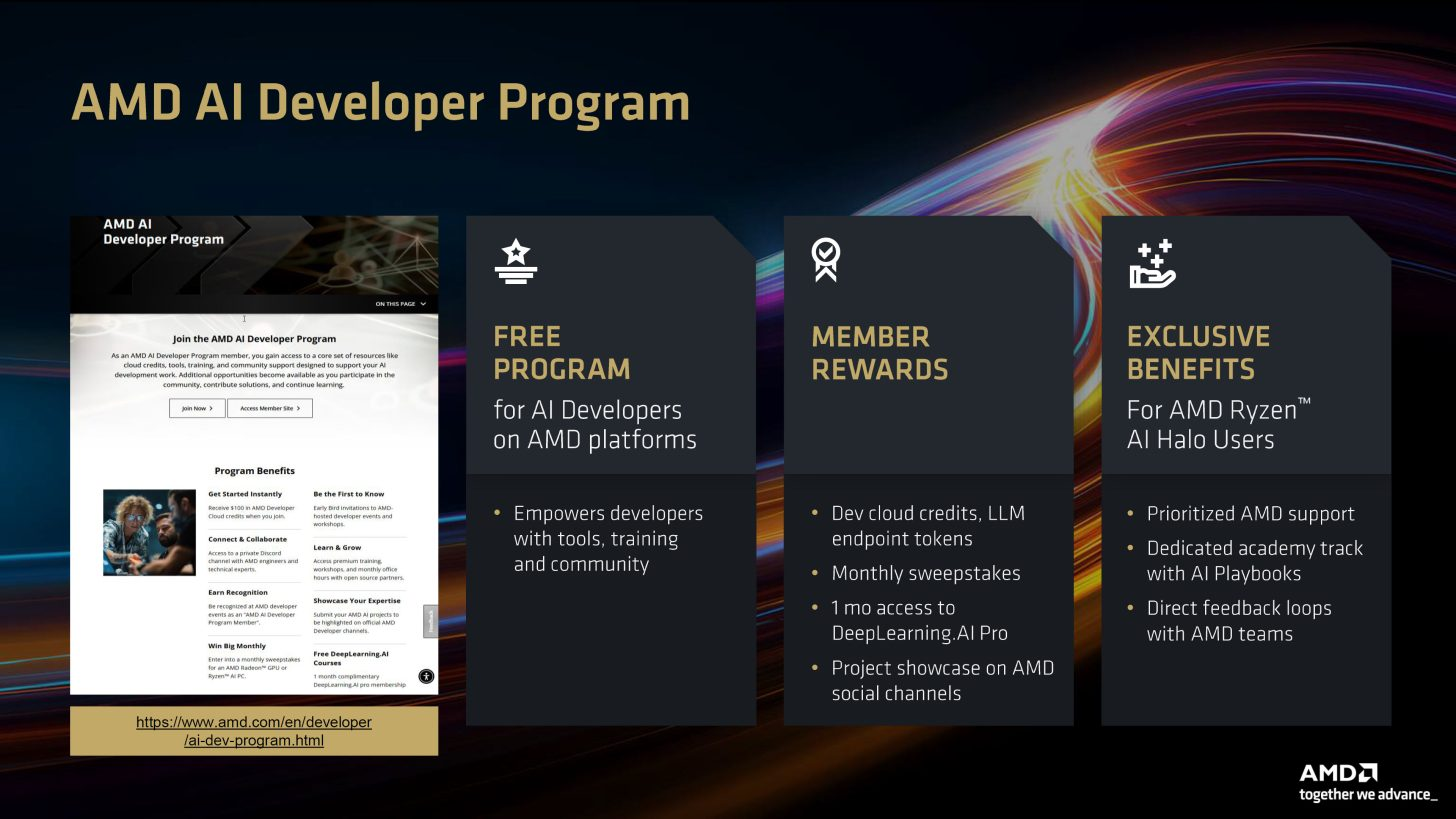
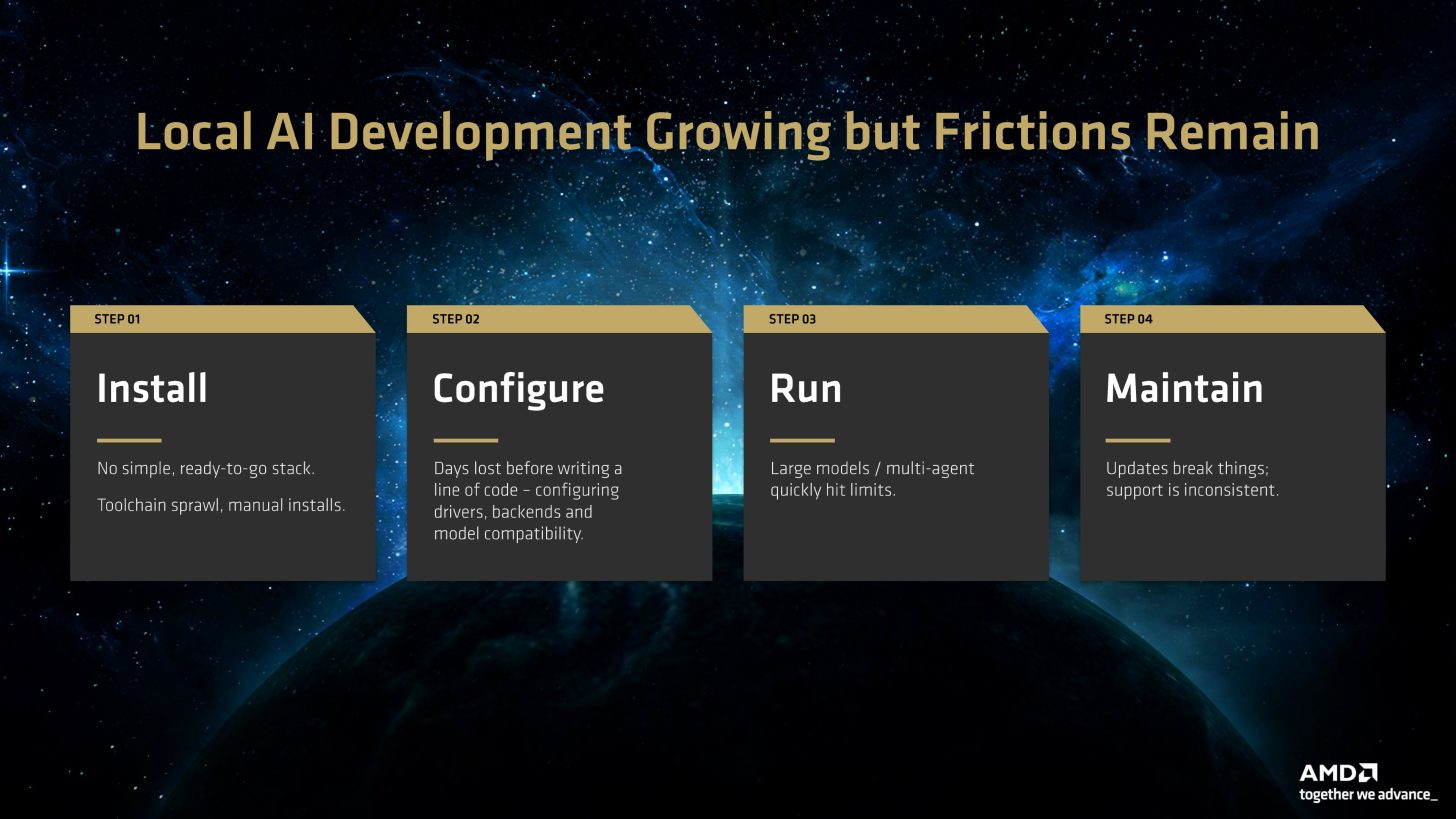
AMD is also using AI Playbooks to reduce setup friction. The platform will ship with 5 preinstalled playbooks, covering image generation, LLM execution, advanced LLM use cases, local LLM coding, and workflow automation. AMD says another 10 playbooks will be available online, helping developers get started faster without needing to manually assemble every toolchain from scratch.
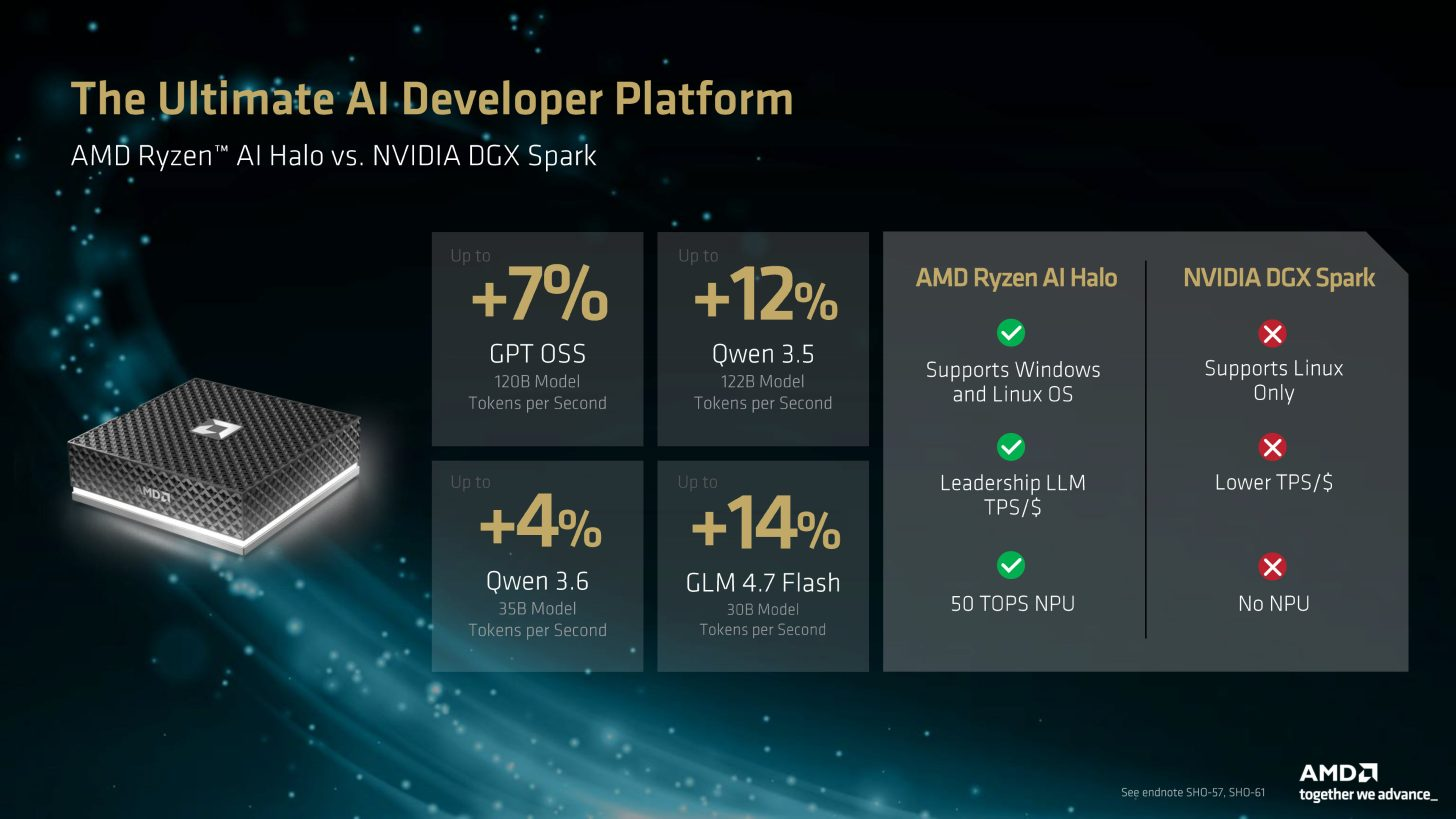
The biggest competitive angle is AMD’s direct comparison against NVIDIA’s DGX Spark and Apple’s Mac Mini M4 Pro. Against NVIDIA’s platform, AMD claims Ryzen AI Halo offers broader operating system support, with both Windows and Linux compatibility, while also delivering stronger tokens per dollar value. AMD also highlights the inclusion of a 50 TOPS NPU, which gives the platform an additional dedicated AI acceleration block beyond CPU and GPU compute.
In AMD’s own comparisons, Ryzen AI Halo is claimed to deliver 7% higher GPT OSS tokens per second on a 120B model, 12% higher Qwen 3.5 tokens per second on a 122B model, 4% higher Qwen 3.6 tokens per second on a 35B model, and 14% higher GLM 4.7 tokens per second on a 30B model versus NVIDIA DGX Spark. The company also notes that Ryzen AI Halo launches at $3999, which is $680 lower than the currently listed $4679 price for NVIDIA DGX Spark.
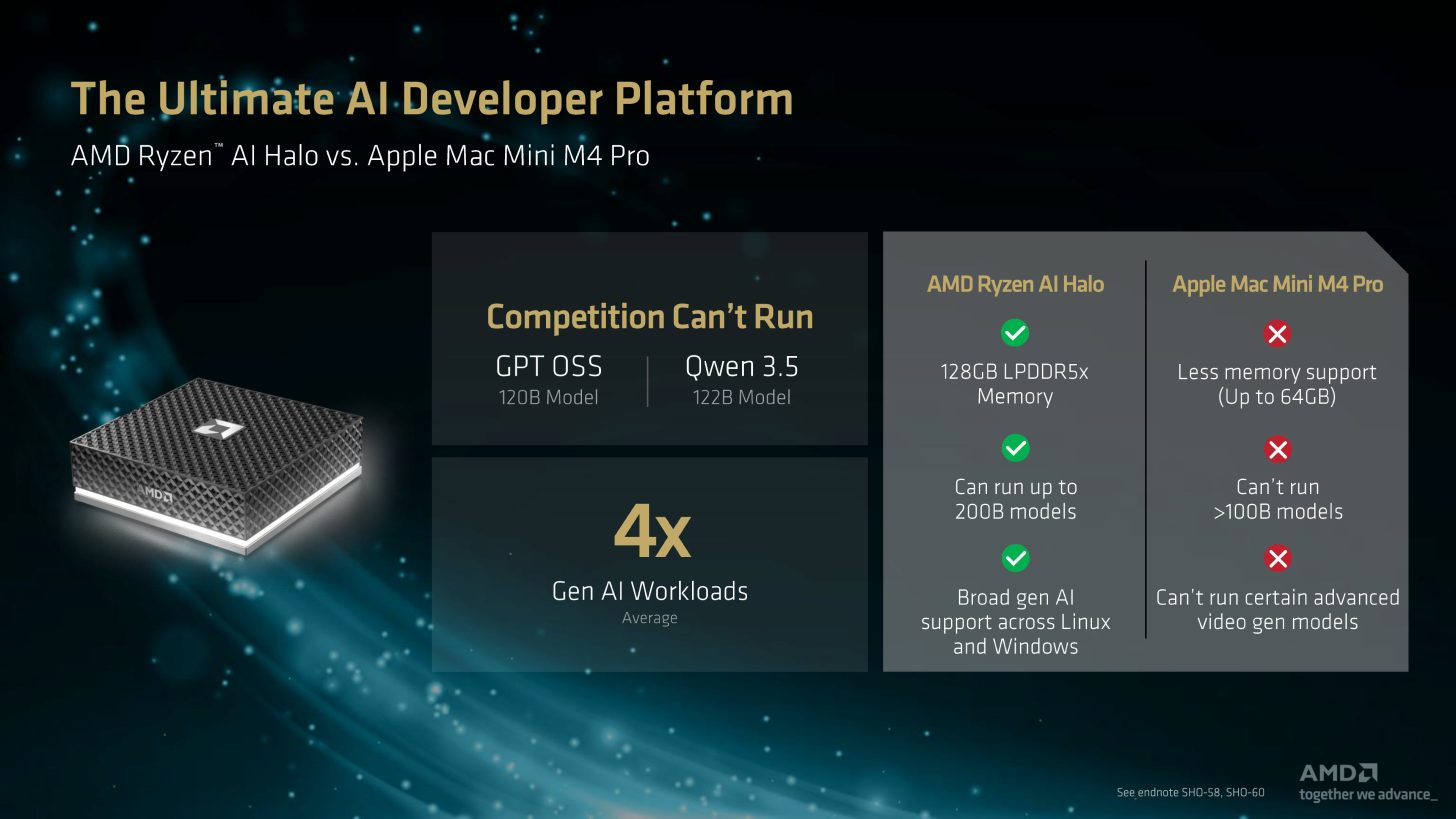
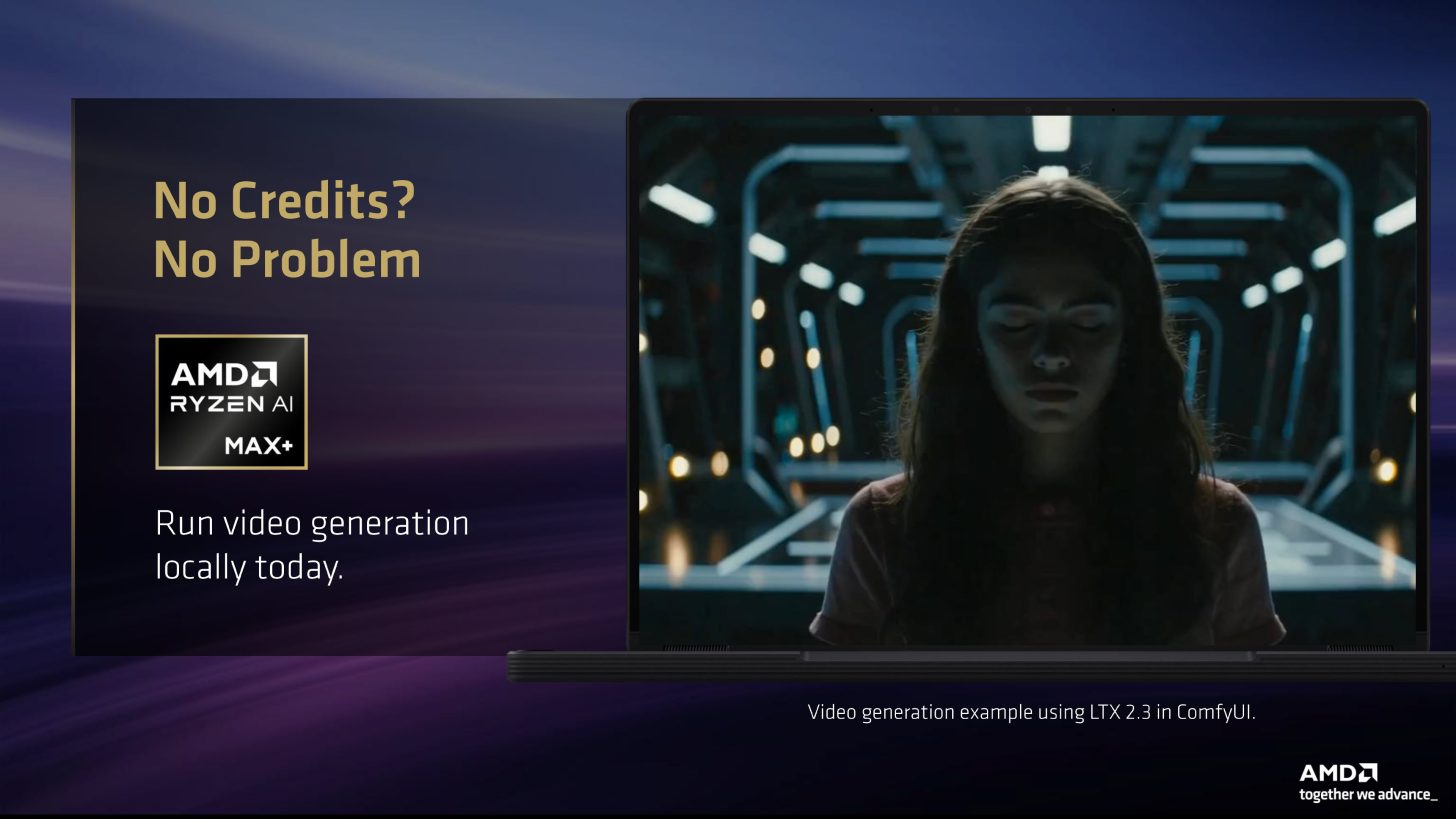
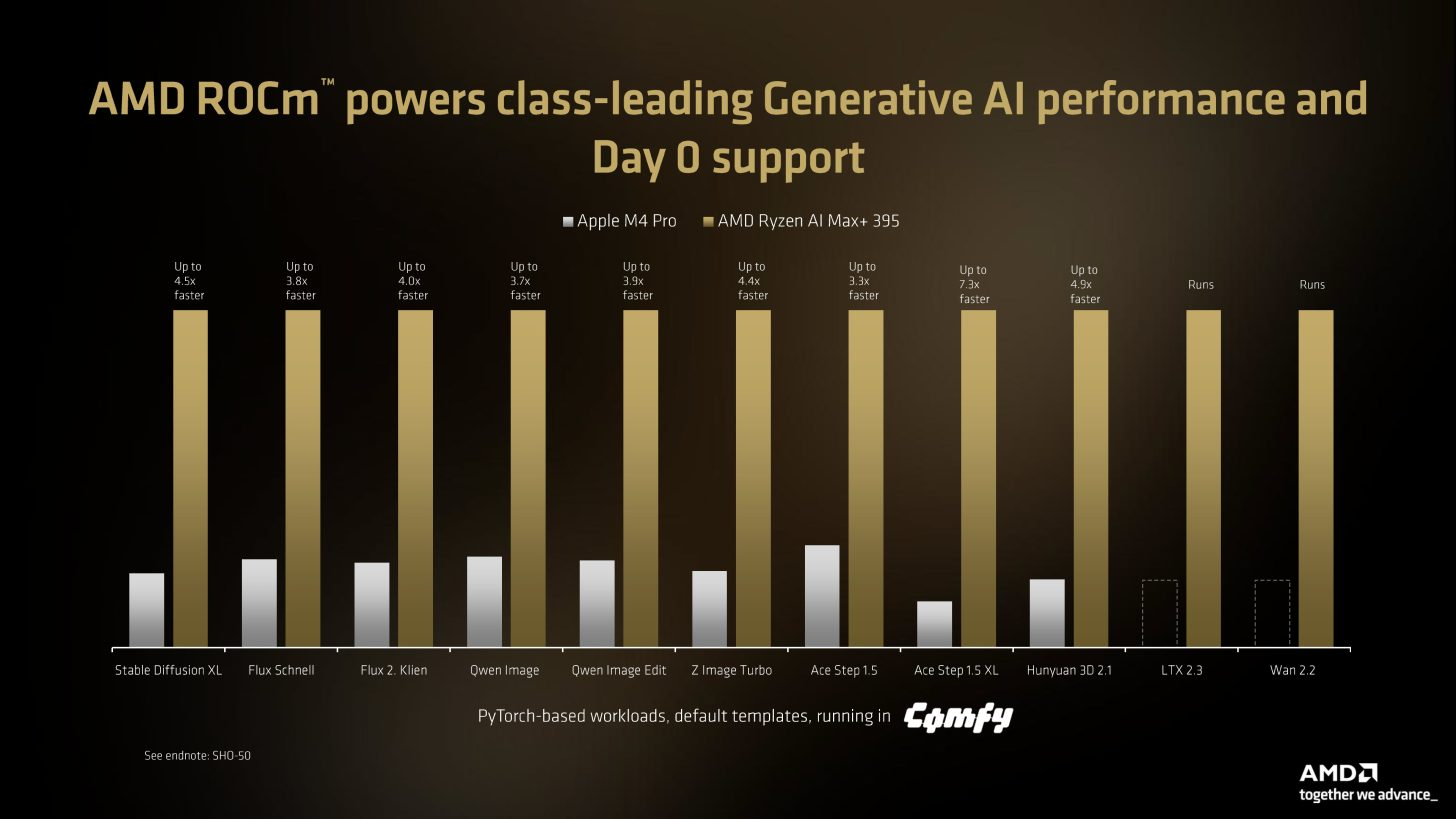
Against Apple’s Mac Mini M4 Pro, AMD focuses on memory capacity and local model size. Ryzen AI Halo offers up to 128 GB unified memory, which is twice the 64 GB maximum memory configuration mentioned for the Mac Mini M4 Pro. AMD also claims Ryzen AI Halo can run up to 200B parameter models, while the Mac Mini M4 Pro is positioned as unable to go beyond 100B parameter models. In broader generative AI workloads, AMD says Ryzen AI Halo is on average 4x faster than the Mac Mini M4 Pro.
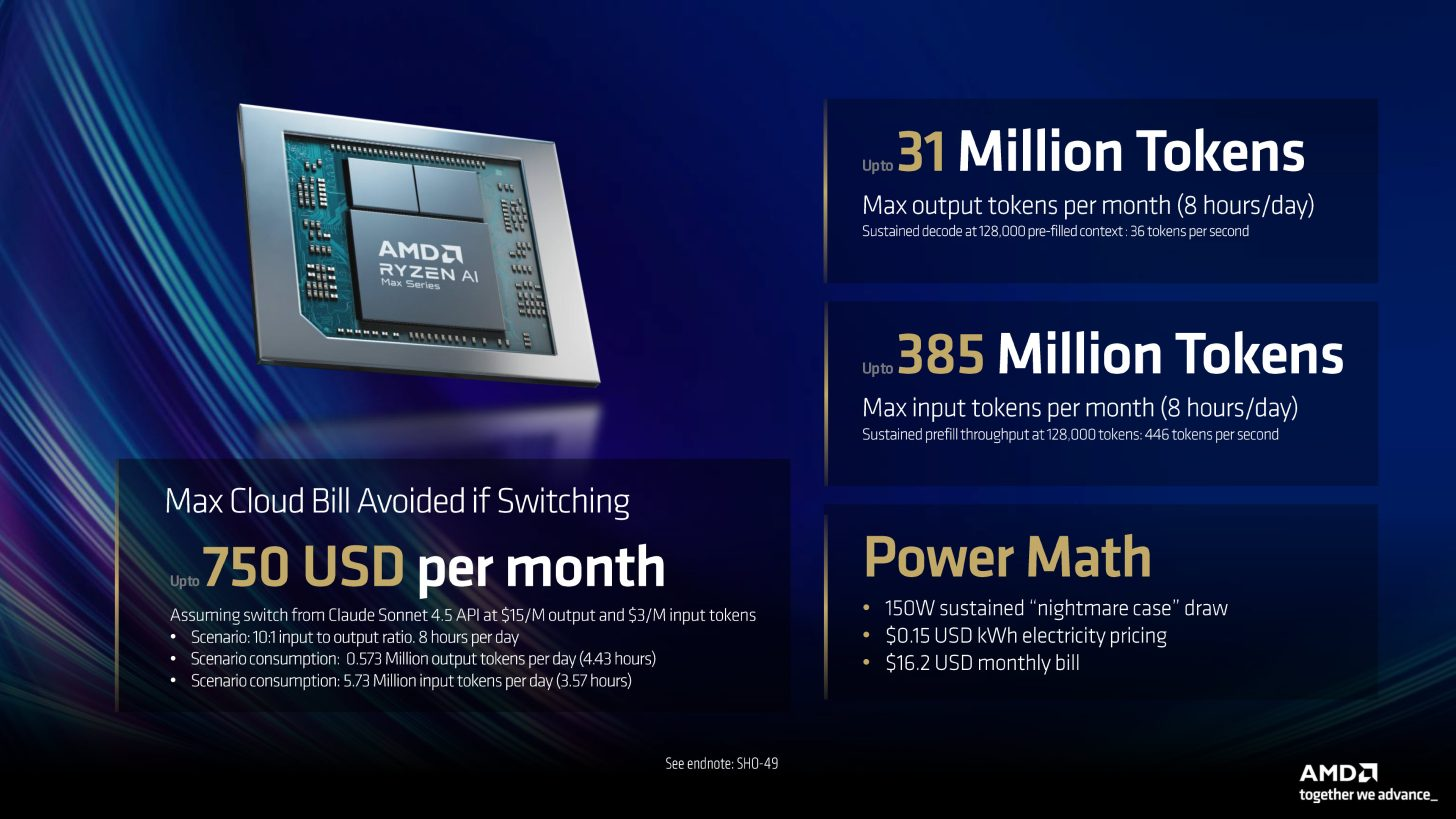
AMD is also making a cost argument. The company says not every AI agent or workflow needs a frontier cloud model, and that much of the routine development workload can be shifted from cloud services to local hardware. Under AMD’s example, developers could save up to $750 per month by moving localized AI workloads to Ryzen AI Halo.
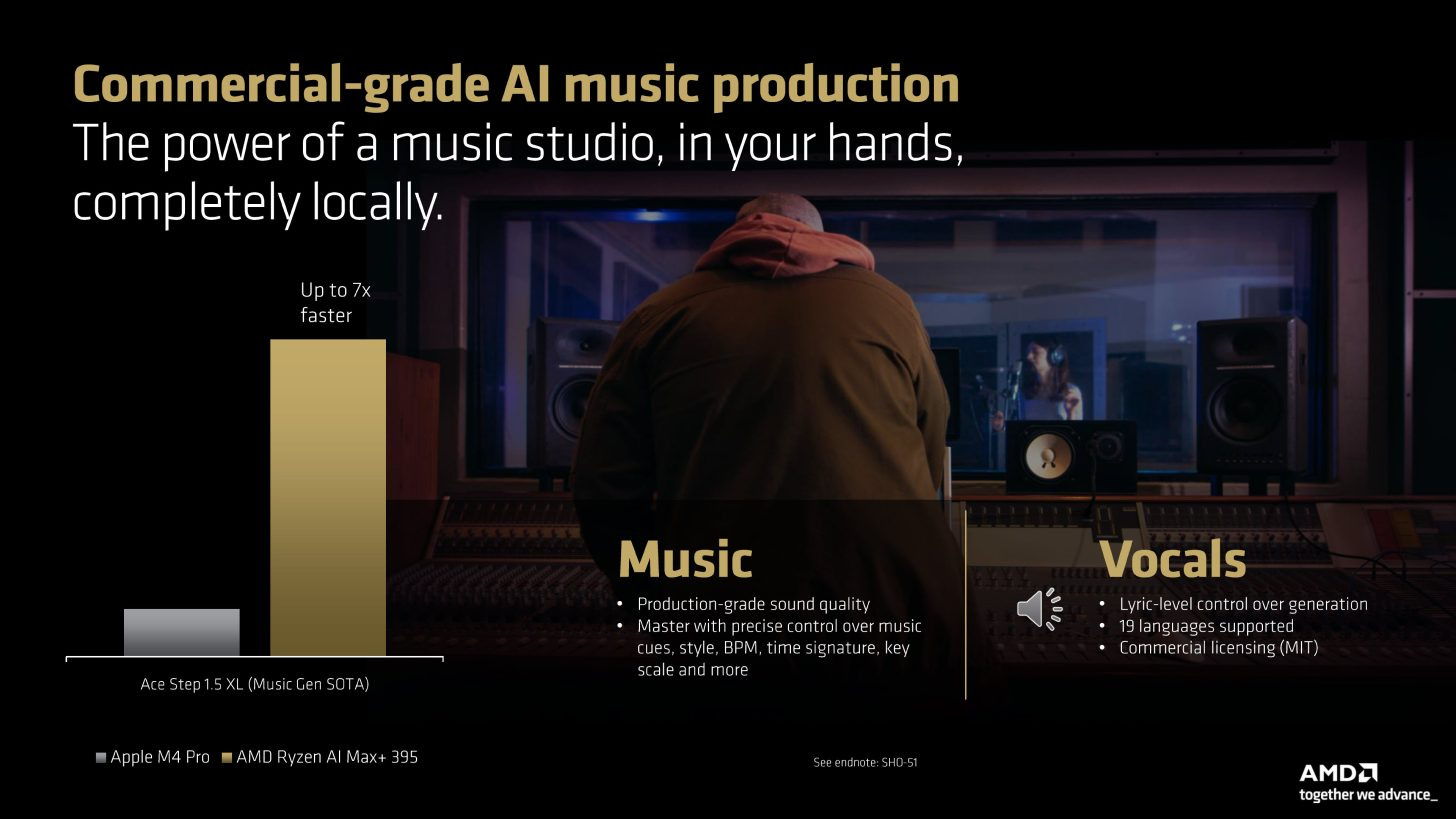
The company’s example assumes the Ryzen AI Halo system costs $3999 upfront and adds around $16.2 per month in electricity costs under a sustained 150 W draw, described as a worst case scenario. By comparison, AMD estimates cloud AI services could cost around $750 per month, based on workloads reaching up to 31 million output tokens per month at 36 tokens per second or up to 385 million input tokens per month at 446 tokens per second, assuming 8 hours per day of usage.
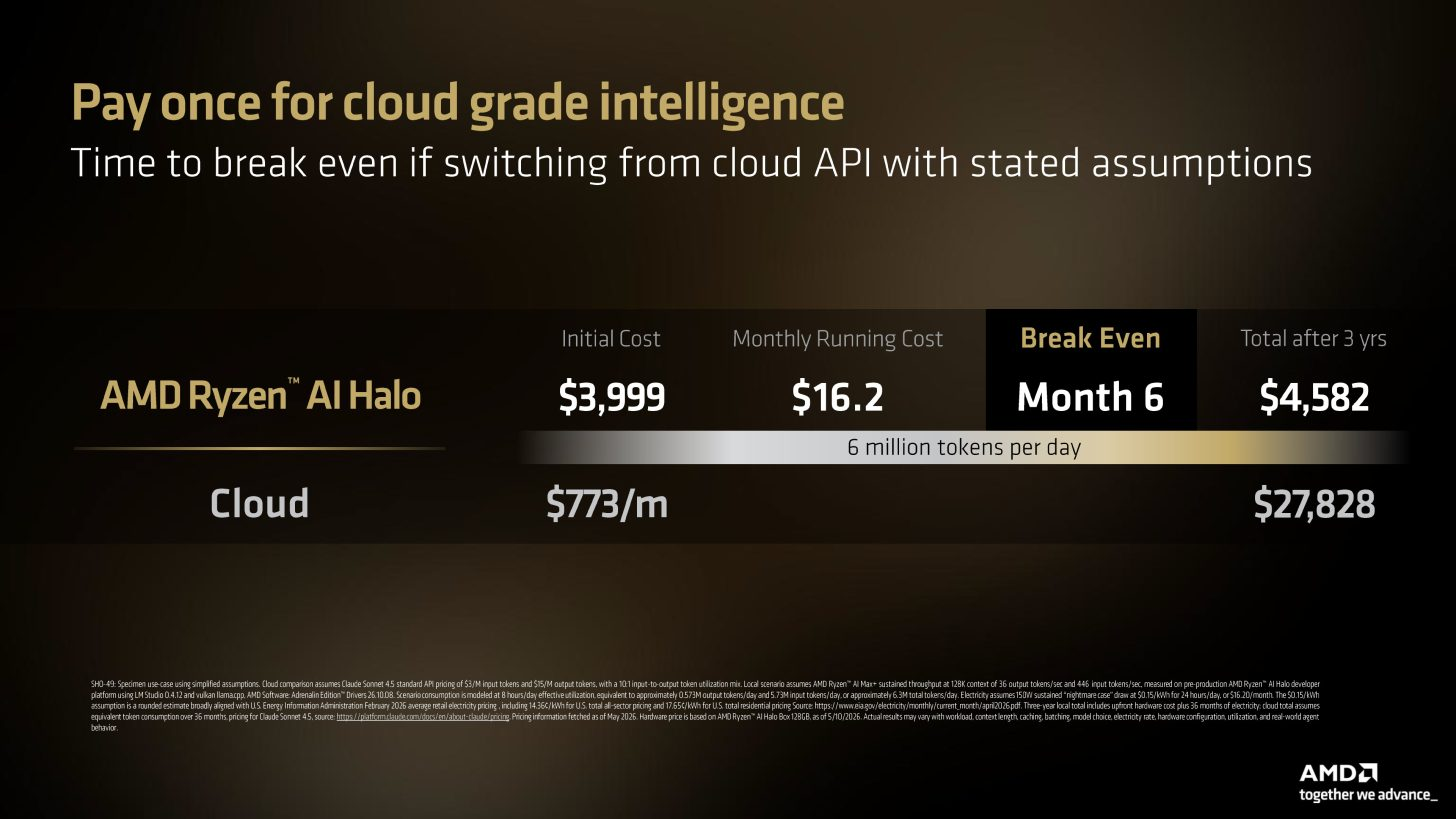
Based on those assumptions, AMD claims Ryzen AI Halo could reach break even in about 6 months. Over 3 years, AMD estimates the local platform would cost roughly $4500 to $4600, compared with more than $25000 for cloud services under the same usage model. This is a strong claim, but it depends heavily on each developer’s real workload, model choice, electricity cost, and cloud usage pattern.
AMD is already preparing an upgraded version as well. After the Ryzen AI MAX+ 395 based model opens for preorder in June 2026, AMD plans to introduce a newer Ryzen AI Halo variant using the Ryzen AI MAX+ PRO 495 around Q3 2026. That updated Gorgon Halo based model will increase memory support to 192 GB, enabling local support for 300B+ parameter models and giving developers more room for larger AI agents and heavier workflows.
The Ryzen AI Halo developer platform arrives at a moment when local AI is becoming more strategically important. Cloud AI remains essential for frontier scale models, but developers increasingly want local systems that can run meaningful models privately, reduce cost, improve iteration speed, and support offline experimentation. AMD’s strategy is clear: bring AI, graphics, and compute into a compact x86 platform with enough unified memory to make serious local AI work practical.
At $3999, Ryzen AI Halo is not a mainstream mini PC. It is a developer platform aimed at AI builders, workstation users, creators, and technical teams that need a local alternative to constant cloud compute. If AMD’s claimed tokens per dollar advantage, ROCm support, and model compatibility hold up in real workloads, Ryzen AI Halo could become an important step in making local agentic AI development more accessible.
Would you invest in a local AI platform like Ryzen AI Halo to reduce cloud costs, or do you still prefer cloud services for large model development?
