
AMD Launches EPYC 2005 “Zen 5” Embedded CPUs with Up to 16 Cores, 45–75W TDP, and Higher Clock Speeds Than Intel’s Xeon Embedded Line
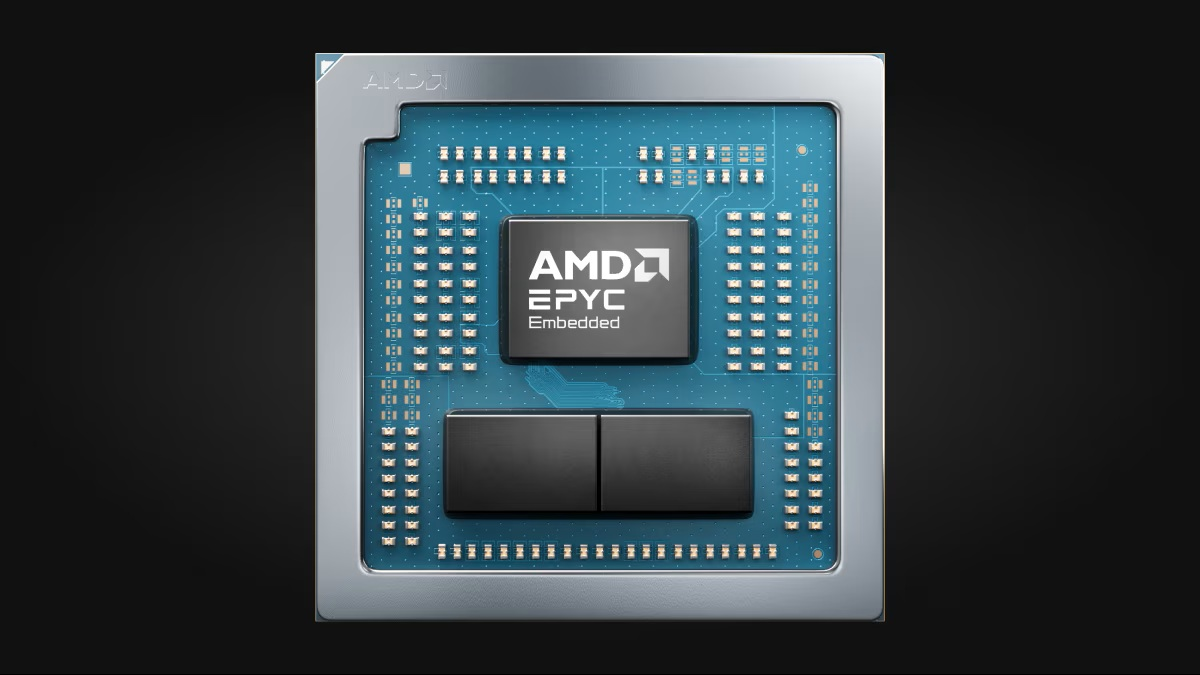
AMD has officially introduced its new EPYC 2005 Embedded Series, a compact, power efficient lineup based on the Zen 5 architecture designed for next generation embedded, networking, storage, aerospace, and industrial systems. With up to 16 Zen 5 cores, boost clocks reaching 4.5 GHz, and configurable TDP ranges between 45W and 75W, the EPYC 2005 Series positions itself as a direct challenger to Intel’s Xeon 6000B embedded processors across both performance and efficiency metrics.
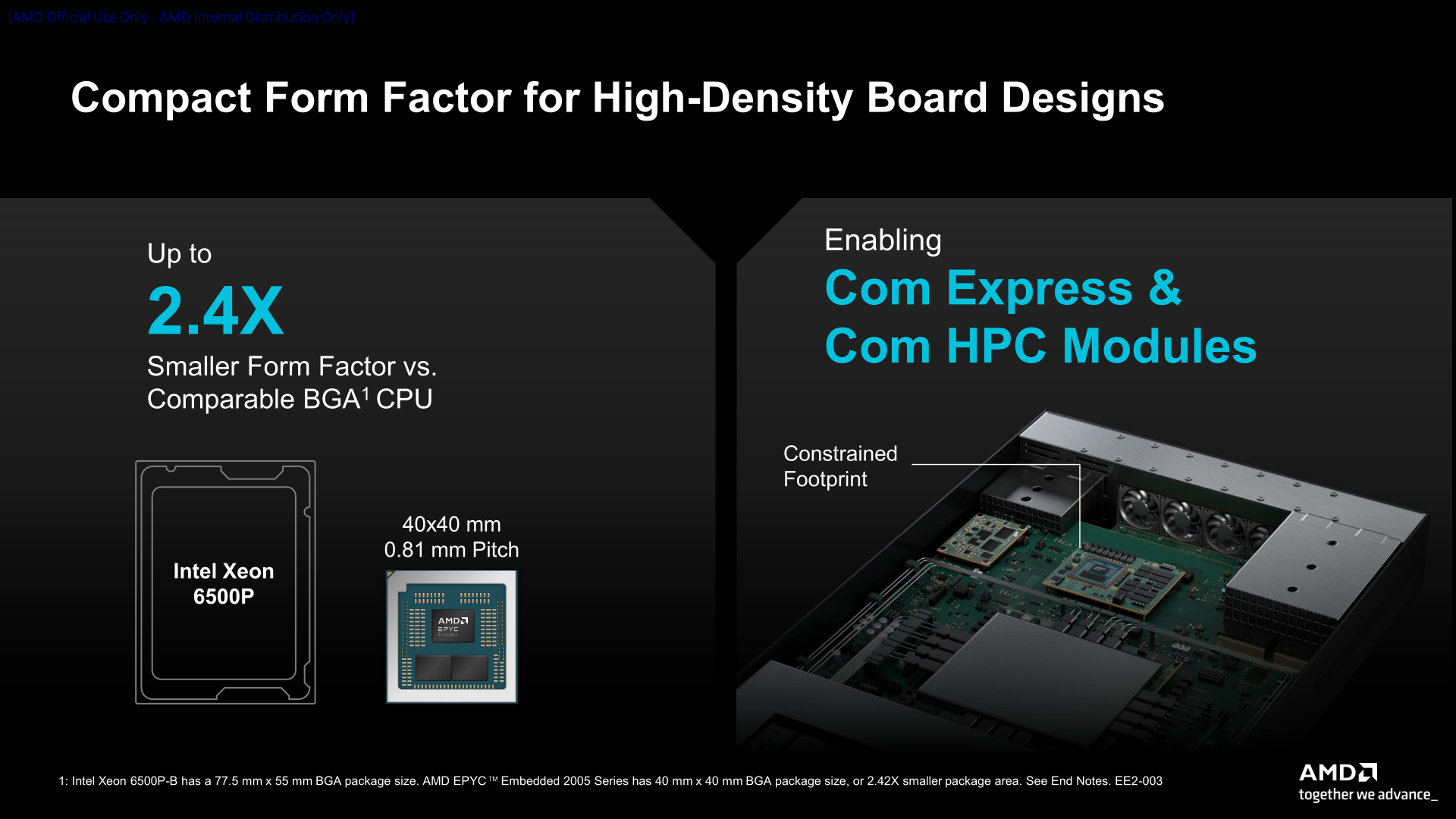
AMD’s announcement highlights how AI driven workloads are reshaping requirements for embedded infrastructure, demanding higher compute density, stronger per watt efficiency, robust reliability, and long lifecycle deployment in increasingly compact system designs. The EPYC 2005 Series targets precisely these needs, leveraging Zen 5 performance within a small 40mm × 40mm BGA package that is 2.4 times smaller than comparable Intel Xeon 6500P B offerings.
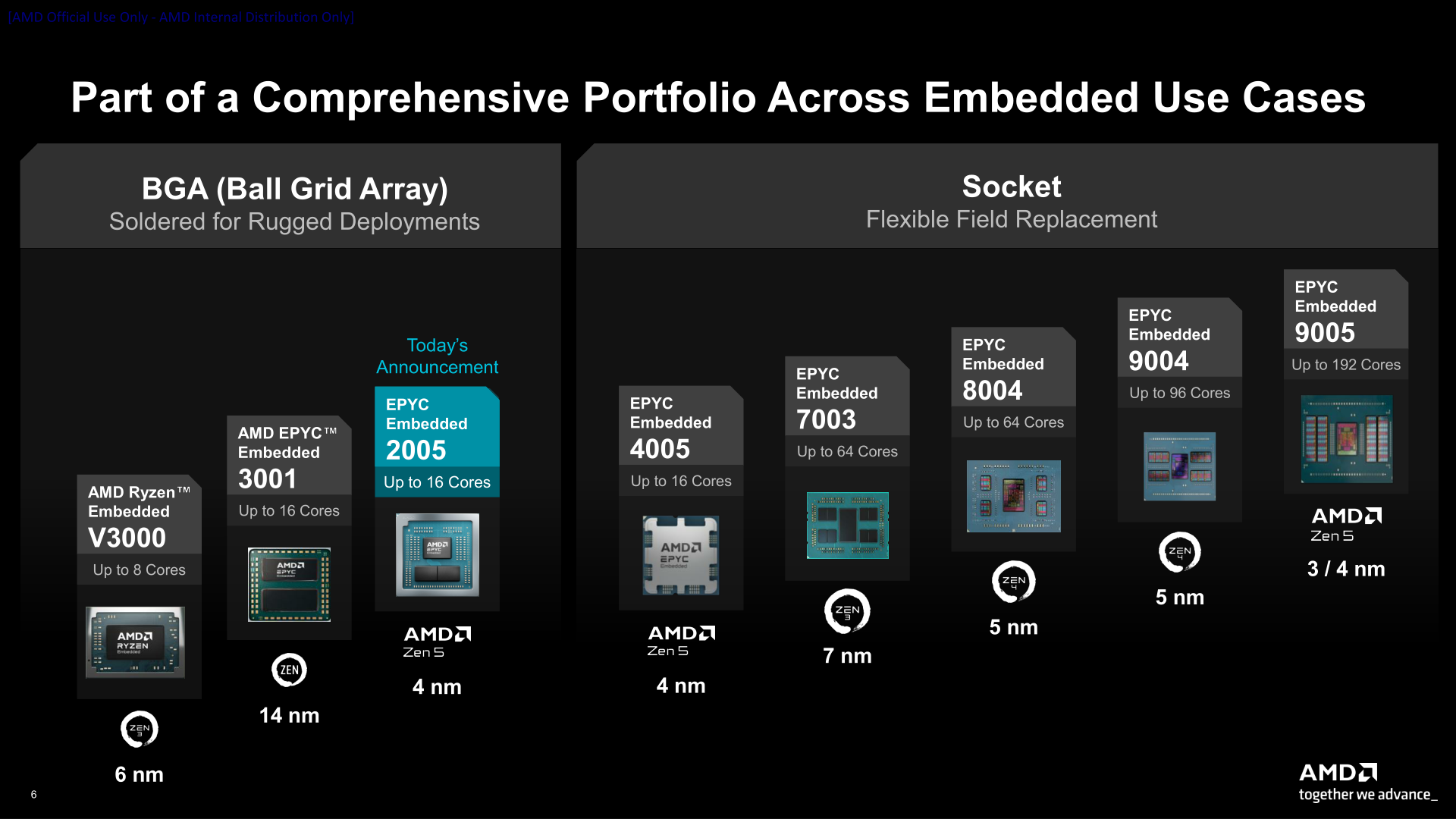
Compact Footprint with High Performance Density
Designed for continuous 24/7 operation across networking, cloud storage, aerospace systems, robotics, and industrial automation, the EPYC 2005 Embedded processors integrate up to 16 x86 cores and 64 MB of shared L3 cache, while offering developers the ability to fine tune power envelopes between 45W and 75W. This combination of frequency scaling, efficient power curves, and high I/O bandwidth makes them particularly suitable for thermally constrained configurations.
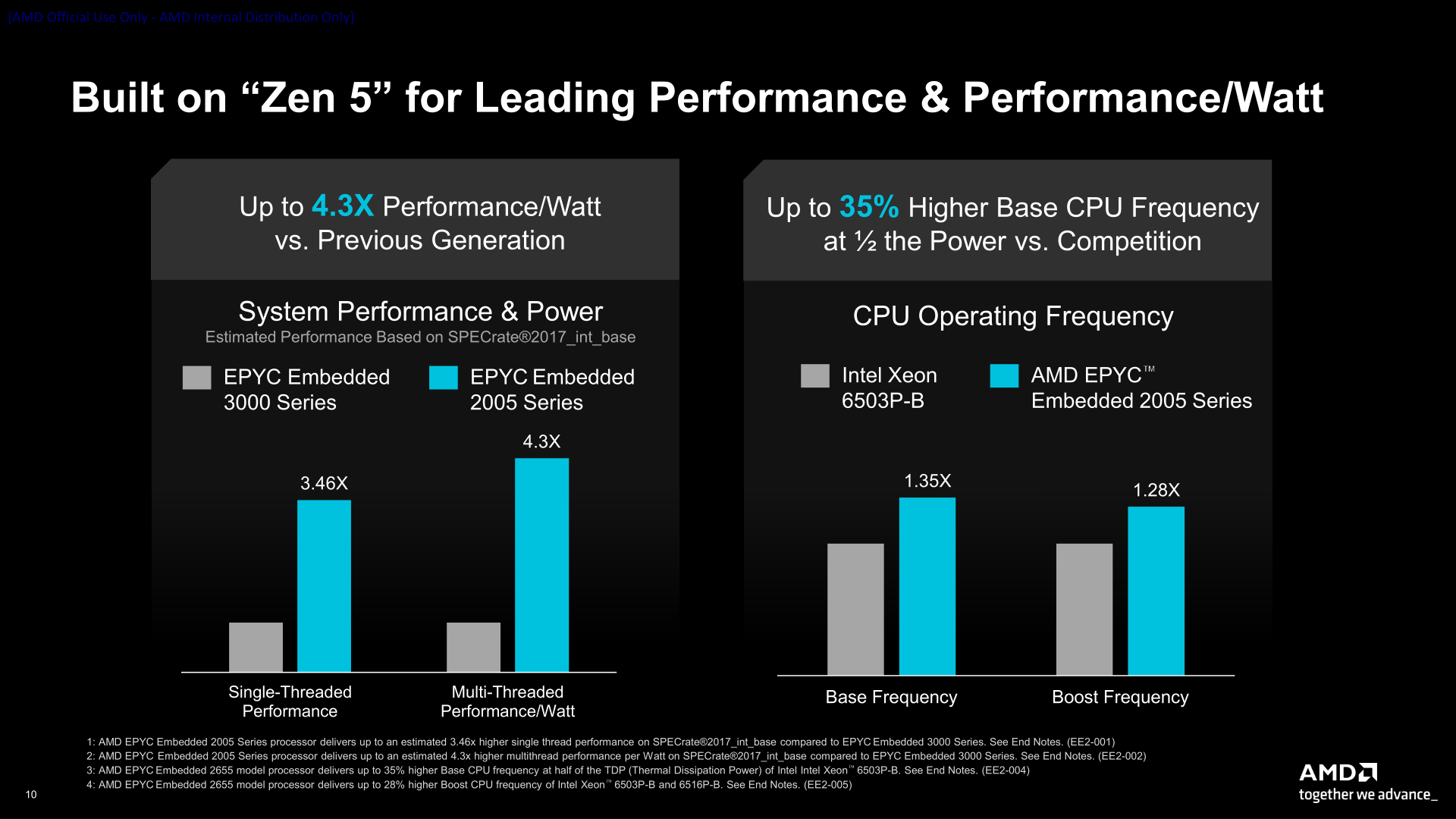
A comparison table provided by AMD outlines three key models:
| Name | CPU Base Freq. | CPU Max Freq. | # of CPU Cores | # of Threads | Total L3 Cache | TDP |
|---|---|---|---|---|---|---|
| AMD EPYC Embedded 2875 | 3 GHz | 4.5 GHz | 16 | 32 | 64 MB | 75 W |
| AMD EPYC Embedded 2655 | 2.7 GHz | 4.5 GHz | 12 | 24 | 64 MB | 55 W |
| AMD EPYC Embedded 2435 | 2.8 GHz | 4.5 GHz | 8 | 16 | 32 MB | 45 W |
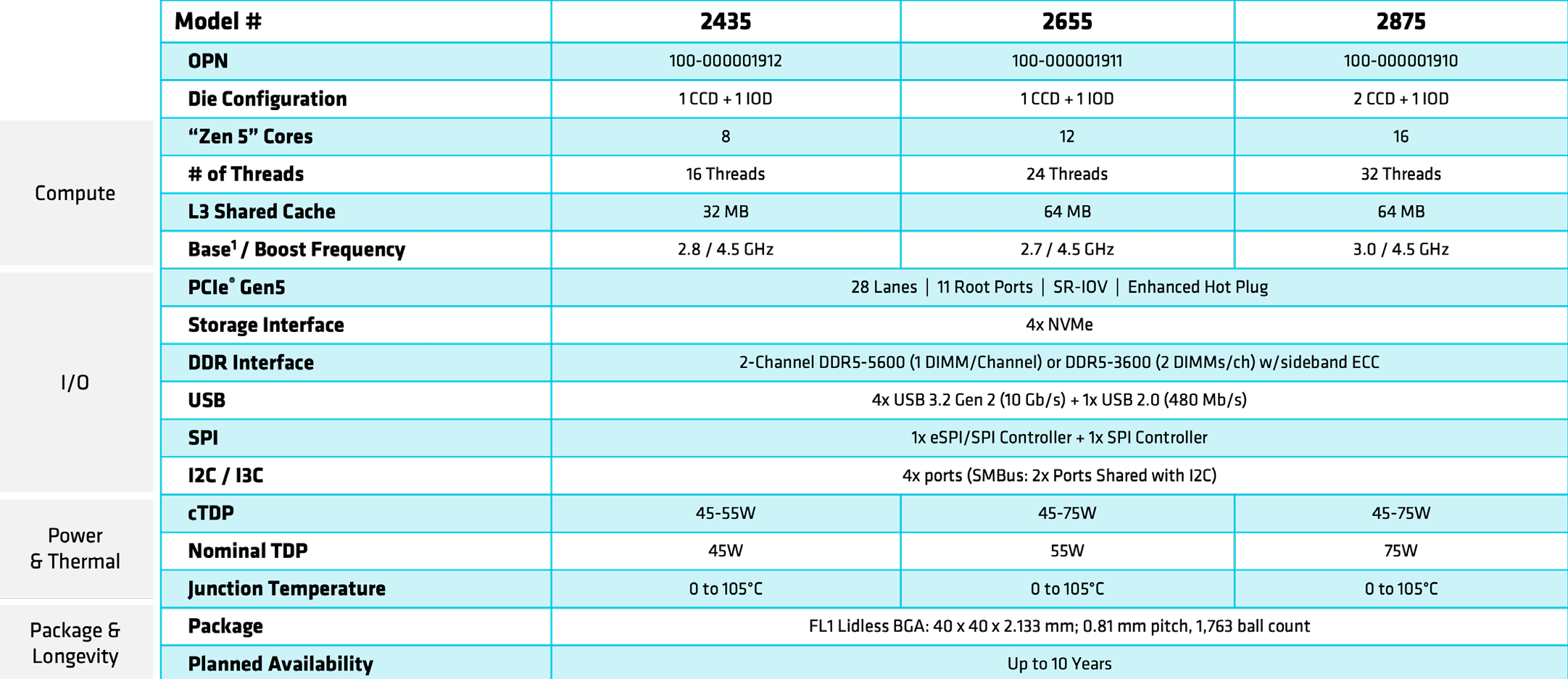
According to AMD, the EPYC 2005 Series delivers up to 28% higher boost frequency and 35% higher base frequency than Intel’s Xeon 6503P B while operating at half the TDP. This allows system builders to reduce total cost of ownership, enhance performance density, and maintain cooler operating conditions.
Scalable Connectivity and Open Software Ecosystem
The series provides 28 lanes of PCIe Gen5 enabling integration with high speed NICs, FPGAs, NVMe storage, and networking ASICs. Up to 16 lanes can be aggregated for unified high throughput applications. DDR5 memory support further increases bandwidth and ensures a forward compatible migration path as DDR4 phases out.
A diagram accompanying AMD’s release illustrates the chiplet layout consisting of a central I/O die flanked by two Zen 5 CCDs, connected to PCIe Gen5, DDR5 channels, and NVMe devices. This configuration reinforces the modular and scalable design philosophy behind the platform.
Enabling Next Generation Embedded Infrastructure
AMD positions the EPYC 2005 Embedded Series as a foundational component for developers preparing for the next generation of AI enabled industrial systems. The processors deliver long term availability, enhanced reliability, hardware level security, and extended lifecycle support, making them suitable for mission critical deployments.
With Zen 5 performance, PCIe Gen5 connectivity, DDR5 bandwidth, and significantly improved frequency to power efficiency ratios, the EPYC 2005 Series sets a new competitive benchmark in the embedded CPU market while challenging Intel’s Xeon 6000B series on nearly every front.
Do you think AMD’s new Zen 5 embedded lineup will shift momentum away from Intel in networking and industrial compute deployments?
