
AMD Is Rumoredly Prioritizing 8 GB Radeon GPUs as Board Partners Prepare Another Price Hike
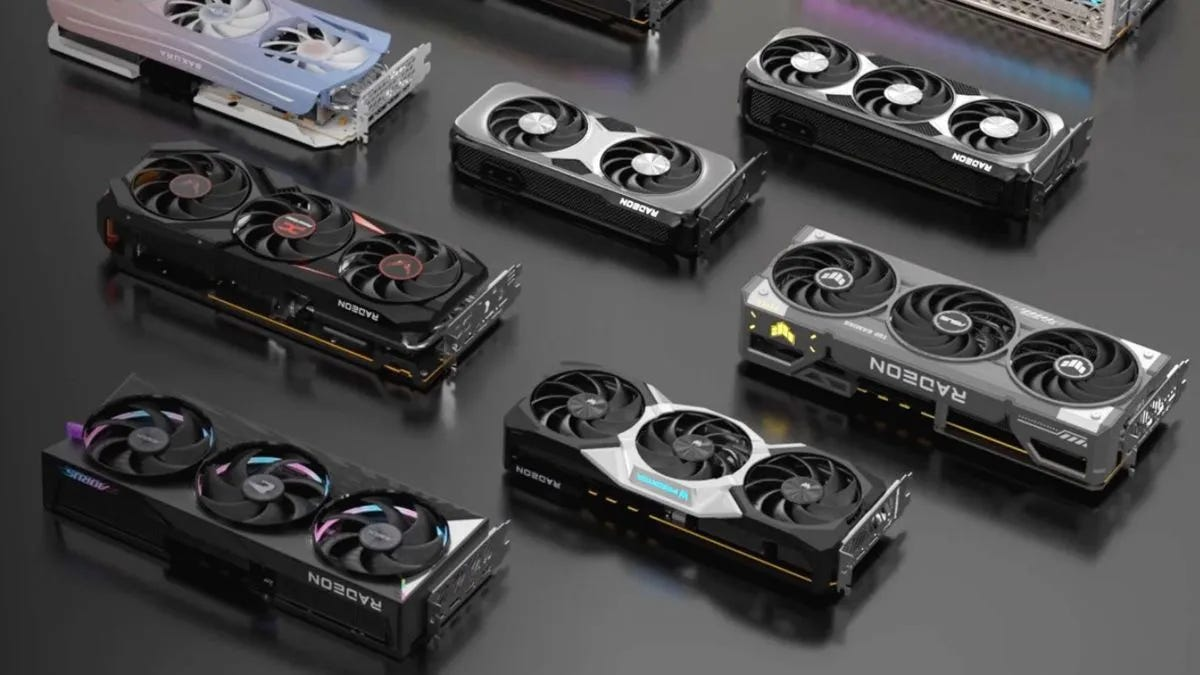
AMD graphics cards could be headed for another round of price increases, and the timing could not be worse for players who have been waiting for the midrange market to normalize. A new update shared by Board Channels indicates that AMD board partners are preparing a second price hike soon, after an earlier increase of roughly 5% to 10% in 01 2026. If this plays out as described, it adds yet another layer of pricing pressure on RDNA 4 Radeon parts and could narrow the value gap that AMD has relied on to stay competitive against NVIDIA’s GeForce lineup. According to Board Channels, AMD board partners are moving to raise prices again to better align with competing NVIDIA products.
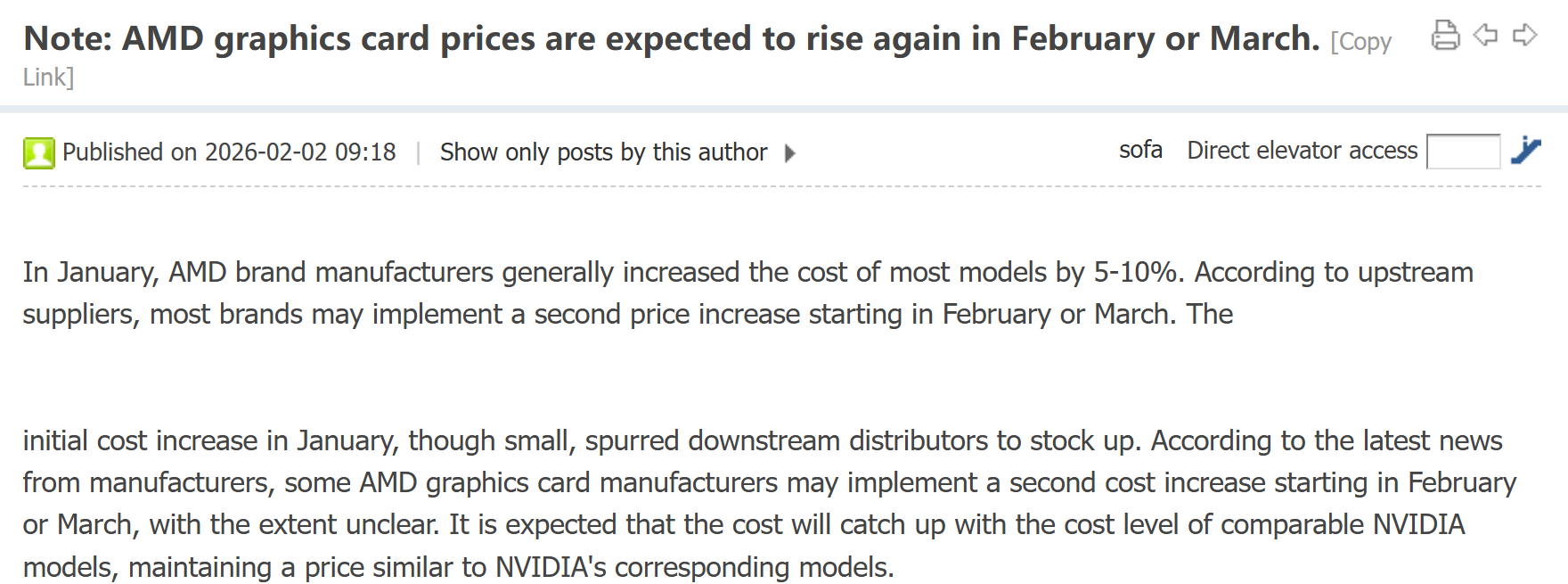
The concern here is not just a small uplift. It is the potential knock on effect across the full stack, including popular price sensitive options. If AMD pricing climbs to track NVIDIA’s current market reality, cards such as Radeon RX 9060 XT and Radeon RX 9070 XT could land at levels that start to feel disconnected from what most gamers consider midrange value. This is particularly alarming in a market where competing products such as GeForce RTX 5060 Ti 16 GB are already showing up near 700$ in some regions, which redefines buyer expectations in the worst way.
What makes this report more strategically interesting is the second claim: AMD is rumored to be prioritizing 8 GB GPUs, similar to what has been reported for NVIDIA’s GeForce RTX 50 series supply strategy. The logic is straightforward. Memory costs are becoming a larger driver of bill of materials, and if DRAM and related memory pricing is spiking, manufacturers have a natural incentive to push higher volume allocations toward lower VRAM configurations. In the report’s framing, DRAM pricing pressure has become so extreme that both AMD and NVIDIA are struggling to hold close to MSRP, leading them to favor 8 GB models.
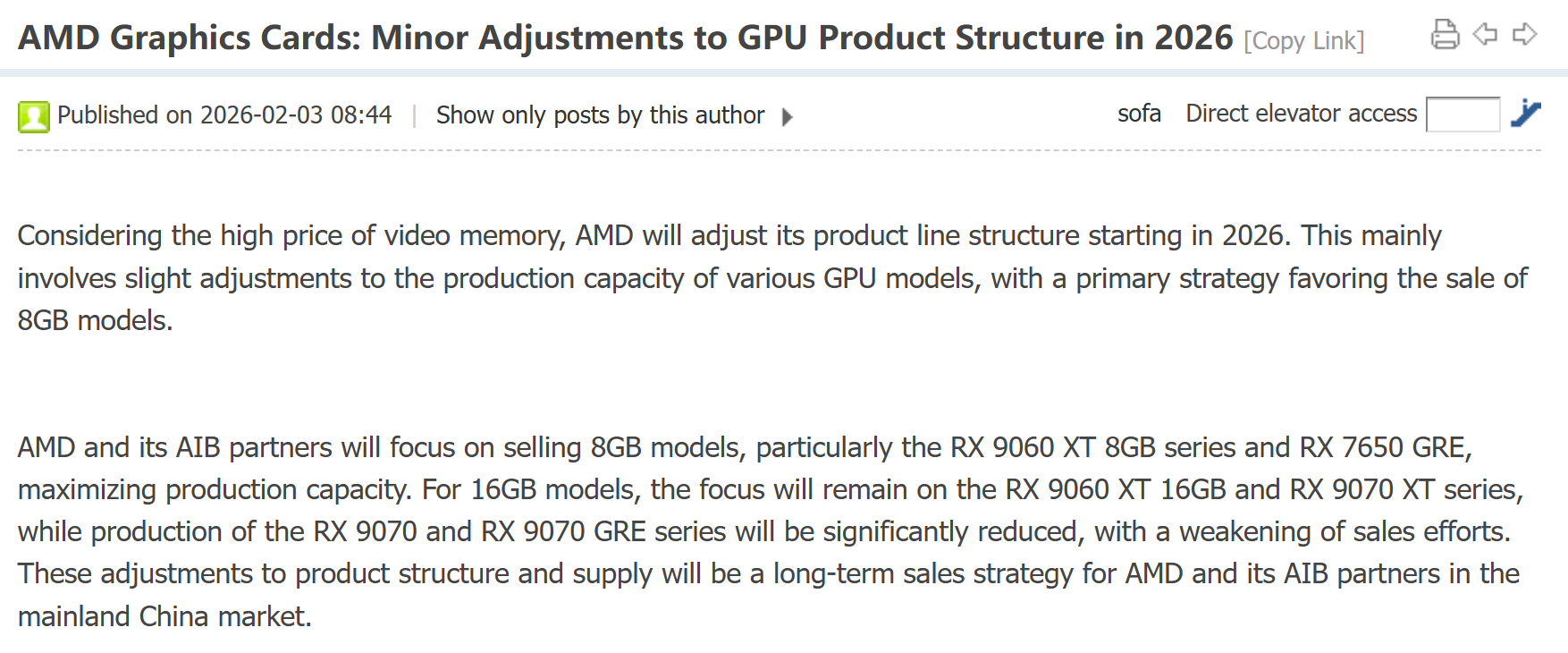
Board Channels suggests AMD will focus more heavily on Radeon RX 9060 XT 8 GB, while also leaning on older generation inventory, including the RDNA 3 based Radeon RX 7650 GRE. The RX 7650 GRE is notable because it began life as a China focused SKU, and a wider push of that part would indicate AMD is looking for additional levers to keep units moving while the market absorbs these new price realities.
For gamers, the practical takeaway is that the midrange could become even more polarized. If 16 GB models become materially more expensive due to memory costs and partner pricing, buyers will be pushed toward 8 GB cards by default, even when 16 GB is the smarter long term purchase for modern game memory footprints, higher texture settings, and future releases. That shift does not just impact today’s buying decisions. It shapes how developers target PC configurations, how long GPUs remain viable at high settings, and how consumers perceive value in a market that is already strained.
None of this is confirmed by AMD publicly at this stage, and Board Channels reporting should be treated as supply chain directional insight rather than a final pricing list. But as a market signal, it aligns with a broader theme we are seeing across PC hardware in 2026: memory is increasingly the bottleneck that dictates product mix, availability, and the final shelf price.
If 8 GB GPUs become the default midrange option again due to pricing, would you still buy one in 2026, or are you holding out strictly for 12 GB or 16 GB even if it costs more?
