
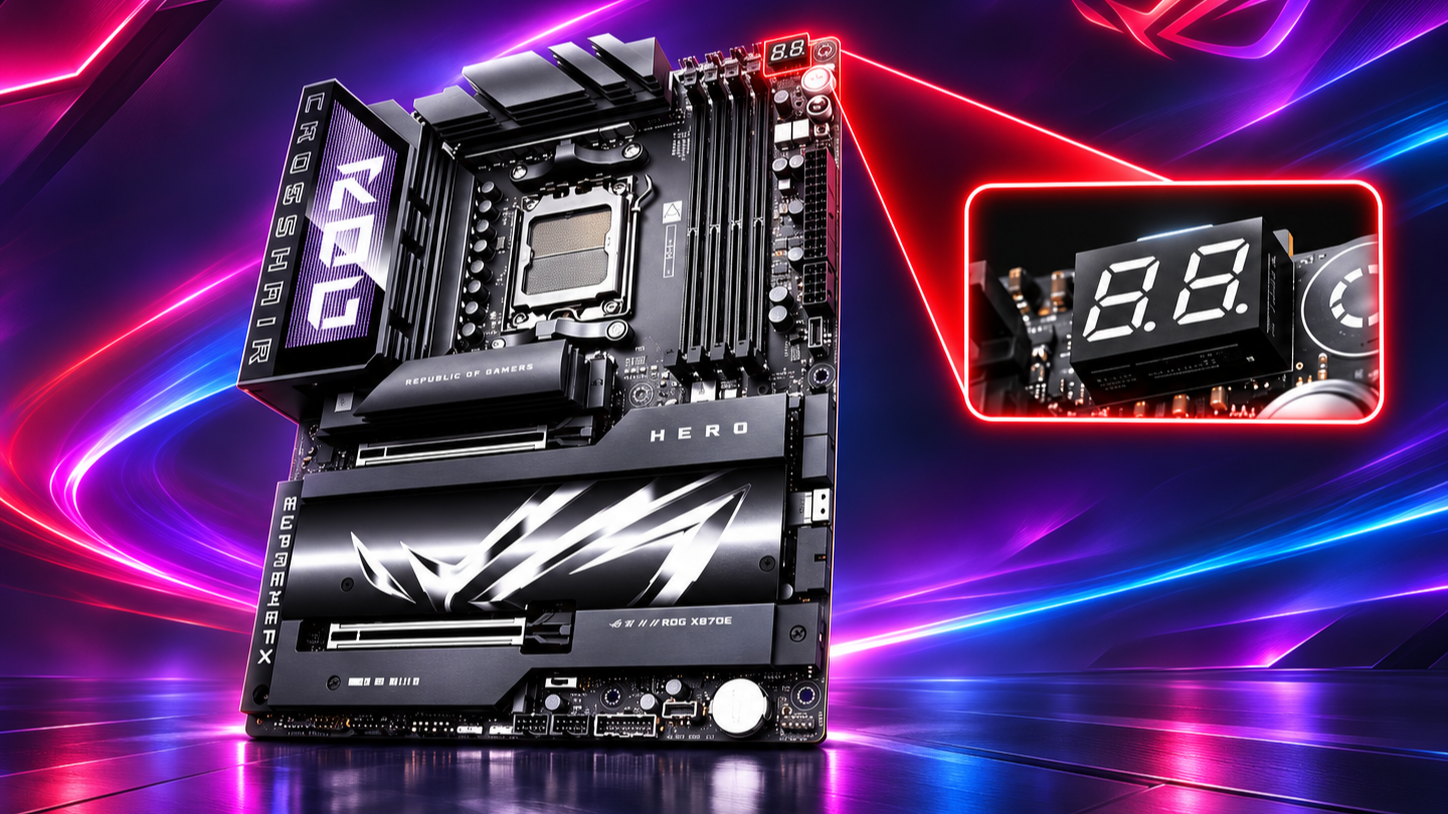
AMD is addressing one of the most frustrating aspects of its AM5 platform with a new DDR5 memory training method that provides visible feedback during system startup. The improvement arrives through AGESA ComboAM5 PI 1.3.0.1f Patch A, helping Ryzen users distinguish normal memory initialization from a frozen system.
According to ASUS's official BIOS documentation, the updated firmware introduces a new Q Code sequence that displays numbers from 00 to 09, increasing approximately once per second before returning to 00 and continuing the normal boot process. This provides visual confirmation that the motherboard is actively initializing memory rather than experiencing a system failure.
DDR5 memory training is a necessary process in which the motherboard and processor memory controller calibrate communication timings and signal parameters to establish stable operation. The procedure can take considerably longer after installing new memory, updating the BIOS, or changing AMD EXPO settings, particularly with high capacity modules and aggressive overclocking configurations.
Previously, some AM5 motherboards displayed static diagnostic codes during this process, leaving users uncertain whether their computers had frozen. This sometimes encouraged unnecessary restarts or troubleshooting. However, the new numerical sequence does not guarantee faster boot times or indicate that memory training finishes in 10 seconds, as the actual duration continues to depend on memory capacity, configuration, and processor characteristics.
The update is currently available through Beta BIOS releases for selected ASUS X870, X870E, and X670E motherboards, including ROG Crosshair, ROG Strix, TUF Gaming, and ProArt models. The visual indicator requires a motherboard equipped with a compatible diagnostic display. ASUS also warns users against importing older CMO BIOS profiles created with different AGESA versions, recommending that memory settings be reconfigured and validated after updating.
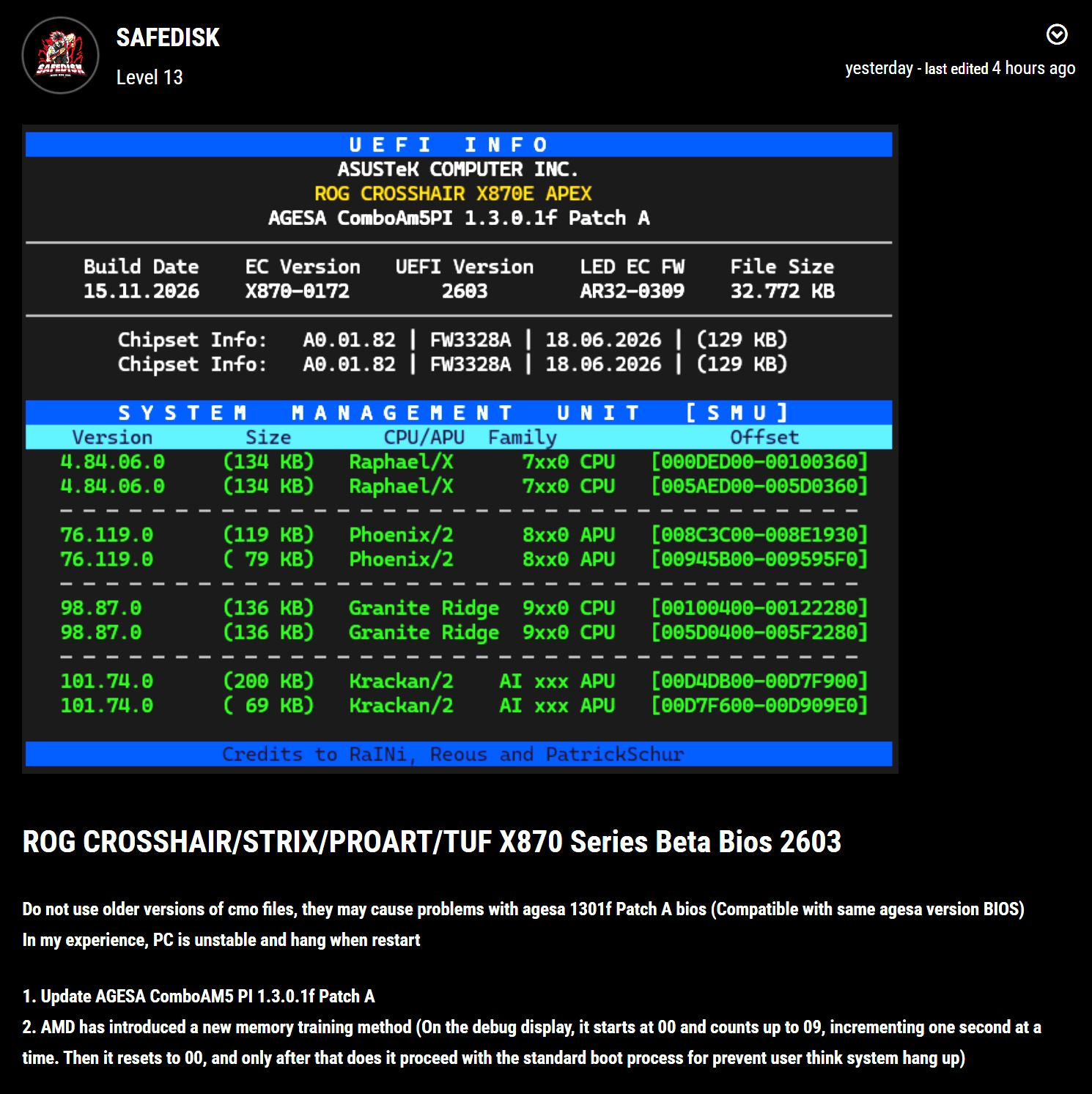
The development continues AMD's efforts to improve DDR5 reliability and compatibility across its AM5 platform, following previous ASUS BIOS updates targeting CXMT memory compatibility and latency optimization. Although the revised training method improves troubleshooting visibility, AMD and motherboard manufacturers have not demonstrated significant performance or boot time improvements from this change.
AMD's latest AGESA update delivers a practical quality of life improvement for Ryzen owners, particularly enthusiasts working with high capacity DDR5 kits and custom memory configurations. Memory training has been a source of confusion since AM5 launched, and providing clearer diagnostic feedback is a welcome improvement.
However, AMD should continue prioritizing faster memory initialization, improved stability, and broader compatibility rather than relying exclusively on better diagnostic indicators. For PC gamers and system builders, reliable startup behavior should be a fundamental feature of modern hardware, especially on premium motherboards.
Have you experienced long DDR5 memory training times on AMD AM5, and would you prefer faster boot times or improved diagnostic information?
