
AMD EXPO 1.2 Support Lands on ASUS X870 Motherboards With CUDIMM and Low Latency DDR5 Memory Ready
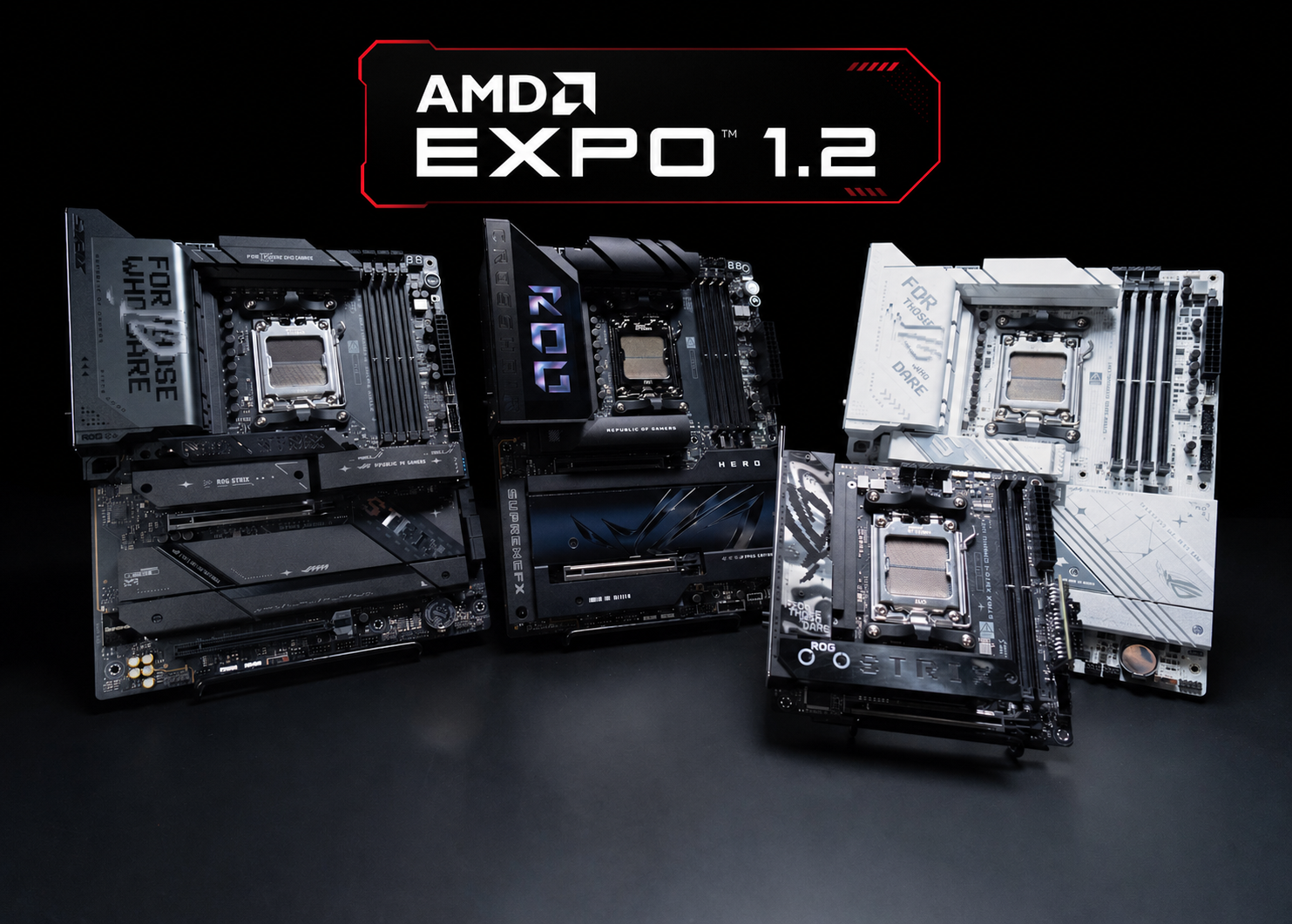
ASUS has become the first motherboard maker to roll out early AMD EXPO 1.2 support on its X870 motherboard lineup, marking an important step forward for faster DDR5 memory support on Ryzen AM5 platforms. The new support arrives through ASUS’s latest 2301 Beta BIOS releases, bringing early compatibility for AMD’s next generation memory profile standard ahead of future Ryzen processors and upcoming high performance DDR5 memory kits.
According to the official ASUS ROG forum post, the new Beta BIOS update introduces AMD EXPO 1.2 support across several X870 and X870E motherboards. This is especially relevant for enthusiasts, overclockers, memory vendors, and system builders preparing for the next stage of AM5 memory tuning. While EXPO 1.2 support is still in its early phase, ASUS moving first gives the ecosystem a major head start before Computex 2026, where more CUDIMM and ultra low latency DDR5 memory kits are expected to appear.
AMD EXPO was originally designed to provide optimized one click memory overclocking profiles for AMD platforms. While AM5 motherboards can support both EXPO and Intel XMP memory profiles, EXPO is tuned specifically for Ryzen platforms, helping users reach higher DDR5 speeds with validated timings and platform specific memory parameters. With EXPO 1.2, AMD appears to be preparing AM5 for the next wave of DDR5 development, including CUDIMM support and ultra low latency memory configurations.
ASUS’s early BIOS rollout is important because memory tuning has become one of the key battlegrounds for modern desktop platforms. Current AM5 boards have already improved significantly through newer AGESA firmware updates, allowing many DDR5 kits to push beyond 8000MT/s in certain configurations. On specific overclocking focused motherboards, Ryzen 8000G APUs have even shown support for memory speeds approaching or exceeding 10000MT/s, largely thanks to their stronger integrated memory controller.
The arrival of EXPO 1.2 could help make these faster profiles more accessible and more consistent across future AM5 systems. For users, this means better plug and play memory optimization. For memory brands, it opens the door to new DDR5 kits tuned specifically for AMD platforms. For motherboard vendors, it gives them another way to differentiate premium X870 and X870E boards through BIOS maturity, memory trace layout, and overclocking support.
The biggest technical highlight is expected CUDIMM support on AM5. CUDIMM memory uses an onboard clock driver to improve signal integrity at higher frequencies, which becomes increasingly important as DDR5 continues scaling beyond today’s mainstream speeds. On Intel platforms, CUDIMM has already become a major discussion point for high frequency DDR5 overclocking. With EXPO 1.2, AMD is now preparing its own AM5 ecosystem to support similar memory advancements.
Ultra low latency DDR5 support is another major part of the EXPO 1.2 story. For gaming and content creation, memory frequency is only one side of the performance equation. Latency, subtimings, stability, memory training behavior, and platform level BIOS optimization all play important roles in real world performance. If EXPO 1.2 enables more refined low latency tuning for Ryzen systems, it could deliver meaningful benefits for gamers chasing higher frame rates and professionals working with latency sensitive workloads.
The timing is also important because AMD’s next generation Ryzen Zen 6 CPUs are expected to benefit from more mature AM5 memory support. Faster DDR5 standards, better memory training, and broader CUDIMM compatibility could help extend the life of the AM5 platform while giving users another reason to invest in high end X870 and X870E motherboards.
For ASUS, being first to release early EXPO 1.2 BIOS support is a strong signal to the enthusiast community. The company’s ROG Crosshair, ROG Strix, TUF Gaming, and ProArt X870 boards now have a head start in preparation for next generation DDR5 kits. This also gives memory vendors and overclockers an early testing base before new EXPO 1.2 ready kits arrive.
However, users should remember that these are Beta BIOS releases. Early adopters may gain access to new features sooner, but Beta firmware can also carry stability risks. Users who depend on their system for professional work should proceed carefully, check motherboard specific feedback, and only update if they need EXPO 1.2 support or are comfortable testing early firmware.
Overall, ASUS’s rollout of AMD EXPO 1.2 support marks an important step for Ryzen memory development. AM5 has already matured significantly since launch, and the addition of CUDIMM and ultra low latency DDR5 readiness could push the platform into its next performance phase. With Computex 2026 expected to bring new memory kits and more vendor announcements, EXPO 1.2 may become one of the key technologies to watch for the next generation of AMD desktop performance.
Will AMD EXPO 1.2 and CUDIMM support make AM5 more competitive for high frequency DDR5 memory tuning, or do you think most gamers will still prioritize lower latency over peak memory speed?
