
AMD Acquires MEXT To Tackle AI Datacenter Memory Bottlenecks
AMD is strengthening its AI infrastructure portfolio by acquiring MEXT, a memory optimization company focused on making flash behave more like DRAM for large scale compute deployments.
AMD has announced the acquisition of MEXT, a company developing AI driven predictive memory technology for datacenter infrastructure. According to AMD, the deal is designed to help customers improve performance, reduce total cost of ownership, and accelerate time to deployment as memory becomes one of the biggest limits in modern AI systems.
The idea behind MEXT is not to replace DRAM entirely. Instead, its technology uses flash storage as an expanded memory layer, predicting which memory pages should move between flash and DRAM so systems can increase usable memory capacity without relying only on expensive DRAM expansion.
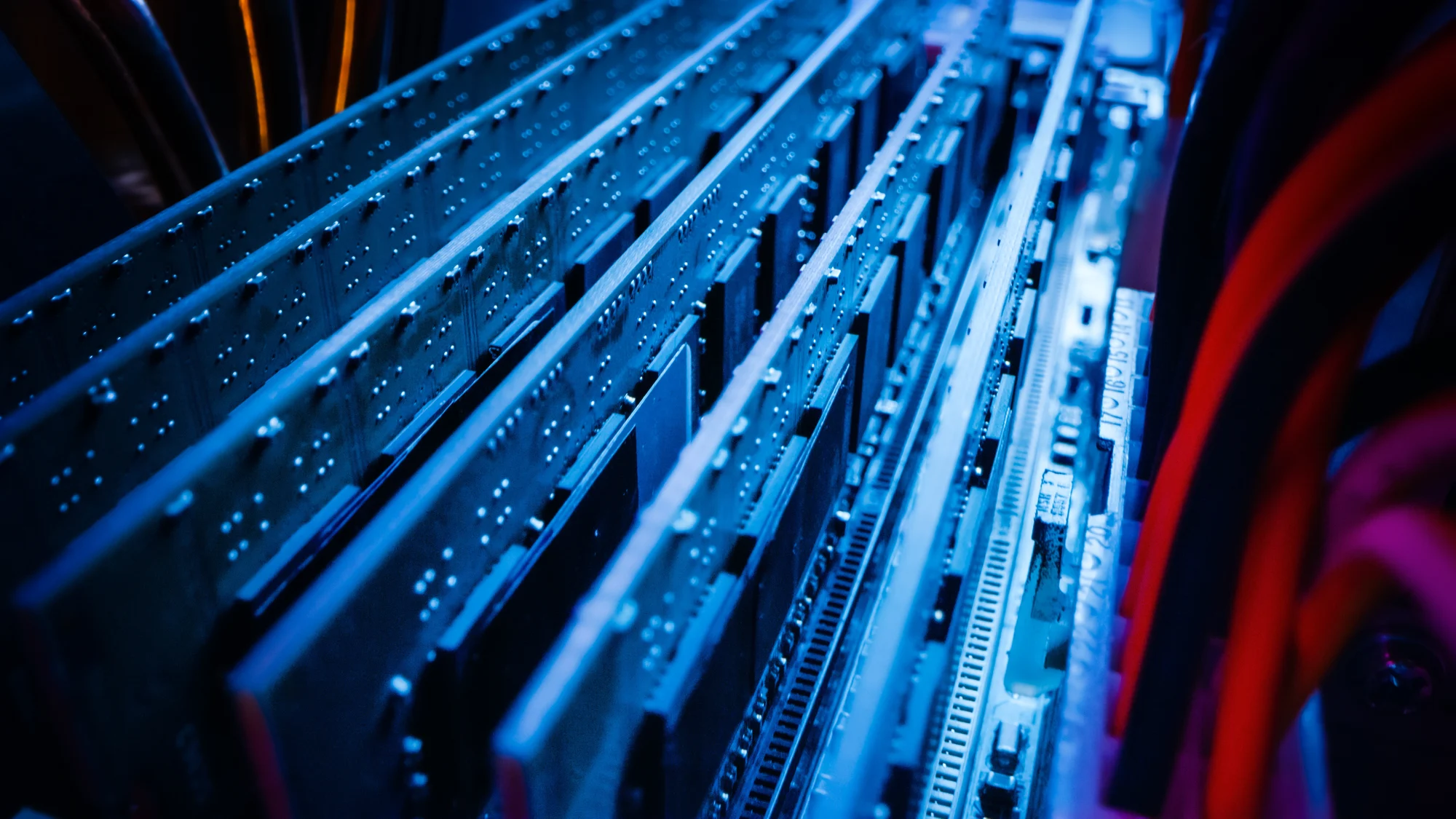
For AI datacenters, that matters. Agentic AI workloads, model serving, data analytics, virtualization, and high performance computing all require more memory as models grow and workloads become more complex. If AMD can integrate MEXT across its datacenter portfolio, customers may be able to scale workloads with better memory efficiency and lower infrastructure cost.
"Demand for memory is growing across every category of enterprise compute."
— Dan McNamara, AMD
AI infrastructure is no longer limited only by GPU performance. Memory capacity, memory access, power consumption, and system cost are now major bottlenecks.
MEXT says its Predictive Memory technology can let customers expand beyond existing DRAM limits by using flash as memory. The company positions the approach as a way to increase effective memory capacity while reducing dependence on costly DRAM. That fits directly into AMD’s current datacenter strategy. AMD is pushing its Instinct GPU roadmap, EPYC CPUs, ROCm software, and AI cloud partnerships, but memory efficiency is becoming just as important as compute density. This also connects with TensorWave expanding AMD Instinct MI355X infrastructure. As AMD powered AI deployments grow, the company needs more than raw accelerator performance. It needs a stronger platform story around memory, software, efficiency, and cost.
AMD acquiring MEXT is a practical move, not a flashy one.
This is not AMD entering the DRAM manufacturing business. It is AMD adding a memory optimization layer that could help customers get more value from existing infrastructure. That distinction is important. In AI datacenters, even small efficiency gains can matter because deployments are measured across thousands of nodes, huge power budgets, and massive operating costs. If MEXT can reduce memory pressure, improve utilization, and delay the need for additional DRAM, the savings can become meaningful at scale. The challenge will be integration. AMD needs to prove that MEXT’s technology works reliably across real enterprise workloads, AI inference, analytics, virtualization, and HPC environments. Customers will care about stability, latency, software transparency, and measurable TCO improvements.
Still, the timing is right. AI is forcing every chip company to think beyond compute. Memory is becoming one of the defining battles of the datacenter era, and AMD is clearly trying to strengthen its position before that bottleneck gets worse.
Do you think memory optimization technologies like MEXT can meaningfully reduce AI datacenter costs, or will companies still need much more DRAM and HBM to keep up?
