
Amazon Positions Itself Fully in the ASIC Race With New Trainium3 UltraServers and Next Generation Trainium4 Chips
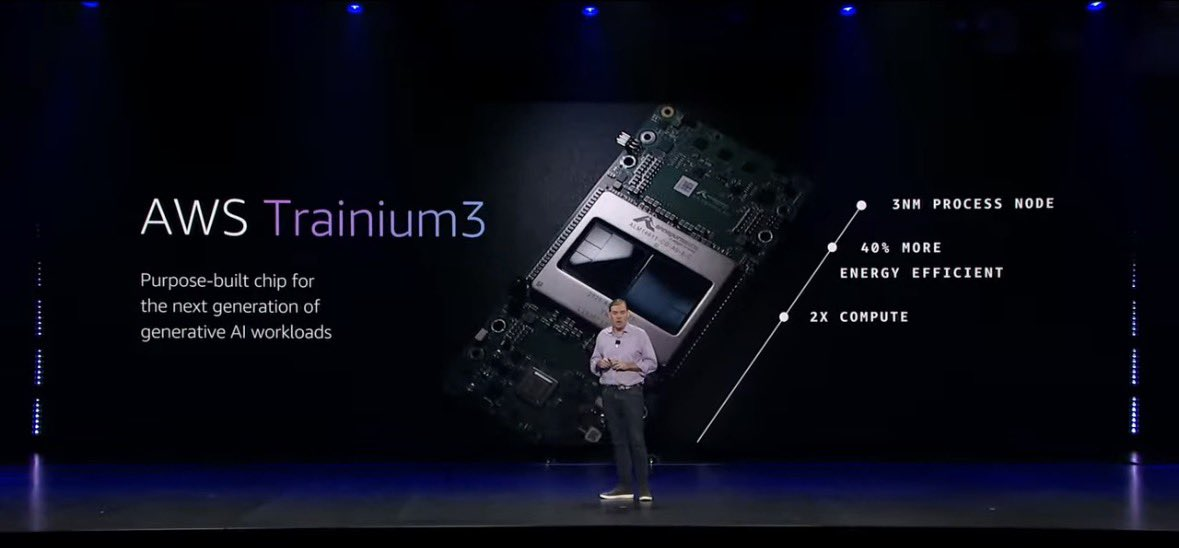
Amazon is expanding its presence in the increasingly competitive custom silicon market by showcasing its latest Trainium3 UltraServers and previewing the next generation Trainium4 accelerator lineup. The company is pushing forward with significant gains in compute performance, energy efficiency and memory bandwidth, reinforcing its commitment to becoming a serious competitor in the global ASIC ecosystem.
At AWS re Invent 2025, Amazon presented its newest system level advancement, the Trainium3 UltraServer platform. According to the company, the Trainium3 UltraServer configuration is capable of scaling up to one hundred and forty four Trainium3 chips inside a unified cluster. Amazon states that this design offers up to four point four times more compute performance, four times greater energy efficiency and almost four times more memory bandwidth compared to the previous generation.
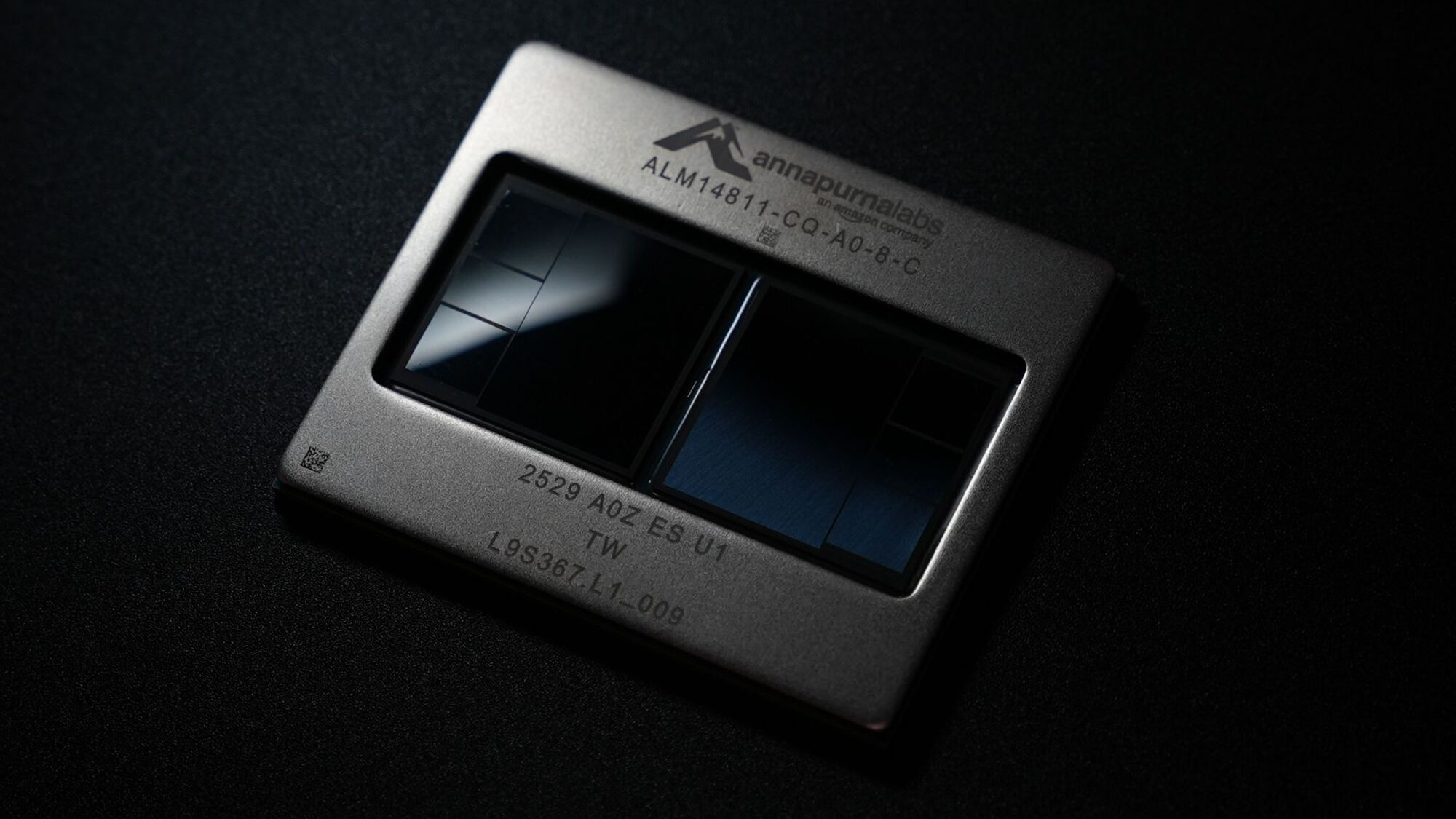
The Trainium3 UltraServer is designed to support extremely large scale AI workloads that previously would have been impractical or financially prohibitive. With up to four point four times more compute performance than Trainium2 UltraServers, the platform enables developers to shorten training cycles from months to weeks, process a higher volume of inference requests and reduce overall operational and time to market costs. The system also introduces the new NeuronSwitch v1 technology, which brings enhanced bandwidth and improved fabric networking. This solution is Amazon’s alternative to NVIDIA’s NVLink interconnect and is designed to scale Trainium clusters up to one million chips. According to the company, this level of scaling can support training on trillion token datasets and provide significantly expanded inference capabilities.
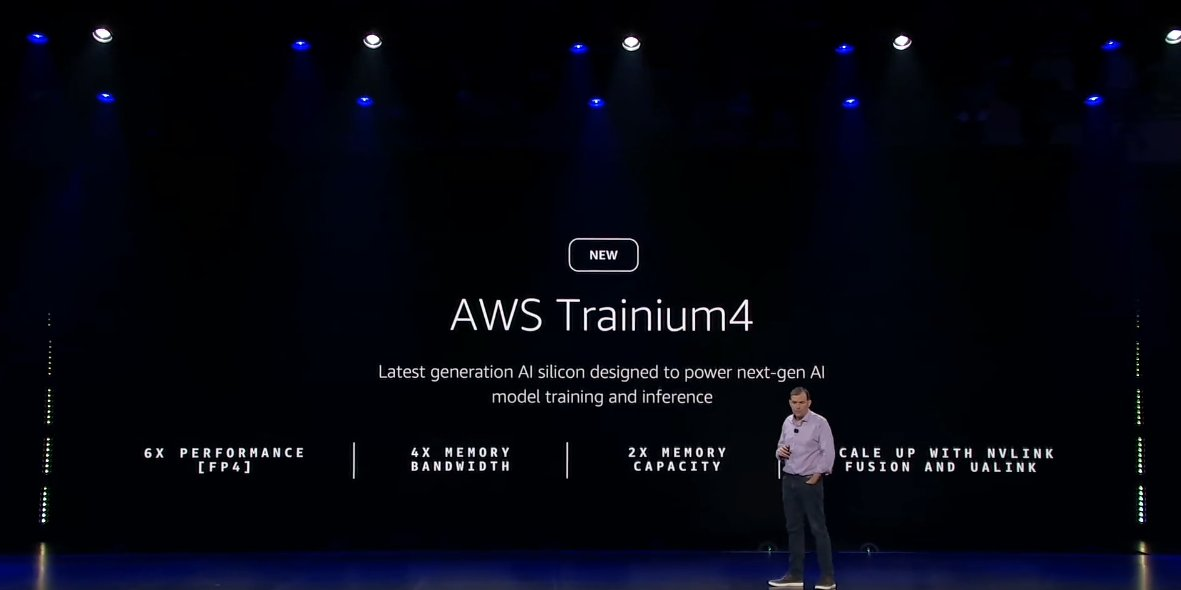
Amazon also provided an early look at the next generation Trainium4 processors. These new chips are expected to deliver six times higher FP4 performance, as well as major improvements in memory bandwidth and memory capacity. A particularly noteworthy development is the announcement that Trainium4 will support NVIDIA NVLink. This integration means customers who already run NVIDIA accelerated infrastructure will be able to extend their clusters by incorporating Trainium hardware, enabling mixed platform scaling between Amazon and NVIDIA solutions.
Early field reports indicate substantial interest in Amazon’s custom AI processors. Companies such as Anthropic have reported lower training costs after utilizing the Trainium family. Amazon has hinted that external demand for both its compute platforms and its custom silicon expertise continues to increase as enterprises explore alternatives to traditional GPU dominated environments.
With Google pushing forward with TPU development and other major cloud providers accelerating their own ASIC strategies, Amazon’s commitment to Trainium3 and Trainium4 demonstrates a clear determination to remain deeply competitive in the next generation compute market. As model sizes continue to grow and hardware availability becomes a global priority, the race to deliver the most efficient, scalable and cost effective AI accelerators is intensifying.
Do you think Amazon’s Trainium platform can compete directly with NVIDIA and Google’s custom silicon, or will mixed infrastructure become the new industry standard
