
AI Will Become the Best Reshade Filter, but This Witcher 3 AI Remake Shows Both the Promise and the Limits
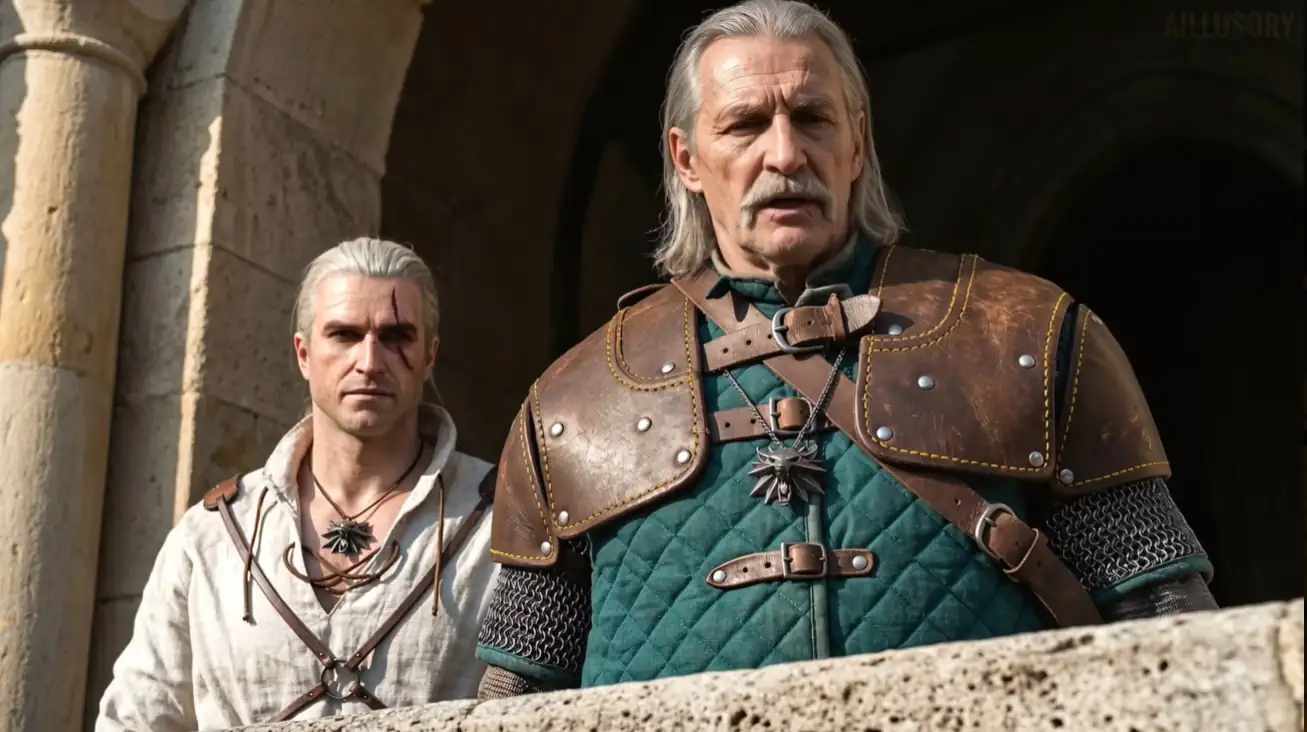
Artificial intelligence continues to accelerate across creative industries, and video game development is no exception. Publishers and studios are actively exploring AI driven workflows, even as concerns remain around inconsistent results, creative dilution, and the long term impact on human artists and developers. Yet when applied with restraint and a clear artistic goal, AI can still deliver striking results. A recent fan made project centered on The Witcher 3 Wild Hunt demonstrates both the potential and the clear boundaries of AI driven visual enhancement.
The project in question was created by Aillusory and is titled The Witcher 3 but it’s AI slop Reimagined by AI. Despite the intentionally self critical framing, the work applies AI based visual processing to captured footage from CD Projekt RED’s acclaimed RPG, transforming environments and characters into a more photorealistic presentation. Nearly every visual layer has been reinterpreted, from landscapes and architecture to character models and lighting.
While the results are not flawless, they are consistently impressive. The AI reconstruction largely preserves the original art direction that defines The Witcher 3, while layering in a more realistic texture and lighting treatment. Rather than replacing the game’s identity, the AI behaves more like an advanced visual overlay, enhancing fidelity without fully erasing the source material’s aesthetic DNA.
Viewer reaction has been overwhelmingly positive. One comment in particular has resonated with the broader discussion around AI in games. A YouTube user summarized the sentiment succinctly by stating that AI will first become the best reshade filter before it is used to make games. After watching the AI remake showcase video, it is easy to understand why. The project reinforces the idea that AI excels when used as a post processing or enhancement layer rather than as a replacement for human led art direction and design.
Despite the excitement surrounding this unofficial remake, an official AI powered overhaul of The Witcher 3 developed by CD Projekt RED remains unlikely in the near future. The original release has aged gracefully, and its visual quality continues to improve thanks to the long standing efforts of the modding community. Renowned modder Halk Hogan recently confirmed that a new version of the HD Reworked Project is planned for release in 2026, further extending the game’s visual longevity through traditional artist driven methods.
Looking ahead, Geralt of Rivia is far from finished. While his potential role in The Witcher IV remains uncertain, he is confirmed to return in the full remake of the original Witcher. This project is currently in development at Fool’s Theory and will rebuild the classic RPG using Unreal Engine 5, promising modern visuals and expanded systems while preserving the core narrative. An official release window has yet to be announced.
In the meantime, projects like Aillusory’s AI reinterpretation highlight where artificial intelligence fits best in gaming today. Rather than replacing artistry, AI shows the most promise when used to amplify existing creative work, functioning as a powerful visual enhancement tool rather than a creative substitute.
Do you see AI as a valuable visual enhancement tool for classic games, or should remakes rely entirely on traditional artist driven pipelines?
