
Tenstorrent Shows Near Real Time AI Video Generation on Blackhole Servers, Hitting 2.4 Seconds for a 5 Second Clip
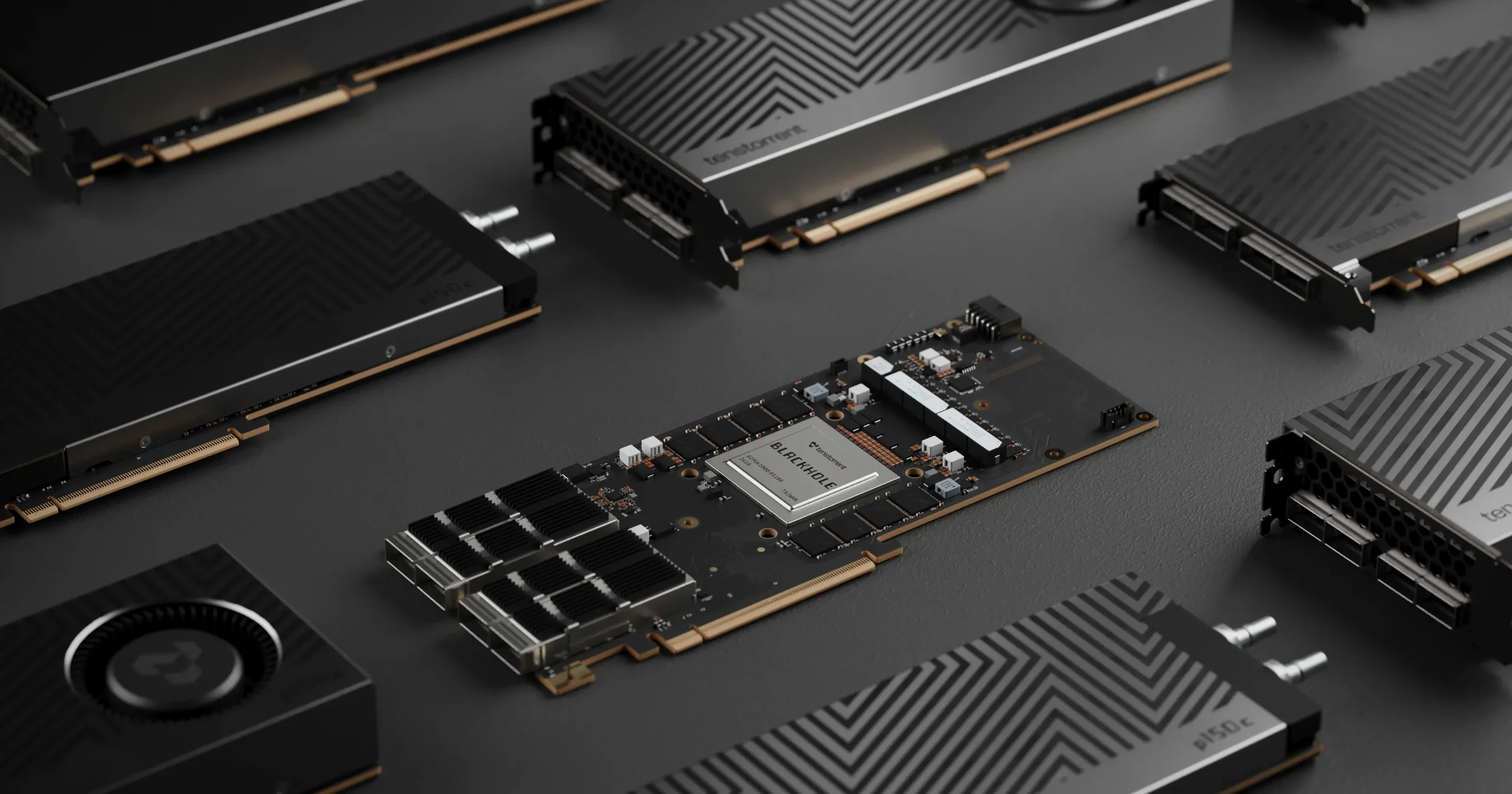
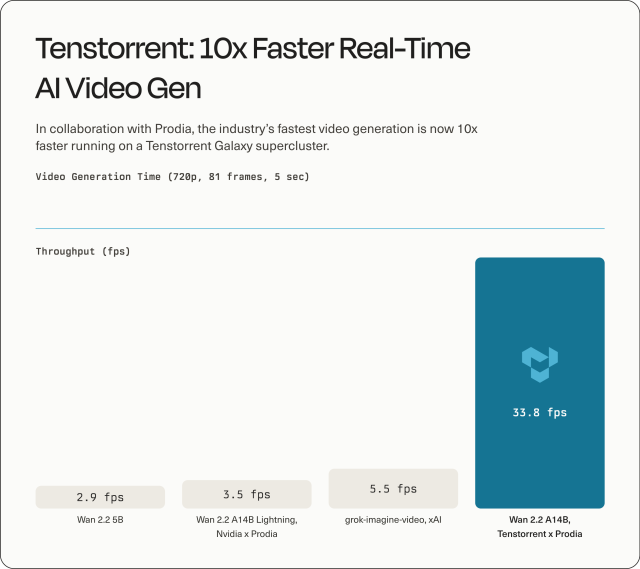
Tenstorrent has previewed a striking new AI video generation result, showing that its optimized Wan2.2 14B model can generate a 5 second 720p video faster than the length of the video itself when running on its Blackhole based systems. In a live demonstration covered by EE Times, the company generated a 5 second clip in about 3 seconds during the publication’s hands on test, while also claiming a record result of 2.4 seconds for the same workload.
That is the headline that makes this demo matter. Video generation has traditionally been one of the heavier and more time consuming AI workloads, especially when quality, resolution, and inference steps begin to rise. Tenstorrent’s preview suggests that the company is now crossing an important threshold where short video creation can happen at or faster than real time, which could have direct implications for interactive content tools, rapid iteration workflows, and future AI media platforms. EE Times described the demo as a 720p, 81 frame, 40 step generation task based on an optimized model, with the 2.4 second figure presented as roughly 10 times faster than the same production grade model running on other leading hardware.
One of the most important corrections here is the actual hardware scale involved. The EE Times report says the demo ran on 4 Blackhole generation Galaxy servers containing 128 Tenstorrent Blackhole chips, not 256 accelerators. That distinction matters because the result is already impressive on its own, and overstating the hardware count would distort the performance picture.
The model itself is also worth noting. Tenstorrent is using an optimized version of Wan2.2 14B created by partner Prodia, which the company says is designed for fast image and video generation cloud workloads. According to EE Times, Tenstorrent sees video generation as one of the next major AI growth areas and believes larger Galaxy scale deployments will make it possible to move toward longer videos and higher resolutions over time.
On the hardware side, Tenstorrent’s Blackhole platform is built around a design philosophy that is very different from the closed stack approach often seen elsewhere in the AI market. Tenstorrent says Blackhole features 16 big RISC V cores and up to 32 GB of GDDR6 memory per chip, while the company’s documentation lists 120 Tensix cores and up to 32 GB of GDDR6 depending on board configuration. That open and highly networked architecture is central to Tenstorrent’s pitch, because the company is trying to position Blackhole not just as another AI accelerator, but as a scalable and more general purpose AI compute fabric.
That broader architectural message is part of the story here. EE Times quotes Tenstorrent saying its systems unify compute, memory, and networking into a single software visible environment without relying on proprietary interconnects or workload specific specialization. Tenstorrent CEO Jim Keller also told the publication that the company believes it is alone in achieving this kind of video generation speed at these cost levels, while arguing that customers can port related video models more easily because the underlying engine remains relatively common across many diffusion based systems.
From an industry point of view, this preview is significant because it shows that AI video is starting to move from offline batch generation toward something much more immediate. A 5 second video generated in 2.4 seconds is not just a benchmark flex. It points toward a future where content creation tools could become far more interactive, where video effects and generation systems respond fast enough for real time creative use, and where alternative AI hardware vendors can start challenging the current market leaders on highly visible workloads.
It is still important to keep the scope of the claim in perspective. This was a preview ahead of a larger Tenstorrent launch, not a broad third party benchmark suite across many public models and deployment environments. The company’s 2.4 second result is its own best case figure, while EE Times itself observed about 3 seconds in a live test. Even with that caution, however, the result is still strong enough to stand out. Breaking the real time barrier in AI video generation is a milestone that deserves attention, especially when it comes from a company trying to build an open alternative in the accelerator market.
If Tenstorrent can carry this momentum into its upcoming cluster scale launches, Blackhole could become one of the more interesting AI hardware stories to watch this year, particularly for customers focused on generative media, inference throughput, and non NVIDIA compute paths.
What do you think matters more for next generation AI video tools: faster real time generation, or better quality even if it takes longer to render?
