
TSMC 2nm Pressure and DRAM Shortage Could Push Smartphone Makers Toward Chipset Downgrades in 2026

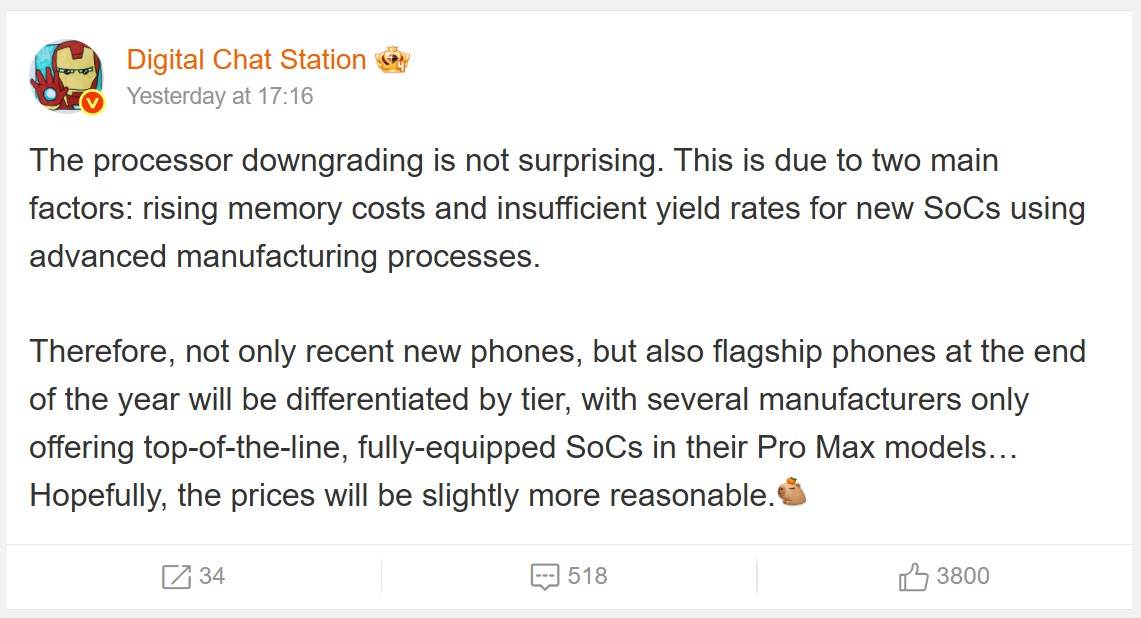
A new rumor from tipster Digital Chat Station claims smartphone makers may be forced to make notable chipset compromises later this year, with the pressure coming from two directions at once: limited practical availability around advanced 2nm production and the broader memory market strain caused by rising DRAM costs. While the claim itself remains unconfirmed, the wider industry context makes the concern far easier to understand than it might have just a few months ago. TSMC is already under immense pressure from surging demand for its most advanced processes, especially from the AI sector, while the smartphone market is also being squeezed by a sharp rise in memory pricing.
According to the rumor, the most advanced flagship chipsets may increasingly be reserved only for top tier handsets carrying names such as Ultra or Pro Max, while lower premium models could receive less capable variants. That would represent a significant shift in flagship smartphone strategy, but it would not come out of nowhere. Reuters reported in February that IDC expected the global smartphone market to suffer its biggest ever decline in 2026 as surging memory prices drove up device costs, with memory shortages hitting low and mid range devices particularly hard. Reuters separately reported that suppliers and smartphone makers were already warning that the AI boom was constraining memory availability and raising costs across consumer electronics.
The TSMC side of the equation is just as important. The company remains the dominant force in advanced chip manufacturing, and Reuters reported this week that it is expected to secure major next generation 2nm orders from some of the biggest technology firms in the world, especially as AI demand continues to expand. That does not directly prove a smartphone shortage on its own, but it does reinforce the idea that access to the most advanced node capacity is becoming increasingly strategic and highly competitive. When the largest AI customers are pulling aggressively on the same supply pipeline, smartphone vendors may have little choice but to prioritize where their most expensive and limited silicon actually goes.
That is where the rumor about dual flagship chipset strategies starts to sound more credible from a market standpoint, even if the individual product names remain unofficial. The report argues that top tier 2nm silicon could be reserved for the most expensive halo models, while more affordable flagship phones adopt weaker or cut back versions. If that happens, smartphone branding may become even more segmented than it already is. Rather than one true flagship chip family powering an entire premium lineup, brands may increasingly split their best silicon across only a few showcase devices while everything below that level gets a more carefully cost controlled version.
This would also fit the broader pricing reality. If the latest flagship chipsets become significantly more expensive to produce and memory costs continue climbing alongside them, manufacturers will need somewhere to protect margins. The easiest answer is not always to raise prices evenly across an entire portfolio. Instead, companies can preserve the most aggressive specifications for their prestige models and step down the rest of the range. That approach keeps the marketing story alive at the top while reducing the bill of materials pressure on more mainstream premium devices.

The DRAM issue adds another heavy layer to the burden. Reuters reported that memory chip prices have been rising sharply as suppliers prioritize AI related demand, with smartphone and PC makers facing a much tougher cost environment as a result. More recently, Tom’s Hardware cited TrendForce expectations that contract prices for DRAM and NAND would continue climbing in the second quarter of 2026, even if spot market pricing showed some short term fluctuations. In practical terms, this means smartphone companies are not just paying more for leading edge application processors. They are also paying more for the memory packages that those flagship phones increasingly rely on for AI features, photography pipelines, multitasking, and higher resolution gaming performance.
For the mobile gaming segment, this could become especially important. Enthusiast devices have leaned heavily on the idea of all out top end silicon, generous RAM allocations, and premium thermal designs to justify their place in the market. If leading brands start reserving the absolute best chipsets for only their Ultra class phones, the gap between premium and ultra premium may widen in a much more visible way. In other words, the next flagship war may not just be about camera modules or display brightness. It may be about whether your phone even gets the full fat processor in the first place.
It is important to be clear about what is confirmed and what is not. The specific claim that TSMC will effectively force smartphone makers into chipset downgrades this year comes from a tipster report and has not been officially confirmed by TSMC, Qualcomm, MediaTek, Apple, or the major Android phone brands. However, the underlying industry environment is very real. TSMC is under extraordinary advanced node demand pressure, and the memory market has already been flagged by major analysts and manufacturers as a source of rising smartphone costs and weaker shipment outlooks.
If this rumor proves accurate, 2026 could become a defining year for how flagship smartphones are positioned. Instead of simply chasing the most powerful chip available for every high end handset, brands may need to make harder portfolio decisions, concentrating the very best silicon and memory configurations into a smaller group of ultra premium models. That would not just reshape specifications. It would reshape consumer expectations about what the word flagship actually means.
Do you think smartphone makers should keep the best chipsets exclusive to Ultra class devices, or would that make the flagship market feel too fragmented for buyers?
