
Intel Officially Launches Core Ultra 7 270K Plus at 299 US Dollars and Core Ultra 5 250K Plus at 199 US Dollars With More E Cores, Faster D2D, and 4 Rank CUDIMM Support
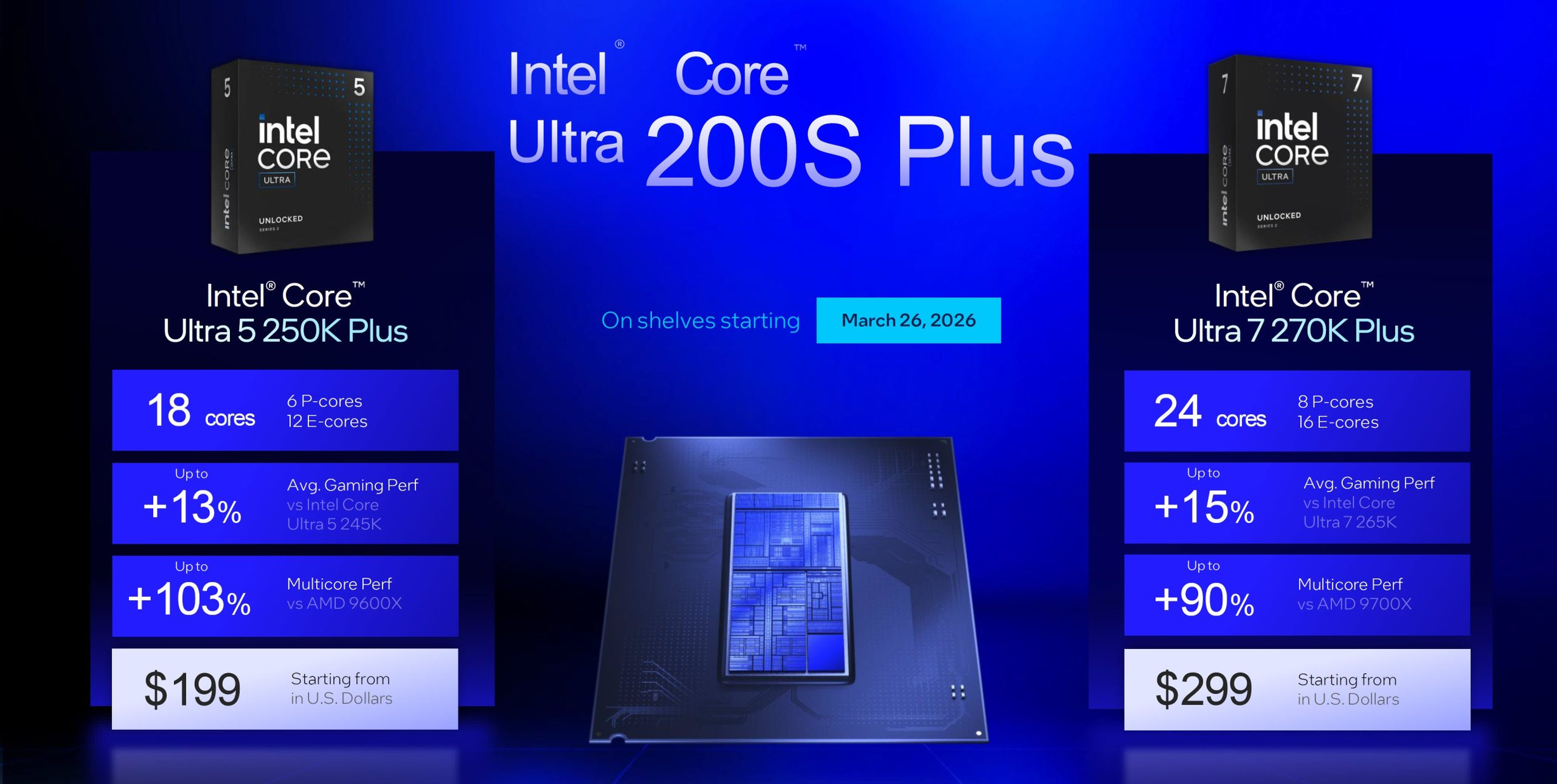
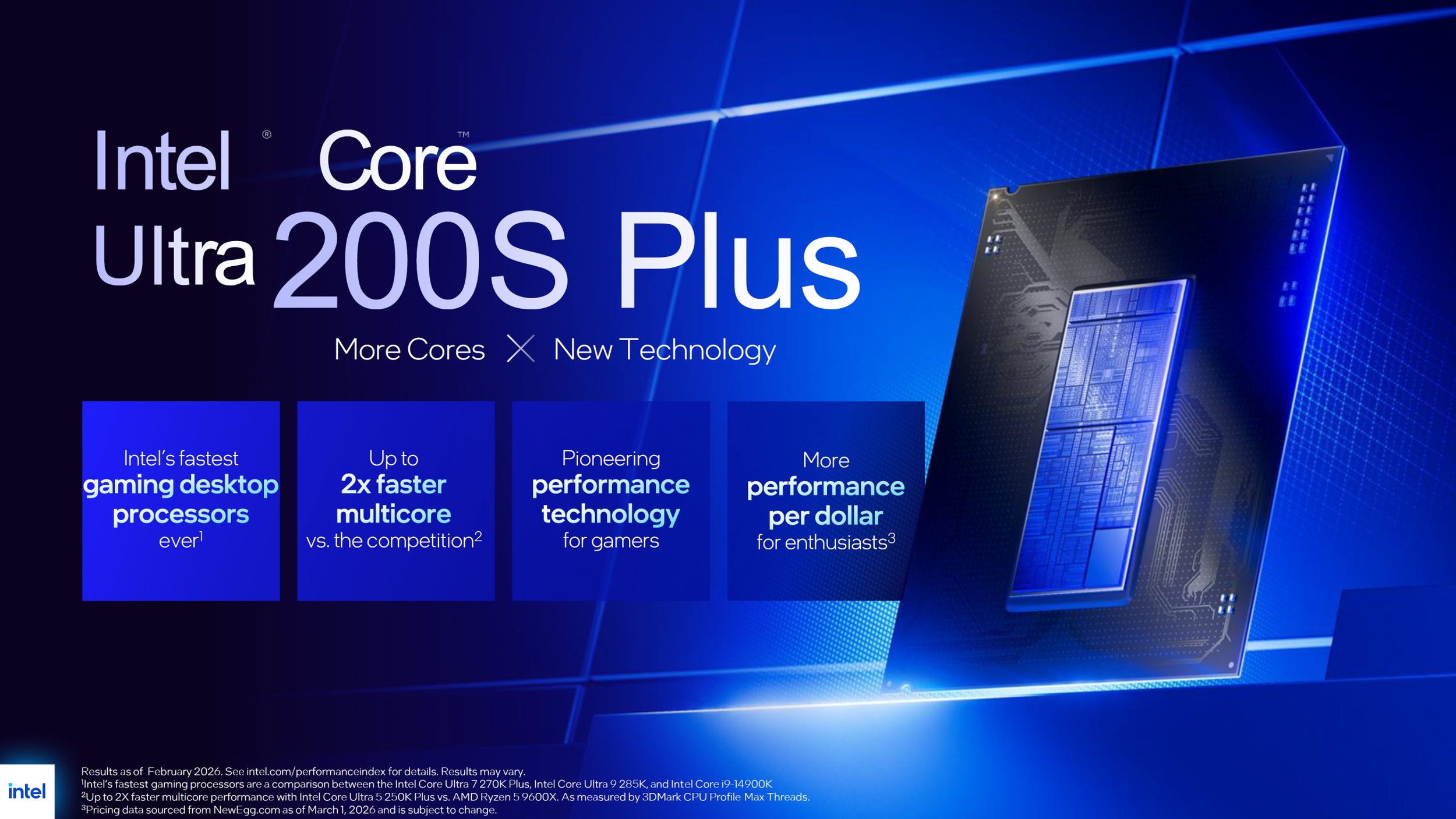
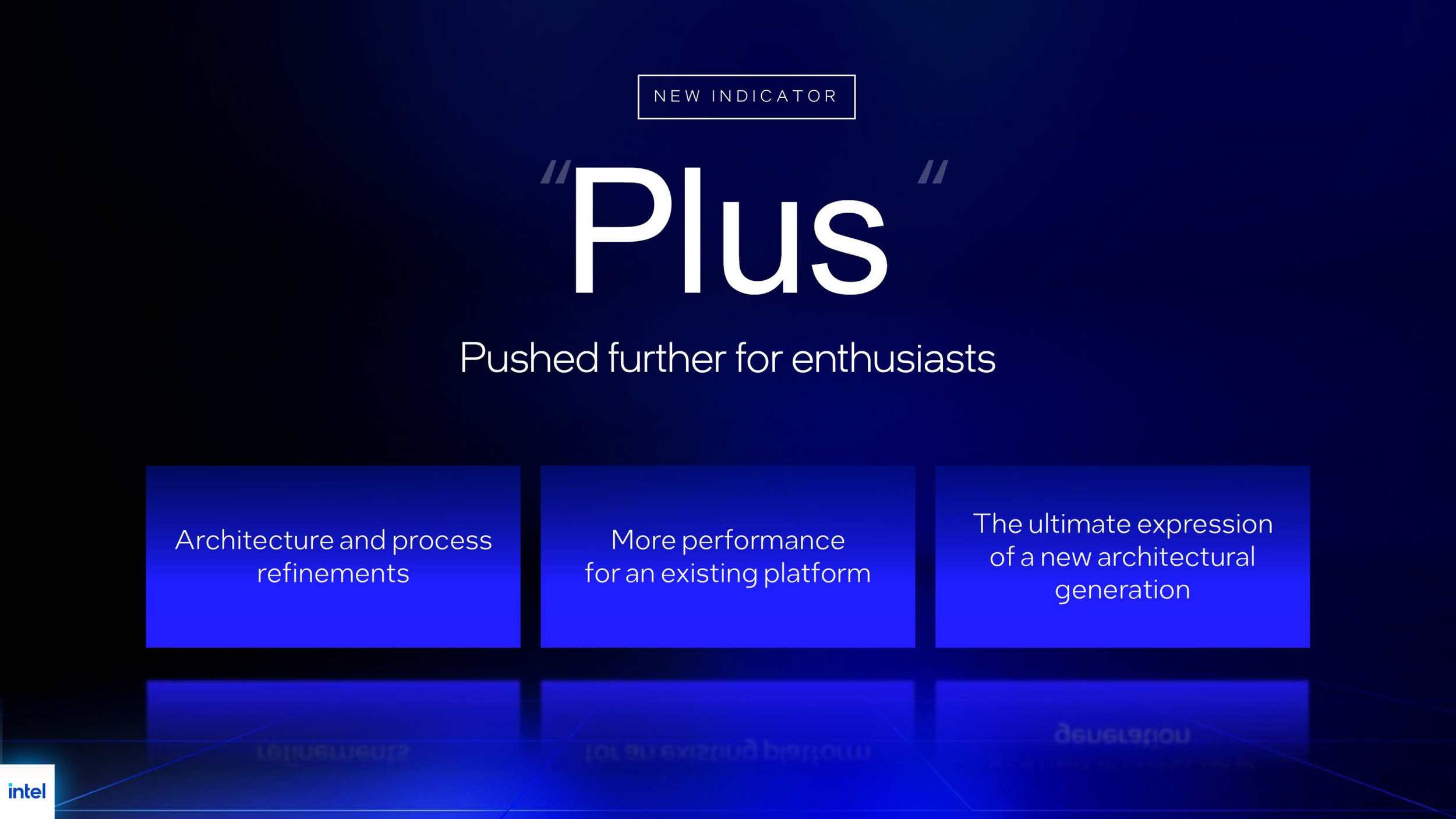
Intel has officially introduced the Core Ultra 7 270K Plus and Core Ultra 5 250K Plus, expanding the Core Ultra 200S Plus desktop lineup as a value focused refresh for the LGA 1851 platform. Intel is pitching these chips as a soft refresh to Arrow Lake with more performance per dollar, updated platform features, and refinements that aim to reduce latency and lift gaming results without forcing a full platform redesign.
The headline is simple. Intel is adding more efficiency cores, pushing a major die to die fabric uplift, and enabling faster memory support on the same socket. The result is a pair of desktop processors that look designed to re establish momentum for LGA 1851 buyers, especially those who want more multi core throughput for the money while still keeping gaming in the conversation.
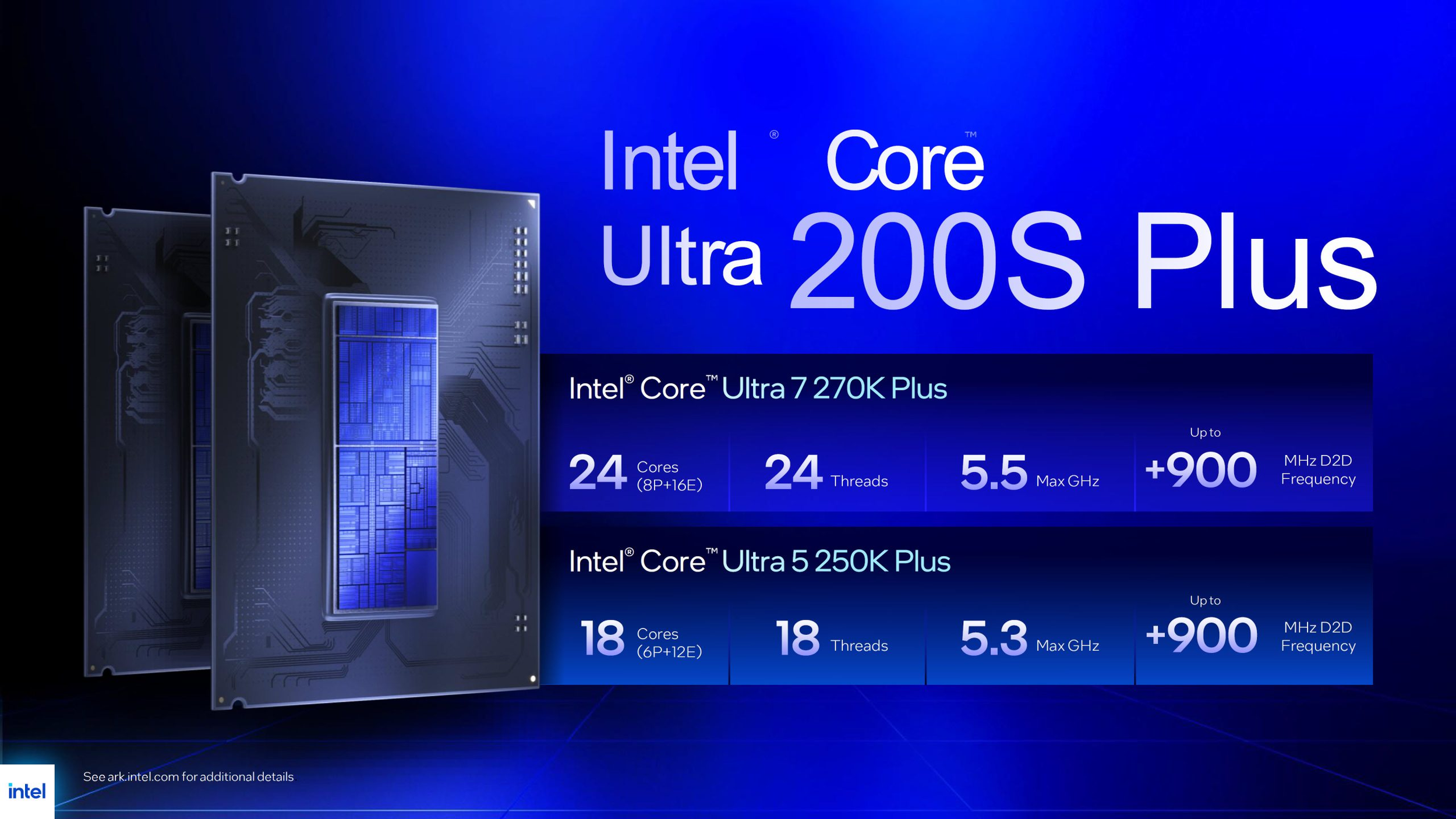
The Core Ultra 7 270K Plus is positioned as the fastest of the two new Plus chips, and its spec sheet is very clear about where Intel is spending its silicon budget.
It comes with 24 total cores in an 8 P Core plus 16 E Core configuration using Lion Cove P Cores and Skymont E Cores. Intel lists a 5.5 GHz max boost, with 5.4 GHz all core boost for P Cores and 4.7 GHz all core boost for E Cores. Cache lands at 36 MB L3 and 40 MB L2, the D2D frequency jumps to 3.0 GHz, and the chip includes 4 Xe iGPU cores at 2.0 GHz. The MTP is listed at 250 W.
Compared to Core Ultra 7 265K, Intel is effectively selling a stronger core count and platform fabric lift at a much lower price point. The comparison points in your source emphasize the move from 20 cores to 24 cores, a 100 MHz uplift to all E Core boost, larger L3 and L2 pools, and a D2D jump from 2.1 GHz to 3.0 GHz. Pricing is the most aggressive change, with $299 listed for 270K Plus versus $394 MSRP for 265K.
The Core Ultra 5 250K Plus is the value anchor. It is framed as the successor to Core Ultra 5 245K and focuses on delivering more total cores while keeping power targets in the same general bracket.
It features 18 total cores in a 6 P Core plus 12 E Core layout. Intel lists 5.3 GHz max boost, with 5.1 GHz all core boost on P Cores and 4.6 GHz all core boost on E Cores. Cache is given as 30 MB L3 and 36 MB L2, with a 3.0 GHz D2D frequency and 4 Xe iGPU cores at 1.9 GHz. The MTP is listed at 159 W.
Versus Core Ultra 5 245K, the source highlights a jump from 14 cores to 18 cores, a 100 MHz boost clock uplift, a 100 MHz all P Core boost uplift, bigger cache pools, and the same D2D jump to 3.0 GHz. Price is again the eye catcher, with $199 listed for 250K Plus versus $309 MSRP for 245K.
| Model | Cores / Threads | Base Clock (P / E Core) | Max Boost (P / E Core) | Cache (L3 / L2) | Memory Support | TDP (PL1 / PL2) | Price (SEP) |
|---|---|---|---|---|---|---|---|
| Core Ultra 9 290K Plus | 24 / 24 (8 + 16) | 3.7 / 3.2 GHz | 5.8 / 4.8 GHz | 36 MB / 40 MB | DDR5 7200 | 125W / 250W | Cancelled |
| Core Ultra 9 285K | 24 / 24 (8 + 16) | 3.7 / 3.2 GHz | 5.7 / 4.6 GHz | 36 MB / 40 MB | DDR5 6400 | 125W / 250W | $589 US |
| Core Ultra 7 270K Plus | 24 / 24 (8 + 16) | 3.7 / 3.2 GHz | 5.5 / 4.7 GHz | 36 MB / 40 MB | DDR5 7200 | 125W / 250W | $299 US |
| Core Ultra 7 265K | 20 / 20 (8 + 12) | 3.9 / 3.3 GHz | 5.5 / 4.6 GHz | 30 MB / 36 MB | DDR5 6400 | 125W / 250W | $394 US |
| Core Ultra 7 265KF | 20 / 20 (8 + 12) | 3.9 / 3.3 GHz | 5.5 / 4.6 GHz | 30 MB / 36 MB | DDR5 6400 | 125W / 250W | $379 US |
| Core Ultra 5 250K Plus | 18 / 18 (6 + 12) | 4.2 / 3.5 GHz | 5.3 / 4.7 GHz | 24 MB / 26 MB ? | DDR5 7200 | 125W / 159W | $199 US |
| Core Ultra 5 245K | 14 / 14 (6 + 8) | 4.2 / 3.6 GHz | 5.2 / 4.6 GHz | 24 MB / 26 MB | DDR5 6400 | 125W / 159W | $309 US |
| Core Ultra 5 245KF | 14 / 14 (6 + 8) | 4.2 / 3.6 GHz | 5.2 / 4.6 GHz | 24 MB / 26 MB | DDR5 6400 | 125W / 159W | $294 US |
Beyond raw core counts, Intel is pushing several platform level value upgrades that are clearly aimed at enthusiasts who care about latency, memory scaling, and getting extra performance without changing boards.
First is the core count uplift itself, specifically 4 additional E Cores on both new Plus parts compared to their direct predecessors. Second is the up to 900 MHz uplift in die to die frequency, rising to 3.0 GHz, which Intel frames as a faster link between CPU and memory controller that reduces latency and boosts gaming performance.
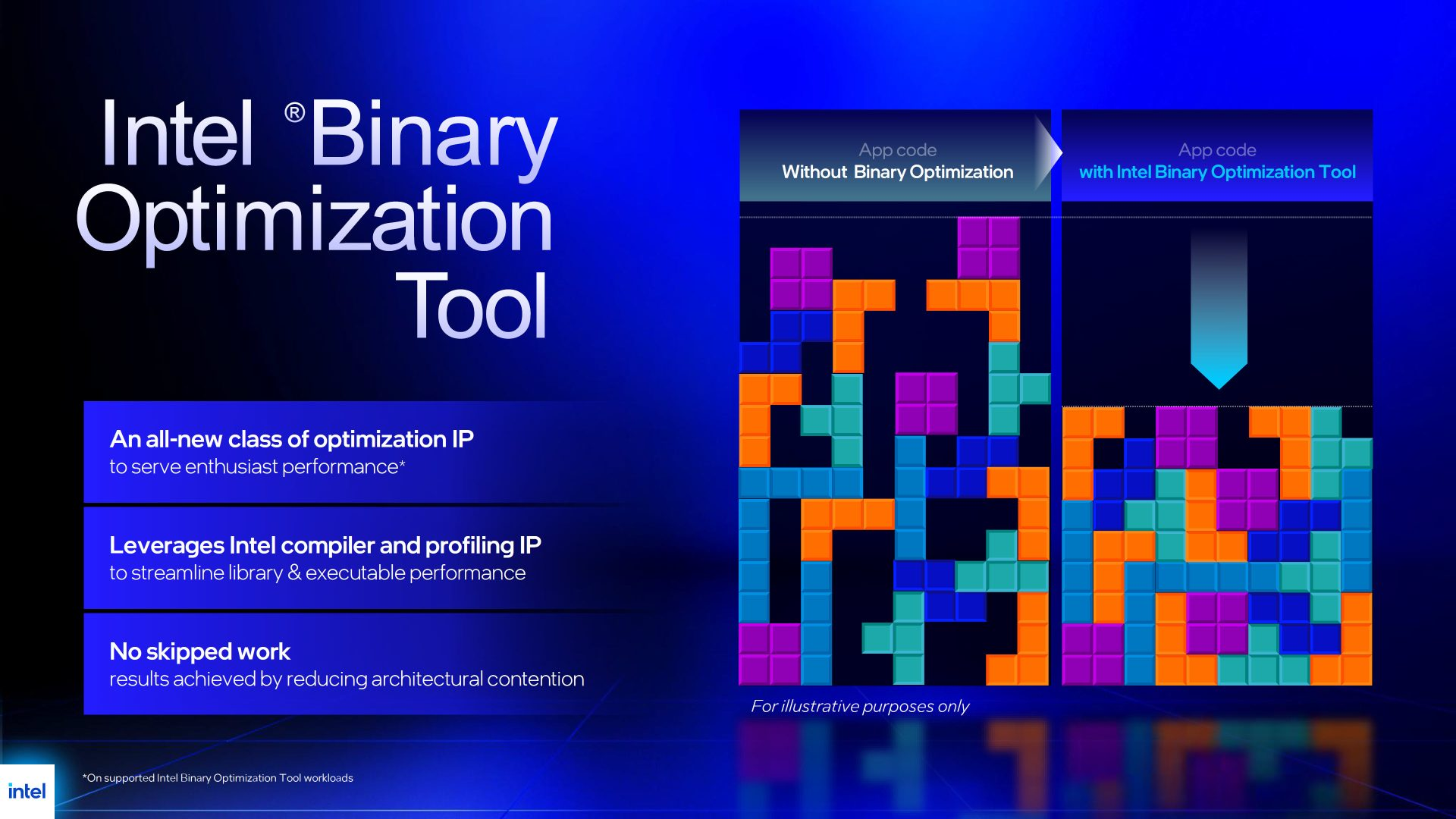
Intel also introduces a new Intel Binary Optimization Tool, positioned as an optimization approach that leverages Intel compiler and profiling know how to improve instructions per cycle and user performance even if a workload was optimized for another x86 processor, a console, or an earlier architecture. This is a strategic move to improve the performance story in targeted workloads without relying purely on raw clocks.
Memory support is another major part of the narrative. Intel lists DDR5 7200 MT per second support for Plus chips, up from DDR5 6400 MT per second on non Plus 200S parts, while also referencing the Intel Core Ultra 200S Boost BIOS profile with warranty backed support for 8000 MT per second memory overclocking.
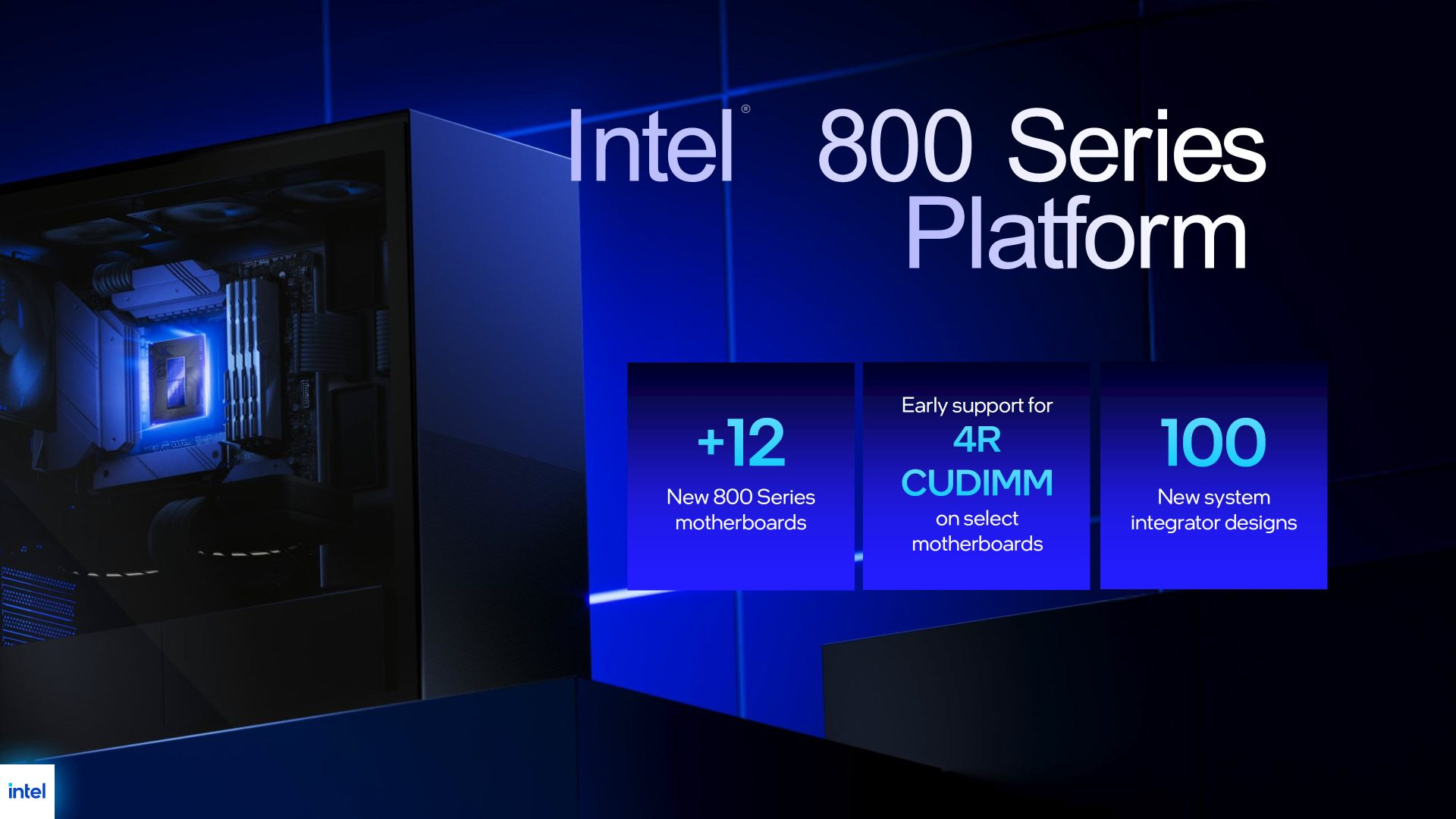
Finally, Intel highlights early support for 4 Rank CUDIMM DDR5, which can scale up to 128 GB per DIMM on select Intel 800 Series motherboards, combining workstation class capacity with mainstream platform latency and bandwidth targets.
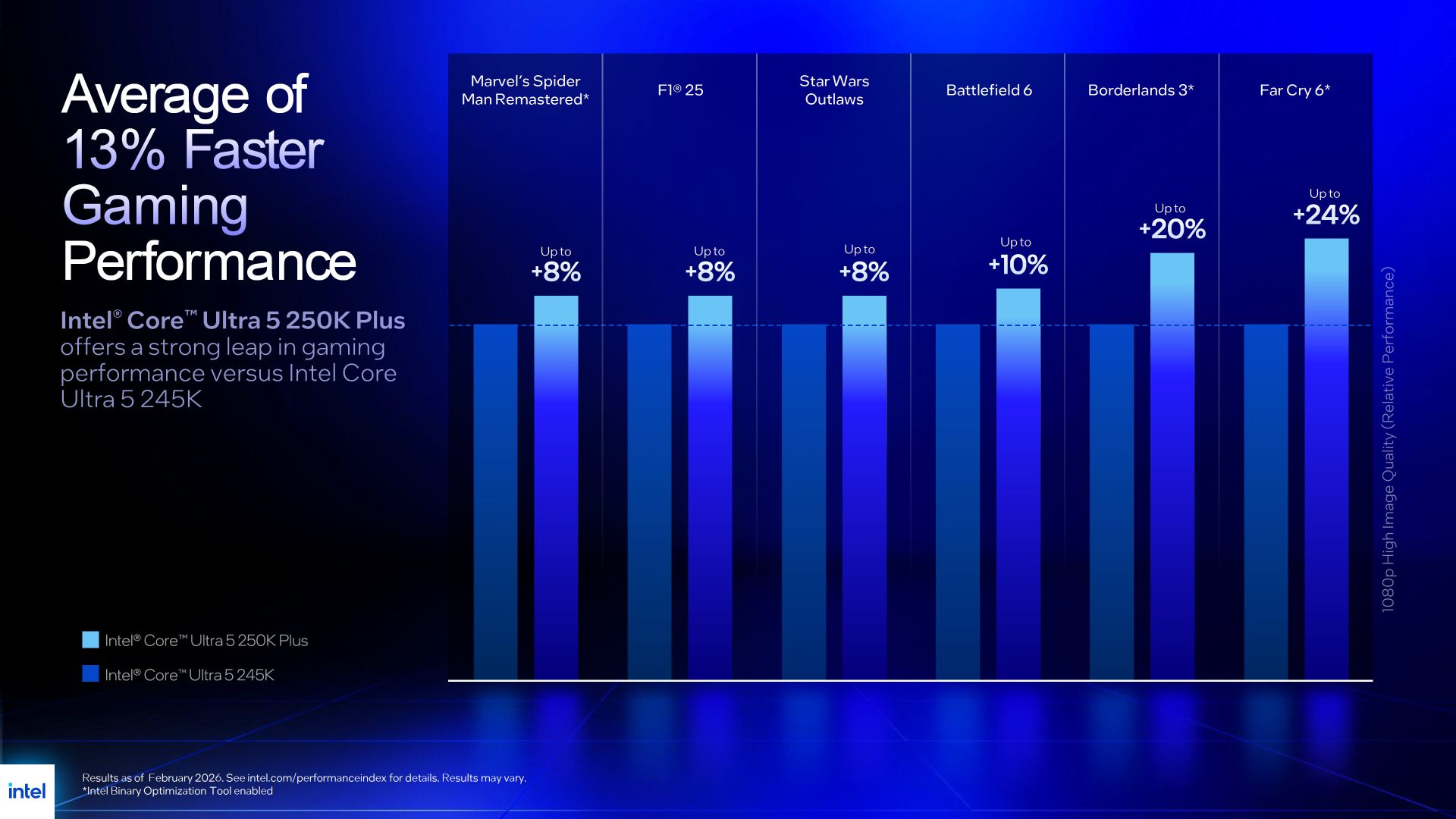
Intel is positioning the Core Ultra 7 270K Plus against the Ryzen 7 9700X on price parity and the Core Ultra 5 250K Plus against the Ryzen 5 9600X on price parity. The source claims up to 103 percent multi thread uplift in Cinebench 2026 multi core for the Plus parts versus those AMD comparisons, which aligns with the obvious core count advantage when comparing 24 cores to an 8 core CPU and 18 cores to a 6 core CPU.
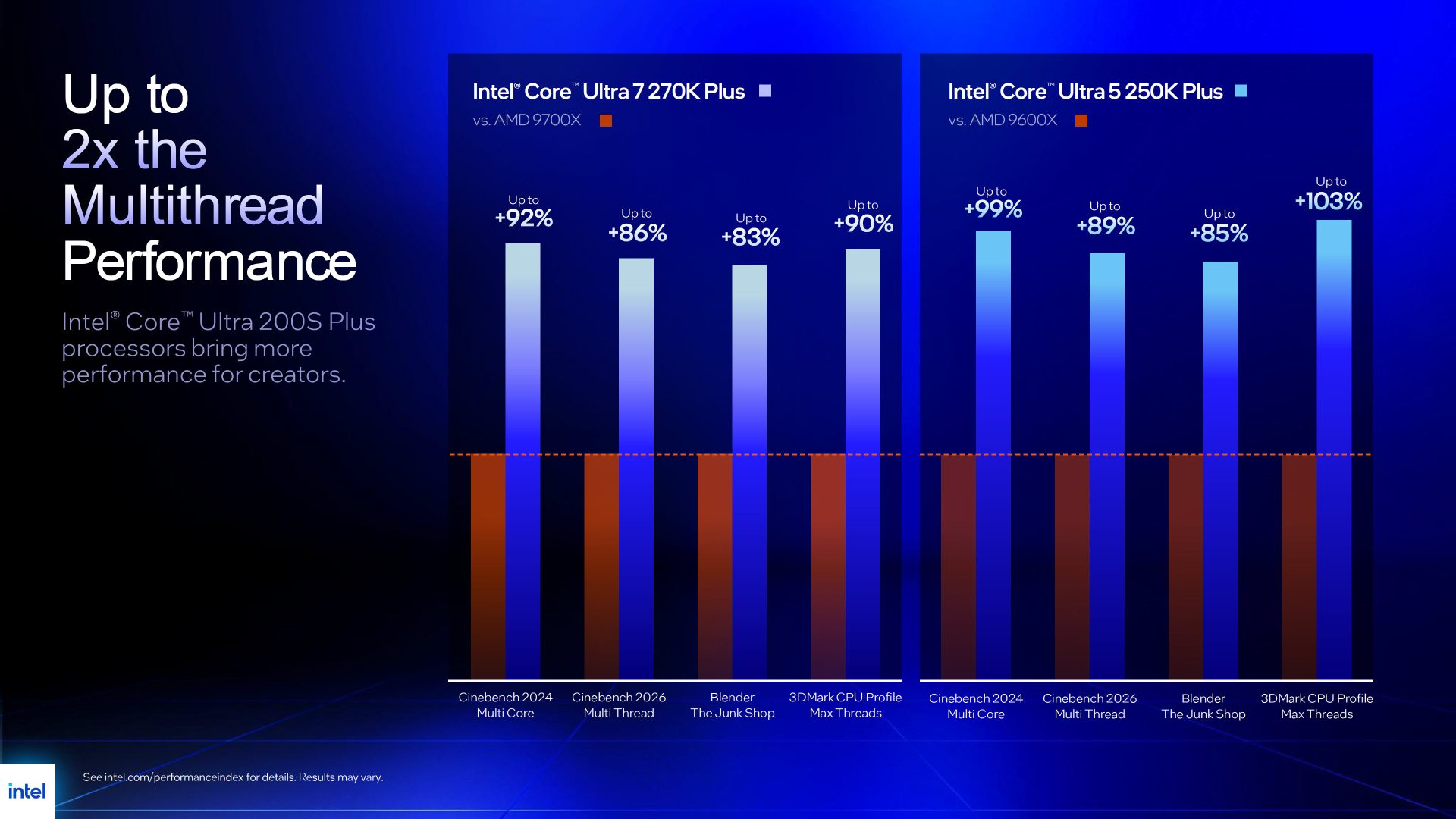
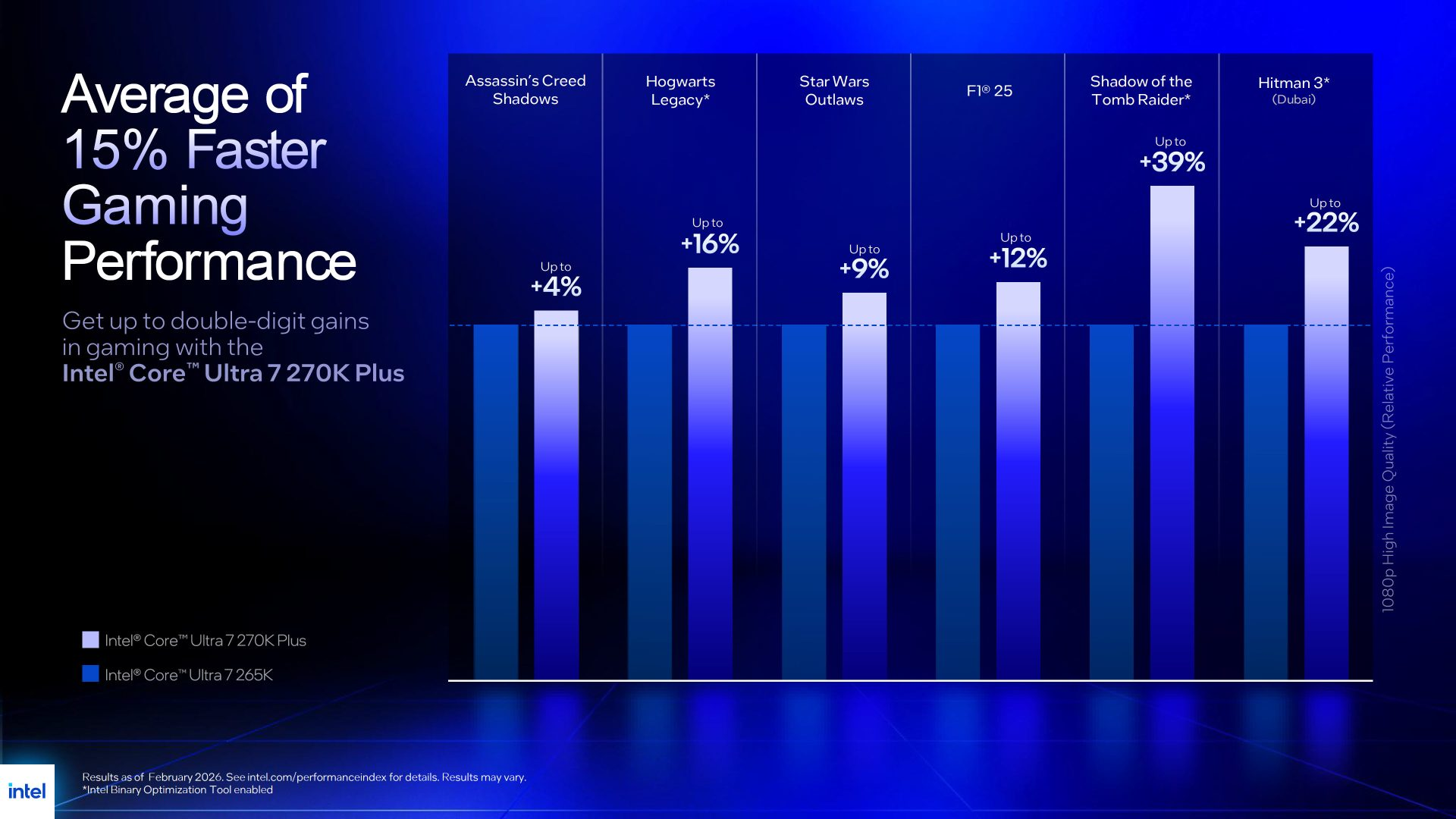
On gaming, Intel is also comparing the Plus parts against the prior non Plus chips. The source describes an average of 15 percent faster gaming for 270K Plus versus 265K in a set of 1080p game tests, and an average of 13 percent faster gaming for 250K Plus versus 245K, with individual titles reportedly showing larger swings.
The pricing is designed to be the selling point. Your source lists the Ryzen 7 9700X at $299 and Ryzen 5 9600X at $199 via Newegg, matching Intel’s own announced prices and setting up direct shelf competition for buyers who want the best value in that tier.
Even if these Plus chips deliver exactly as advertised, the platform question remains the strategic friction point. LGA 1851 is still a platform that many buyers view as transitional, especially with an expected socket change later this year per your source narrative. That means these CPUs look most attractive for 2 groups.
First, builders already on LGA 1851 who can drop in a Plus chip without replacing their motherboard and want a meaningful step up, particularly if they are upgrading from a lower tier or non K part. Second, new builders who prioritize immediate value and features like higher DDR5 support and CUDIMM readiness, and who are less concerned about long upgrade paths.
Intel states the Core Ultra 200S Plus CPUs will hit retail on March 26, while new boards will follow in the coming months.
If you were building a value focused gaming PC right now, would you take the $299 Core Ultra 7 270K Plus and bet on short term value, or choose AM5 for the longer platform runway?
