
YouTuber Challenges DLSS 5 Backlash, Arguing the So Called Geometric Anomalies Were Already Present in the Base Games
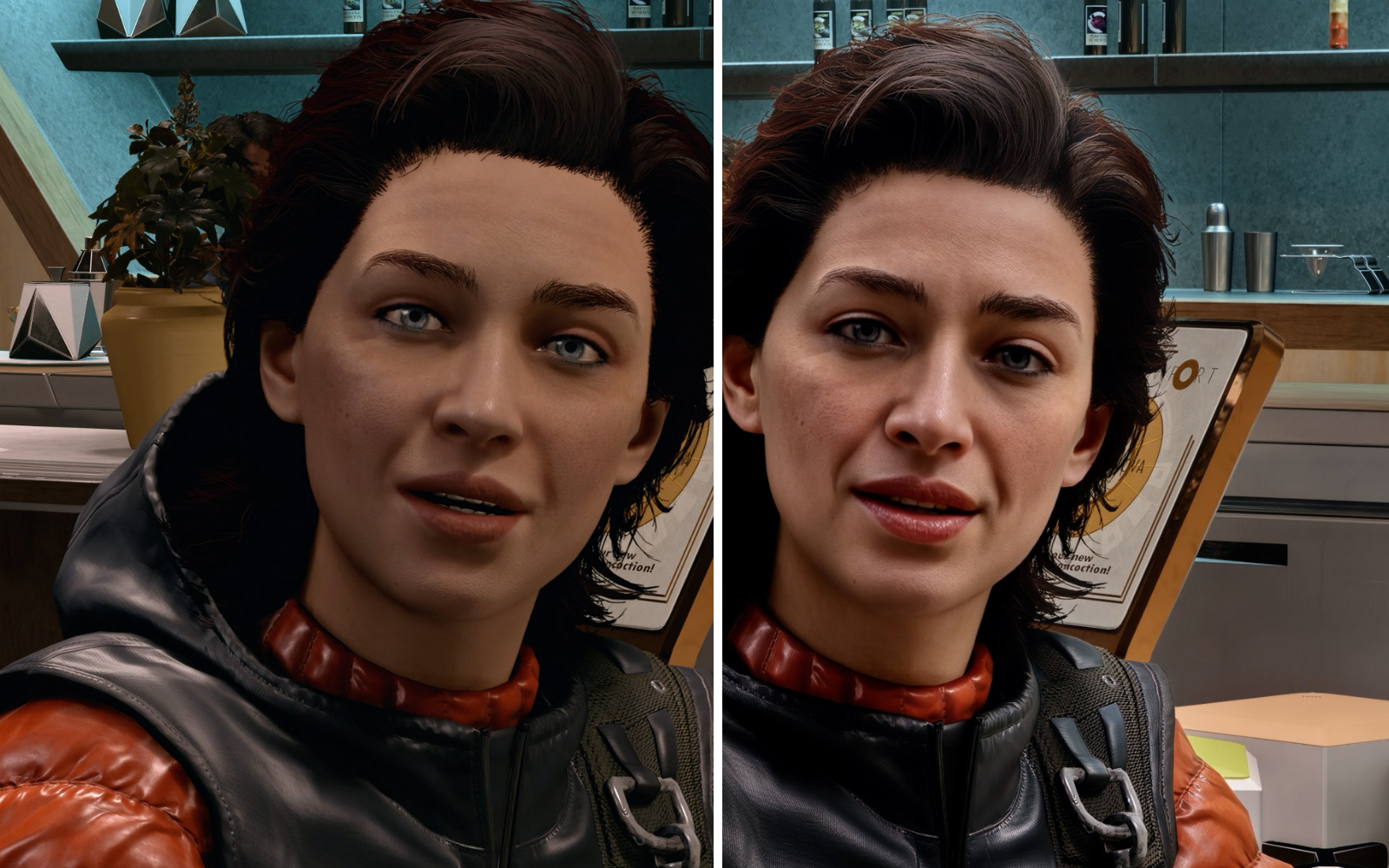
NVIDIA’s DLSS 5 has faced sharp criticism since its GTC 2026 reveal, with some players arguing that the company’s new neural rendering model introduced odd character details, broken geometry, and visual artifacts that were not present in the original games. But a new analysis from content creator WhizzDumbPlayz is now pushing back on that narrative, arguing that many of the most widely shared examples were not created by DLSS 5 at all, but were already visible in the underlying game footage before the technology was enabled. That challenge matters because NVIDIA has positioned DLSS 5 as a major leap in visual fidelity rather than a replacement image generator detached from the original scene.
The strongest part of the video’s argument is not that DLSS 5 is perfect, but that several viral comparisons may have blamed the wrong source. In the Starfield example involving Heller and Supervisor Lin, critics pointed to odd nostril shading and what looked like extra facial hair as proof that DLSS 5 was inventing geometry. WhizzDumbPlayz argues those issues are already tied to strange meshing, lighting behavior, and rendering quirks in the original scene, with DLSS 5 at most making them more noticeable rather than fabricating them from scratch. The same pattern is raised in The Elder Scrolls IV: Oblivion Remastered, where the much discussed eyelid anomaly appears to persist even in footage with DLSS 5 off, suggesting a game side problem rather than a neural rendering hallucination.
That distinction becomes even more important once frame generation enters the discussion. NVIDIA says DLSS 5 is a real time neural rendering model that uses a game’s color and motion vectors to infuse scenes with more photoreal lighting and materials while remaining anchored to source 3D content. But some of the motion related oddities in the reveal clips may have been influenced by frame generation behavior rather than DLSS 5’s core material and lighting model. Reporting from GTC coverage noted that journalists were toggling multiple advanced NVIDIA features in demo environments, and the WhizzDumbPlayz analysis argues that at least some perceived anomalies in Starfield and EA Sports FC style footage could be exaggerated by that broader pipeline rather than by DLSS 5 alone.
The Resident Evil Requiem comparison may be the most important example because it became one of the most controversial images from the reveal. In that case, the video argues the off and on comparison shots were not perfectly aligned, with small differences in idle animation, facial pose, and camera angle changing how viewers interpreted the character’s face. That does not automatically prove every complaint was wrong, but it does weaken one of the most repeated arguments against the technology. If the shots are not lined up precisely, then viewers may be judging a mismatch in capture conditions as if it were evidence of AI distortion.
That said, the analysis does not fully let NVIDIA off the hook. Even while disputing the biggest geometric anomaly claims, the video still points to issues such as haloing around some character silhouettes and occasional shadow behavior that can look inconsistent when directional lighting is heavily altered. Those are more grounded criticisms because they focus on how DLSS 5 changes scene presentation rather than accusing it of inventing entirely new forms out of nowhere. In other words, the most defensible critique of DLSS 5 may not be that it is broken, but that it still needs refinement before developers and players fully trust it across a wide range of content.
From an industry perspective, this is probably the healthier direction for the conversation. DLSS 5 was always going to face an uphill battle because NVIDIA described it as a major generational breakthrough, and any technology that touches the artistic output of a game so directly will be scrutinized frame by frame. But if many of the most viral examples turn out to be inherited bugs, bad capture alignment, or pre existing rendering limitations, then the early backlash may have overstated the case against the technology. NVIDIA still needs to prove that DLSS 5 can preserve artistic intent consistently, yet the burden of criticism now looks more nuanced than the first wave of reaction suggested. NVIDIA says DLSS 5 is scheduled to arrive in fall 2026 with support from major publishers including Bethesda and Capcom, so there is still time for the company to tune the presentation before wider release.
What do you think, is DLSS 5 being judged too harshly too early, or do these visual debates show exactly why players are skeptical of AI driven rendering in games?
