
Call of Duty Movie Targets June 30, 2028 as Activision Pushes for Authenticity, Scale, and a More Grounded War Film Tone
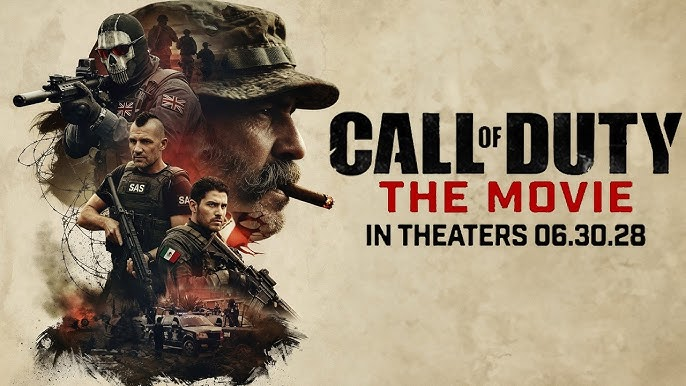
After years of delays, false starts, and long stretches of silence, the Call of Duty movie is finally back on a clear theatrical path. During Paramount’s CinemaCon presentation, the film was given an official June 30, 2028 release date, with Pete Berg attached to direct and Taylor Sheridan set to write and produce alongside him. The update was first reported through Eurogamer, and multiple trade reports from CinemaCon confirmed both the date and the creative direction now guiding the adaptation.
The tone Activision wants is already becoming clear. According to comments shared from the CinemaCon stage, Activision president and producer Rob Kostich said the company only wanted to move forward if it could make the film the right way, adding that the goal is to capture authenticity on a human level so that it “feels really real” while also delivering “epic scope.” That positioning suggests Activision is aiming for something closer to a grounded large scale military drama than a purely explosive arcade action adaptation.
That creative pairing is an interesting one for the franchise. Sheridan has built much of his reputation around character driven American drama through projects such as Yellowstone, while Berg has experience with muscular military and disaster storytelling through films like Lone Survivor, Deepwater Horizon, and Battleship. Paramount and Activision first confirmed the project with Berg and Sheridan in late 2025, making this release date announcement the clearest signal yet that the movie has moved beyond concept stage and into a real production runway.
What remains unknown is the most important creative question of all: what exactly is this movie going to be about? That is where adapting Call of Duty becomes more complicated than simply attaching prestige names and a summer release date. As a brand, Call of Duty is one of the biggest names in entertainment, with more than 500 million copies sold worldwide, but it is also a franchise that spans wildly different tones, settings, and eras, from World War II campaigns to modern military fiction to near future geopolitical spectacle.
That means authenticity, while a strong marketing phrase, could be interpreted in several different ways. If Activision and Paramount are using the word to describe emotional realism, soldier perspective, and the human cost of conflict, then Sheridan and Berg make a lot of sense. If the film tries to present Call of Duty as some kind of deeply realistic military simulation, it risks colliding with the reality that the games themselves have usually functioned as highly polished blockbuster shooters first and grounded war stories second. The brand has always excelled at immediacy, spectacle, and cinematic pacing. Its best campaigns feel like playable action films, not necessarily like nuanced military dramas.
Still, that does not mean the movie cannot work. In fact, a disciplined B tier or A tier military action film with a strong cast, practical urgency, and a tighter focus on a single squad, operation, or theater of conflict may be exactly the right way to translate the franchise. Trying to build a giant cinematic universe on day one would be the wrong lesson. A focused story with strong character work and credible combat staging would likely serve the property far better than an overstuffed fan service showcase.
The release timing also makes strategic sense. A June 30, 2028 launch places the movie directly in summer blockbuster territory, where Paramount can position it as a large scale event release and where Activision can take advantage of the franchise’s enormous global recognition. If the film lands even at the level of a solid mainstream military thriller, the brand alone could give it a very strong commercial floor.
For now, the biggest takeaway is that the Call of Duty movie is no longer just a dormant adaptation people vaguely remember from the 2010s. It now has an official date, a high profile writer, a commercially proven director, and a very deliberate pitch centered on scale and human authenticity. Whether that produces a great film is still an open question, but after nearly a decade in limbo, the project is finally moving with real momentum.
Do you think Call of Duty works better as a grounded military drama, or should the film lean fully into the franchise’s blockbuster action roots?
