
Valve Broadens Steam Machine, Steam Frame, and Steam Controller Launch Window to 2026 “This Year”
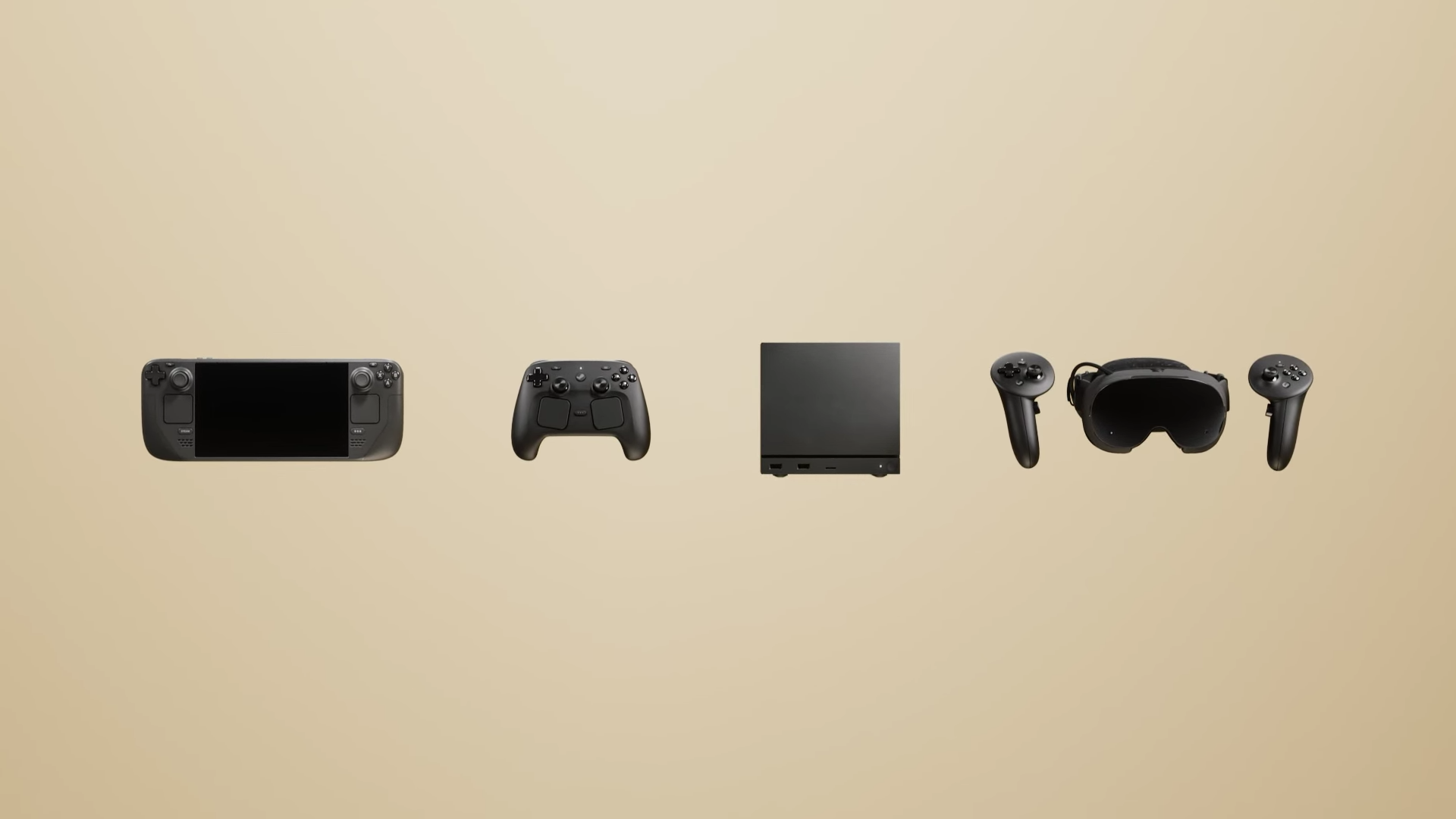
Valve has updated the launch wording around its newly announced hardware lineup, and the change matters. In its new 2025 Steam retrospective, the company now says it will ship the Steam Machine, Steam Frame, and Steam Controller “this year,” which means sometime in 2026, rather than repeating the more specific first half of 2026 target it had communicated earlier. Valve’s revised wording confirms the products are still planned for 2026, but it also signals a broader and less precise release window than before.
The wording shift became especially notable because Valve’s retrospective briefly created confusion before the company clarified that its overall 2026 plan had not changed. Reporting around the post showed that an earlier version used more tentative language, after which Valve told media that all 3 hardware products are still expected to ship in 2026. The current public wording now reads more firmly, but it still stops short of recommitting to a launch by the end of June. That makes the safest interpretation clear: the first half target is no longer the headline promise, and the schedule is now framed as a full year window.

The reason behind this softer timing language remains the same. Valve has directly acknowledged ongoing memory and storage shortages, a problem that has continued to affect hardware planning across the industry. Those supply pressures have made it harder for companies to lock pricing and launch timing, especially for a product like the Steam Machine, where the bill of materials is far more exposed to component market swings than a traditional subsidized console.
That is where the Steam Machine becomes the most commercially interesting part of the story. Based on the official specifications previously circulated for the system, Valve is targeting a fairly serious compact gaming box with a semi custom AMD Zen 4 6 core 12 thread CPU, a semi custom AMD RDNA 3 GPU with 28 compute units. In other words, this is not a low ambition living room experiment. It is a proper premium hardware push, and that makes it especially vulnerable to rising RAM and SSD costs.
| Category | Specification |
|---|---|
| I/O | |
| Displays |
DisplayPort 1.4
|
| USB |
|
| Networking | Gigabit Ethernet |
| LED Strip | 17 individually addressable RGB LEDs for system status and customization |
| Size and Weight | |
| Size | 152 mm tall (148 mm without feet), 162.4 mm deep, 156 mm wide |
| Weight | 2.6 kg |
| Software | |
| Operating System | SteamOS 3 (Arch based) |
| Desktop | KDE Plasma |
| General | |
| CPU |
Semi custom AMD Zen 4 6C / 12T Up to 4.8 GHz, 30W TDP |
| GPU |
Semi custom AMD RDNA3 28 CUs 2.45 GHz max sustained clock, 110W TDP |
| RAM | 16GB DDR5 plus 8GB GDDR6 VRAM |
| Power | Internal power supply, AC 110 to 240V |
| Storage |
Two models available
|
| Connectivity | |
| Wi-Fi | 2x2 Wi Fi 6E |
| Bluetooth | Bluetooth 5.3 with dedicated antenna |
| Steam Controller | Integrated 2.4 GHz Steam Controller wireless adapter |
From a market perspective, this updated timeline is not a cancellation signal, but it is a risk management signal. Valve is still publicly committed to shipping the Steam Machine, Steam Frame, and Steam Controller in 2026, yet the language now gives the company more flexibility as component pricing remains unstable. For gamers watching the living room PC segment, the message is simple: the hardware is still coming, but the exact timing now has more breathing room than it did before.
Do you think Valve should launch the Steam Machine this year even if component pricing stays high, or would it be smarter to wait for a more stable memory and storage market?
