
The Witcher Remake Faces an Open World Trap That Could Break Its Narrative Pace
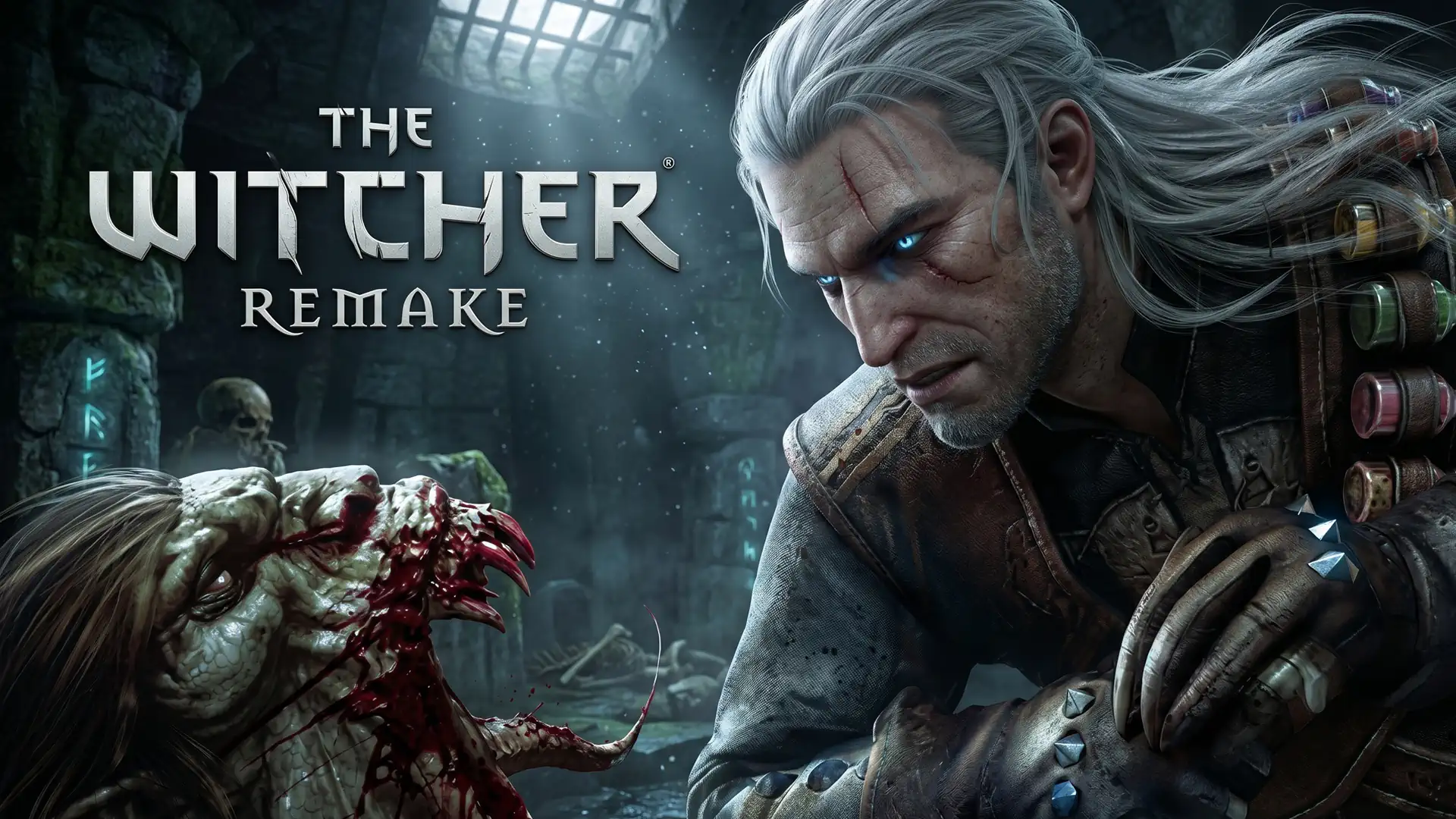
The Witcher Remake may face a deeper design challenge than modernizing combat, visuals, and outdated mechanics. Artur Ganszyniec, lead story designer of the original game, has warned that transforming its tightly controlled locations into a larger open world could fundamentally disrupt the pacing and structure that supported Geralt’s first gaming adventure.
CD Projekt RED announced the project in 2022 as a complete modern reimagining of the 2007 RPG. The remake is being developed with Unreal Engine 5 by Fool’s Theory under CD Projekt RED’s creative supervision. The company later described it as a story driven, single player open world RPG, confirming that the remake will significantly change the original game’s chapter based structure. No gameplay, platforms, release window, or detailed feature list has been publicly revealed.
Speaking with Polish publication CHIP, Ganszyniec explained that increasing the size and freedom of the world would create additional production and narrative demands. The original game frequently relied on knowing where the player would enter an area, allowing developers to activate specific conversations, encounters, and story scenes at controlled moments.
"If there is more space, there needs to be more content. The pace and scale of the entire project would immediately change."
— Artur Ganszyniec
An open world would remove much of that control. Players could approach objectives from different directions, avoid intended encounters, discover locations earlier than expected, or interrupt the planned order of major story events. Each new route would require additional quest conditions, dialogue variations, testing, and contingency systems to prevent the narrative from breaking.
Ganszyniec highlighted Lake Vizima during Act 5 as an example. If the remake gives players unrestricted access to boats, they could theoretically sail directly from the outskirts of Vizima to the old manor before the story intends them to arrive. That freedom may feel natural to players, but it creates a difficult problem for designers responsible for maintaining quest progression and dramatic timing.
The challenge is therefore not simply connecting the original locations into a larger map. Fool’s Theory must decide how much freedom the remake can introduce without weakening the oppressive atmosphere, carefully arranged encounters, and escalating tension that defined the original experience. Greater exploration could modernize the game, but excessive scale may replace deliberate storytelling with travel time and additional content created mainly to fill empty space.
Ganszyniec also questioned when expanding every possible path stops delivering meaningful value. Modern open world production requires significantly more environmental work, dialogue, quest logic, animation, testing, and technical support. Those costs can multiply rapidly without guaranteeing that a larger number of players will purchase or complete the game.
His comments do not indicate that Fool’s Theory is experiencing development problems. Instead, they illustrate the structural decisions required when rebuilding a linear or zone based RPG as an open world experience. The remake must preserve the original game’s narrative identity while using the technology and exploration standards expected from a modern Witcher release.
Fool’s Theory is also co-developing The Witcher 3: Wild Hunt Songs of the Past, which launches in 2027, while CD Projekt RED continues full production of The Witcher 4. These projects give the teams additional opportunities to refine shared Unreal Engine 5 tools, assets, and open world development processes before the remake eventually arrives.
The original Witcher succeeded partly because its limitations became part of its identity. Restricted locations created a dense, uncomfortable world where every district, swamp, village, and road felt connected to the immediate story. Replacing those boundaries with a massive seamless map could improve immersion, but it could also dilute the atmosphere that made the first game distinctive.
Fool’s Theory should not attempt to turn the remake into another Witcher 3 simply because modern technology makes a larger world possible. A carefully structured collection of connected regions may provide the best balance between exploration and narrative control. The success of the remake will depend on whether it understands what the original game was trying to achieve, rather than simply giving it every feature expected from a modern RPG.
Should The Witcher Remake offer a completely seamless open world, or would smaller and more controlled regions better preserve the original game’s atmosphere?
