
Tenstorrent Launches TT QuietBox 2 With RISC V AI Hardware, 128GB GDDR6, Liquid Cooling, and a $9,999 Entry Price
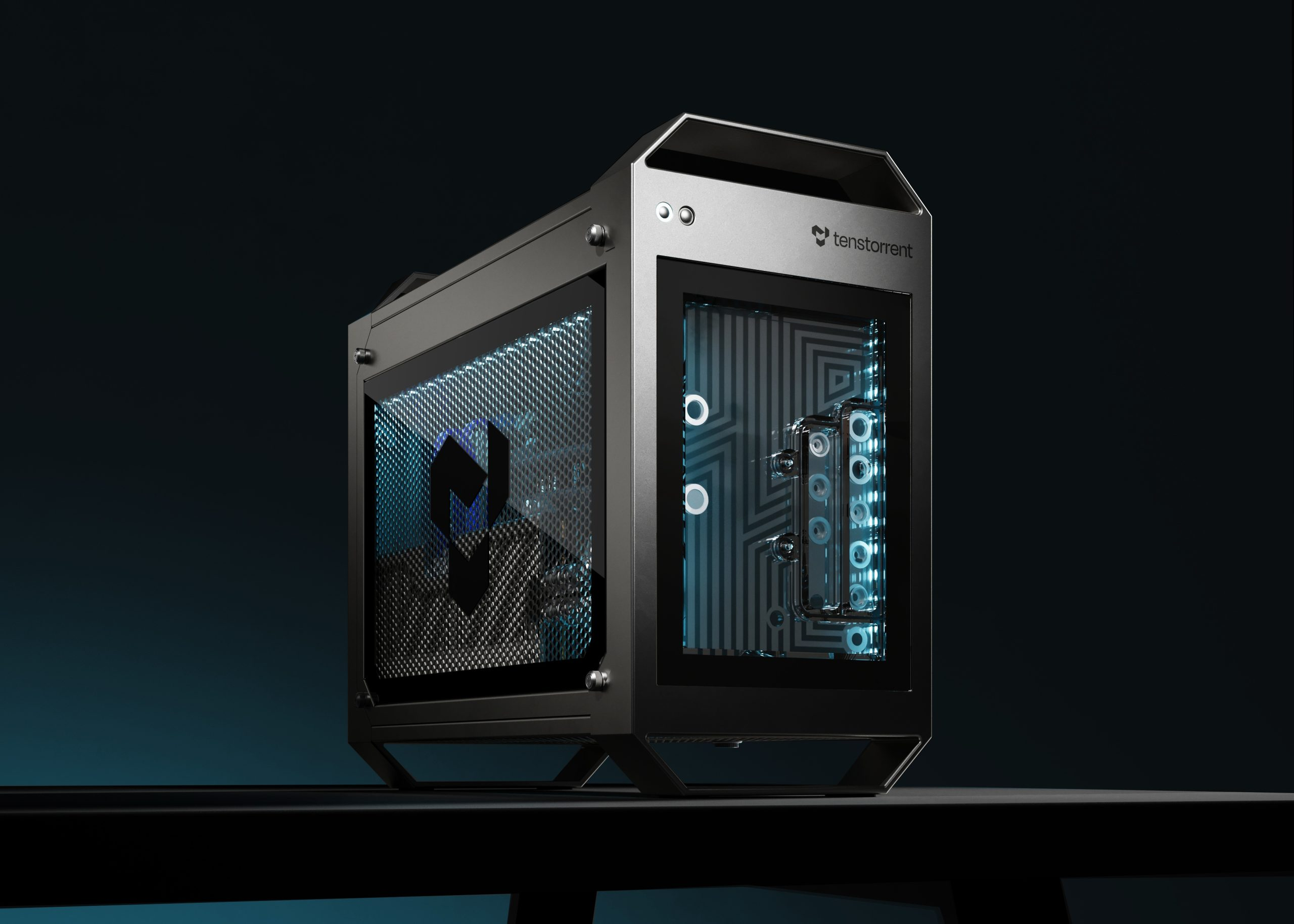
Tenstorrent has officially unveiled the TT QuietBox 2, a new desk side AI workstation built around the company’s Blackhole processors and positioned as a locally deployable alternative to traditional cloud dependent inference infrastructure. According to Tenstorrent’s launch materials, the system is a whisper quiet, liquid cooled workstation designed to run models with up to 120 billion parameters directly at the desk, while offering a fully open source software stack from compiler to kernel. The company is positioning it as the industry’s first desktop AI workstation built on RISC V architecture for teraflop class inference.
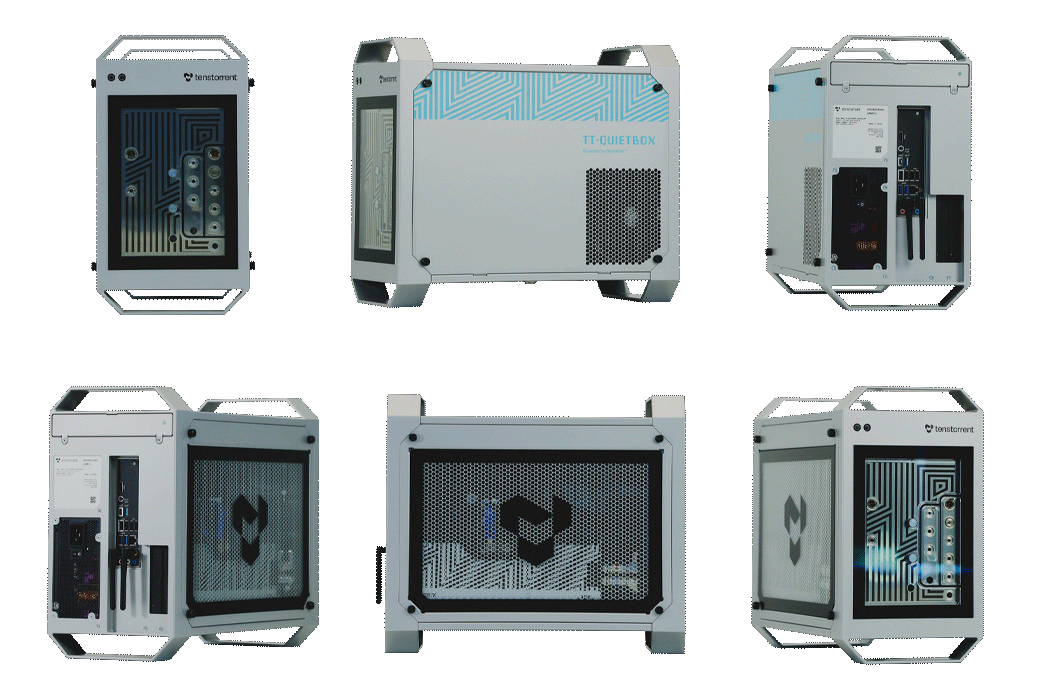
From a hardware standpoint, TT QuietBox 2 is built around four Blackhole ASICs, giving the system a combined 480 Tensix cores, 64 big RISC V cores, 128GB of GDDR6, and 256GB of DDR5 system memory. Tenstorrent says the architecture is designed to move tensors efficiently through on chip memory and SRAM while avoiding some of the bandwidth and supply limitations tied to HBM based systems. The company also says the workstation runs on Ubuntu 24.04, plugs into a standard 120V wall outlet, and is intended to be deployed without a rack or dedicated server room.
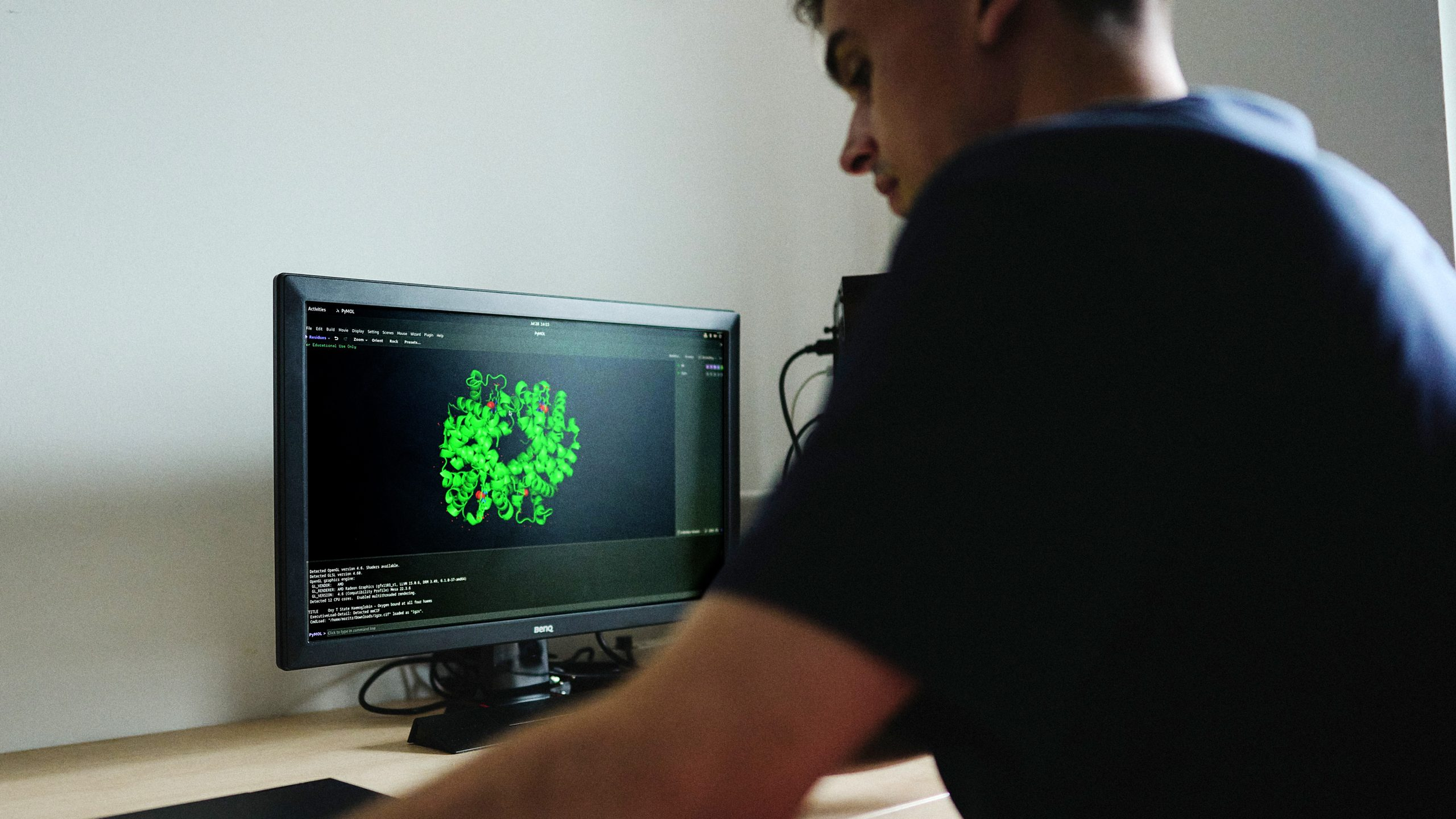
One of the boldest messages in this launch is usability at scale for real local AI workloads. Tenstorrent claims the workstation can run GPT OSS 120B fully on device, while Llama 3.1 70B reaches 476.5 tokens per second. The company also highlights support for Qwen3 32B as a private coding agent, Flux for image generation, Wan 2.2 for local video synthesis, and Boltz 2 for biomolecular inference. In one of the more aggressive scientific examples, Tenstorrent says a single Blackhole processor can predict the structure of a 686 amino acid protein in 49 seconds, versus 45 minutes on a modern CPU. Those are vendor supplied claims, but they clearly show where the company wants this product to compete: private inference, development, and specialized on premises AI work without cloud token costs.
The software angle is arguably just as important as the silicon. Tenstorrent says TT Forge, TT Metalium, and TT LLK are all part of the open source stack, giving developers visibility into graph lowering, optimization, kernel control, and hardware level execution behavior. That matters because Tenstorrent is not just selling performance here. It is selling control. In a market where many AI systems are tightly wrapped in proprietary tooling, the company is making transparency a core part of the product pitch. The official waitlist page reinforces that positioning by explicitly describing TT QuietBox 2 as an open source full stack platform that users can edit, fork, and own.
There is also an interesting market positioning layer here. Tenstorrent says TT QuietBox 2 avoids the HBM supply shortages that are pushing up pricing across the AI hardware market by relying on GDDR6 and on chip SRAM instead. That does not make it a direct replacement for every enterprise accelerator configuration, but it does create a distinct value proposition for developers, labs, and smaller scale commercial deployments that want local inference capacity without entering the full cost structure of a rack scale AI environment. In other words, Tenstorrent is not only challenging NVIDIA and other accelerator vendors on architecture philosophy. It is also trying to challenge the assumption that serious AI development always needs expensive, closed, data center first hardware.
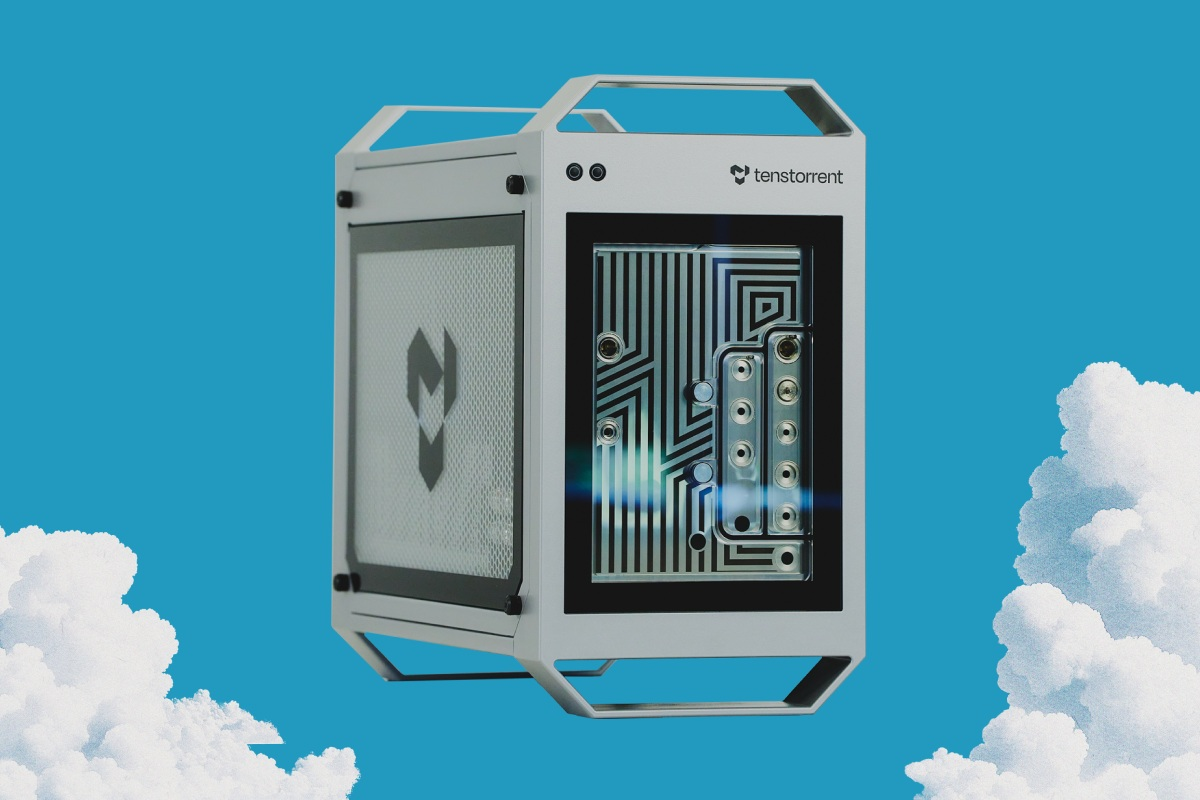
The pricing story is also worth watching carefully. Tenstorrent’s newly launched TT QuietBox 2 materials say the system starts at $9,999 and will ship globally in Q2 2026. However, Tenstorrent’s currently listed TT QuietBox Blackhole product page still shows an existing workstation configuration priced at $11,999. That suggests the new QuietBox 2 is either a refreshed entry configuration, a separate SKU structure, or part of a broader lineup update still being rolled out across the company’s storefront. Either way, the lower starting figure is central to Tenstorrent’s competitive messaging.
For the broader hardware industry, this launch is notable because it is another sign that AI workstations are moving out of the server room narrative and into a more developer centric form factor. Tenstorrent is effectively trying to package local inference, open tooling, high memory capacity, and quiet acoustics into a system that can live on or near a desk. That is a very different pitch from the traditional accelerator market, and it could resonate with researchers, private model developers, and businesses that want to keep inference and data processing in house.
The big question now is execution. The spec sheet is ambitious, the open source narrative is strong, and the price undercuts the image many buyers associate with high end local AI hardware. But the actual market impact will depend on software maturity, model support breadth, developer adoption, and how consistently Tenstorrent can translate its architecture story into production ready workflows. Even so, TT QuietBox 2 is one of the more interesting AI workstation launches of 2026 so far because it is not just another box with more memory. It is Tenstorrent making a direct case for a different AI hardware future.
What do you think about Tenstorrent’s approach here, could a fully open RISC V based AI workstation become a serious alternative for local inference and developer workflows?
