
While researching affordable hardware for an upcoming article on running artificial intelligence locally, we encountered a concerning situation involving a Taiwanese second hand GPU retailer that canceled our NVIDIA Tesla V100 32GB preorder shortly before its scheduled delivery. Our original purchase, placed approximately 1 month earlier through Shopee Taiwan, cost NT$25,500 and was expected to arrive on November 14, 2026. However, on November 11, just 3 days before the scheduled delivery, our order was canceled and refunded. The same seller subsequently advertised the Tesla V100 32GB product family for NT$32,500 after vouchers, representing an increase of NT$7,000, or approximately 27.5% over our original purchase price.
Our investigation began as part of an upcoming article exploring practical and affordable alternatives for running local AI workloads without relying on expensive modern graphics cards or recurring cloud subscriptions. During our research into Taiwan's second hand hardware market, we discovered multiple NVIDIA Tesla V100 32GB accelerators available at competitive prices. Considering their substantial memory capacity, we identified these older enterprise GPUs as potentially valuable candidates for benchmarking large language models, image generation and other GPU accelerated AI applications. Rather than relying exclusively on theoretical specifications, we wanted to purchase the hardware ourselves and evaluate whether these retired enterprise accelerators could provide meaningful performance for enthusiasts and developers working with limited budgets.
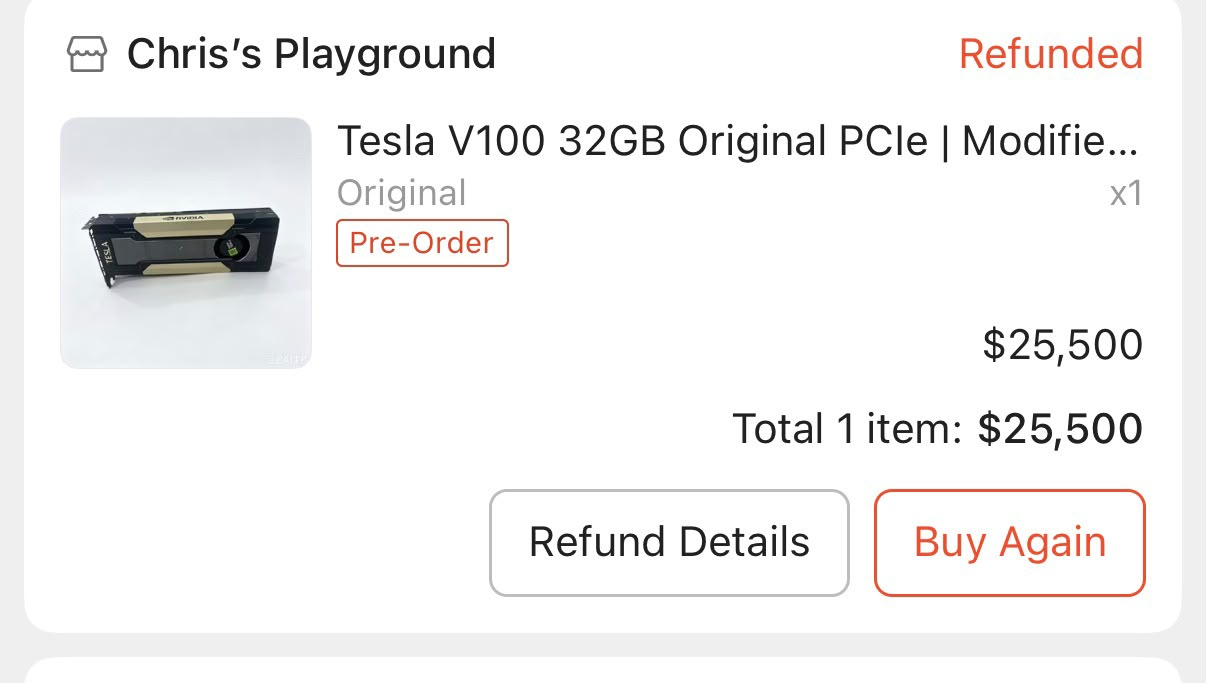
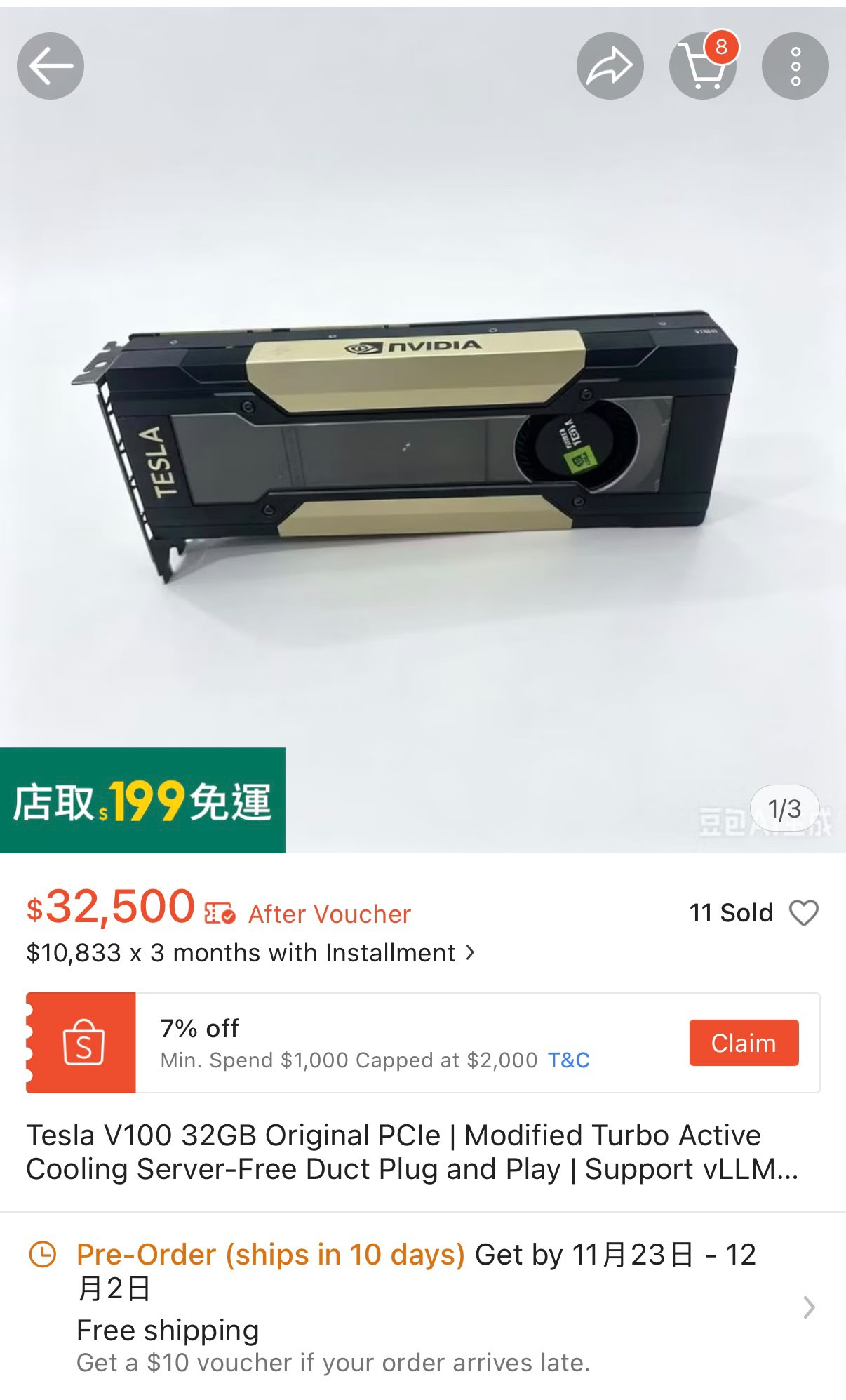
We eventually selected an NVIDIA Tesla V100 32GB PCIe from a seller on Shopee Taiwan, priced at NT$25,500. The listing included a preorder arrangement, and we placed our order approximately 1 month ahead of the expected November 14 delivery. Having committed to the purchase, we organized our testing plans around the anticipated arrival of the GPU. Unfortunately, on November 11, we discovered that our order had been canceled, despite the seller subsequently advertising the same GPU product family at a considerably higher price.
After contacting the seller directly to understand why our purchase had been canceled, we received the following explanation:
"We are so sorry we couldn't ship your order on time! Because our supplier tightly restricted stock and raised prices significantly, we couldn't get the items in time and your order expired and was canceled."
— Quote by: The seller
The seller further explained that new prices and confirmed stock quantities had already been updated in the store, encouraging us to place another order if the revised price remained acceptable. According to the seller, a replacement purchase could be secured immediately and shipped within 7 to 10 business days. This response was particularly disappointing because we had already committed to the original transaction and waited approximately 1 month for the expected delivery. Instead of receiving the hardware we purchased, we were offered the opportunity to buy it again at a substantially higher advertised price.
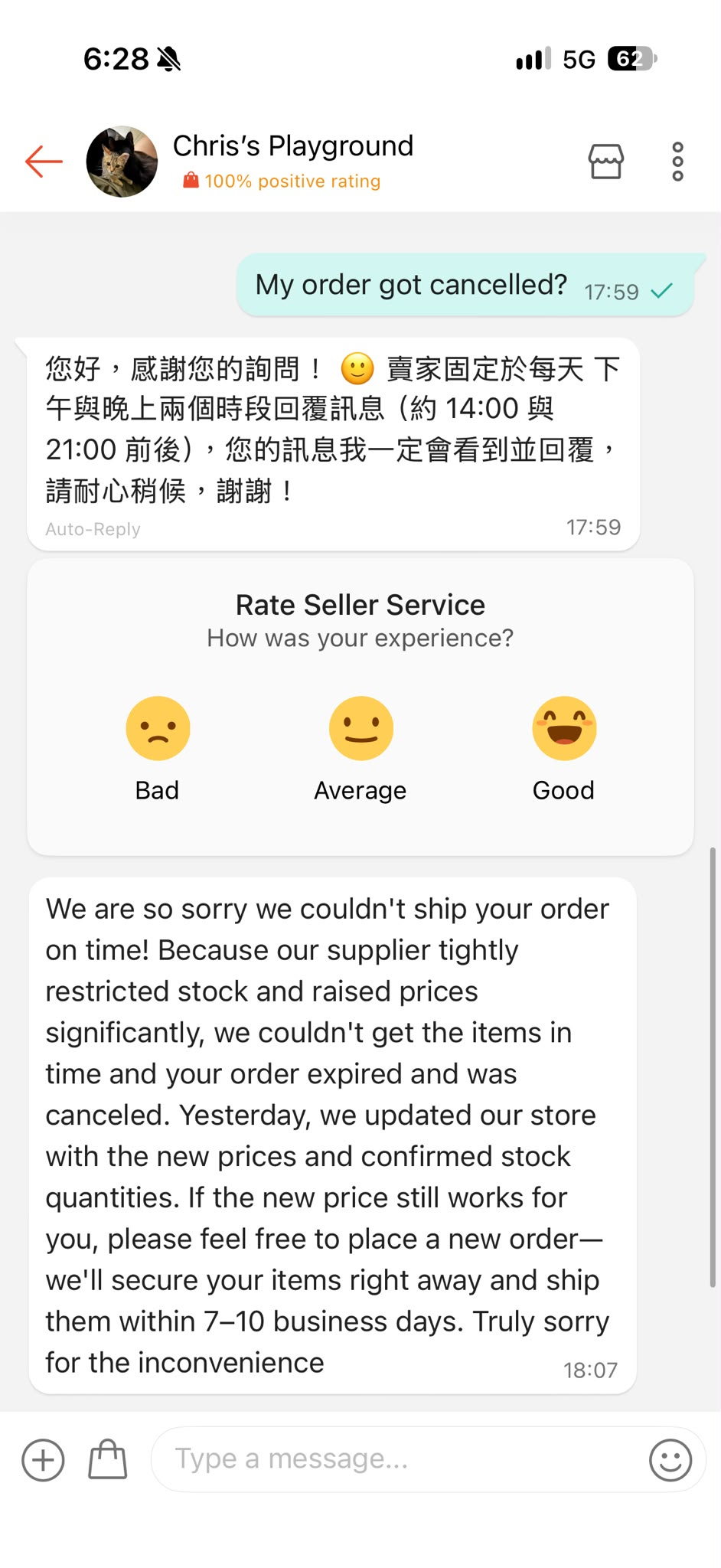
The order history, cancellation notice and direct conversation with the seller are documented in screenshots obtained from our own Shopee account. While these records establish our purchase, the cancellation and the seller's explanation, they do not independently prove that the cancellation was deliberately intended to secure a higher selling price. The screenshots also do not conclusively establish that the updated listing offered an identical cooling configuration. Nevertheless, the sequence raises legitimate questions about preorder reliability, inventory management and whether retailers should be able to shift unexpected supplier costs onto customers who have already committed to a purchase.
The hardware itself remains particularly interesting for the expanding local AI community. The NVIDIA Tesla V100, powered by the Volta architecture, offers 32GB of HBM2 memory, up to 900 GB/s of memory bandwidth and CUDA acceleration. Although originally developed for enterprise computing and machine learning, these accelerators can still provide useful memory capacity for selected AI workloads. Their limitations include older Tensor Core capabilities, software compatibility considerations, substantial power consumption and cooling requirements that can complicate installation in conventional desktop systems. Our planned testing was intended to evaluate precisely these tradeoffs and determine whether the lower acquisition cost could justify the compromises compared with newer consumer hardware.
The broader hardware market is also facing growing pressure from artificial intelligence infrastructure investments. As covered in SK hynix's warning about memory shortages potentially lasting until 2030, manufacturers are increasingly allocating production toward high value enterprise memory and AI infrastructure. However, shortages involving new memory production should not automatically be treated as an explanation for price increases in second hand enterprise GPUs. These products operate within a separate market influenced by retired server inventory, refurbishment costs, regional availability and demand from users seeking affordable AI computing hardware.
More importantly, Taiwan already has consumer protection guidance addressing disputes involving retailers canceling orders after supplier prices increase. In June 2026, the Taipei City Government Department of Legal Affairs addressed similar complaints involving electronics retailers canceling purchases or requesting additional payments after manufacturers increased prices. Authorities emphasized that supplier price increases do not automatically justify withdrawing from an established sales contract. Whether a legally binding agreement existed in our specific transaction would depend on the marketplace's contractual terms, order confirmation process and applicable Taiwanese law.
This experience highlights a growing concern in the hardware market, particularly as artificial intelligence increases demand for GPUs with substantial memory capacity. As technology enthusiasts and journalists, we understand that supply restrictions, inventory fluctuations and supplier price increases can create significant challenges for smaller retailers. However, we strongly believe that customers who place confirmed preorders should not be expected to absorb unexpected price increases simply because the market becomes more expensive before delivery.
In our case, we were not attempting to purchase hardware for resale or speculation. We were conducting research for an article intended to help PC enthusiasts, developers and gamers discover affordable options for experimenting with local AI. We identified promising hardware, committed to the purchase at the advertised price and waited approximately 1 month for its expected arrival. Instead, our order was canceled on November 11, only 3 days before delivery, while the seller offered the opportunity to purchase the same GPU product family at a significantly higher price.
What makes the situation particularly concerning is the seller's confirmation that new stock quantities had already been secured. If inventory was available for new purchases, it raises the question of why existing customers were not prioritized under their original agreements. While we cannot establish the seller's internal procurement circumstances, the outcome shifted the consequences of supplier price fluctuations onto us as the original buyers.
The refund also fails to address the disruption caused by the cancellation. We lost valuable time that could have been spent purchasing alternative hardware, preparing benchmarks and evaluating affordable AI solutions for our readers. For independent technology publications, developers and enthusiasts, purchasing hardware often involves planning projects around delivery schedules, available budgets and specific testing requirements.
Our position remains that affordable computing hardware should be accessible to everyone, and the second hand enterprise market has an important role in extending the useful life of powerful components. Rising demand for local AI should encourage competition, transparency and responsible retail practices rather than making previously agreed purchases uncertain.
This is our documented experience with 1 Taiwanese seller, not evidence that such cancellations are widespread across the country's second hand GPU market. Nevertheless, it demonstrates why consumer protection and retailer accountability are increasingly important as demand for affordable AI computing continues to grow.
We waited approximately 1 month for our Tesla V100 32GB, only to have the order canceled 3 days before delivery while the seller advertised it at a 27.5% higher price. Should retailers be required to honor confirmed preorders regardless of supplier price increases, or should they be allowed to cancel and offer customers the same hardware at a new price?
