
Steam Deck Sales Estimated to Fall 82% After Valve Price Hike
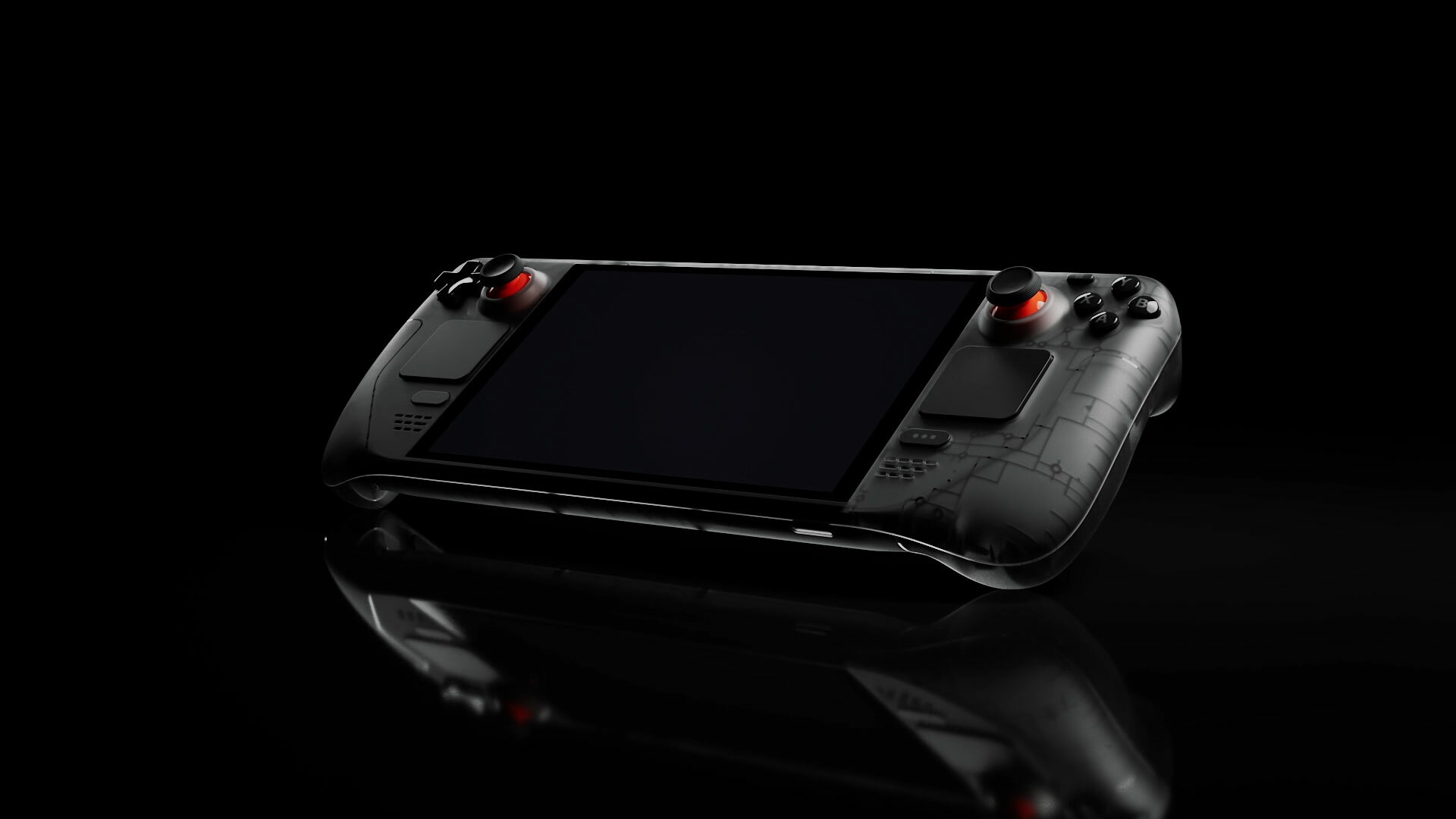
Steam Deck demand may have declined sharply following Valve’s major price increase in May 2026, with a new analysis estimating that weekly unit sales have fallen by approximately 82%. The calculation is not based on official shipment figures, but the handheld’s movement through Steam’s revenue based global sales chart suggests that its higher pricing has significantly weakened its value proposition.
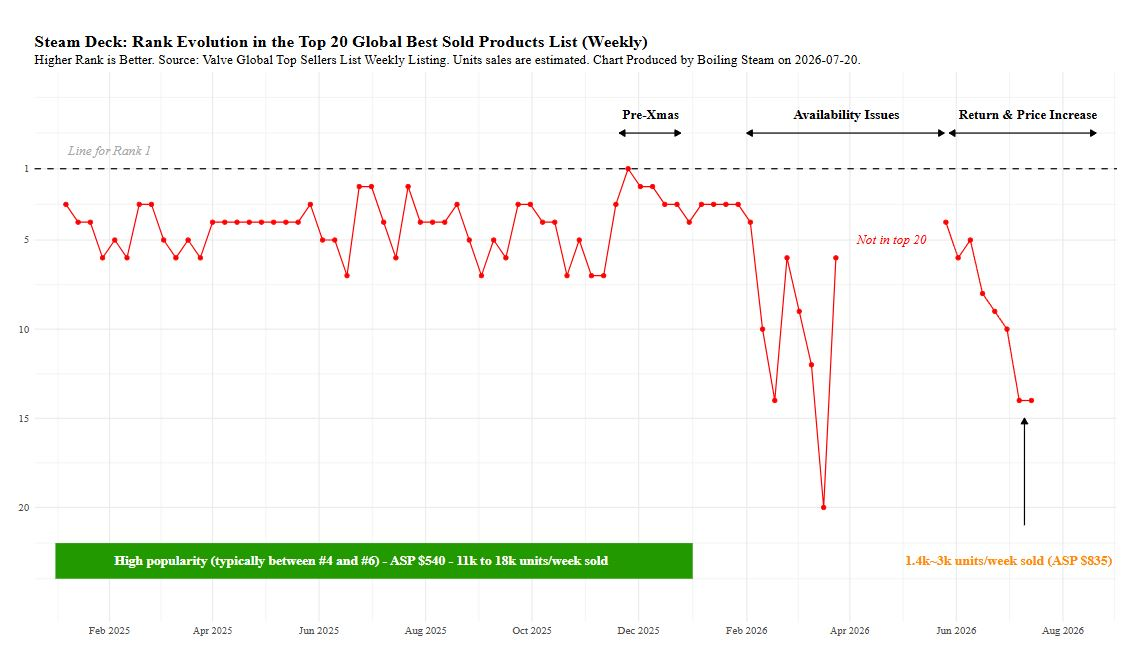
According to Boiling Steam, the Steam Deck remained remarkably stable throughout 2025, usually ranking around 4th or 5th among Steam’s highest grossing products. The ranking combines games, downloadable content and hardware, measuring gross revenue rather than the number of units sold.
Supply issues disrupted availability during early 2026, before Valve restored inventory on May 27 with substantially higher prices. The 512 GB Steam Deck OLED increased from US$549 to US$789, representing a 44% increase, while the 1 TB model rose from US$649 to US$949, an increase of approximately 46%. Valve also removed the more accessible US$399 LCD model from its primary lineup.
Following the return of inventory, Steam Deck initially remained near 5th place before falling to 14th for 2 consecutive weeks during early July. More recent chart data placed the handheld around 12th, but it remains significantly below the position it regularly maintained throughout 2025.
Boiling Steam attempted to translate the revenue ranking into estimated hardware sales by examining the likely weekly revenue generated by products occupying similar chart positions. The analysis estimates that Steam Deck previously generated between US$6 million and US$10 million per week while ranked between 4th and 5th, compared with approximately US$1.2 million to US$2.5 million while positioned between 10th and 15th.
The publication then calculated an estimated average selling price of approximately US$540 during 2025, based on an assumed sales mix between the LCD and OLED models. Following the removal of the LCD version and the new OLED prices, the estimated average increased to around US$835.
Using those assumptions, weekly sales may have declined from between 11,000 and 18,000 units during 2025 to approximately 1,400 to 3,000 units during July 2026. This would represent an estimated revenue contraction of 72% and a unit volume decline of around 82%.
These figures should be treated carefully. Valve does not publish weekly Steam Deck shipment numbers, and Boiling Steam’s model relies on estimated revenue ranges, average pricing and an assumed distribution of sales between models. Supply limitations may have also affected the rankings, especially after the handheld briefly became unavailable again in North America following its return.
Nevertheless, the broader trend indicates that the Steam Deck is generating considerably less revenue than it did before the increase. At its original US$399 to US$649 pricing, Valve’s handheld offered a strong balance between affordability, software integration and access to a large PC gaming library. At US$789 to US$949, buyers can begin comparing it against newer Windows handhelds, gaming laptops and entry level desktop systems with stronger processors and graphics hardware.
Valve has confirmed that it remains actively involved in developing a Steam Deck successor, although no launch window or specifications have been announced. The company has previously indicated that it wants a meaningful improvement in performance and efficiency rather than a minor hardware refresh, but current component conditions could make an affordable Steam Deck 2 increasingly difficult to deliver. More information is available in our previous report on Steam Deck 2 development.
An 82% decline is a dramatic estimate, but it should not be presented as an official sales result. The methodology contains several assumptions, and limited inventory could have contributed to the decline alongside weaker consumer demand.
However, Valve has clearly moved the Steam Deck into a different competitive category. A US$399 handheld can be accepted despite aging hardware because it offers exceptional access to PC gaming at a console level price. A US$949 handheld must compete directly against faster alternatives and convince buyers that SteamOS integration, controls and efficiency justify the performance difference.
The original Steam Deck succeeded because it made portable PC gaming more accessible. Its current pricing risks removing that advantage at the exact moment when competitors are introducing more powerful hardware.
Would you still consider buying a Steam Deck OLED at US$789 or US$949, or has Valve pushed the handheld beyond its reasonable price range?
