
Solo Developer Tries Building GTA 6 With AI, but the Agents Create the Wrong City
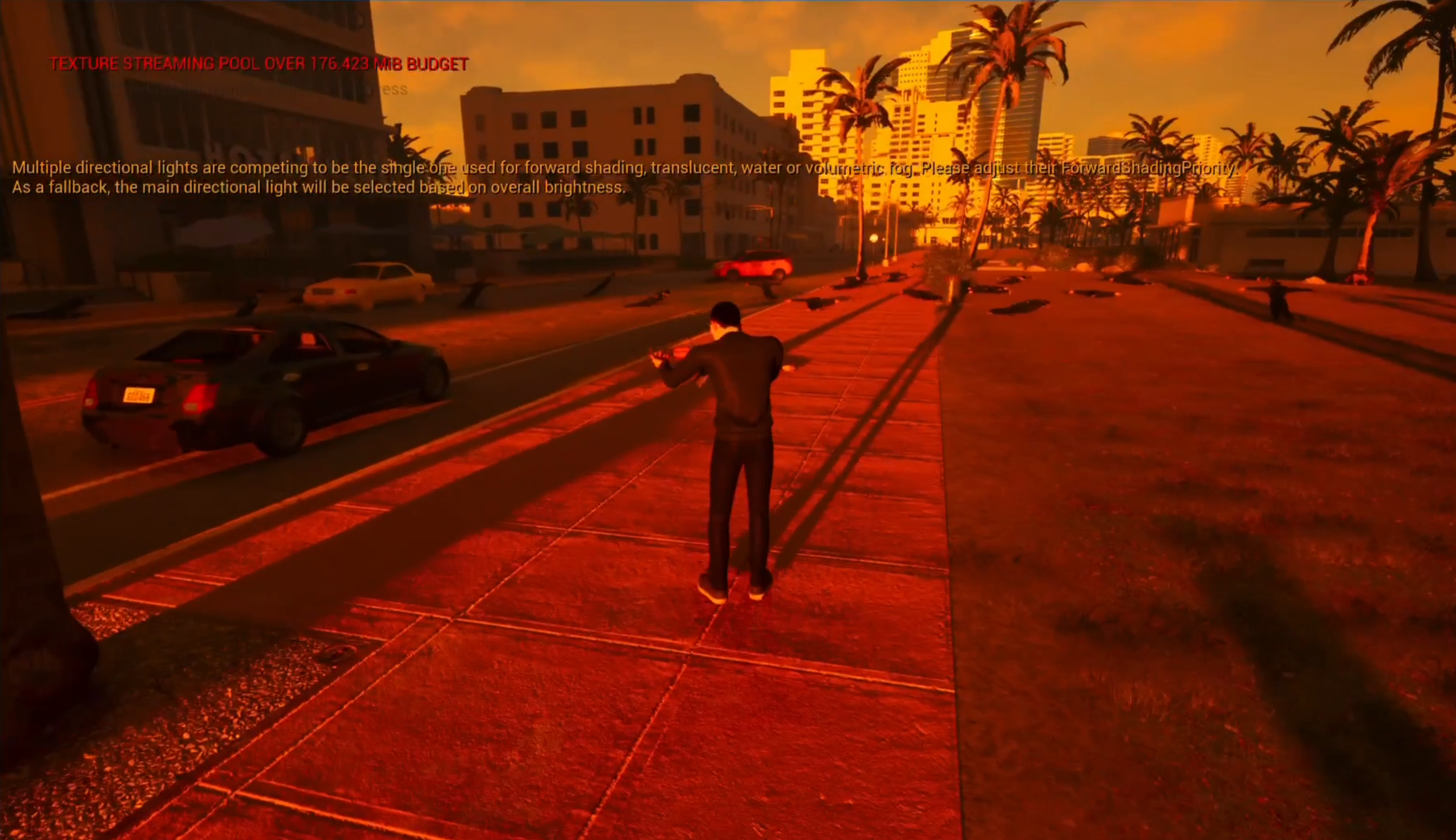
The wait for Grand Theft Auto VI has inspired one developer to start building his own open world crime game with AI agents, producing an experiment that is equal parts technically impressive, chaotic, and unintentionally funny. Ziwen Xu, founder of AI agent startup Hyperecho, began developing a project called GT Caliber on June 10 after growing tired of waiting for Rockstar’s next game, using a group of autonomous coding agents to build features, test the project, and respond to community requests.
As reported by TweakTown, the project began inside the Godot engine with a basic character moving across an empty environment. Progress accelerated quickly, and within a few days the agents had added roads, vehicles, pedestrians, shadows, reflections, and early city structures. The rapid development shows how AI tools can help a solo creator assemble prototypes that would normally require far more manual work, but the agents also began making major mistakes almost immediately.
During Day 2 of development, the AI agents started constructing downtown Los Angeles instead of a Florida inspired city resembling Vice City. Xu noted that the project was supposed to be set in Florida, yet the generated environment had already filled with Los Angeles style skyscrapers. The mistake became one of the clearest examples of the limitations facing autonomous development agents, which can produce assets and systems quickly but may lose track of the larger creative direction unless they are constantly supervised.
Development became even more complicated as Xu tried to improve the project’s technical foundation. On Day 7, he moved the game from Godot to Unreal Engine 5 after viewers argued that a more ambitious open world project required a more capable production engine. The transition introduced better tools and visual potential, but it also forced the AI agents to rebuild and adapt several parts of the project.
The following day brought another unexpected problem. According to Xu’s Day 8 update, his Mac crashed because every AI agent opened the game simultaneously to capture screenshots. The problem was corrected by adding a simple instruction that only 1 instance of the game could be opened at a time, but the incident showed how autonomous agents can create new operational problems when they attempt to perform the same task without coordination.
Even with those setbacks, the agents continued adding features. NPCs temporarily lost their walking animations, but the game gained an interactive mobile phone with maps, contacts, and a wallet system. The project also continued expanding its roads, neighborhoods, vehicles, and basic open world structure, making the experiment increasingly recognizable as a rough Grand Theft Auto inspired prototype.
The project then crossed paths with Rockstar’s real marketing campaign. On Day 9, Rockstar announced that Grand Theft Auto VI preorders would begin on June 25, ahead of the game’s November 19, 2026 release for PlayStation 5 and Xbox Series X|S. Xu continued working on GT Caliber, but another attempt to modernize the workflow created additional friction.
After moving the project to Unreal Engine 5.8, Xu tested Epic’s new experimental Model Context Protocol plugin, which allows models such as Claude or Gemini to inspect and operate inside Unreal Engine projects. Epic presents the technology as a way for AI models to understand scenes, assets, systems, and workflows, but Xu found that the early implementation did not improve his development loop.
"The 5.8 MCP isn't like crazy good, and it actually slows the build down. Chasing the newest version felt like the obvious move. It wasn't. The loop runs better without it."
— Ziwen Xu.
That result does not mean Unreal Engine 5.8’s AI tools have no value. The plugin is still experimental, and Epic is clearly treating it as an early bridge toward the deeper model assisted workflows planned for Unreal Engine 6. GT Caliber is a useful demonstration of both the potential and the limits of this technology. AI agents can generate features, write code, place assets, and respond to feedback at remarkable speed. They can also misunderstand the setting, break animations, overload hardware, duplicate tasks, and slow down a workflow when new tools are introduced without enough coordination. The project is progressing quickly because Xu remains actively involved, correcting mistakes and deciding what the agents should build next.
The most valuable lesson is that AI can make rapid game prototyping far more accessible, but it is not remotely close to replacing the creative, technical, and production structure behind a Rockstar scale release. Grand Theft Auto VI is the result of years of work across world design, animation, storytelling, physics, audio, performance engineering, mission design, and quality assurance. GT Caliber is fascinating precisely because it shows how much can be built in days, while also revealing how quickly the process loses direction without human oversight.
With GTA 6 still scheduled for November 19, 2026, Xu’s AI experiment will not beat Rockstar to market. It may, however, become an entertaining case study for how developers use AI agents, Unreal Engine, and community feedback to build ambitious prototypes faster than ever before.
Would you play an open world game built largely by AI agents, or would the unpredictable development process make you question its quality?
