
Singularity Computers Launches PSU Penta Node Hub That Can Control Up to 5 Power Supplies From 1 Central Board
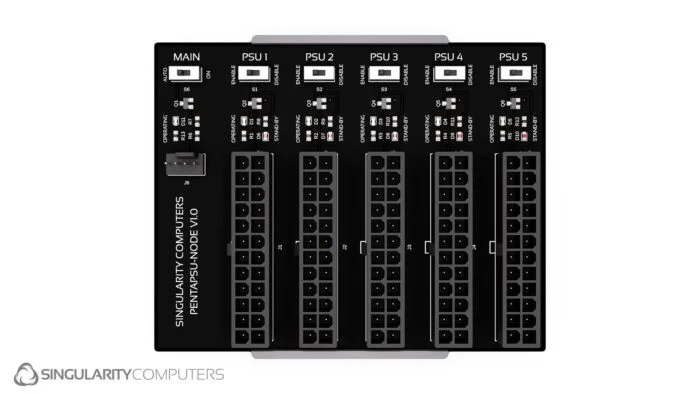
Singularity Computers has introduced a niche but genuinely practical accessory for extreme builders, test bench users, and modders who run multi PSU setups: the PSU Penta Node. Unlike the typical dual PSU sync adapters that only coordinate 2 units, this hub is designed to manage up to 5 power supply units from a single control point, giving enthusiasts a cleaner workflow without the usual wiring complexity.
The concept is simple and very builder friendly. You pick 1 main PSU, then connect up to 4 additional PSUs into the hub using its 24 pin connectors. From there, you can choose whether those additional power supplies follow the main system power state automatically, or whether you want manual, per PSU control for staging power delivery across a bench. That flexibility makes it especially appealing for power hungry stress tests, multi GPU platforms, and overclocking rigs where you may want to bring subsystems online in phases rather than flipping everything at once.
A key usability detail is that the board includes a dedicated switch per connector, enabling each PSU to be turned on or off individually. It supports 2 operation modes. Auto Mode syncs the connected PSUs to the main PSU, so when the system powers on, the additional PSUs come up automatically. On Mode enables manual control, letting you run a single PSU, keep others in standby, or activate multiple units only when needed. For builders who tune power and thermals like a checklist, this can streamline validation work and reduce setup friction during repeated bench sessions.
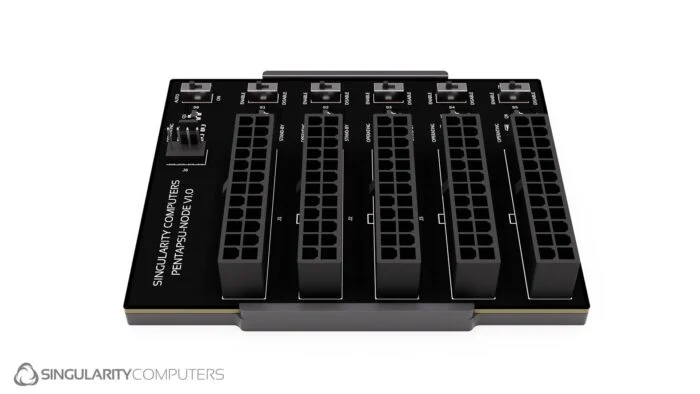
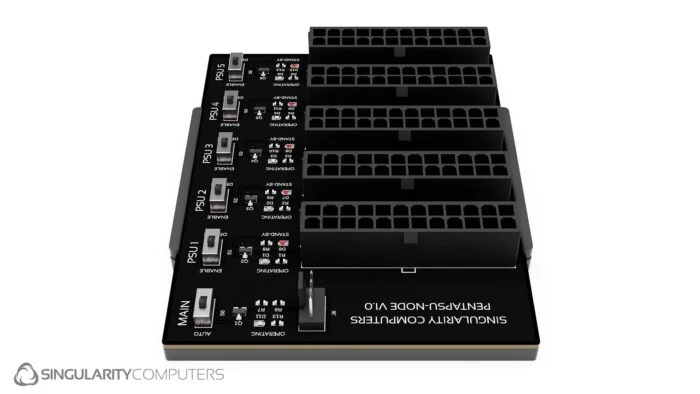
Status visibility is also built in. The hub provides LED indicators per PSU connection so you can quickly see whether a unit is in standby or actively running. The syncing logic is handled through a single PWM connection carrying the signal from the main PSU, which is a clean approach for bench reliability and repeatability.
This is not mainstream consumer hardware, and it is not trying to be. The value here is about control, modularity, and workflow, specifically for the kind of builder who regularly changes hardware, validates stability, or pushes power limits in a controlled environment.
Specifications shared
SC PSU Penta Node, black dual layer PCB
Connectors: 24 pin x5, 4 pin PWM x1
Cable: black PWM 500 mm
PCB dimensions: 80 mm x 60 mm x 12 mm
Packaged dimensions: 150 mm x 100 mm x 20 mm
Packaged weight: 0.1 kg
If you run multi PSU builds, would you want the extra PSUs synced in Auto Mode for convenience, or manual control so you can stage power for GPUs, pumps, and test loads separately?
