
RTX 5090 Owner Builds Open Source 12VHPWR Guard to Shut Down PCs Before Connector Melting
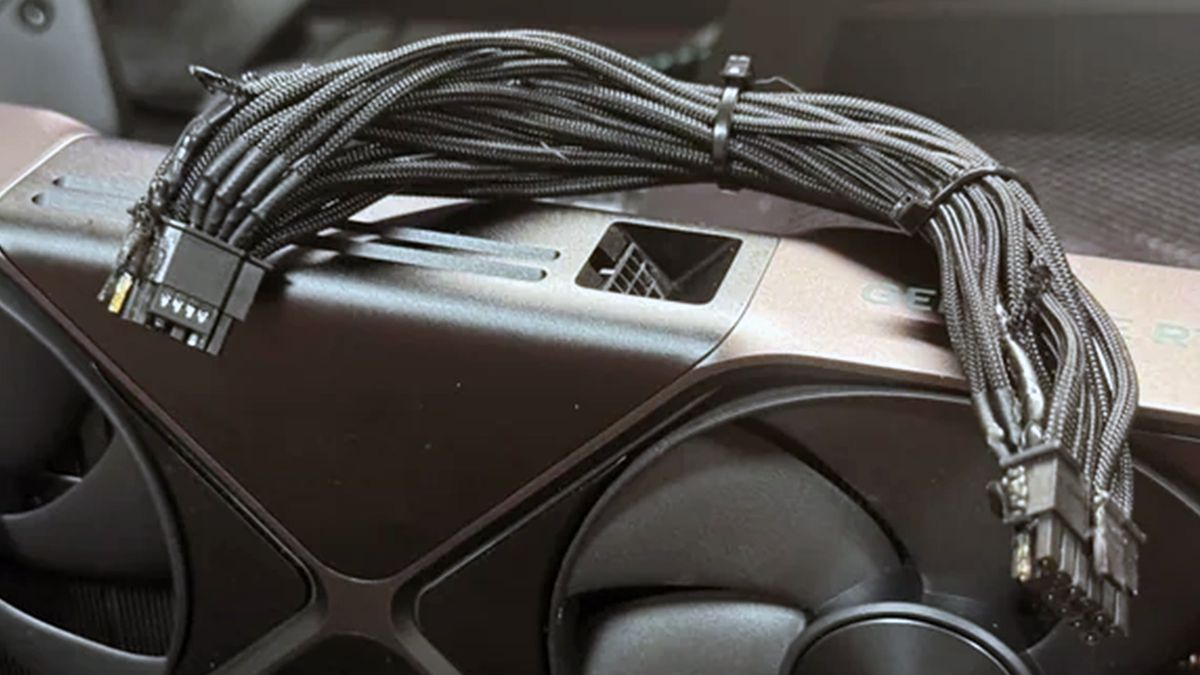
An RTX 5090 owner has developed an open source Windows utility designed to react to dangerous 12VHPWR current conditions before they can progress into an overheated or melted GPU power connector. Called 12VHPWR Guard, the lightweight monitoring tool continuously reads current data from each of the 6 power pins on supported ASUS ROG Astral graphics cards and can automatically shut down the PC when it detects sustained excessive current.
The project was created after its developer followed the continuing reports surrounding 16 pin connector failures on high power graphics cards. Instead of simply displaying current readings, 12VHPWR Guard is designed to take direct action. By default, the software checks all 6 pins every 0.5 seconds and initiates a forced Windows shutdown if any individual pin remains above 9.5A for 15 consecutive seconds. Short spikes therefore should not immediately shut the system down, while a sustained abnormal load can trigger protection before temperatures continue climbing.
This approach is particularly relevant for the GeForce RTX 5090 because NVIDIA officially rates the flagship Blackwell GPU at 575W Total Graphics Power, with a recommended 1000W system power supply and either a 600W PCIe Gen 5 cable or the included 4 connector PCIe adapter. Moving close to 600W through a single compact GPU power connector means current distribution across its individual contacts becomes extremely important.
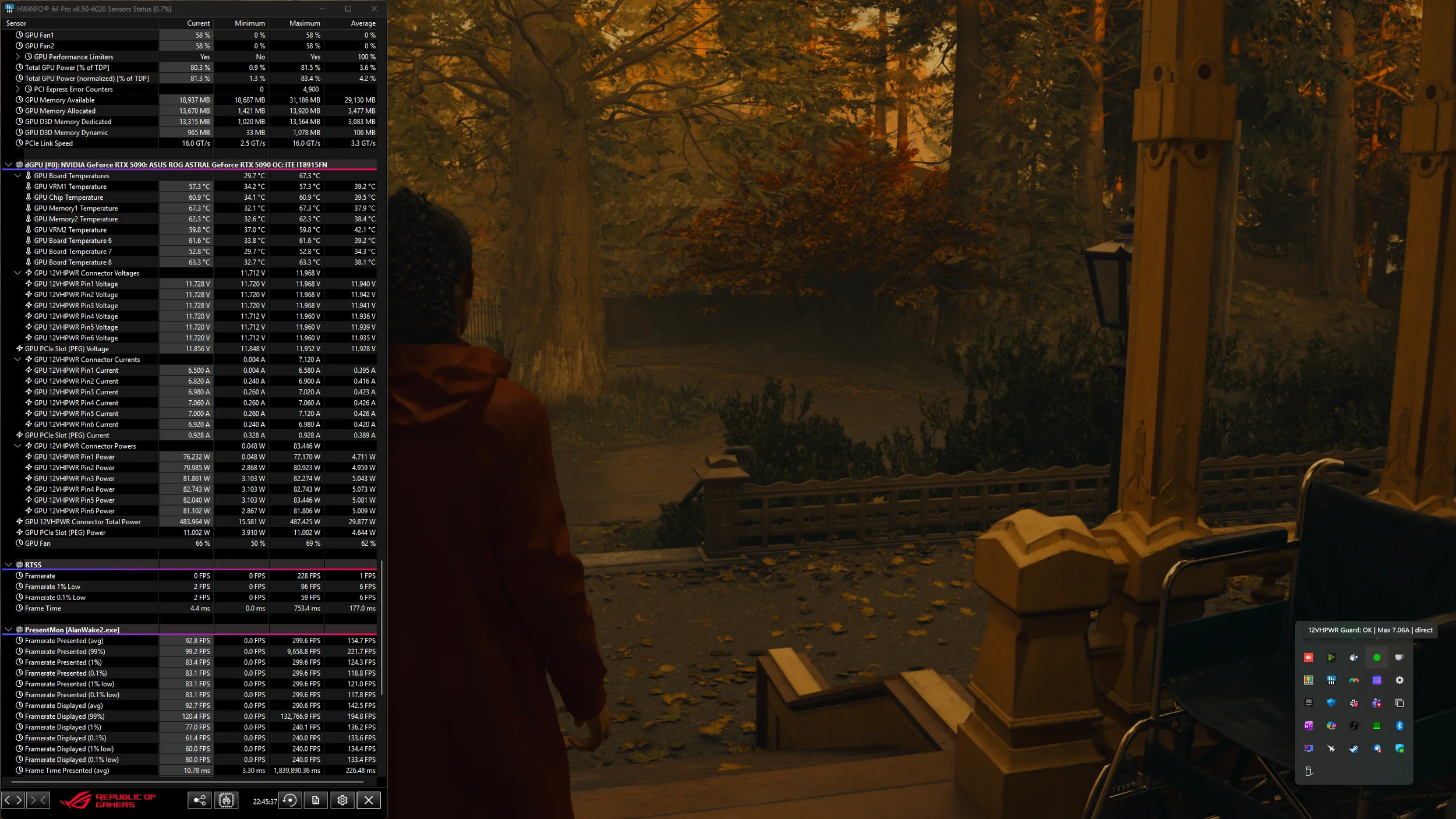
The tool currently works specifically with ASUS ROG Astral RTX 5080 and RTX 5090 models because those graphics cards integrate an ITE IT8915FN monitoring chip capable of measuring the current passing through each power pin individually. Supported hardware listed by the project includes the ROG Astral RTX 5090 OC, RTX 5090D OC, RTX 5090 Matrix, RTX 5090 LC, and RTX 5080 OC. Other graphics cards without accessible individual pin telemetry cannot currently use the protection system.
12VHPWR Guard can communicate directly with the monitoring chip through the NVIDIA driver interface, removing the requirement to keep HWiNFO running continuously. HWiNFO remains available as an optional fallback source, but the direct monitoring method is the default. The application operates from the Windows system tray, provides live status information, generates notifications and logs, automatically reconnects if sensor communication is interrupted, and can start with Windows through Task Scheduler.
ASUS already provides its own monitoring functionality through GPU Tweak III and Power Detector+. The official system monitors current across all 6 pins and displays a red warning if a pin reports 0A or exceeds 9.2A. ASUS recommends immediately shutting down the system and inspecting the power cable and connector if such a warning appears. 12VHPWR Guard effectively takes that concept further by allowing the computer itself to react when the user may not be looking at a warning notification.
There is an important technical distinction, however. ASUS identifies 9.2A as the point where Power Detector+ issues its warning, while the community developed 12VHPWR Guard currently uses 9.5A for 15 seconds as its default shutdown condition. The application allows both the amperage threshold and required duration to be changed, although its developer specifically warns that increasing these values reduces protection and could allow unsafe conditions to remain for longer. It should therefore be viewed as an additional software safety layer rather than a replacement for correct cable installation, quality power delivery hardware, and regular inspection.
The concern surrounding 16 pin power delivery has remained relevant as desktop GPUs push increasingly close to the maximum capacity of a single connector. ASUS itself introduced the ROG Equalizer in 2026 as another approach to the issue, using active load balancing across the 12V 2x6 connection while recommending Power Detector+ as an additional monitoring layer on compatible ROG graphics cards.
Power requirements are also increasing outside conventional gaming. NVIDIA's professional RTX PRO 6000 Blackwell reaches a full 600W power rating through a 12V 2x6 connection, while extreme workstation power supplies such as the Super Flower Leadex 2800W Titanium are now being designed to support several high power GPUs simultaneously. As desktop graphics hardware continues moving toward workstation and local AI workloads, connector monitoring and current distribution are becoming increasingly important parts of system reliability.
12VHPWR Guard is an interesting example of the PC enthusiast community addressing a hardware concern through software. ASUS already exposes unusually detailed individual pin telemetry on its ROG Astral cards, but monitoring data has limited value if nobody is watching it when a dangerous condition develops. Automatically shutting the system down creates an additional line of defense that could be particularly useful during long gaming sessions, rendering jobs, AI inference, or any workload that leaves an RTX 5090 operating near high power levels for extended periods.
The limitation is equally important. This is an independent open source project, not an NVIDIA or ASUS certified protection mechanism, and it currently depends on hardware telemetry available only on specific ROG Astral models. It cannot guarantee that connector damage will never occur, but the concept highlights something GPU manufacturers may increasingly need to address directly. On graphics cards approaching 600W, individual pin monitoring combined with automatic hardware level protection could eventually become far more valuable than simply showing users another warning notification.
Should NVIDIA and GPU manufacturers integrate automatic individual pin monitoring and emergency shutdown protection directly into future high power graphics cards?
