
Razer And Tenstorrent Unveil A Compact RISC V Based AI Accelerator For Thunderbolt 5 PCs, Bringing Modular Edge AI To Consumer Devices
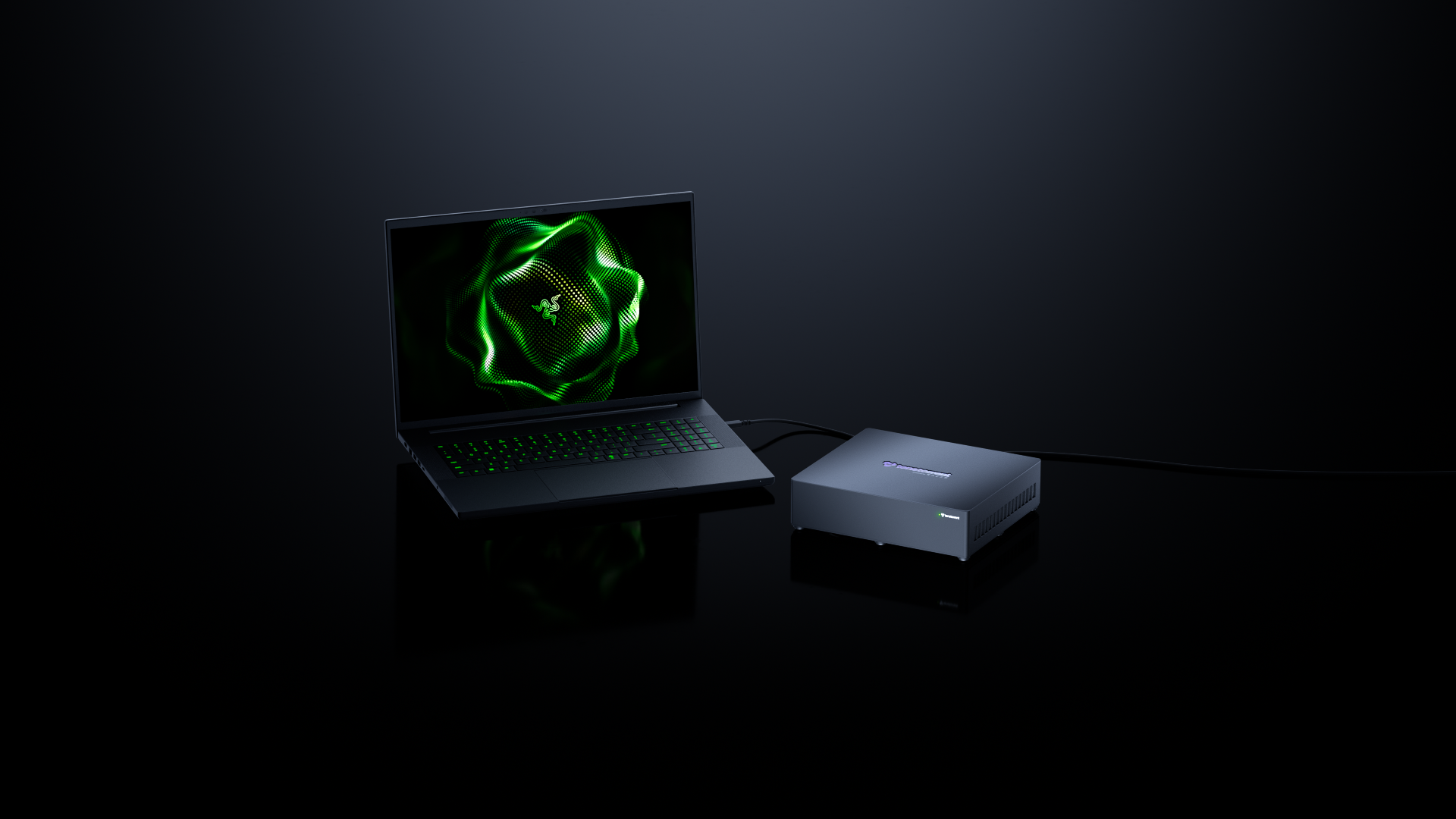
Tenstorrent used CES 2026 to unveil its first generation compact AI accelerator device developed in partnership with Razer, marking a notable milestone for consumer oriented hardware because it is framed as the first consumer facing device to feature a RISC V based AI accelerator. Positioned as a compact and modular external accelerator, the device is designed to bring generative AI capabilities to any system equipped with Thunderbolt 5, Thunderbolt 4, or USB4 connectivity, effectively turning a compatible laptop or desktop into a portable edge AI workstation for developers.
At the heart of the product is Tenstorrent’s Wormhole n150, which the company says enables scalability for multichip development and is supported by Tenstorrent’s open source software stack. The focus here is clearly developer enablement, with Tenstorrent stating that users will be able to run LLMs, image generation models, and a broad range of AI and ML workloads using its software ecosystem. Tenstorrent also points developers toward its software availability via its GitHub repository at tenstorrent github, reinforcing an open tooling narrative that aligns with RISC V’s broader community driven positioning.
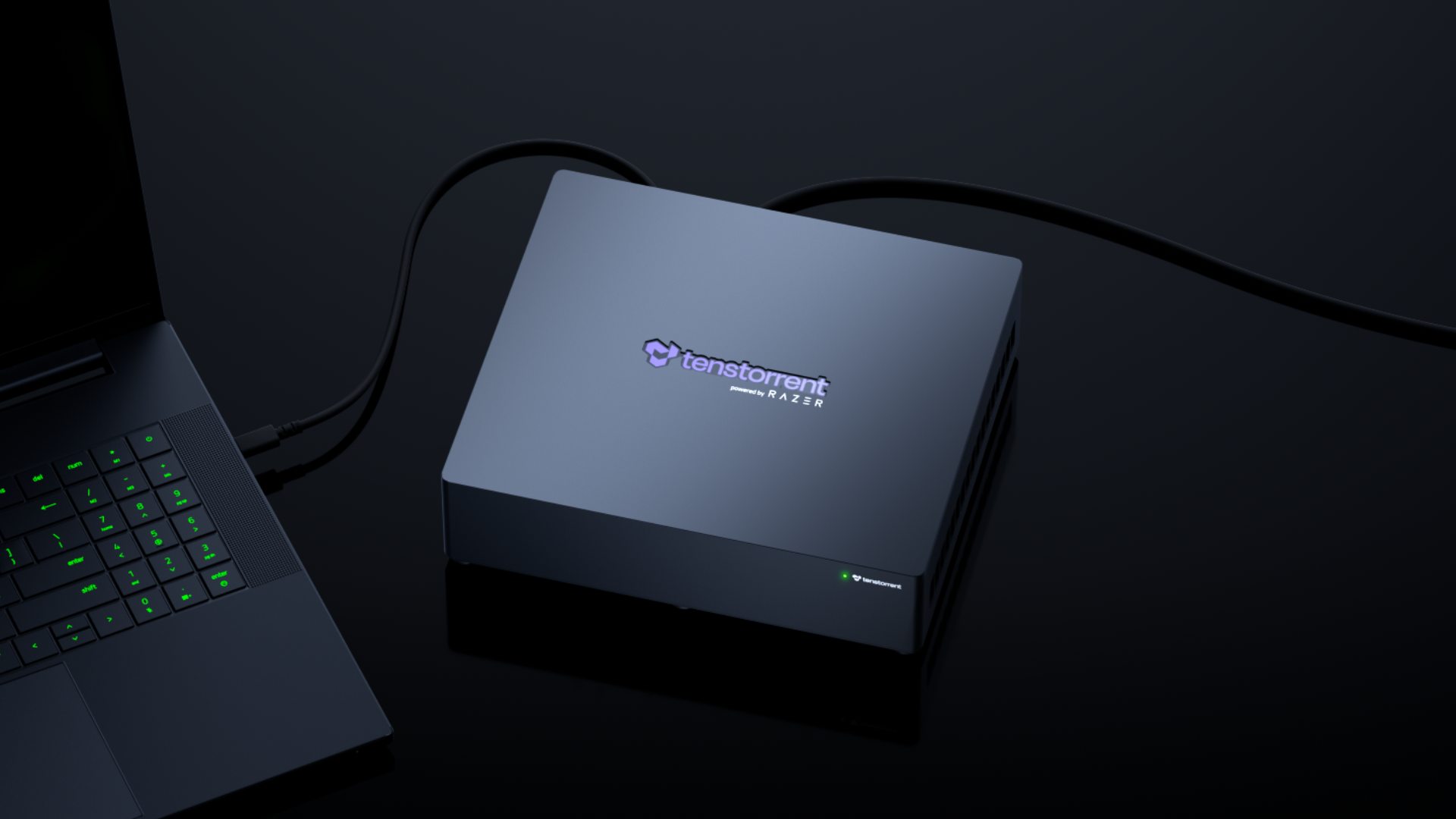
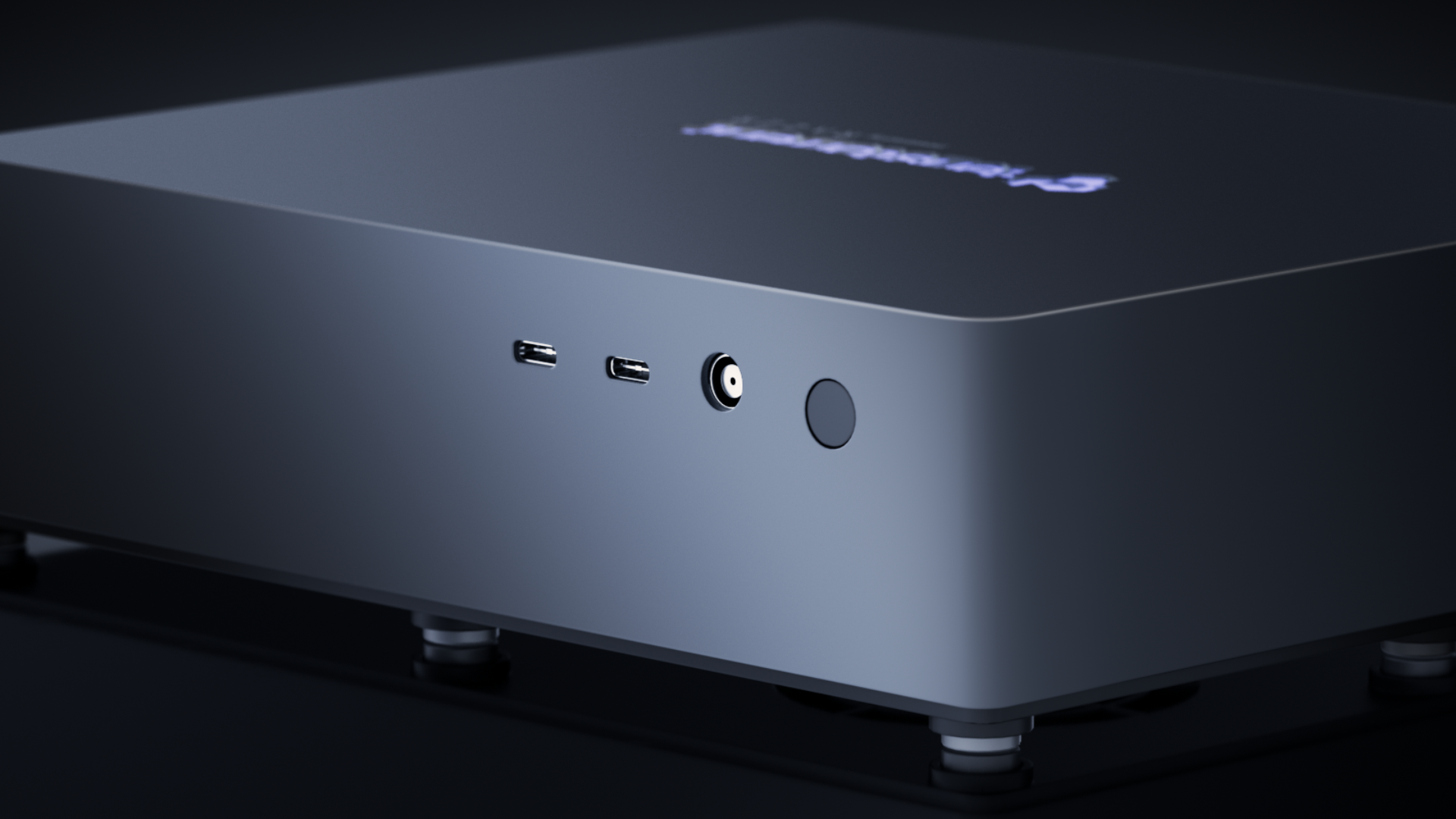
From a product design standpoint, the device is built around modularity and ease of adoption. Tenstorrent and Razer are positioning the enclosure and connectivity as the friction reducer, by packaging the accelerator in a small form factor that supports the latest Thunderbolt technology and can connect to a wide range of laptops and systems without the complexity of internal PCIe installs. That matters for practical workflows because it lowers the barrier for experimentation, classroom use, mobile dev setups, and small studio prototyping, especially for teams that want to validate edge inference use cases without committing to a rack or server footprint.
A standout capability is scaling via daisy chaining. Tenstorrent says users can connect up to 4 units to scale performance for larger models, effectively creating a desktop sized mini cluster for edge AI experimentation and deployment. This is a forward leaning approach that mirrors how many developers already think about modular compute, start small, validate, then scale up as model size and workload intensity grow. In a market dominated by large GPU solutions, the pitch here is portability and iterative scaling, powered by high bandwidth external interconnect.
Tenstorrent highlights the following key features for the device:
Compact modular design with a portable form factor intended for mobile AI development
High speed connectivity with Thunderbolt 5 support to enable fast data transfer and lower latency
Scalable performance through daisy chaining up to 4 devices for larger models and experiments
Open source integration designed to align with Tenstorrent’s software stack for flexible development
Razer frames the collaboration as part of a wider edge AI strategy and positions it as a performance plus mobility play. Travis Furst, Head of Notebook and Accessories Division at Razer, states that edge AI developers demand power, flexibility, and mobility, and that the partnership combines Tenstorrent’s AI acceleration technology with Razer’s high performance engineering and external enclosure design, with the goal of advancing portable compute for developers as part of Razer’s broader vision for AI.
For the PC and gaming adjacent ecosystem, this announcement is interesting because it expands what consumer grade hardware ecosystems can look like in the AI era. Rather than focusing purely on gaming performance, Razer is actively investing into developer oriented edge compute that can sit next to a laptop and scale through modular add ons. If Tenstorrent’s open tooling story and the external accelerator ergonomics land well, this could become a practical entry point for developers who want AI acceleration without building a full tower GPU rig or relying entirely on cloud resources.
Would you consider a modular external AI accelerator like this for local LLM and image generation work, or do you still prefer GPU based solutions inside a desktop for maximum compatibility and raw throughput?
