
NVIDIA Releases DLSS 4.5 SDK, Opening the Door for Ray Reconstruction, Dynamic Multi Frame Generation, and New Transformer Model Upgrades
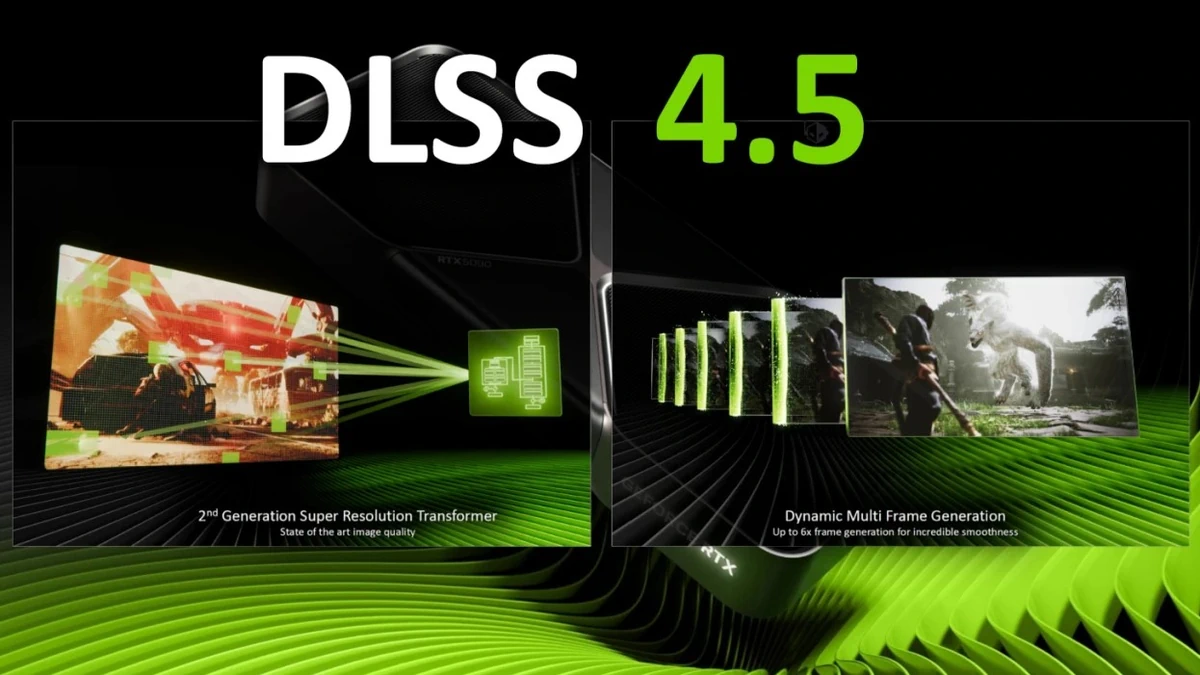
NVIDIA has officially made the DLSS 4.5 SDK available to developers, marking an important step forward for studios looking to integrate the company’s newest AI powered rendering features into upcoming games. Built on Streamline, the SDK gives developers a more unified path to adopt DLSS capabilities selectively, including Super Resolution, Frame Generation, Ray Reconstruction, and the newly introduced Dynamic Multi Frame Generation. NVIDIA’s developer materials also confirm that DLSS 4.5 brings a second generation transformer model, positioning this release as more than a routine update and instead as a broader quality and workflow upgrade for game developers working with RTX features.
According to NVIDIA’s official developer page, DLSS 4 introduced Multi Frame Generation and a transformer model for higher quality Super Resolution, while DLSS 4.5 adds Dynamic Multi Frame Generation and a second generation transformer AI model. The company says the updated Super Resolution model improves stability, anti aliasing, and visual clarity, while Ray Reconstruction continues replacing traditional hand tuned denoisers with an AI model trained to generate higher quality pixels in ray traced scenes. That matters because image quality has increasingly become the defining battleground for AI assisted rendering, especially in games pushing heavier path tracing and more advanced lighting pipelines.
One of the most notable features in the new release is Dynamic Multi Frame Generation. NVIDIA describes it as a system that dynamically adjusts the frame generation multiplier in real time to better match a target frame rate or the refresh rate of a display, rather than forcing users into a single fixed multiplier. In practical terms, that means the technology can increase or reduce generated frames depending on scene load, helping balance smoothness, responsiveness, and image quality more intelligently. NVIDIA says this feature is particularly aimed at maximizing high refresh gaming experiences on displays running at 120Hz, 144Hz, 240Hz, or higher.
NVIDIA is also expanding performance ceilings with up to 6X Multi Frame Generation in supported scenarios. On its official GeForce update page, the company says its second generation transformer model, together with improvements to frame pacing and image quality, allows the system to generate up to five additional frames for every natively rendered frame on GeForce RTX 50 Series GPUs. NVIDIA further states that DLSS 4.5 can improve 4K frame rates in path traced titles by up to 35% when moving from 4X to 6X Multi Frame Generation, while Reflex remains part of the package to help keep latency under control. For the enthusiast audience, especially those using 4K 240Hz OLED displays or ultra high refresh 1080p and 1440p monitors, this is exactly the kind of headline feature that reinforces NVIDIA’s push to make AI rendering central to the premium PC gaming experience.
From a development standpoint, the bigger strategic move may be the fact that all of this now sits behind a more consistent Streamline based integration path. NVIDIA says developers can selectively integrate Ray Reconstruction, Dynamic Multi Frame Generation, Super Resolution, and related DLSS technologies through the same framework, which should reduce fragmentation and make adoption simpler across projects. NVIDIA also notes that DLSS 4.5 support is already available through its official Unreal Engine plugin, which includes access to Multi Frame Generation, Frame Generation, Ray Reconstruction, Super Resolution, DLAA, Reflex Low Latency, and Image Scaling. That lowers the barrier for teams already building in Unreal Engine and could accelerate how quickly newer DLSS 4.5 features show up in upcoming releases.

On the user side, NVIDIA is pairing the SDK rollout with broader app level support. The latest NVIDIA app update introduces DLSS 4.5 Dynamic Multi Frame Generation as an override option for supported GeForce RTX 50 Series titles, and also adds improved Frame Generation handling for interface elements in select games. NVIDIA says the new Frame Generation model uses additional UI buffers in supported engines to improve the clarity of mini maps, on screen interface elements, and other HUD components when Frame Generation or Multi Frame Generation is active. That is a meaningful quality of life improvement because one of the more visible weak points in generated frame workflows has often been how static interface layers behave under heavy interpolation.
NVIDIA is also using the moment to strengthen its surrounding ecosystem. Through the NVIDIA app, the company is continuing to roll out new DLSS override functionality and related game support, while GeForce Rewards remains part of the broader engagement strategy around supported titles and in app promotions. Together, the SDK release and app side improvements show that NVIDIA is no longer treating DLSS as a single feature checkbox. It is building DLSS into a larger rendering stack that spans developer integration, player side overrides, image quality enhancements, and game specific optimization pathways.
For PC gaming, this release is significant because it pushes DLSS further into the role of a platform level rendering solution instead of a simple upscaling option. Ray Reconstruction, upgraded Super Resolution, smarter frame generation behavior, and broader engine level access all support the same goal: better image quality and higher performance with less integration friction. If adoption moves quickly, DLSS 4.5 could become one of the more impactful enabling technologies for the next wave of visually ambitious PC games, especially those aiming to combine path tracing with high refresh performance targets.
Do you think DLSS 4.5’s Dynamic Multi Frame Generation will become a real game changer for high refresh gaming, or are image quality and latency still the bigger priorities?
