
OneXPlayer Launches ONEXStation Mini AI with Ryzen AI Max+ 395 and a Premium Compact AI Focus
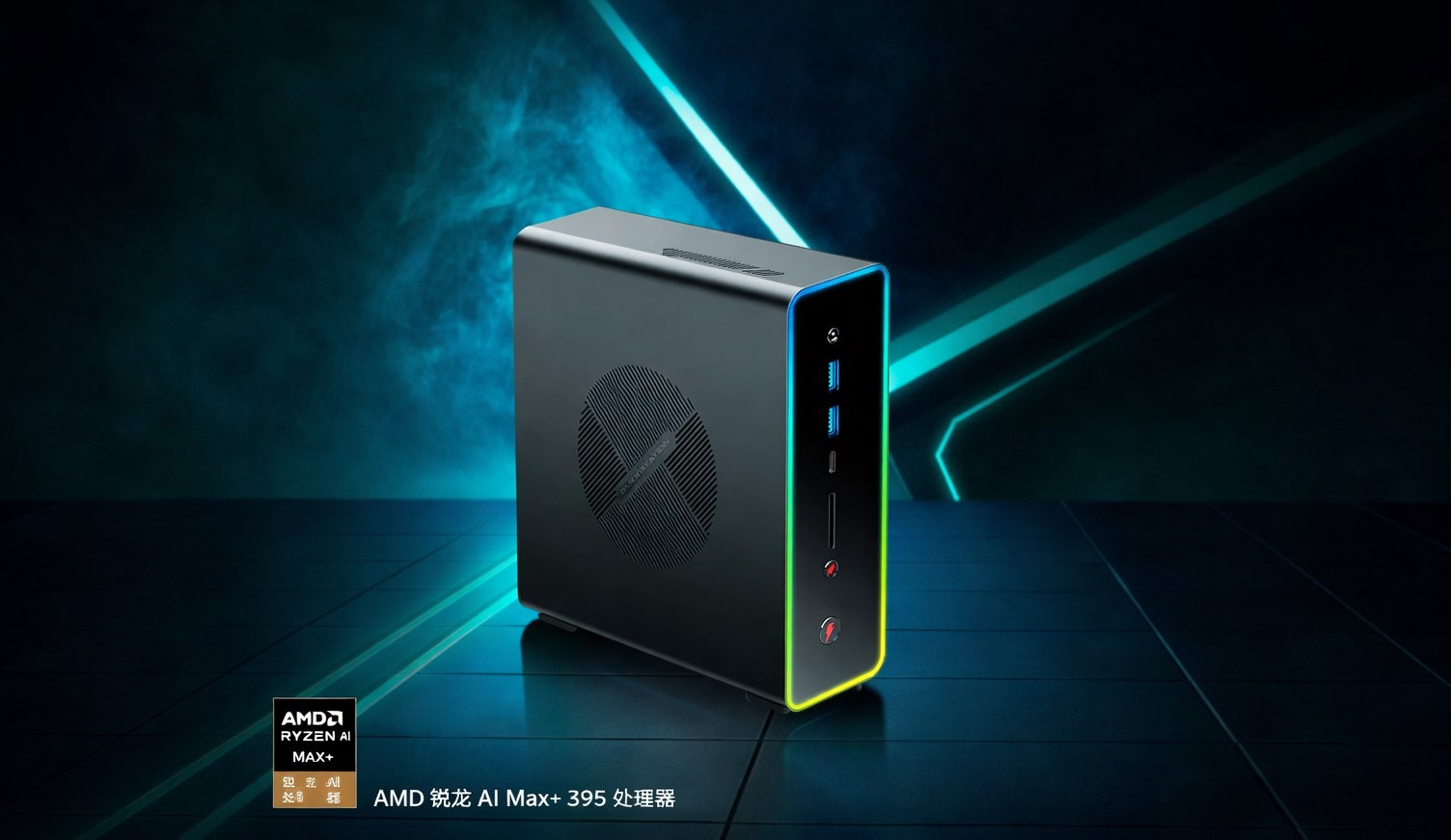
OneXPlayer has officially introduced the ONEXStation Mini AI, a new high performance mini PC built around AMD’s flagship Ryzen AI Max+ 395 processor, positioning it as the most powerful compact system currently in the company’s lineup. The launch was announced through OneXPlayer’s official launch post, where the company presented the machine as a premium compact platform for users who want workstation grade compute performance, strong local AI capability, and modern connectivity in a very small footprint.
At the center of the ONEXStation Mini AI is AMD’s Ryzen AI Max+ 395, a 16 core and 32 thread mobile processor that AMD officially rates at up to 126 TOPS of total AI performance across the CPU, GPU, and NPU. AMD’s product page also confirms support for up to 128GB of LPDDR5X 8000 memory, Radeon 8060S integrated graphics with 40 graphics cores, and up to 50 NPU TOPS, making this chip one of the most capable all in one mobile platforms currently available for compact AI PCs and advanced creator systems.
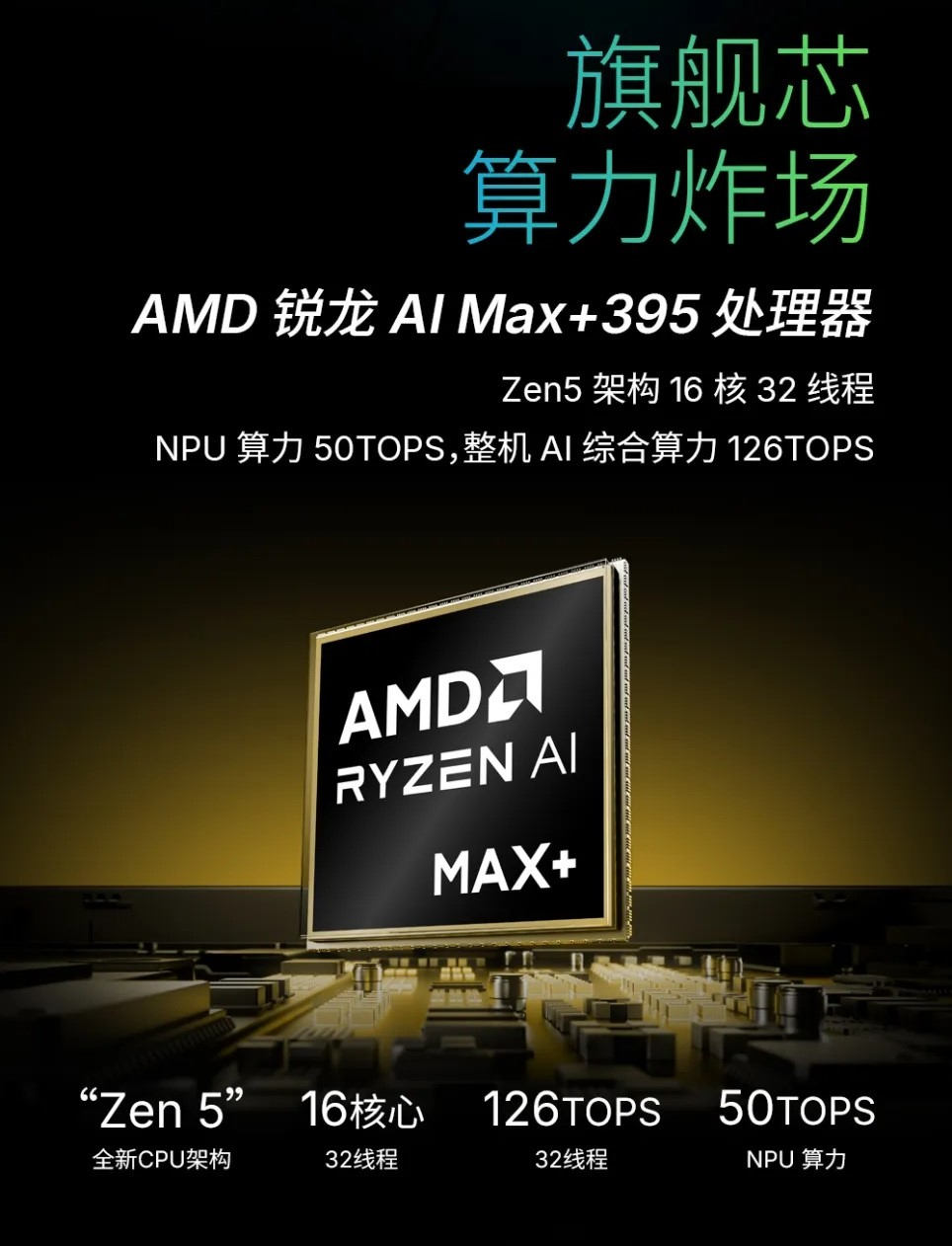
That hardware combination is what makes this launch particularly interesting. Unlike many mini PCs that are designed mainly for office computing or light content creation, the ONEXStation Mini AI is clearly positioned as a much more ambitious machine. The Ryzen AI Max+ 395 gives it enough CPU throughput for demanding multitasking, heavy productivity workloads, software development, and professional applications, while the integrated Radeon 8060S pushes the graphics side well beyond the usual expectations for this class of device. AMD confirms the 8060S runs with 40 graphics cores and a peak graphics frequency of 2900 MHz, which explains why these new Ryzen AI Max systems are being discussed as a serious step forward for compact gaming and local AI inference workloads.
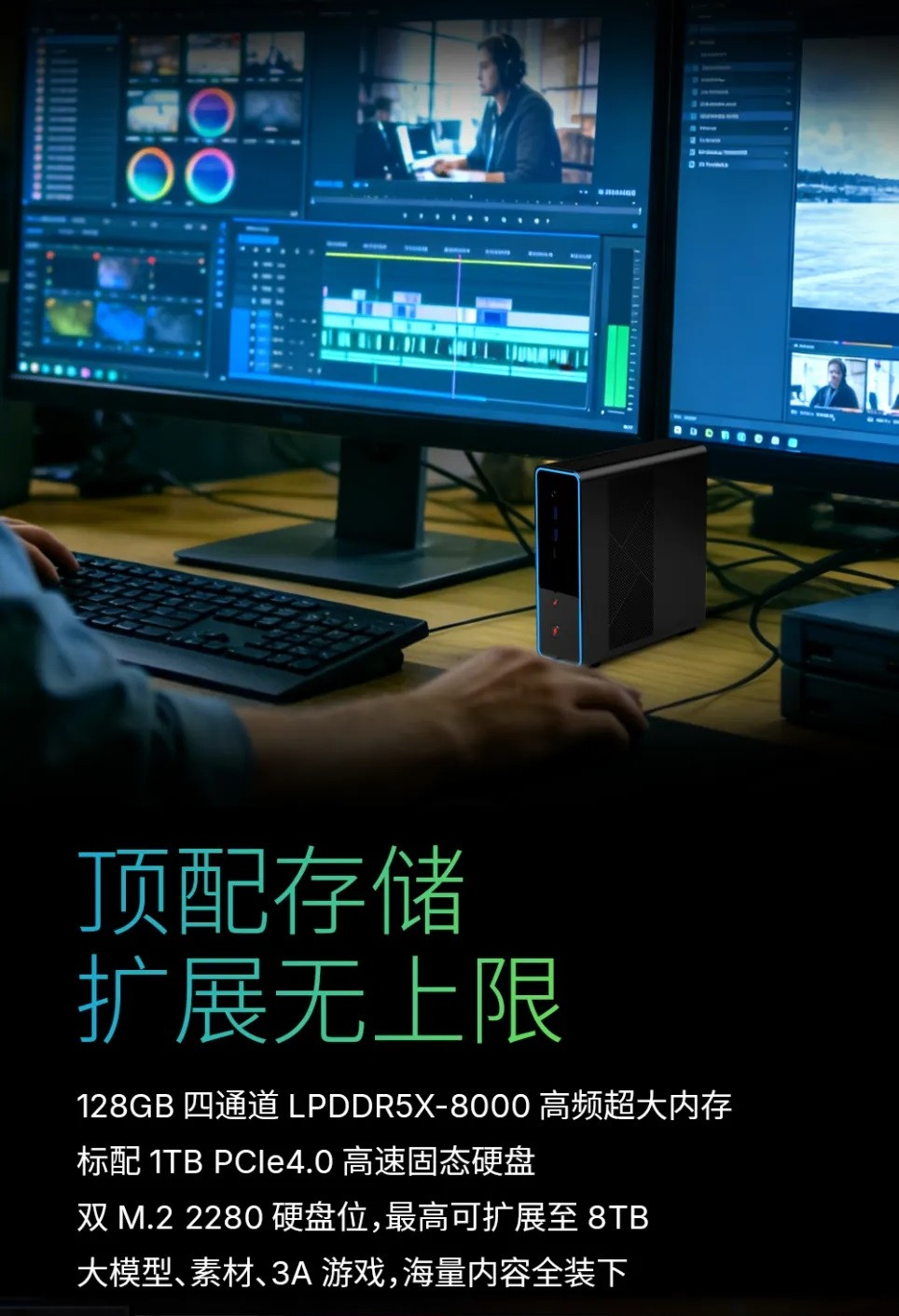
OneXPlayer is also leaning heavily into memory and storage flexibility. According to the company’s launch materials, the ONEXStation Mini AI supports up to 128GB of memory and up to 8TB of total storage through dual M.2 slots, while a 1TB PCIe 4.0 SSD is included out of the box on at least one launch configuration. That kind of memory ceiling is especially important for the AI PC conversation, because larger memory pools directly improve the practicality of running local models, heavier creative pipelines, and more demanding integrated graphics workloads without immediately hitting platform limitations. AMD separately confirms that the Ryzen AI Max+ 395 platform itself supports up to 128GB of LPDDR5X 8000 memory and PCIe 4.0 connectivity, aligning with OneXPlayer’s positioning of the machine as a compact but serious performance platform.
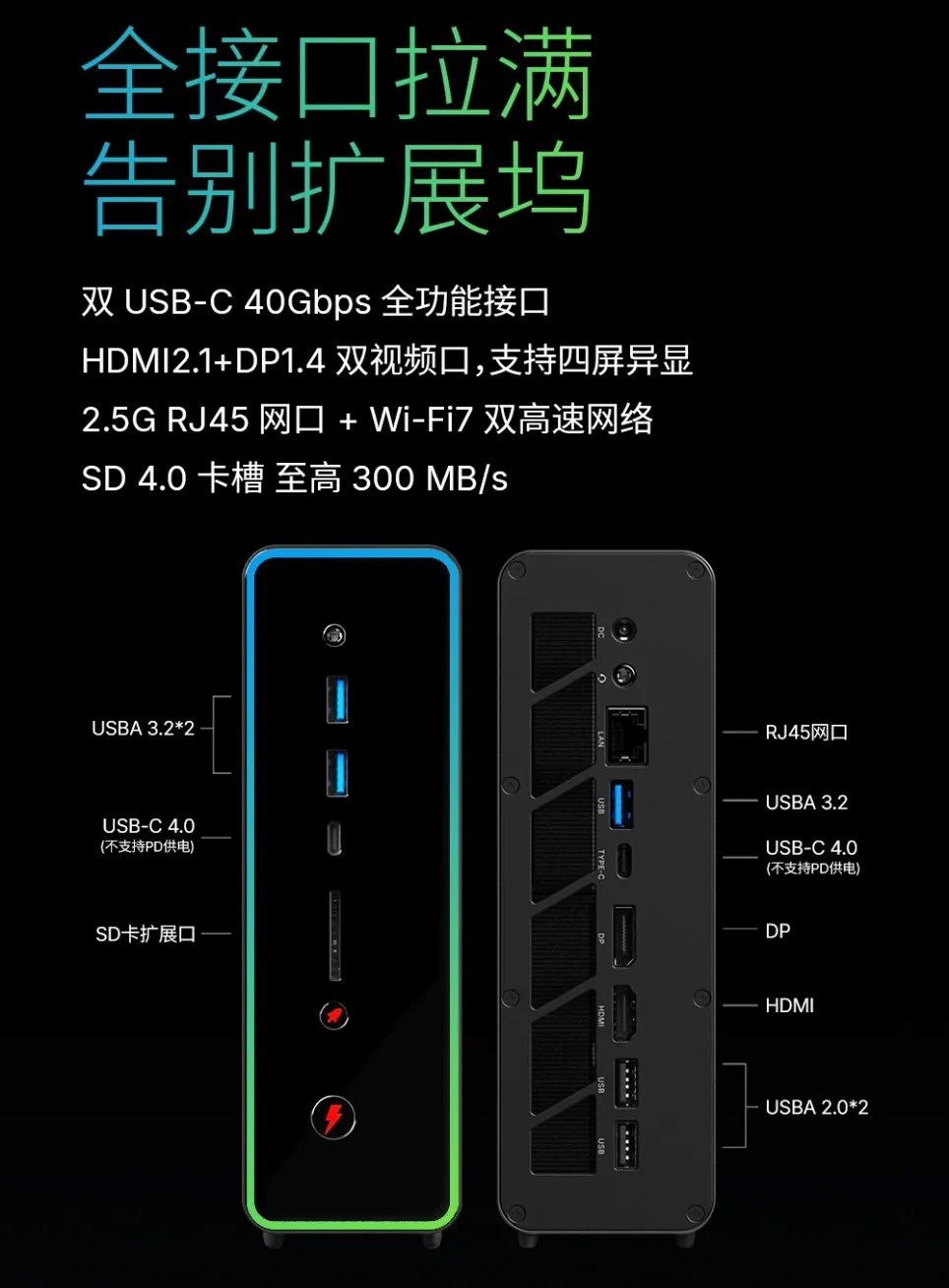
Connectivity is another area where the ONEXStation Mini AI looks well prepared for premium users. OneXPlayer says the system includes multiple USB Type A and USB Type C ports, WiFi 7, 2.5G LAN, and an SD 4.0 card slot, giving it a more complete I O setup than many compact systems in the consumer mini PC segment. On the processor side, AMD states that the Ryzen AI Max+ 395 supports native USB 4 at 40Gbps, USB 3.2 Gen 2, and PCIe 4.0, which helps explain how vendors like OneXPlayer are able to build more desktop style compact systems around this chip.
From a market perspective, this product sits at the intersection of several growing categories at once. It is a mini PC, but it is also clearly part of the emerging AI PC segment. It is also relevant to gaming users, especially those watching the steady rise of integrated graphics performance in premium AMD mobile silicon. For creator workflows, compact development stations, local model experimentation, and even high end home setups where space is a premium, the ONEXStation Mini AI looks like OneXPlayer’s most aggressive attempt yet to move beyond its handheld and eGPU roots into a more performance focused desktop adjacent category.
What remains unclear for now is pricing. OneXPlayer has confirmed the system is currently available in China, but the company’s launch materials did not disclose an official retail price. That missing detail matters, because the ONEXStation Mini AI has the specifications to compete in a premium tier, and its overall value proposition will depend heavily on how aggressively OneXPlayer prices it against other Ryzen AI Max systems, boutique mini PCs, and small form factor desktops.
Even without pricing, the launch itself is noteworthy. Compact PC makers are no longer just trying to deliver smaller desktops. They are now trying to pack AI acceleration, stronger graphics, larger unified memory pools, and more versatile connectivity into systems that can serve as gaming machines, creator boxes, and local AI platforms all at once. With the ONEXStation Mini AI, OneXPlayer is making it clear that it wants a stronger foothold in that next phase of the mini PC market.
Do you think mini PCs like the ONEXStation Mini AI can become a serious alternative to larger gaming and creator desktops, or is pricing still the biggest factor holding this category back?
