
NVIDIA’s Rubin Ultra Reportedly Pulls Back From a Four Die Package to a Dual Die Approach as Supply Chain Reality Sets In
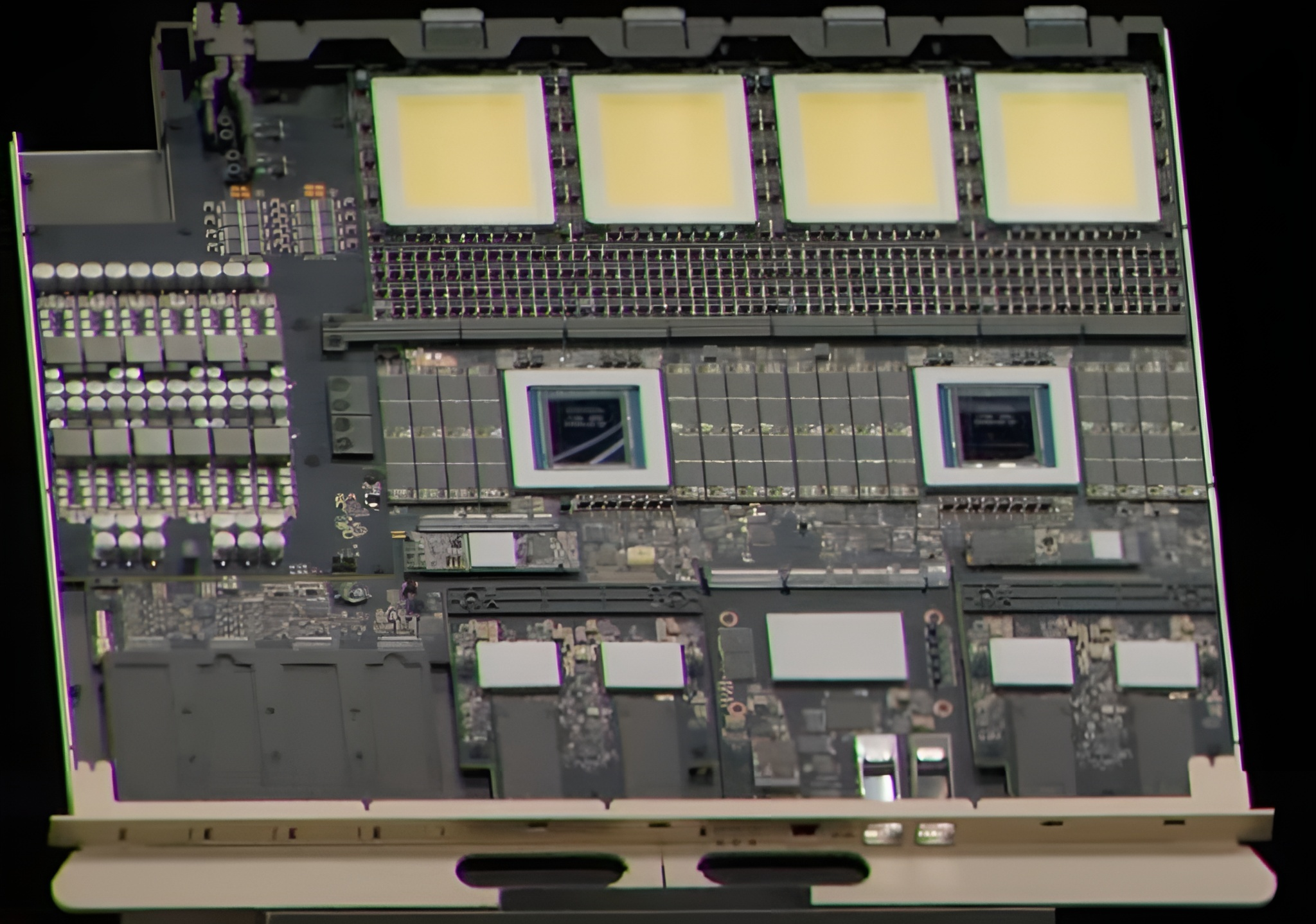
NVIDIA’s Rubin Ultra is reportedly undergoing a notable design rethink, with Taiwanese supply chain reporting claiming that the company is stepping away from the previously discussed four die package concept and moving back toward a dual die configuration. According to the report you shared from Ctee, the change is not being framed as a downgrade in market ambition, but rather as a practical response to packaging complexity, manufacturing risk, and the need to keep production scalable as NVIDIA maintains its aggressive annual data center cadence. This part remains report based and has not been publicly confirmed by NVIDIA itself.
That distinction matters, because officially NVIDIA is still pushing forward hard on the Rubin roadmap. NVIDIA has already said Vera Rubin NVL72 is in full production and on track to ship in the second half of 2026, while the broader post Rubin roadmap continues toward future architectures beyond that. In other words, there is no official sign that NVIDIA is slowing down its data center AI plans. What this report suggests instead is that the company may be adjusting how Rubin Ultra is physically assembled in order to make the roadmap more manufacturable at scale.
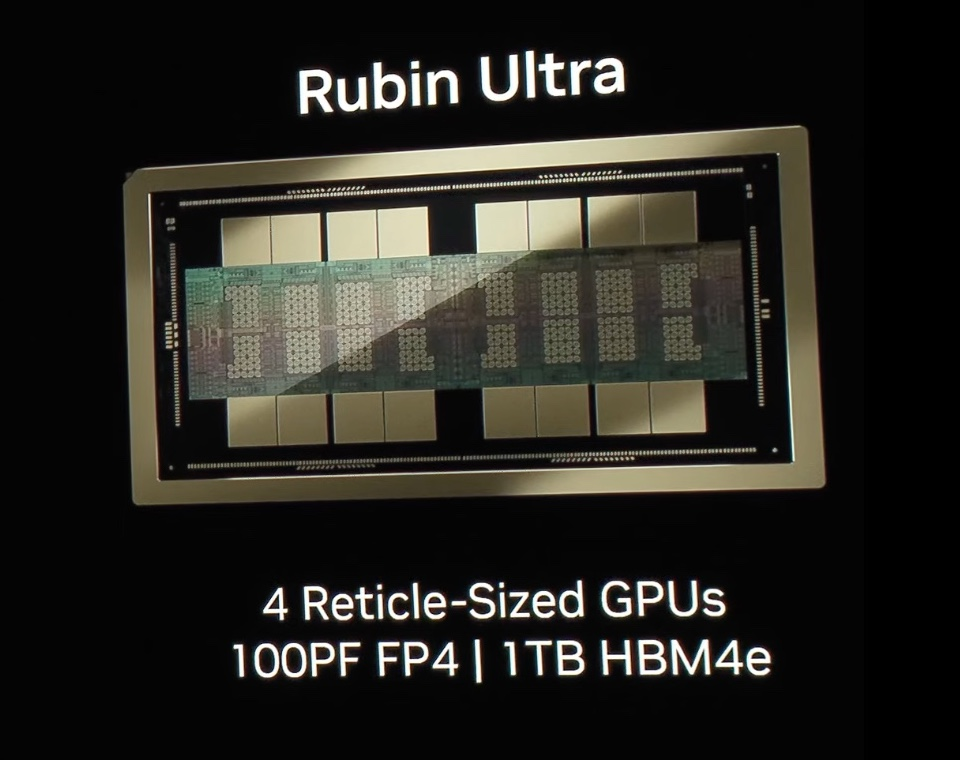
The core issue appears to be packaging ambition versus production practicality. Prior public roadmap coverage around Rubin Ultra had described a very aggressive design centered on four compute dies per package, 1 TB of HBM4e memory, and deployment in Kyber class NVL576 systems in 2027. That kind of package would be enormous, and reports now suggest the challenge is not raw demand or product relevance, but the physical stress of trying to integrate so much silicon and memory into one advanced package. Thermal expansion, warping risk, and yield concerns are the kinds of problems that can quietly become make or break issues long before a product ever reaches customers.
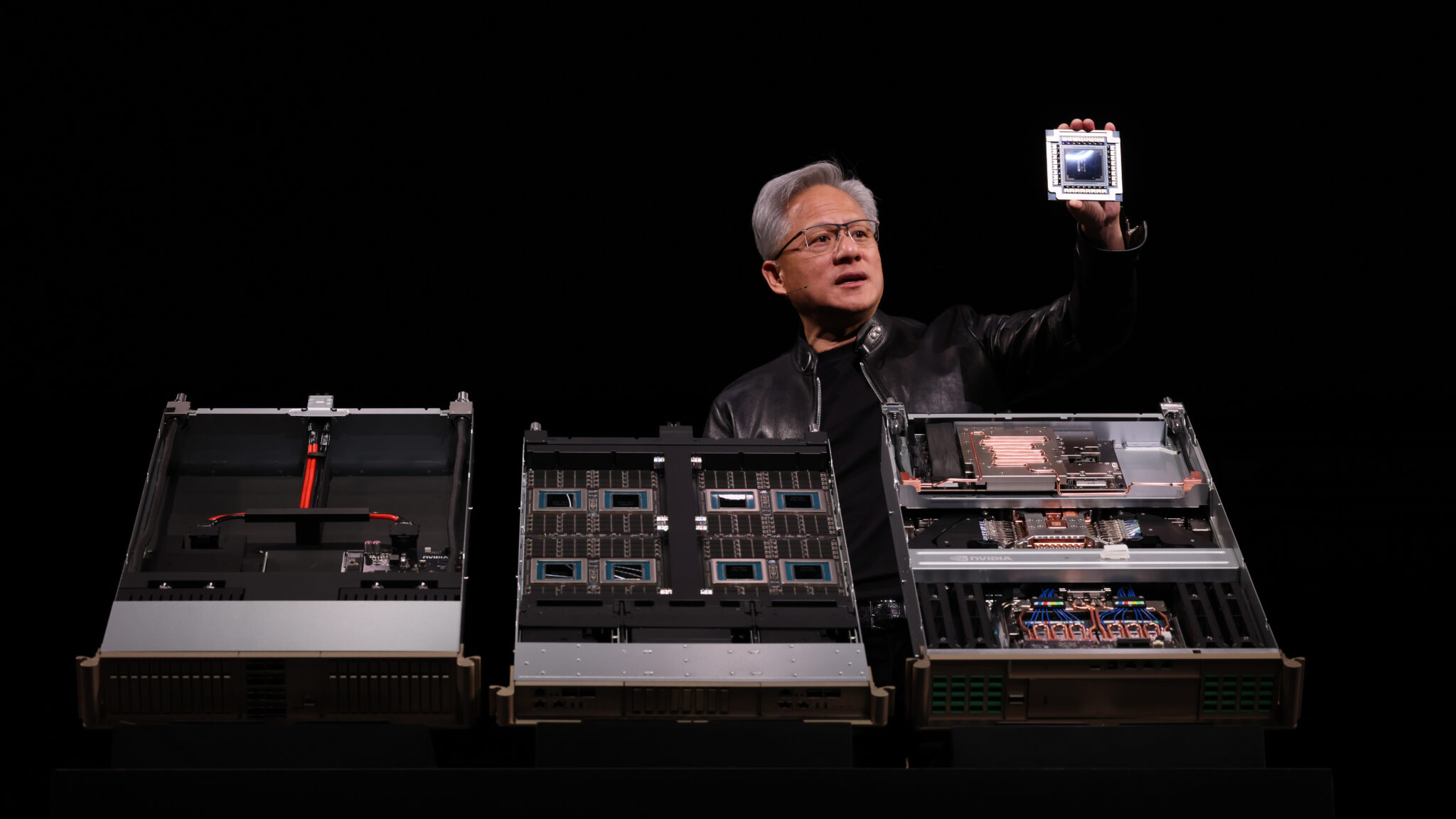
If the report is accurate, NVIDIA’s answer is not to abandon the larger performance target, but to reorganize how it gets there. Instead of forcing four compute dies into a single massive package, Rubin Ultra could reportedly move to a board level 2 plus 2 structure, effectively preserving the broader four die logical configuration across the system while easing packaging pressure at the component level. That would be a very NVIDIA move. The company has consistently shown that it is willing to rethink physical implementation details as long as platform level performance, memory capacity, and rack scale economics remain intact.
From a supply chain perspective, this makes a great deal of sense. NVIDIA’s AI roadmap is no longer just about designing the biggest chip possible. It is about building something that TSMC, substrate partners, memory vendors, board makers, and rack integrators can all deliver in volume without turning every generation transition into a manufacturing bottleneck. Micron has already publicly tied its HBM4 production to Vera Rubin, which shows how tightly coordinated the memory ecosystem already is around NVIDIA’s platform plans. When that many parts of the chain are moving in parallel, reducing packaging risk becomes a strategic decision, not just an engineering preference.
That is why this reported change should not automatically be read as weakness. If anything, it reinforces how seriously NVIDIA treats execution. A four die package sounds spectacular on a roadmap slide, but if it creates lower yields, more complicated thermals, or harder ramp conditions, the smarter play may be to spread that complexity across the board and rack architecture instead. In the AI server market, customers care about delivered performance, deployable systems, and time to volume far more than whether the original concept stayed visually identical to the first internal plan.
There are still open questions, of course. Even if performance and HBM4e capacity remain intact on paper, board footprint, thermals, interconnect behavior, and serviceability will all become critical design factors. Rubin Ultra is already expected to sit inside a much larger rack scale architecture than Vera Rubin, so every physical design choice ripples through power delivery, cooling, and system layout. That means the reported shift may solve one class of manufacturing problems while creating a fresh set of system engineering challenges that partners will now need to absorb.
For now, the most disciplined takeaway is this: NVIDIA has not officially announced that Rubin Ultra is being scaled back, but fresh supply chain reporting indicates the company may be restructuring the product from an ultra ambitious four die package into a more manufacturable dual die building block strategy. If true, this would not necessarily reduce Rubin Ultra’s end goals. It would simply show NVIDIA once again prioritizing the practical realities of shipping AI hardware at enormous scale over preserving the flashiest possible packaging story.
Do you think this is the right move for NVIDIA, or would a true four die Rubin Ultra package have been worth the extra manufacturing risk?
