
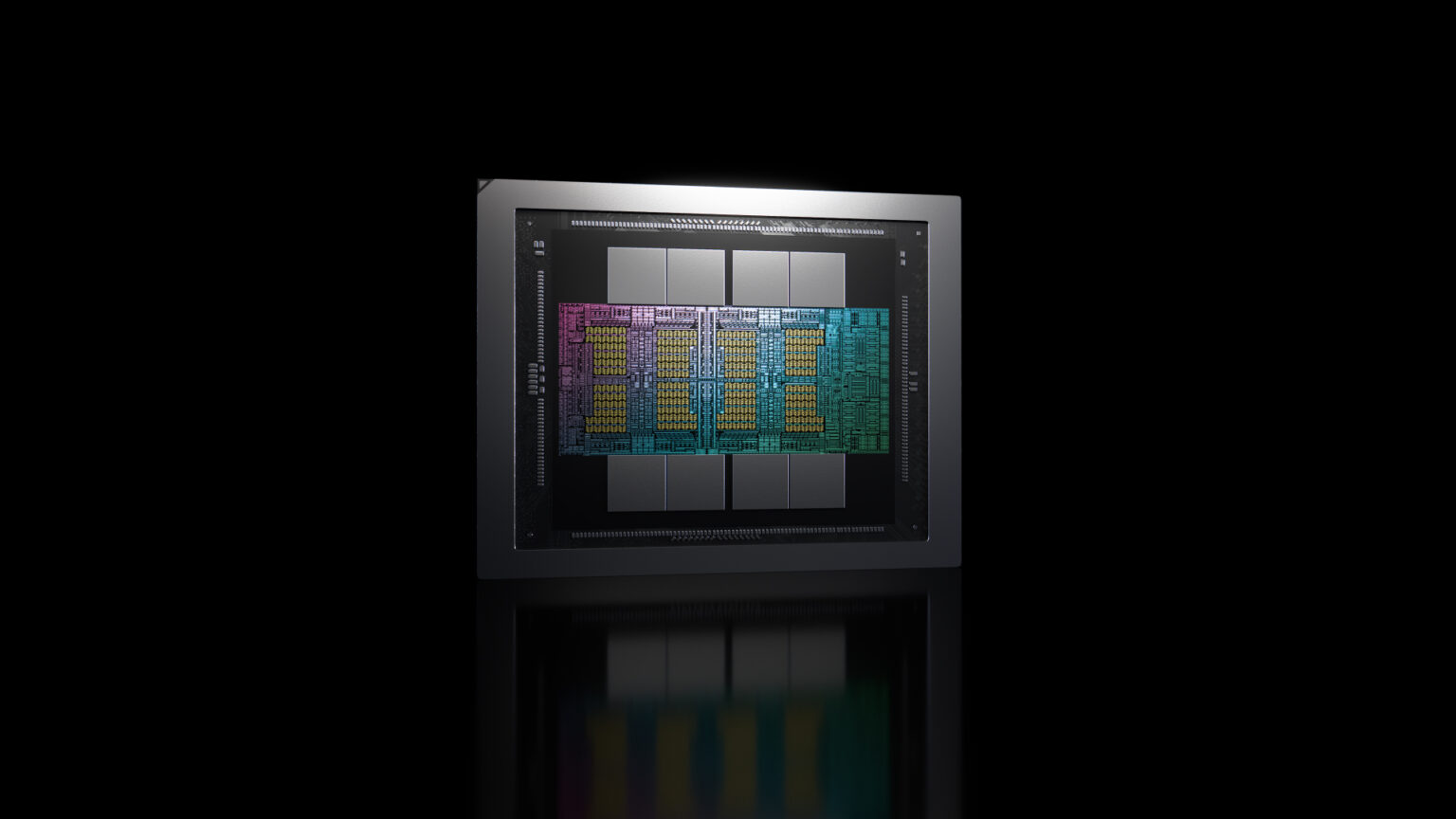
NVIDIA has officially unveiled Rubin HPC, a new graphics processor featuring more than 50,000 CUDA cores and seventh generation NVLink technology, designed to accelerate scientific simulations, engineering workloads, and advanced data processing. Announced during the SC26 Supercomputing Conference on November 16, 2026, the GPU represents a major expansion of NVIDIA's Rubin architecture beyond traditional AI training and inference, with availability expected in 2028.
According to NVIDIA's official announcement, Rubin HPC delivers the company's highest CUDA core count on a single GPU, more than doubling the 21,760 cores found in the GeForce RTX 5090. However, the processor targets high performance computing rather than consumer graphics, making direct gaming performance comparisons irrelevant. The architecture introduces dedicated sparse data acceleration designed to improve how information moves between memory and processing units, reducing the time CUDA cores spend waiting for data.
The GPU also supports seventh generation NVIDIA NVLink, enabling high bandwidth communication between multiple accelerators operating within large computing systems. This is particularly important for scientific applications involving massive datasets, including climate modeling, genomic analysis, engineering simulations, and financial risk calculations. NVIDIA is also integrating its CUDA X libraries to help researchers accelerate specialized algorithms without developing every computational function from scratch.
"For agents tackling science and engineering, faster simulation means faster discovery."
— Quote by: Ian Buck, NVIDIA Vice President of Hyperscale and High Performance Computing.
GPU's promotional images suggest a complex package design featuring multiple processing dies and 8 surrounding memory positions. The report also describes server configurations potentially exceeding 200,000 CUDA cores per tray. However, NVIDIA has not confirmed the exact chiplet configuration, memory capacity, bandwidth, or final server specifications.
Unlike NVIDIA's standard Rubin accelerators, which primarily target large AI models, Rubin HPC emphasizes computational efficiency across traditional scientific workloads. Its sparse data acceleration technology is designed to improve operations such as matrix calculations, sorting, reductions, and stencil computations, which are frequently used in scientific simulations. The company believes combining these capabilities with AI agents could accelerate research by allowing automated systems to generate hypotheses, perform simulations, and evaluate results more efficiently.
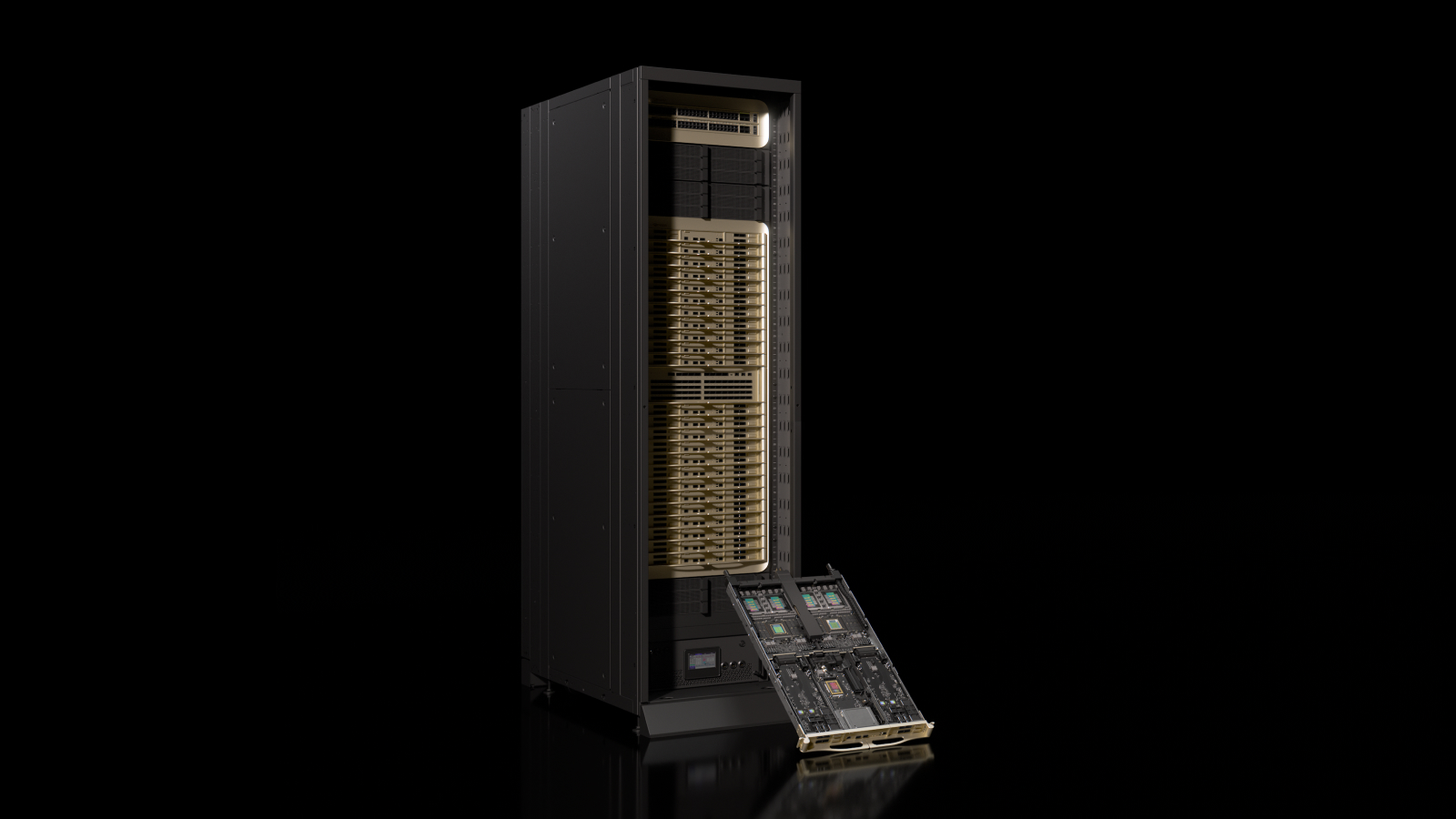
Despite the ambitious architecture, NVIDIA has not disclosed Rubin HPC's FP64 performance, power consumption, manufacturing process, pricing, or detailed memory configuration. These specifications will be essential for evaluating its competitiveness against AMD Instinct and other scientific computing accelerators.
NVIDIA expects Rubin HPC to become available in 2028, although a specific launch date and initial customer deployments have not been announced.
Rubin HPC demonstrates NVIDIA's renewed emphasis on scientific computing, an important market that increasingly overlaps with AI infrastructure. Its massive CUDA core count is impressive, but real performance will depend on memory bandwidth, computational precision, power efficiency, and how effectively the architecture handles complex simulations.
The announcement also reinforces NVIDIA's growing focus on enterprise hardware, where demand for advanced processors continues expanding. However, increased investment in AI and scientific computing should not come at the expense of consumer GPUs, affordable hardware, or gaming innovation.
For PC enthusiasts and independent developers, the most important question is whether architectural advances developed for these massive accelerators will eventually improve consumer graphics cards and locally accessible computing hardware.
Do you believe NVIDIA's increasing investment in AI and scientific computing will eventually benefit GeForce gamers, or is the company becoming too focused on enterprise hardware?
