
An NVIDIA GeForce RTX 5070 Ti owner has demonstrated an extreme undervolting configuration that reportedly reduces GPU power consumption to just 142.8W, approximately 52% below its official 300W power rating. The experiment, shared by Reddit user Most_Cicada3939, demonstrates the potential efficiency gains of NVIDIA's Blackwell architecture when operating at substantially reduced voltage and clock speeds, although its impact on gaming performance remains unverified.
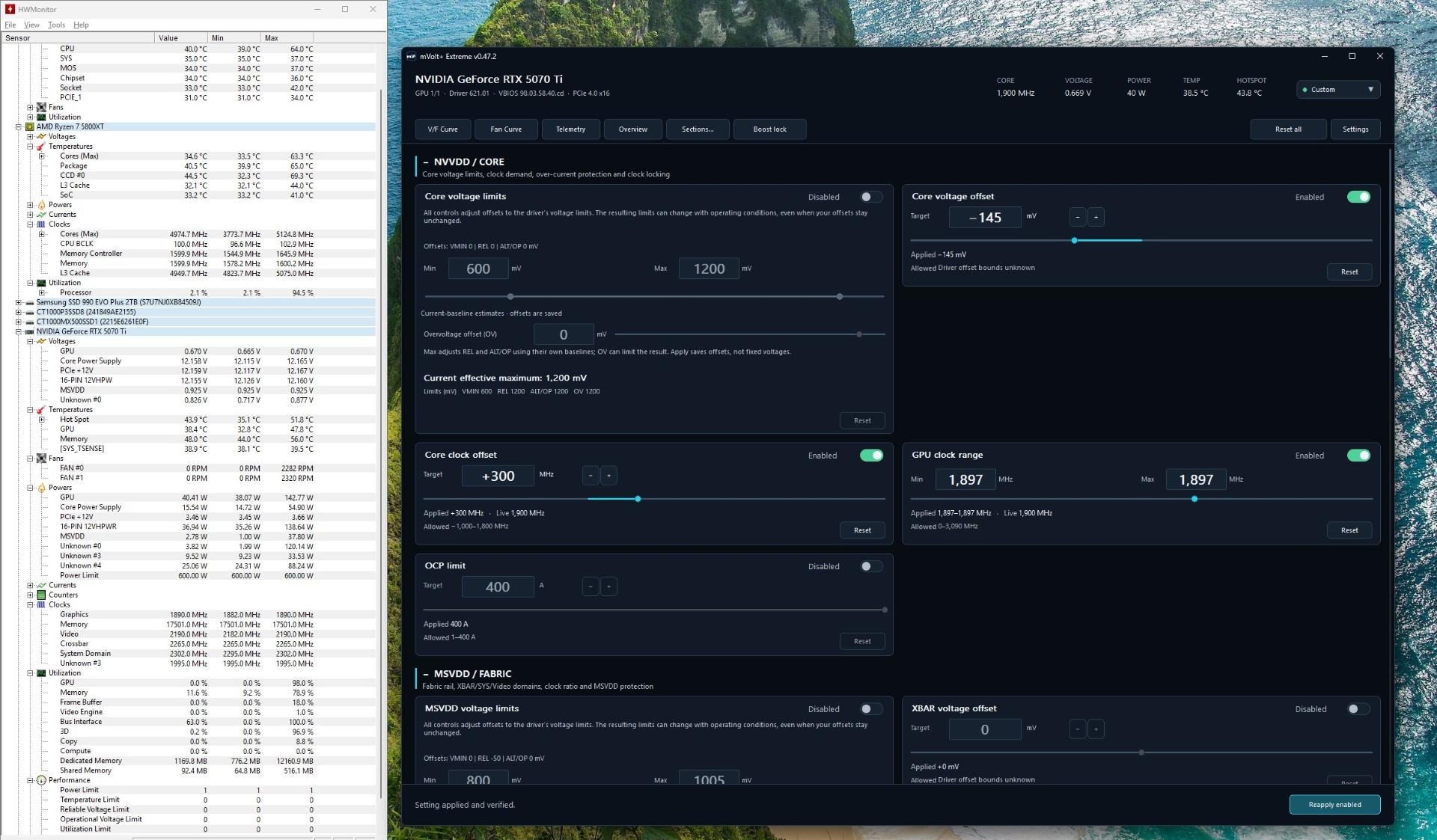
Using mVolt+ Extreme v0.47.2, the enthusiast configured the graphics card with a 145 mV negative voltage offset and a 300 MHz positive core clock offset, ultimately locking the GPU frequency at approximately 1897 MHz. The monitoring software recorded a core voltage of just 0.669V, considerably below typical operating conditions. The accompanying HWMonitor screenshot showed GPU utilization reaching 98%, with maximum board power consumption of 142.8W and power delivery through the graphics card connector peaking at approximately 138.6W. The test system featured an AMD Ryzen 7 5800XT processor, with the RTX 5070 Ti operating through a PCIe 4.0 x16 interface using NVIDIA driver 621.01.
RTX 5070 Ti Standard Specifications vs Extreme Undervolt
| Specification | NVIDIA Reference | Extreme Undervolt |
|---|---|---|
| GPU Architecture | Blackwell | Blackwell |
| GPU Clock | 2452 MHz boost | 1897 MHz locked |
| Core Voltage | Dynamic | 0.669V reported |
| Graphics Power | 300W rated TGP | 142.8W peak recorded |
| Power Reduction | Reference rating | Approximately 52% |
| GPU Temperature | Workload dependent | 47.8°C maximum |
| Hotspot Temperature | Workload dependent | 51.8°C maximum |
| Memory Temperature | Workload dependent | 56°C maximum |
| Gaming Performance | Standard configuration | Not benchmarked |
The reported temperatures are equally interesting, with the GPU core reaching a maximum of 47.8°C, hotspot temperatures remaining at 51.8°C, and GDDR7 memory peaking at 56°C. These figures suggest considerably reduced thermal demands, potentially benefiting compact gaming systems and users prioritizing lower fan noise. However, the 52% power reduction is calculated against the official 300W rating rather than a measured comparison using the same workload at factory settings. Additionally, the screenshot does not establish that the reported voltage, utilization, and maximum power readings occurred simultaneously.
Another important consideration is the substantial frequency reduction. According to NVIDIA's official specifications, the RTX 5070 Ti features a reference boost clock of approximately 2452 MHz, meaning the modified configuration operates around 23% below that frequency. While the owner described gaming performance as better than expected, no comparative frame rate benchmarks or extended stability tests were provided. Consequently, the actual performance tradeoff remains unknown.
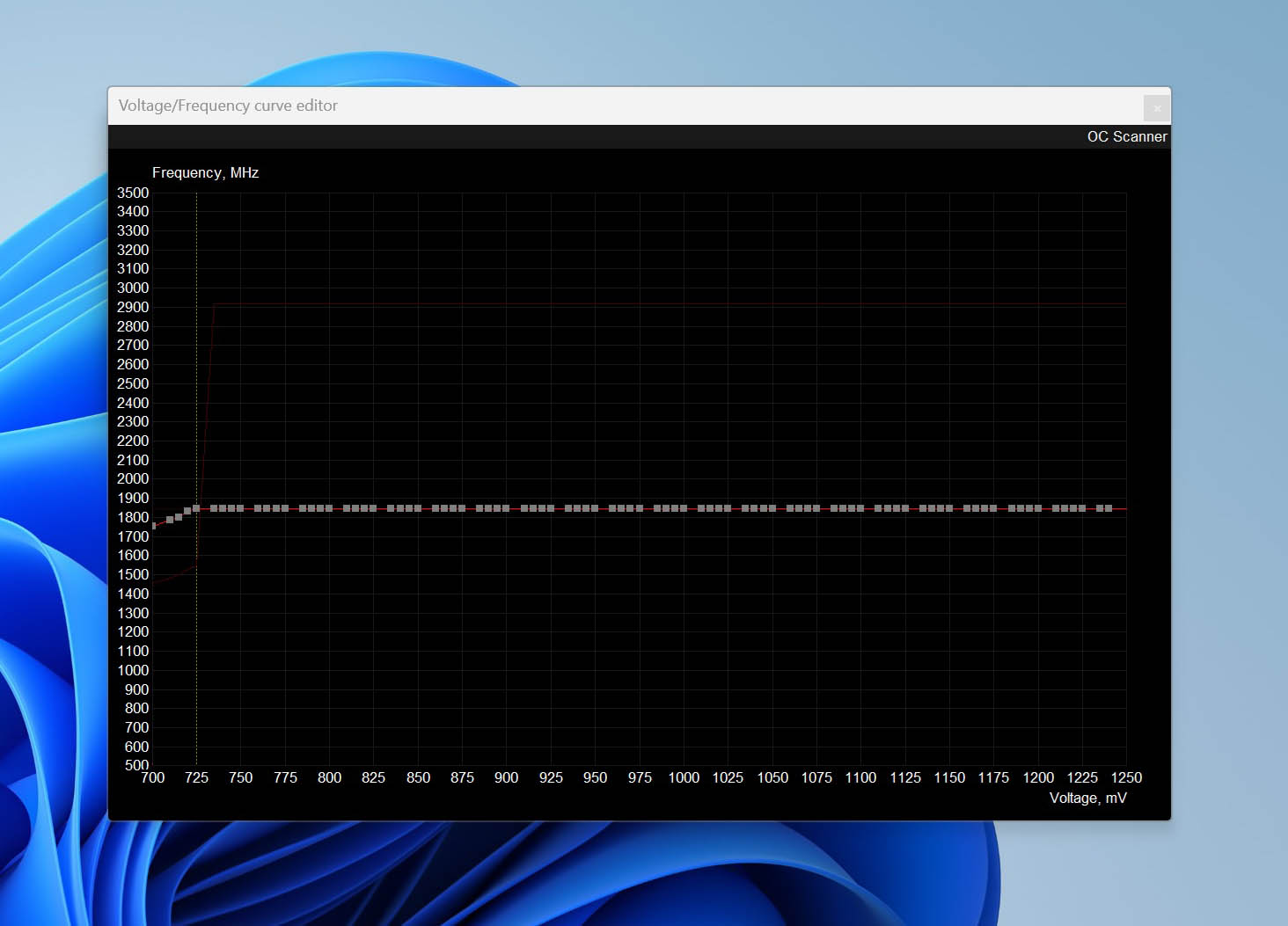
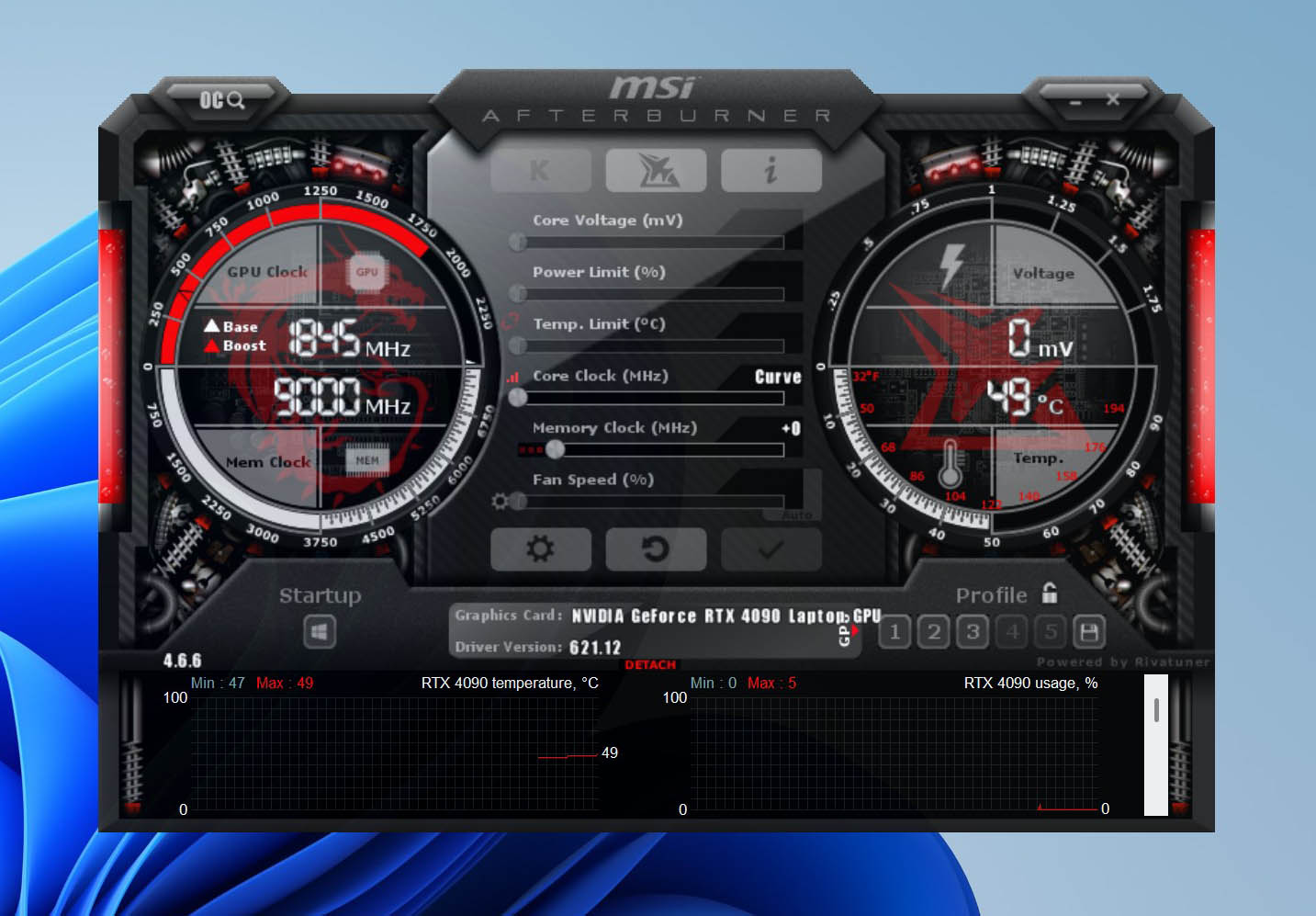
Nevertheless, the experiment highlights the flexibility of modern GPU voltage and frequency tuning. Rather than pursuing maximum clock speeds, enthusiasts can use tools such as MSI Afterburner to optimize operating efficiency, potentially reducing electricity consumption, heat generation, and cooling requirements. More moderate undervolting profiles may offer a better balance between performance and efficiency without the substantial frequency limitations demonstrated in this extreme configuration.
The RTX 5070 Ti experiment raises an interesting question about how much power modern gaming GPUs actually need to deliver a satisfying experience. Running a 300W graphics card at approximately 143W is impressive, but power consumption alone does not determine efficiency. Performance per watt, frame pacing, and long term stability are equally important. For gamers targeting 60 FPS or 120 FPS rather than maximum benchmark scores, a carefully optimized undervolt could offer meaningful benefits. However, the most effective configuration is rarely the lowest achievable voltage, but the setting that preserves gaming performance while reducing unnecessary power consumption.
Would you sacrifice some GPU performance to reduce power consumption by nearly 50%, or do you prefer running your graphics card at its maximum potential?
