
NVIDIA Formally Ends Game Ready Driver Support for Maxwell, Pascal, and Volta GPUs with Release of GeForce 590 Drivers
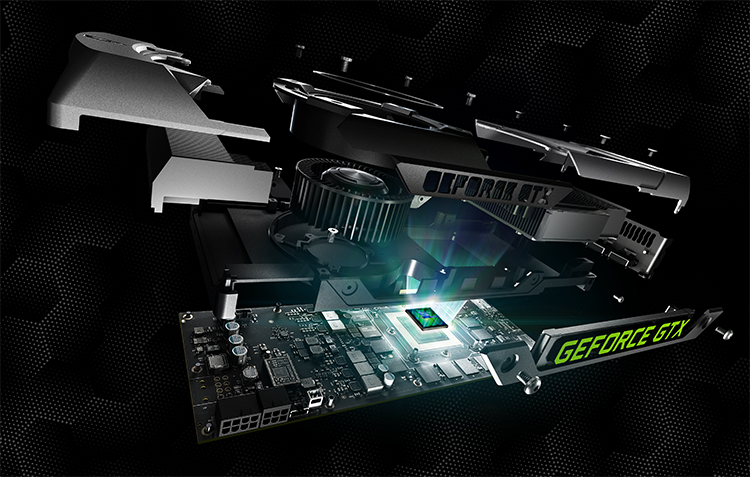
NVIDIA has officially closed the book on Game Ready Driver support for its Maxwell, Pascal, and Volta GPUs. With the rollout of the new GeForce 590 driver branch, only GeForce 16 series and newer architectures will continue to receive GRD updates. This marks the end of mainstream driver support for some of the most iconic GPUs ever produced, including the legendary GeForce GTX 1080 Ti, one of NVIDIA’s most celebrated enthusiast graphics cards.
The company had previously signaled that GRD support for these older architectures would conclude with the 580 driver branch, and the 590 release confirms that transition. From this point forward, Maxwell, Pascal, and Volta GPUs move into NVIDIA’s legacy driver branch, where they will continue to receive critical security patches and maintenance updates but will no longer receive Game Ready optimizations for new titles or major performance updates. This mirrors NVIDIA’s earlier shift on Linux, where legacy branches are already maintained separately.
The change primarily affects GTX era GPUs from 2014 to 2017 including the GTX 980 Ti, GTX 1080 Ti, GTX 1070, GTX 1060, and GTX 1050 series as well as Titan XP and Titan X (Pascal). Volta based cards such as the Titan V are also sunset from GRD support. Users operating gaming systems on these GPUs should now expect diminishing compatibility with new AAA releases as they increasingly rely on optimizations delivered through GRD updates.
GeForce 590+ Driver Branch Supported GPU List
With the 590 branch NVIDIA now supports only Turing (GTX 16/RTX 20), Ampere (RTX 30), Ada Lovelace (RTX 40), and Blackwell (RTX 50) GPUs for Game Ready Drivers.
The full list of supported desktop GPUs includes:
RTX 5090 series (Blackwell)
RTX 5080 series (Blackwell)
RTX 5070 series (Blackwell)
RTX 5060 series (Blackwell)
RTX 5050 (Blackwell)
RTX 4090 through RTX 4060 series (Ada Lovelace)
RTX 3090 Ti through RTX 3050 series (Ampere)
Titan RTX and RTX 20 series (Turing)
GTX 16 series (Turing), now the final GTX lineup to retain GRD support
Mobile GPU support follows the same generational structure, with the RTX 5090 down to RTX 5050 range as well as RTX 40 and RTX 30 laptop GPUs receiving continued GRD updates.
Notably, the GeForce GTX 16 series becomes the last surviving GTX family to receive active GRD support. All GTX 10 series and older will remain operational but without game specific optimizations moving forward.
This shift reflects NVIDIA’s evolving driver strategy focused on AI assisted features, DLSS enhancements, frame generation, and architectural improvements specific to Turing and newer platforms. As game engines increasingly integrate modern upscaling pipelines, mesh shaders, and hardware accelerated ray tracing, NVIDIA’s GRD development has effectively shifted toward architectures that support these capabilities.
For long time PC gamers this moment is both expected and nostalgic. Cards like the GTX 1080 Ti defined an era of high end gaming performance that lasted far beyond their typical lifecycle. With the 590 branch NVIDIA now fully transitions to a modern stack centered around Turing and later generations.
Are you still running a Maxwell or Pascal card today? How do you feel about the shift to legacy support? Let us know your thoughts.
