
Nioh 3, Sea of Remnants, and Vampires Bloodlord Rising Add NVIDIA DLSS 4 Multi Frame Generation Support Ahead of Key February Drops
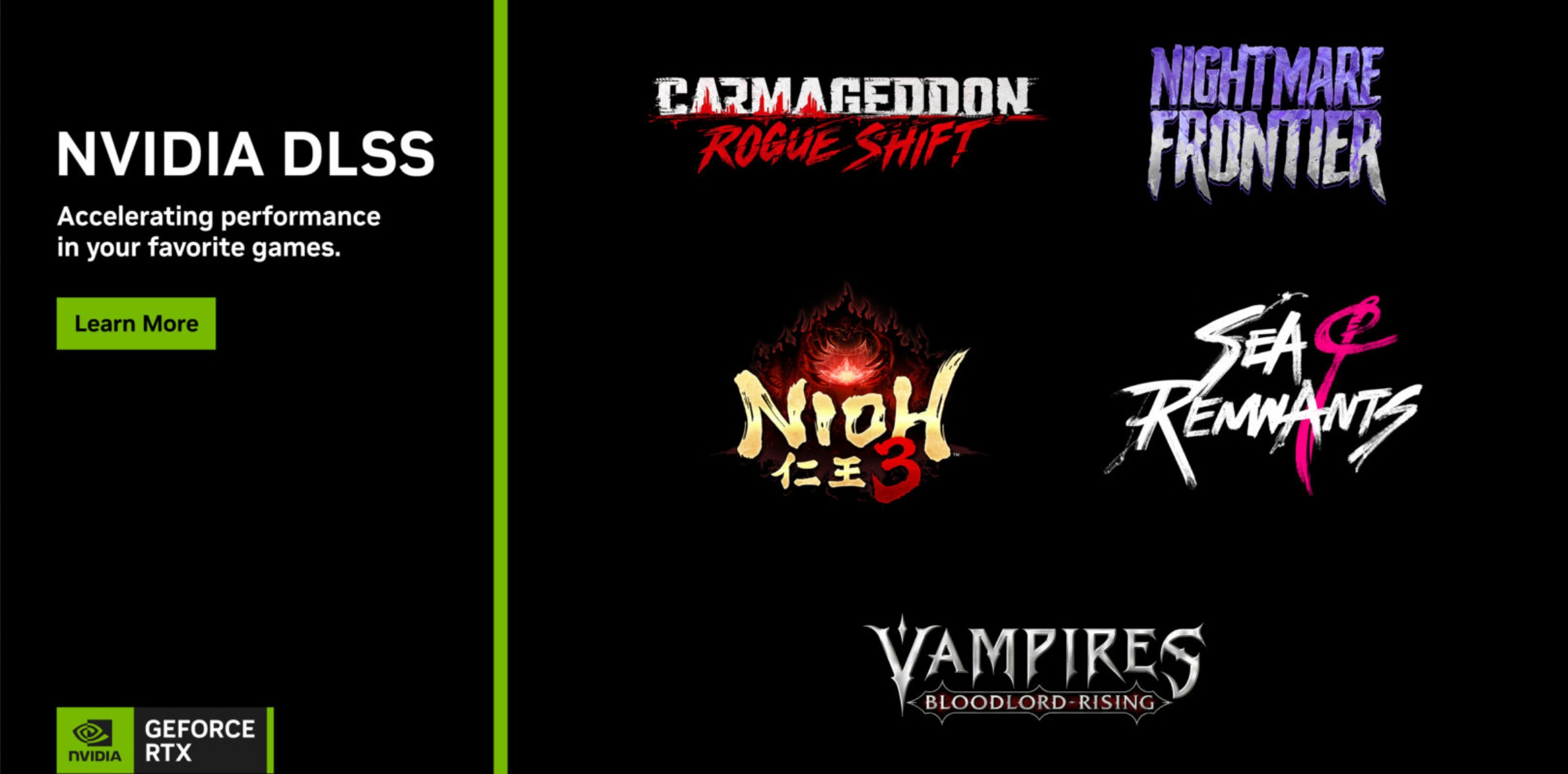
NVIDIA has expanded its DLSS 4 Multi Frame Generation rollout with a new batch of supported titles, aligning with the same moment GeForce NOW is celebrating its sixth anniversary. In an official update from NVIDIA, several upcoming and newly released games are now confirmed to support DLSS 4 with Multi Frame Generation, giving GeForce RTX users another set of high impact performance tools as more demanding releases land through February 2026.
The biggest near term headline is Team Ninja’s Nioh 3, which arrives on PC and PlayStation 5 on 2026 02 06. NVIDIA confirms both the Nioh 3 demo and the full game support DLSS 4 with Multi Frame Generation, meaning players can get their PC performance expectations dialed in ahead of release. For action heavy games where responsiveness and stable frame pacing define the experience, Multi Frame Generation support can be the difference between a smooth high refresh run and a settings compromise.
Also joining the list is NetEase Games and Joker Studio’s Sea of Remnants, an ocean adventure role playing game that begins a closed alpha today with DLSS 4 Multi Frame Generation support enabled from the start. That early integration is a meaningful signal for PC players because it suggests performance scaling is being treated as a core part of the technical stack rather than a post launch patch.
On the recently shipped side, Vampires Bloodlord Rising launched on PC on 2026 01 30, and NVIDIA confirms it supports DLSS 4 Multi Frame Generation plus DLSS 4.5 Super Resolution. The combined stack targets both higher frame rates and improved image reconstruction, which is especially valuable for players trying to push higher resolutions while keeping input feel tight.
Rounding out the update, Carmageddon Rogue Shift is confirmed to support NVIDIA’s latest DLSS tech and launches on PC on 2026 02 06, bringing the classic action racing franchise back with a roguelike structure. NVIDIA also calls out Nightmare Frontier, a turn based tactical extraction looter currently in early access on PC, as part of this same support wave.
For the PC gaming market, this is a clear pattern shift. DLSS support is no longer a premium add on reserved for a few flagship titles. It is now an expected performance layer that publishers increasingly announce as part of launch readiness. As more games ship with Multi Frame Generation on day 1, performance becomes less about raw brute force hardware and more about how well your game and driver stack can leverage modern reconstruction and frame generation pipelines.
Are you buying into Multi Frame Generation as a must have feature for 2026 PC releases, or do you still prefer native rendering even if it means lowering settings?
