
Micron Launches 3610 SSDs: World’s First Gen5 QLC Storage Devices With Up To 4 TB Capacity In Ultra Compact M.2 2230 Form Factor
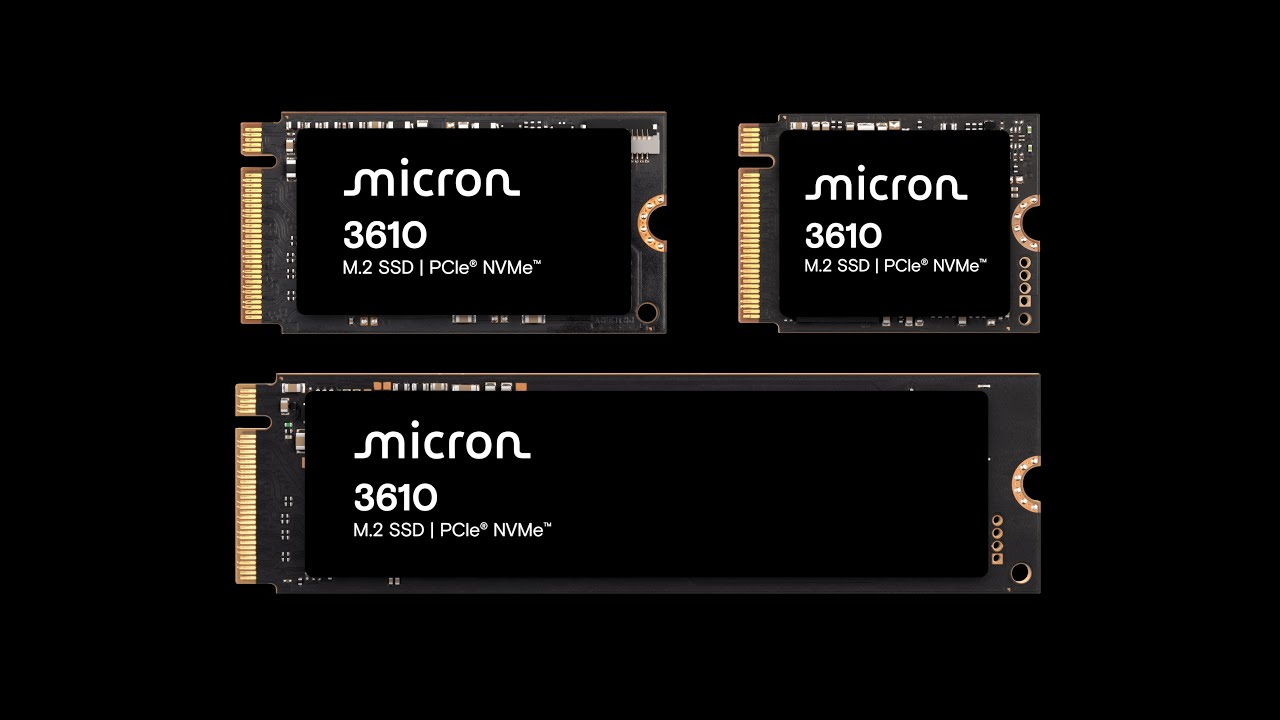
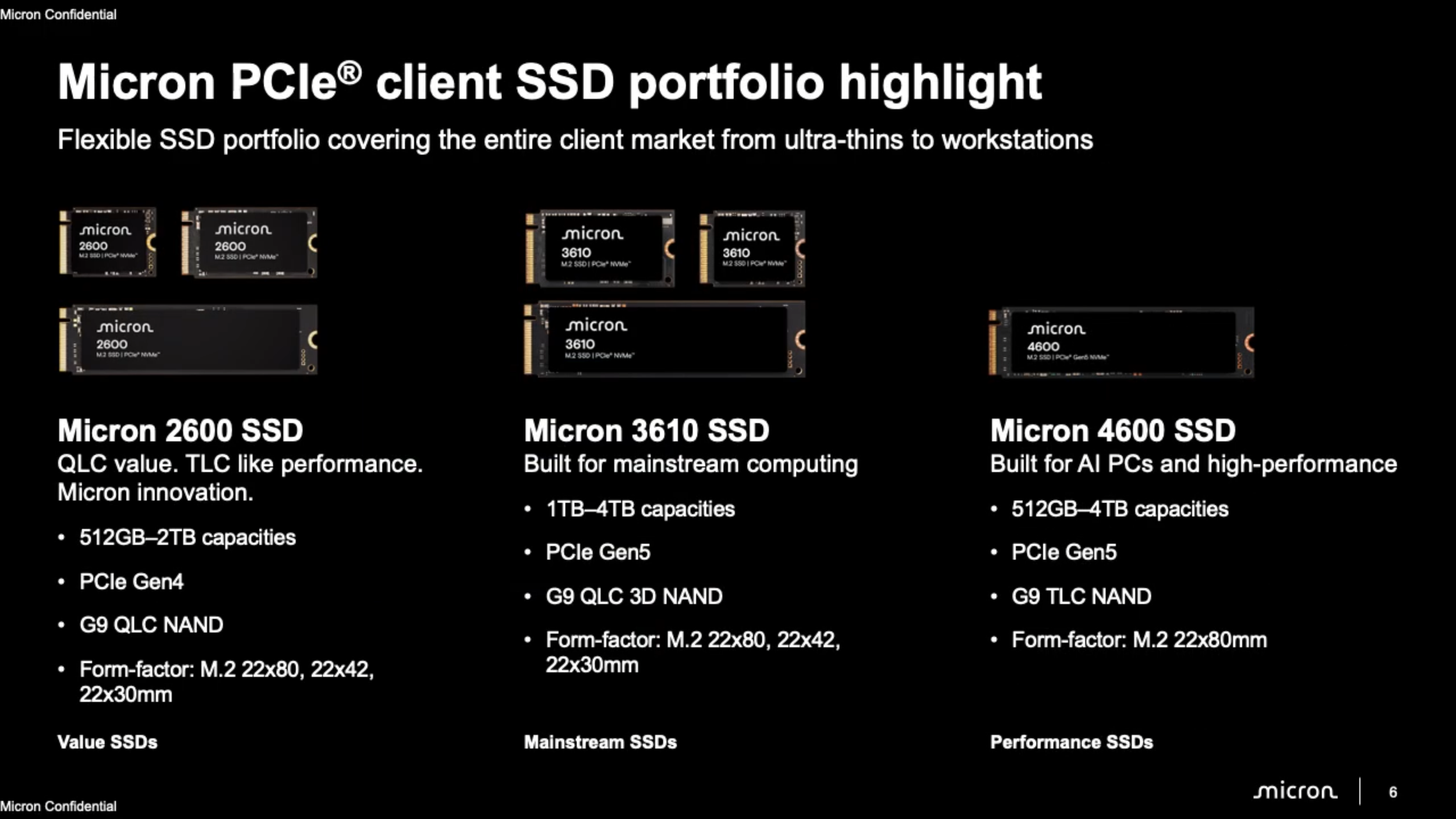
Micron has officially announced the Micron 3610 NVMe SSD, positioning it as the industry’s first PCIe Gen5 client SSD built on G9 QLC NAND, and the first to deliver up to 4TB in a single sided M.2 2230 form factor aimed squarely at mainstream PCs, ultra thin laptops, and space constrained devices like mini PCs and handheld platforms. Micron is framing the 3610 as a bridge between premium Gen5 offerings and value focused Gen4 drives, with a focus on making Gen5 performance more accessible without blowing up thermals or battery life, which is exactly the balancing act OEMs have been trying to solve as AI PCs and ultra portable systems become the default.
At the headline level, Micron states the 3610 reaches up to 11,000MB per second sequential read and 9,300MB per second sequential write. Random performance is listed at up to 1.5 million IOPS for reads and 1.6 million IOPS for writes, which puts this product squarely into the territory where storage stops being the bottleneck for day to day responsiveness and starts enabling more aggressive multitasking and heavier content workflows on thin and light devices. The more disruptive angle is the combination of those Gen5 speeds with QLC economics, because QLC has traditionally been the capacity focused choice rather than the raw performance pick, especially once workloads move beyond short burst behavior.
Micron also emphasizes power efficiency as a core differentiator. The 3610 uses a DRAM less design supported by Host Memory Buffer and low power states such as DEVSLP. According to Micron, this design improves performance per watt by 43 percent versus Gen4 TLC, which is a key statement because Gen5 has often been associated with higher power draw and heavier thermal requirements. If that efficiency claim holds up in shipping OEM systems, it gives laptop makers a viable path to deploy Gen5 storage in thinner chassis without sacrificing battery life or forcing louder cooling behavior.
On the AI angle, Micron is clearly aligning the 3610 with the current AI PC narrative rather than pure enthusiast benchmarks. The company claims the drive can load 20 billion parameter AI models in under three seconds, which is the kind of user facing metric OEMs like to market because it translates into perceived snappiness for local inference workflows, creative tools, and real time assistance features. It is also a reminder that storage is now part of the AI platform story, because loading large models and datasets quickly is a meaningful part of the overall experience even before the NPU or GPU starts doing the heavy lifting.
For validation and user experience metrics, Micron highlights PCMark 10 results, stating up to 30 percent better scoring and 28 percent better bandwidth versus Gen4 QLC SSDs. This matters because PCMark style traces often correlate more closely with real world workloads than isolated sequential tests, particularly for laptops and mainstream desktops. If an OEM is choosing between a cost effective Gen4 QLC solution and a Gen5 QLC upgrade, these are the kinds of measurements that justify the step up when the platform supports it.
Thermals and sustained behavior are also addressed with host controlled thermal management, which gives OEMs control over thermal thresholds to maintain performance in ultra thin designs, including fanless configurations. That is a pragmatic addition because thin devices often need predictable thermal behavior more than peak burst numbers. Micron also calls out new security capabilities such as Data Object Exchange and Device Identifier Composition Engine, positioning the 3610 as a more enterprise aligned client SSD in terms of platform security requirements, which increasingly matters for premium business laptops and managed fleets.
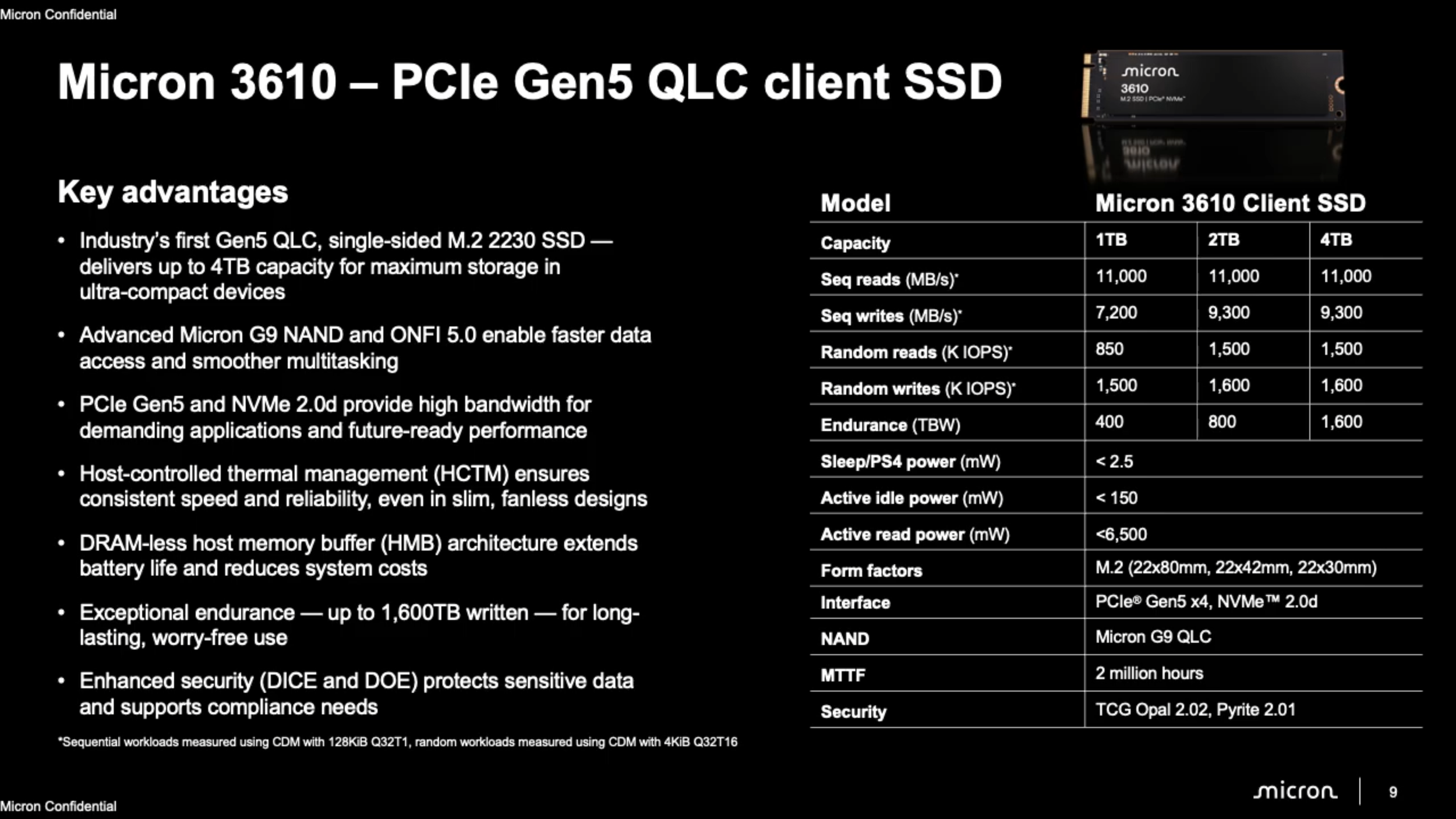
In terms of availability, Micron states the 3610 is sampling now with select OEM partners and will ship in multiple form factors with capacities ranging from 1TB to 4TB, with the 4TB highlight attached to the compact single sided M.2 2230 version. For gamers and handheld enthusiasts, that form factor detail is the quiet mic drop moment, because 2230 slots are the exact constraint that has historically capped practical upgrade options in many handheld PCs and ultra compact builds. Gen5 2230 at 4TB has the potential to reset expectations for what a small system can carry without external storage workarounds, especially as game installs and creator assets continue to balloon.
Would you rather see Gen5 SSDs prioritize maximum peak speeds, or is this kind of high efficiency 2230 design with 4TB capacity the real next level upgrade for mini PCs and handheld gaming rigs?
