
Mesa 26.0 Officially Released, Boosting Vulkan Ray Tracing Performance on AMD Radeon via RADV

Mesa, the open source graphics stack that underpins hardware accelerated gaming and professional graphics on Linux, has officially reached its next major milestone with the release of Mesa 26.0. This release is positioned as a broad upgrade across Mesa’s Vulkan, OpenGL, and Gallium3D ecosystem, delivering performance gains, wider API coverage, and practical driver level improvements for the platforms that rely on Mesa as their graphics foundation.
The biggest headline for PC gamers is AMD. Mesa 26.0 brings enhanced Vulkan ray tracing performance on AMD Radeon GPUs through the RADV driver, with meaningful optimizations that target pipeline overhead and ray tracing workload efficiency. A key part of this uplift comes from contributions by Valve developers, which matters because Valve’s Linux gaming pipeline is often where real world performance pain points get identified quickly and addressed aggressively for shipping games.
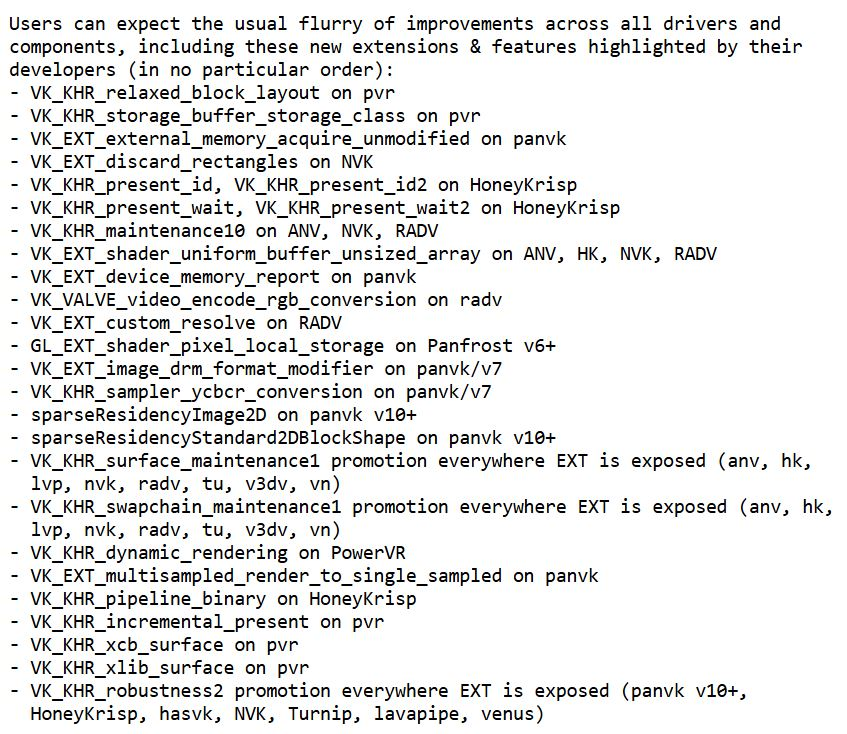
In parallel with the ray tracing focus, Mesa 26.0 expands Vulkan feature coverage by exposing more extensions across RADV and other Vulkan drivers in the Mesa stack. That extended extension set is a practical win because it translates into better compatibility with new games, modern engines, and evolving rendering paths, especially as developers increasingly lean into Vulkan for cross platform builds.
Mesa 26.0 is not just an AMD story. The wider driver ecosystem also sees improvements, including Intel’s Vulkan and OpenGL pathways and the open source NVIDIA NVK driver, reinforcing that Mesa’s progress is increasingly multi vendor and not limited to a single hardware lane. Qualcomm Adreno Gen 8 Vulkan support also sees continued improvements, which is important for the next wave of Snapdragon based Windows and Linux devices that will rely heavily on Mesa for modern graphics support.
The significance of these ray tracing optimizations is also worth framing properly. Mesa’s ray tracing journey has historically been constrained by translation overhead and shader compilation limitations even after foundational Vulkan ray tracing components became available. With Mesa 26.0, the stack is closing those gaps in a more tangible way, which is exactly what Linux gamers need as ray traced effects and hybrid rendering paths become increasingly common in mainstream PC releases.
For your next Linux gaming build, would improved Vulkan ray tracing performance move the needle for you, or are you still prioritizing raw raster performance and stability over ray traced visuals?
