
Rumor Claims NVIDIA Could Add 9GB Variants of the RTX 5060 Ti and RTX 5060 by Switching to 3GB GDDR7 Modules
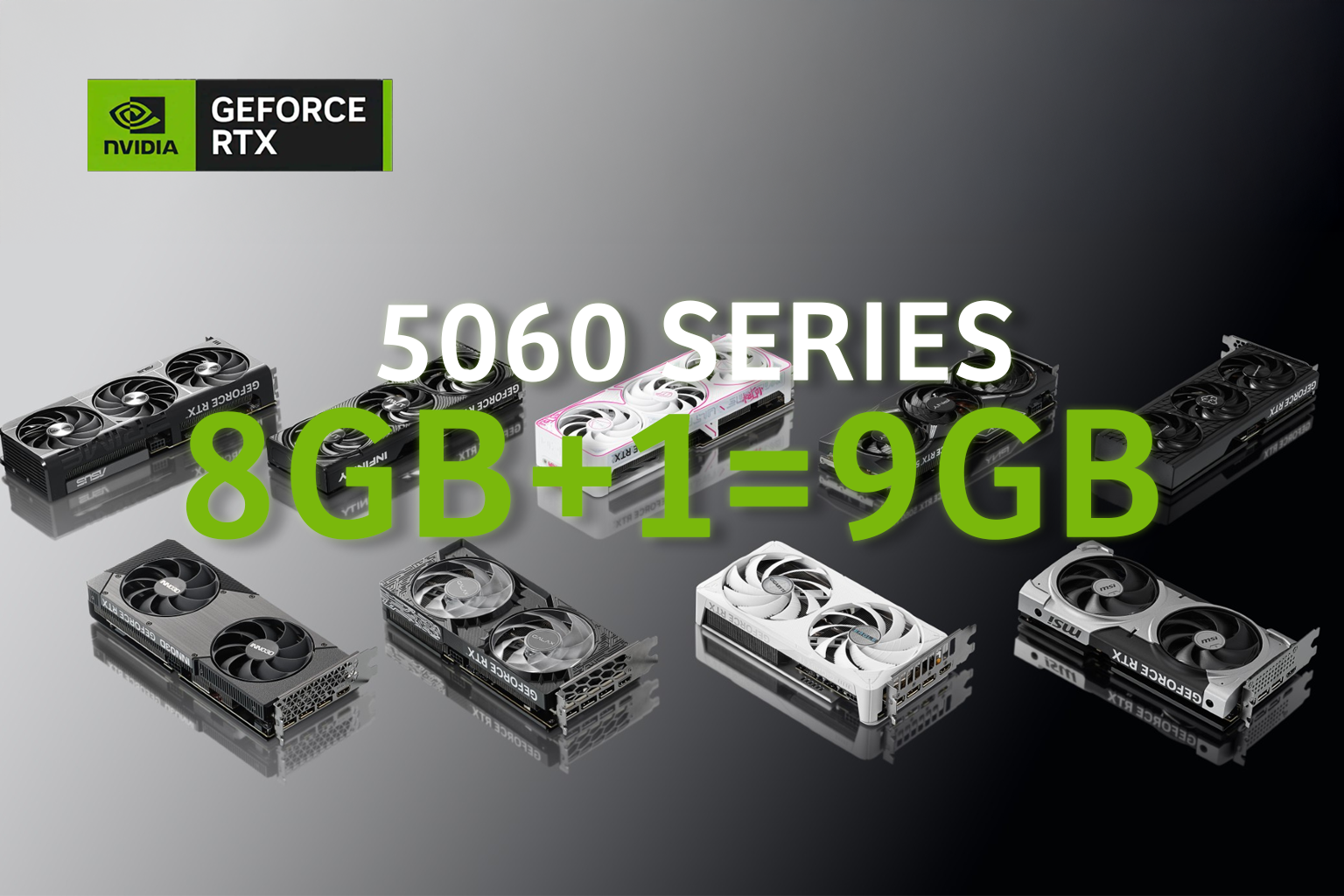
A new report out of China suggests NVIDIA may be preparing refreshed versions of the GeForce RTX 5060 Ti and GeForce RTX 5060 with 9GB of memory instead of the current 8GB configuration. The claim comes from the Chinese Board Channel forums, where the discussion points to broader availability of 3GB GDDR7 memory modules from major suppliers and a possible May to June 2026 launch window for these revised cards. At the time of writing, NVIDIA has not publicly confirmed any 9GB desktop RTX 5060 Ti or RTX 5060 models, so this should still be treated as a rumor rather than an announced product.
What makes the report interesting is the logic behind it. Current official NVIDIA specifications list the RTX 5060 Ti and RTX 5060 with a 128 bit memory interface and 448 GB/s of memory bandwidth, using 8GB of GDDR7 on today’s retail models. If NVIDIA were to move to a 9GB design built around 3GB modules without increasing chip count, the likely layout would be 3 memory chips on a 96 bit bus rather than 4 chips on a 128 bit bus. That would allow NVIDIA to add 1GB of VRAM while reducing the number of memory packages required per card.
The tradeoff is bandwidth. With a 96 bit bus at the current 28 Gbps memory speed, total bandwidth would fall to 336 GB/s. Compared with the current 448 GB/s figure on existing RTX 5060 Ti and RTX 5060 cards, that is a 25% reduction, not 33%. Even if NVIDIA pushed these rumored cards to 30 Gbps, bandwidth would only reach 360 GB/s, which would still be about 19.6% below current models. In other words, the extra 1GB of VRAM could help certain memory limited scenarios, but the narrower bus would create a real penalty in raw throughput.
That creates a very awkward value proposition. On paper, 9GB sounds more marketable than 8GB, especially in 2026 when VRAM capacity is under much heavier scrutiny in newer games and AI adjacent workloads. But for mainstream GPUs like the RTX 5060 Ti and RTX 5060, cutting memory bandwidth that sharply could hurt performance in many real world gaming situations, especially at higher settings or in titles already sensitive to bus width and memory throughput. In simple terms, this would not be a straightforward upgrade. It would be a capacity increase paired with a potentially meaningful architectural compromise.
The rumor also fits into a larger supply chain story around GDDR7 packaging and cost control. Multiple reports this week have echoed the idea that 3GB GDDR7 modules are becoming more relevant to NVIDIA’s planning, with some outlets suggesting that the strategy could help reduce memory pressure and lower BOM costs by requiring fewer chips per board. That does not automatically mean NVIDIA will pass any savings to buyers, but it would explain why partners might be interested in a design like this if memory supply remains tight.
The one part that remains especially uncertain is product positioning. NVIDIA already sells the RTX 5060 Ti in both 8GB and 16GB variants, while the RTX 5060 remains an 8GB part officially. If 9GB versions do appear, NVIDIA would need to decide whether they replace existing cards, sit alongside them, or target specific regions and board partners. That kind of fragmentation could make the lower midrange stack even more confusing for buyers, particularly if the naming does not clearly communicate the bandwidth cut that comes with the new memory layout. Based on the current official product pages, none of this exists yet in the retail lineup.
For now, the most important takeaway is that this is a plausible rumor, not a launch announcement. The memory math is real, the supply chain angle is believable, and the timing around late May to early June would line up with Computex season. But unless NVIDIA formally introduces these cards, the reported RTX 5060 Ti 9GB and RTX 5060 9GB remain speculative. If they do become real, the conversation will not be whether 9GB is better than 8GB in isolation. It will be whether 1GB of extra VRAM is worth giving up a large chunk of memory bandwidth on already bandwidth sensitive GPUs.
Would you take 9GB of VRAM on an RTX 5060 class card if it meant dropping from a 128 bit bus to 96 bit, or would you rather keep the higher bandwidth?
