
Intel Latest Arc Pro Driver Lets Users Allocate Up To 93% Of System Memory To Built In Arc Pro GPUs For Wider AI LLM Support
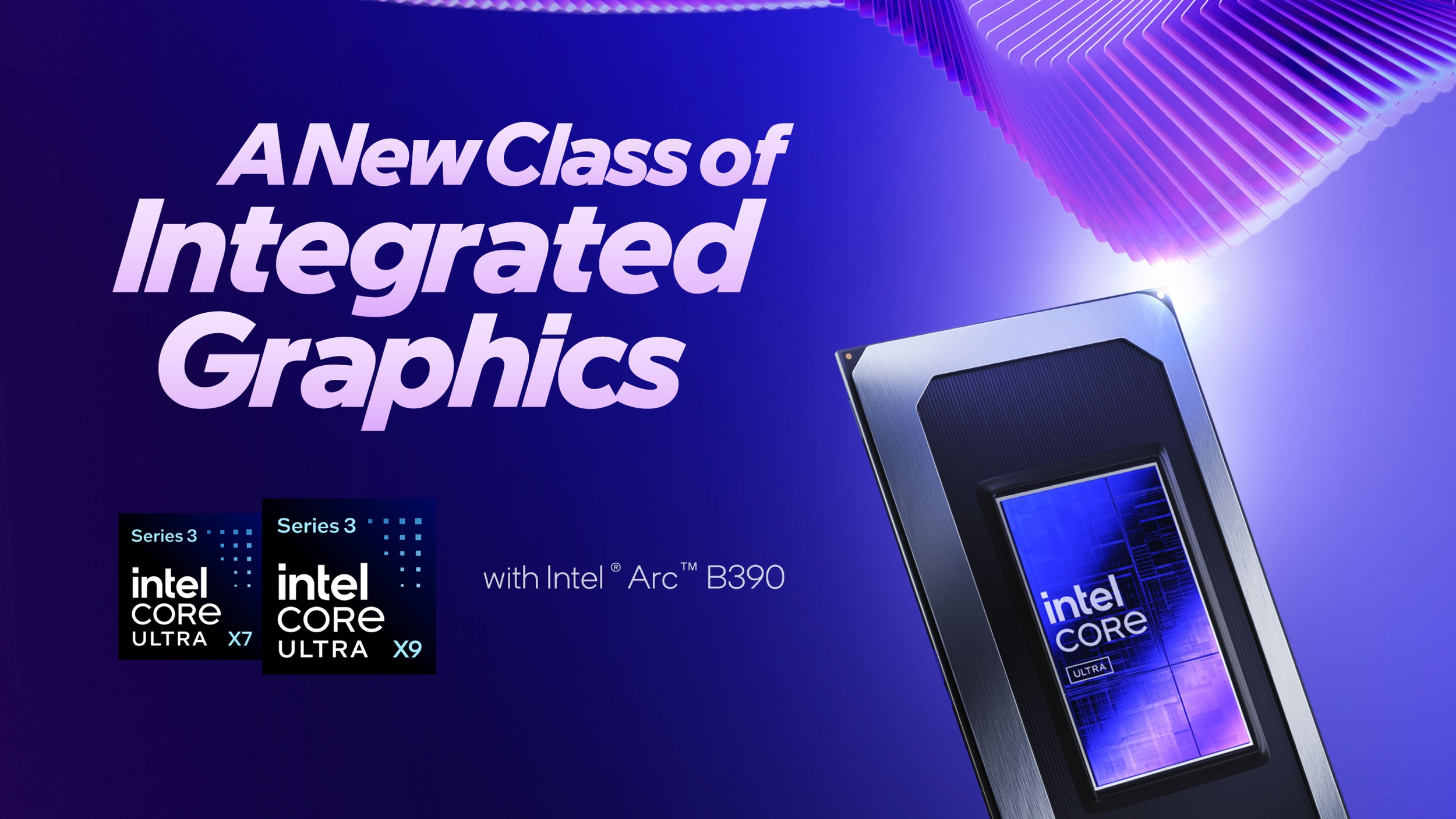
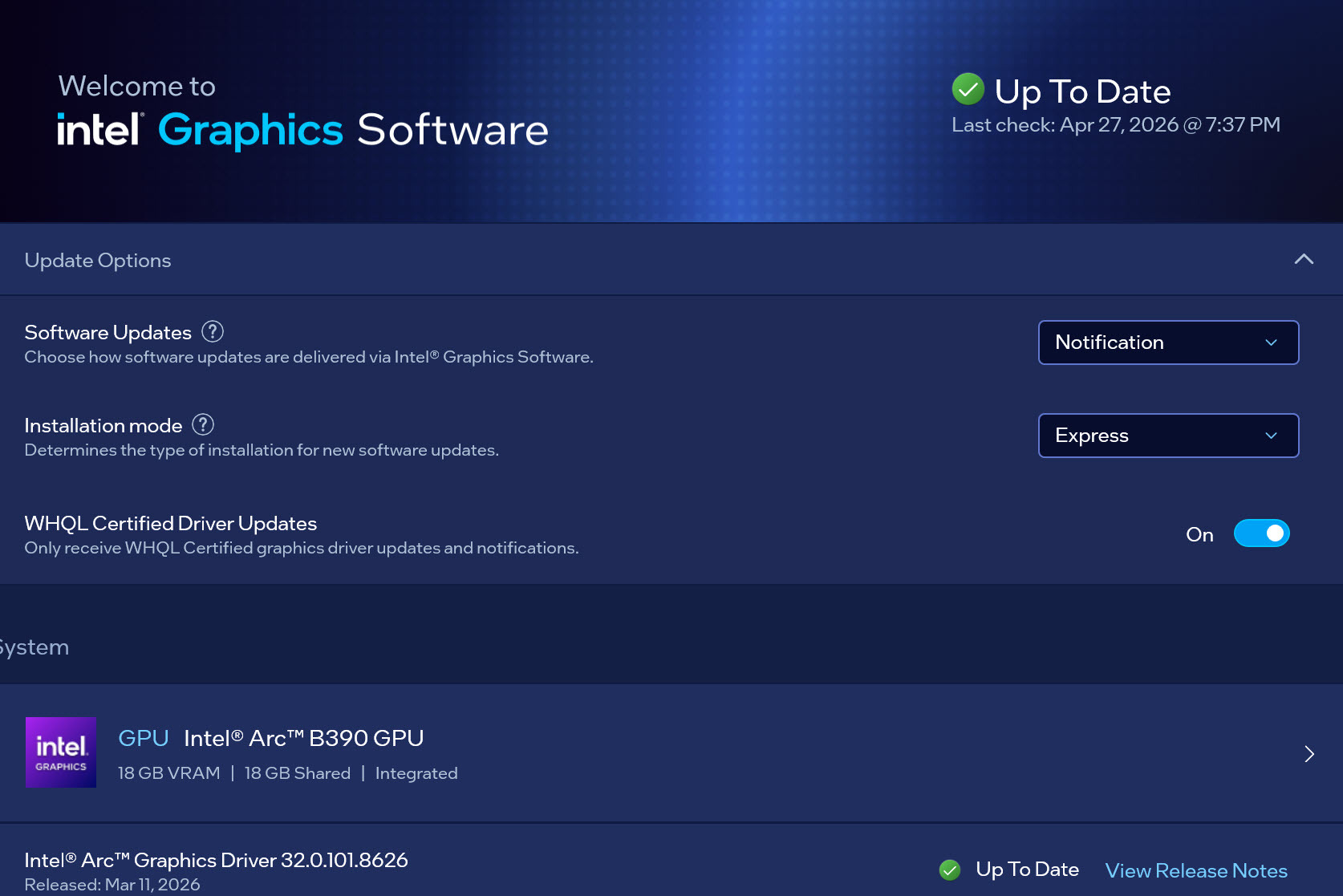
Intel has released its latest Arc Pro Graphics driver, version 32.0.101.8517 Q1.26.R2, bringing a notable update for workstation users, creators, developers, and AI focused PC builders. The new Intel Arc Pro Graphics Windows driver expands graphics memory allocation for built in Intel Arc Pro GPUs, allowing select Intel Core Ultra systems to dynamically allocate up to 93% of system memory to the GPU under Microsoft Windows 10 and Windows 11. Intel lists the driver date as April 24, 2026, with support for Intel Arc Pro Series Graphics and select Intel Core Ultra H series processors with Intel Arc Pro Graphics.
This is a strategic update for the AI workstation market. Larger local AI models, including LLM workloads, need more accessible memory to operate efficiently. With this driver, Intel is giving Arc Pro iGPU based systems more flexibility by allowing a greater share of system RAM to be dynamically used as GPU working memory. Intel provides a clear example: a 64 GB host system can allocate up to 93%, or around 59.5 GB, to the built in Intel Arc Pro GPU.
Previously, Intel graphics drivers allowed up to around 87% of system memory to be allocated to the GPU. In a 32 GB system, that translated to roughly 28 GB available for graphics memory. With the new allocation ceiling, a 32 GB configuration can reach close to 30 GB of GPU accessible memory, while larger systems can offer significantly more headroom for AI models, professional visualization, inference testing, and memory intensive creator workloads.
The update is especially relevant as PC makers continue positioning integrated graphics as more than a display output solution. With AI workflows becoming increasingly local, the ability to dedicate more shared memory to Arc Pro iGPUs helps Intel compete more directly in compact workstation designs, mobile creator platforms, and small form factor AI PCs where discrete GPUs may not always be practical.
Intel states that the driver supports built in Intel Arc Pro GPUs in select Intel Core Ultra Processors from series 3, series 2, and series 1. Platform support includes Intel Arc Graphics family products based on Alchemist and Battlemage, along with Intel Core Ultra processor families based on Meteor Lake, Lunar Lake, Arrow Lake S, Arrow Lake H, and Panther Lake.
The driver is also listed as valid for several Intel Arc Pro products, including Intel Arc Pro B390 GPU, Arc Pro B370 GPU, Arc Pro B70 Graphics, Arc Pro B65 Graphics, Arc Pro B60 Graphics, Arc Pro B50 Graphics, and multiple Alchemist based Arc Pro A series products. This gives the update wider relevance across Intel professional graphics hardware, although the headline memory allocation improvement is focused on built in Intel Arc Pro GPUs in select Core Ultra systems.
For comparison, AMD Ryzen AI platforms have also pushed higher shared memory allocation for AI tasks, with some Ryzen AI chips allowing up to 87% memory allocation. AMD AI MAX Plus platforms can go much further when paired with 128 GB of system memory, allowing up to 112 GB to be assigned to GPU memory. Intel latest driver does not necessarily overtake every high capacity AI platform, but it narrows the gap and makes Intel Arc Pro iGPU systems more viable for broader LLM experimentation.
The move also reflects the growing importance of memory capacity in AI PC performance. While raw compute remains essential, many LLM workloads are limited by available GPU memory. Increasing the allocation ceiling gives developers, researchers, and workstation users more room to test larger models locally without immediately needing a high end discrete GPU.
The driver does not appear to introduce a wide list of additional public feature changes, but Intel continues working toward broader ISV certification for Arc Pro GPUs. That matters for professional users who rely on stability and compatibility across creative, engineering, AI, and enterprise applications. For the gaming and hardware enthusiast community, this also shows how integrated graphics is becoming a more serious part of the AI PC conversation, especially as memory capacity, bandwidth, and driver level optimization become key battlegrounds.
Simple supported OS list:
Microsoft Windows 10 64 bit October 2022 Update 22H2
Microsoft Windows 11 64 bit October 2021 Update 21H2
Microsoft Windows 11 64 bit September 2022 Update 22H2
Microsoft Windows 11 64 bit October 2023 Update 23H2
Microsoft Windows 11 64 bit October 2024 Update 24H2
Microsoft Windows 11 64 bit September 2025 Update 25H2
The biggest takeaway is clear: Intel is pushing Arc Pro iGPUs deeper into the AI workstation conversation by giving users more control over memory allocation. For users running local AI tools, LLM experiments, creator workloads, or professional applications on Core Ultra platforms, this driver could make Arc Pro based systems more flexible and more competitive.
Would you consider using an Intel Arc Pro iGPU system for local AI and LLM workloads, or do you still prefer a dedicated GPU for serious AI testing?
