
Huawei Says Atlas SuperPoD 950 Will Challenge NVIDIA Vera Rubin and It Is Set for Its First Public Debut at MWC
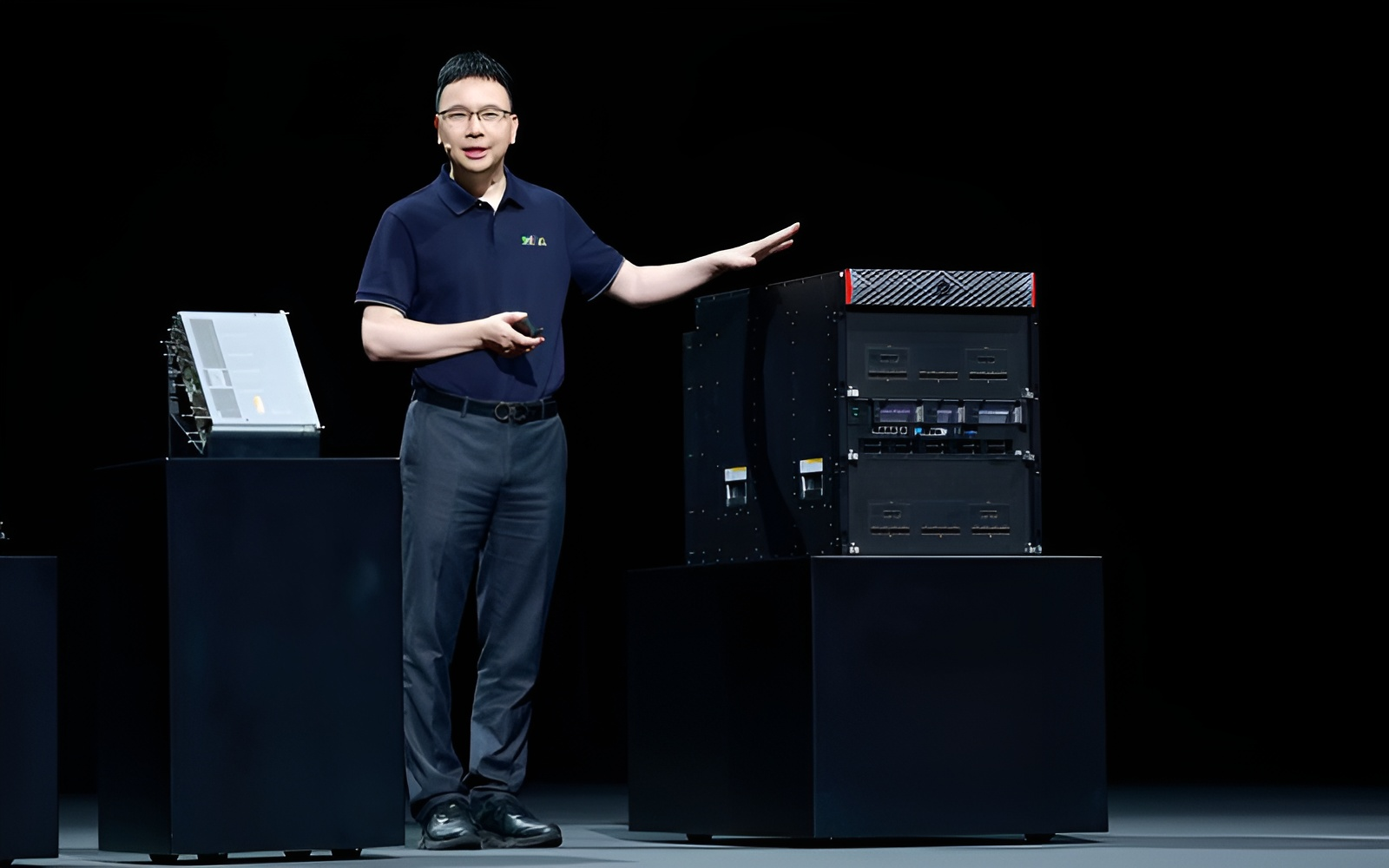
Huawei is preparing to bring its highest profile AI infrastructure pitch to a global stage. According to a report from Nikkei Asia, Huawei plans to showcase the Atlas SuperPoD 950 at Mobile World Congress in Barcelona, marking the first public overseas appearance for the company’s newest large scale AI cluster concept and a direct attempt to position its Ascend roadmap as a credible alternative to NVIDIA’s next generation rack scale systems.
The timing is not subtle. MWC Barcelona runs from March 2, 2026 through March 5, 2026, and the show has increasingly become a venue where AI infrastructure, connectivity, and enterprise platforms compete for attention alongside mobile hardware. Huawei using this stage signals confidence that it wants to sell the story outside its home market, not just to domestic customers already aligned with the China first compute push.
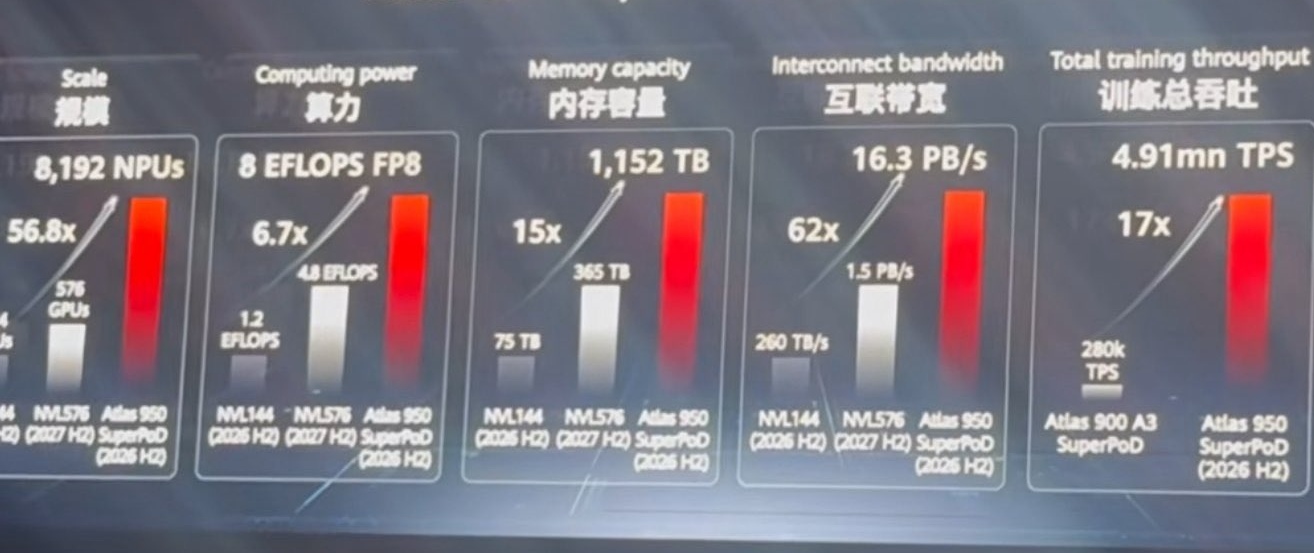
On paper, Huawei’s disclosed numbers for Atlas SuperPoD 950 are designed to sound blockbuster. Huawei has described the Atlas 950 SuperPoD as scaling to 8,192 Ascend 950 NPUs, with headline performance cited at 8 EFLOPS FP8 and 16 EFLOPS FP16, alongside 1,152 TB of memory capacity and 16.3 PB per second of interconnect bandwidth. The interconnect branding here is UnifiedBus, positioned as Huawei’s answer to high bandwidth rack scale fabric similar in concept to NVIDIA’s NVLink driven system design.
The market reality is that these figures remain claims until third party validation, real workloads, and real thermals show what is sustainable. Huawei has been aggressive in system scale messaging, and cluster level performance can look spectacular on disclosure slides, especially when the architecture strategy leans into scaling out massive chip counts to compensate for constraints at the single chip level. That is precisely why a public showing matters, because it becomes the first step toward credibility with international audiences who will want proof, software maturity, and repeatable deployment outcomes rather than marketing peaks.
What makes Atlas SuperPoD 950 strategically interesting is less about winning a direct one to one spec war with NVIDIA and more about what it represents inside the China driven AI buildout. Huawei is effectively selling a complete stack story: hardware at scale, a proprietary interconnect, and an ecosystem that can keep training clusters expanding even under export controls. That is the real competitive objective: supply certainty and a viable domestic substitute path for large customers who can no longer rely on United States origin accelerators at the same scale as before.
At the same time, customer adoption will hinge on two gating factors that specs alone do not solve. First is software tooling and developer experience: compilers, kernels, frameworks, scheduling, and debugging at scale. Second is deliverability: can Huawei manufacture, integrate, and deploy these systems in sufficient volume with stable yields and consistent networking behavior. In the AI infrastructure world, the winner is rarely the company with the loudest peak number. It is the company that can ship, support, and keep clusters productive month after month.
If Huawei shows Atlas SuperPoD 950 publicly at MWC, what would you need to see to take it seriously: third party benchmarks, real power and cooling disclosures, or proof of software ecosystem readiness?
