
Guild Wars 3 Revealed as ArenaNet Looks to Push the MMO Genre Beyond a Decade of Stagnation
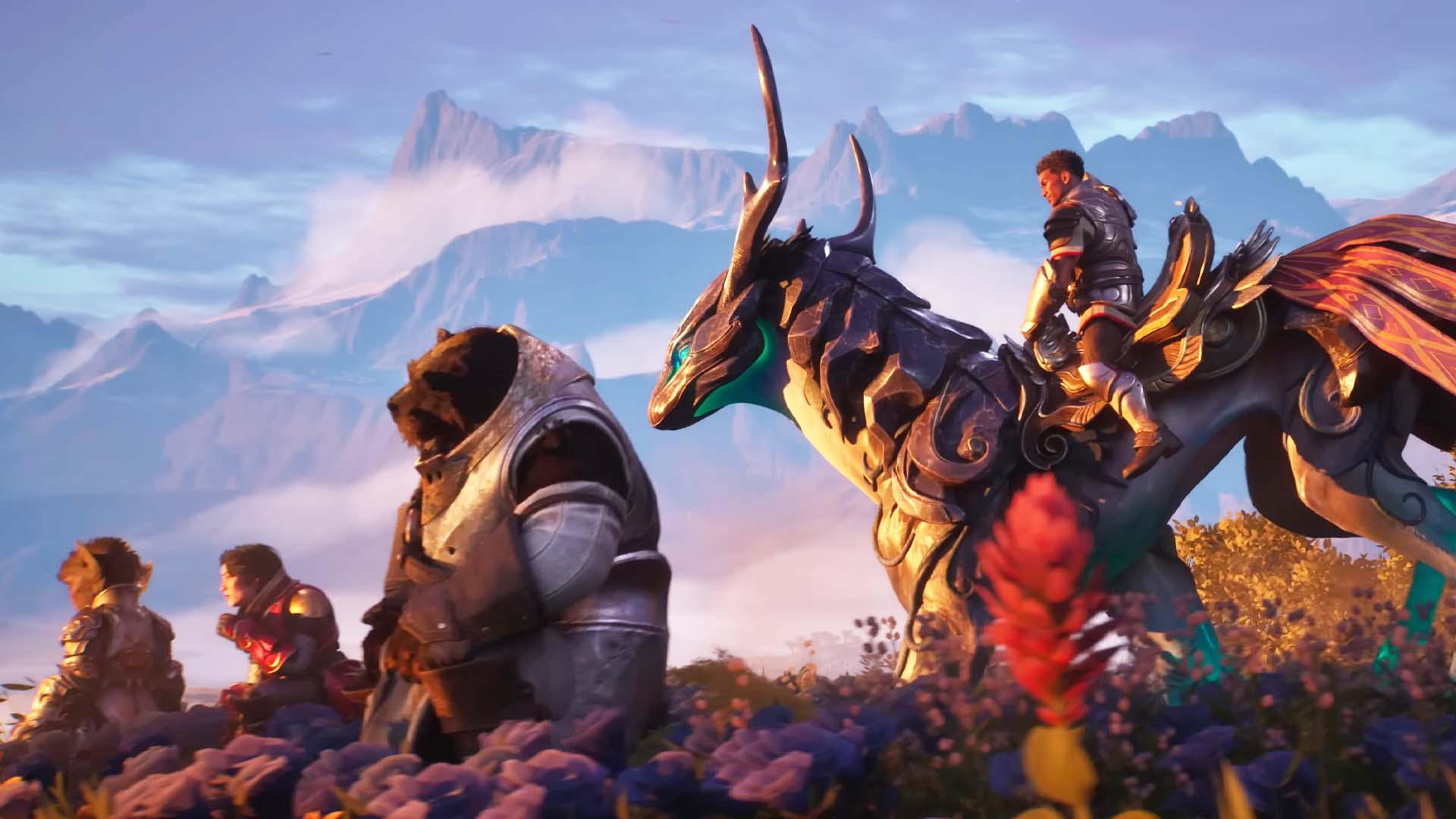
ArenaNet has officially revealed Guild Wars 3 during Summer Game Fest 2026, giving MMORPG fans one of the biggest surprises of the show. The project had been quietly teased before, including an unexpected mention by an NCSoft executive during an investor call in March 2024, while a job listing earlier this year suggested the game was being developed with Unreal Engine 5.
The announcement arrives at an important moment for the MMO genre. Western studios have largely stepped away from large scale AAA MMORPG development, with Riot Games’ long discussed Runeterra MMO remaining one of the few major projects still surrounded by long term expectation. The cancellation of Amazon’s The Lord of the Rings MMO also reinforced how difficult and risky the genre has become for major publishers.
That context makes Guild Wars 3 more than a simple sequel announcement. It positions ArenaNet as one of the few Western studios still willing to take on the challenge of building a new major MMO at a time when many players feel the genre has stopped moving forward.
Speaking during the IGN Live interview, ArenaNet Studio Head Colin Johanson explained that the studio approaches each Guild Wars project by looking at the biggest frustrations players have with online RPGs at the time.
"We start with player problems. We make MMORPGs, so we begin by asking what the player problems and frustrations in the genre are at that time. When we made Guild Wars 1, one of the big ones was that every online game had a subscription fee. So we made a game with no subscription fees, where anyone could play as much or as little as they wanted and always play with their friends."
— Colin Johanson
That philosophy helped define the original Guild Wars as a different kind of online RPG. Instead of following the subscription model that dominated the genre, ArenaNet built a game that allowed players to jump in freely and play at their own pace. It was a major part of the series identity and helped separate Guild Wars from other online RPGs of its era.
Johanson said Guild Wars 2 followed the same problem solving philosophy, but targeted a different set of MMO frustrations.
"When we made Guild Wars 2, we wanted to make a giant open world MMO on the scale of other games at the time, and solve the problems those games had. We made a world where players don’t get put in conflict with one another, where it’s easy to play with other players, and where other players actually make the game more fun."
— Colin Johanson
Guild Wars 2 became known for its cooperative open world structure, dynamic events, accessible grouping, and design philosophy that encouraged players to help each other rather than compete over objectives. For many MMO fans, that approach remains one of the series’ biggest strengths.
With Guild Wars 3, ArenaNet appears ready to repeat that process for a new generation. Johanson said every Guild Wars game is shaped by the problems of its time, even though they all share Tyria, core lore, and a connected universe.
"Starting with those player problems as our core means every one of our games is very different. They take place in Tyria, they draw from the same core lore, but they’re on different timelines and are very different game experiences because they solve different problems in the era they’re made in. We feel like right now the MMO genre is ready for something new. It’s stagnated; we’ve all been playing the same games for the most part for over a decade. This is when ArenaNet is at its best: when we challenge ourselves and say, let’s go solve the problems and innovate."
— Colin Johanson
That statement directly frames Guild Wars 3 as an attempt to shake up the MMO space. ArenaNet is not simply promising a bigger version of Guild Wars 2. The studio is positioning the sequel as a new answer to an old genre that many fans believe has become too familiar, too slow moving, and too reliant on systems that were established more than 10 years ago.
Johanson acknowledged that this is a risky and difficult goal. MMORPGs are among the most expensive, complex, and demanding games to build. They require long term content planning, online infrastructure, player retention systems, social design, combat depth, world building, and years of live service support. That is one reason many Western publishers have stepped away from the genre or struggled to keep projects alive.
ArenaNet has not yet shared many concrete details about how Guild Wars 3 will innovate. However, one of the studio’s stated goals is to deliver a fluid, momentum driven movement and combat experience inspired by single player action RPGs. The idea is to create a style of control and action that feels difficult to find in current MMOs, where combat often remains locked to older targeting, cooldown, or animation structures.
That direction could be one of the most important parts of Guild Wars 3. If ArenaNet can make movement and combat feel more physical, responsive, and expressive while still supporting large scale multiplayer encounters, it could help the game stand apart from both traditional MMOs and modern action RPGs. The challenge will be making that system work across online latency, group content, competitive modes, and long term progression.
The return to Tyria also gives ArenaNet a strong foundation. Guild Wars has built years of lore, races, cultures, conflicts, and history across its first 2 major entries. However, Johanson’s comments suggest that Guild Wars 3 will not be restricted to simply continuing Guild Wars 2 in a direct line. Different timelines and different player problems mean the studio has room to rethink what a Guild Wars game can be.
For MMORPG fans, the announcement is especially meaningful because there are so few major Western alternatives on the horizon. The genre still has massive audiences, but many of its biggest games are aging. World of Warcraft, Final Fantasy XIV, The Elder Scrolls Online, and Guild Wars 2 continue to carry much of the market, while many newer attempts have struggled to find long lasting momentum.
Guild Wars 3 could be one of the first real tests of whether a major Western MMO can still launch, innovate, and capture a new generation of players. ArenaNet has experience, a recognized IP, and a clear design philosophy, but expectations will be high. Players are not only asking for more content. They are asking for a reason to believe the MMO genre can feel new again.
ArenaNet plans to share more information in the coming months. The studio is currently targeting a beta in Fall 2027 for PC and PlayStation 5, which suggests the full launch may follow sometime in 2028.
For now, Guild Wars 3 feels like one of the most important MMO announcements in years. At a time when many studios are stepping away from the genre, ArenaNet is choosing to confront the challenge directly. If the studio can truly solve modern MMO frustrations and deliver the fluid action RPG inspired experience it is teasing, Guild Wars 3 could become the game that pushes the genre forward again.
Do you think Guild Wars 3 can bring real innovation back to the MMO genre, or has the market changed too much for a new AAA MMORPG to break through?
