
GMKtec Prepares EVO T2 Mini PC Rollout With Intel Panther Lake, Up To Core Ultra X9 388H and 128GB Memory
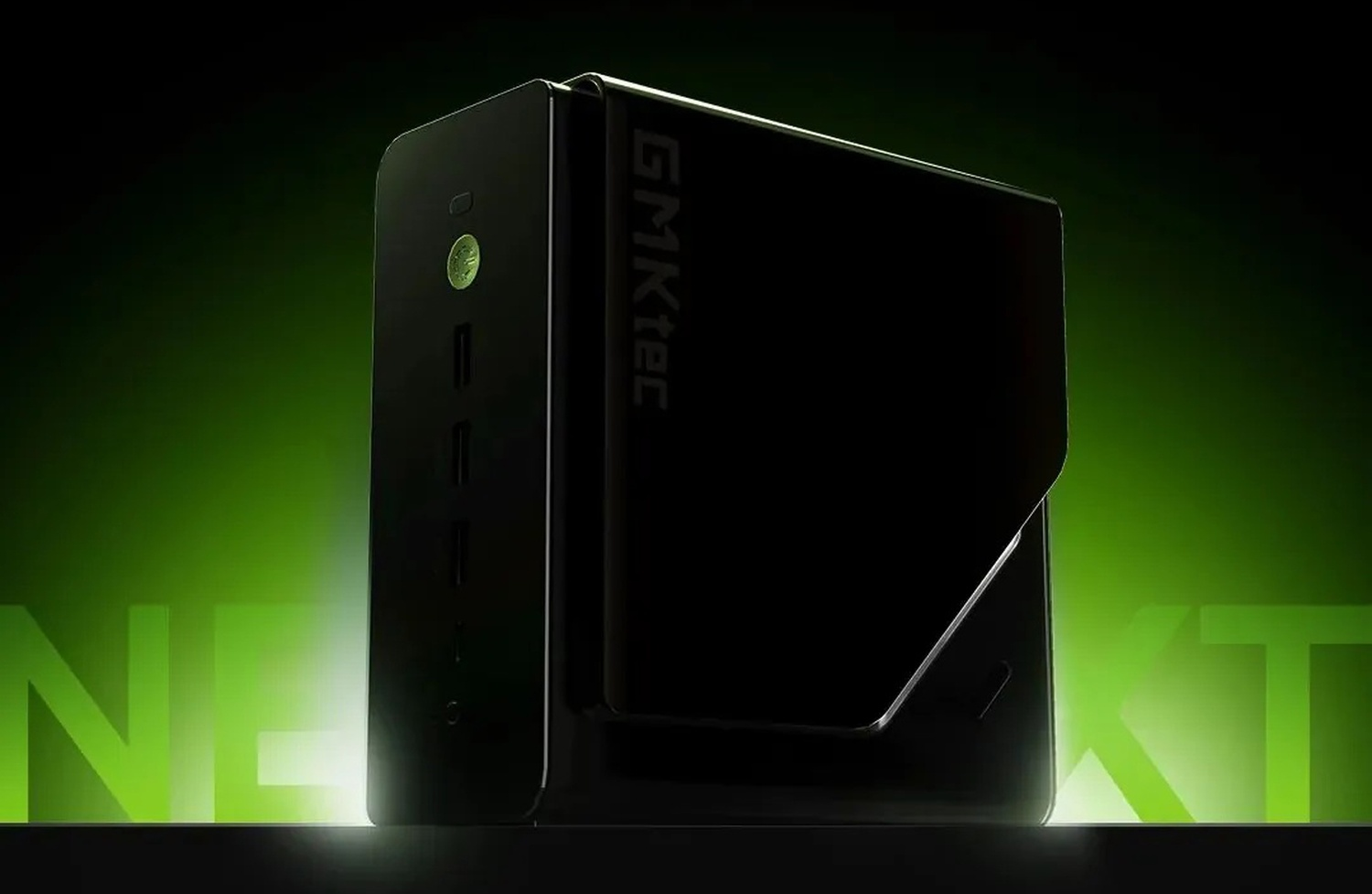
GMKtec is moving ahead with the EVO T2, a new mini PC built around Intel’s Panther Lake platform, positioning it as one of the most ambitious compact systems in its current lineup. Based on GMKtec’s official product release, the EVO T2 is centered on the Intel Core Ultra X9 388H and is being promoted as a desktop class AI focused mini PC capable of delivering up to 180 TOPS of local AI performance. GMKtec previously introduced the system during CES 2026, where it described the EVO T2 as the world’s first consumer mini PC based on Intel’s 18A process technology.
According to GMKtec, the EVO T2 is designed to push the mini PC category beyond its traditional productivity role and into heavier AI, content creation, and high performance desktop workflows. The company says the system can be configured with up to 128GB of LPDDR5X memory, while storage expansion reaches up to 16TB through a combination of PCIe 5.0 and PCIe 4.0 M.2 support. That puts the EVO T2 firmly in workstation territory for users who want a compact machine without giving up modern bandwidth and expansion headroom.
Connectivity is another major part of the pitch. GMKtec lists 10G Ethernet, 5G Ethernet on its CES materials, alongside USB4, OCuLink, and support for quad 4K display output. In practical terms, that makes the EVO T2 more than just an AI mini PC headline product. It is also being positioned as a flexible small form factor platform for creators, developers, and power users who may want fast networking, external GPU expansion, and multi display support in a far smaller chassis than a full tower desktop.
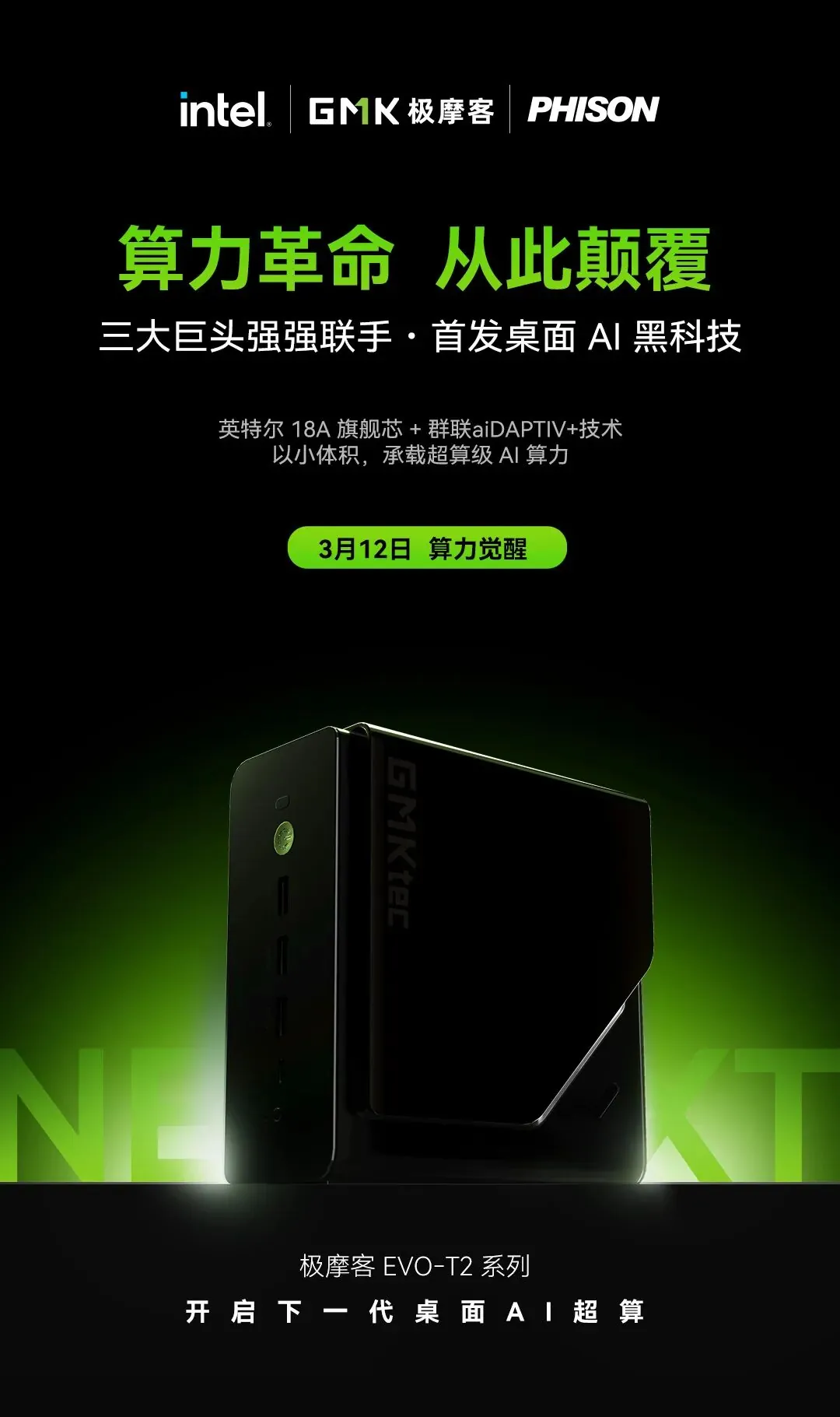
The processor story is what gives the EVO T2 most of its market value. GMKtec has repeatedly highlighted the Core Ultra X9 388H as the headline chip behind the system, calling it Intel’s 2026 flagship mobile consumer processor and tying it directly to the company’s desktop AI supercomputing messaging. GMKtec also states that Panther Lake brings major gains in both performance and energy efficiency through Intel’s RibbonFET and PowerVia technologies. While GMKtec’s official materials strongly confirm the X9 388H based model, a report from ITHome also states that the EVO T2 may be offered in a second configuration with the Core Ultra X7 358H. At the time of writing, I was able to confirm the X9 388H variant from GMKtec’s official materials, but not independently verify full retail configuration details or pricing from GMKtec’s own storefront.
What makes this launch notable for the broader mini PC market is timing. Vendors have spent the last few years proving that compact systems can handle daily productivity, light gaming, and creator workloads, but AI acceleration and high speed expansion are now becoming the next competitive battleground. GMKtec is clearly trying to claim first mover momentum here by tying the EVO T2 to both Intel’s latest process story and the growing demand for local AI inference on smaller desktop systems. If the final retail pricing is aggressive enough, the EVO T2 could become one of the more interesting premium mini PC launches of 2026.
For gaming users, the most important question will be how far Panther Lake’s integrated graphics can really go in a compact box like this. GMKtec’s messaging suggests the EVO T2 is capable enough to handle games without a discrete GPU, but the real differentiator may be the inclusion of OCuLink, which creates a pathway for external graphics expansion when users need more rendering power. That gives the system broader appeal than a pure office or AI device and could make it attractive for enthusiasts who want a compact main setup with room to scale.
At this stage, GMKtec has already laid out the core hardware story, but final regional availability and pricing remain the missing pieces. GMKtec’s official CES coverage says global availability was planned for Q1 2026, while the report from ITHome points to a March 12 launch window. Until GMKtec posts the retail listing and final configurations publicly, the EVO T2 stands as a very promising flagship mini PC that still needs its final commercial details locked in.
Will compact Panther Lake systems like the EVO T2 be enough to push mini PCs into the mainstream for AI and gaming users, or do you still see this segment as too niche for wider adoption?
