
GeIL Pushes DDR5 Into New Territory With Spear V at 8000 MT/s Under JEDEC, No BIOS Tuning Required
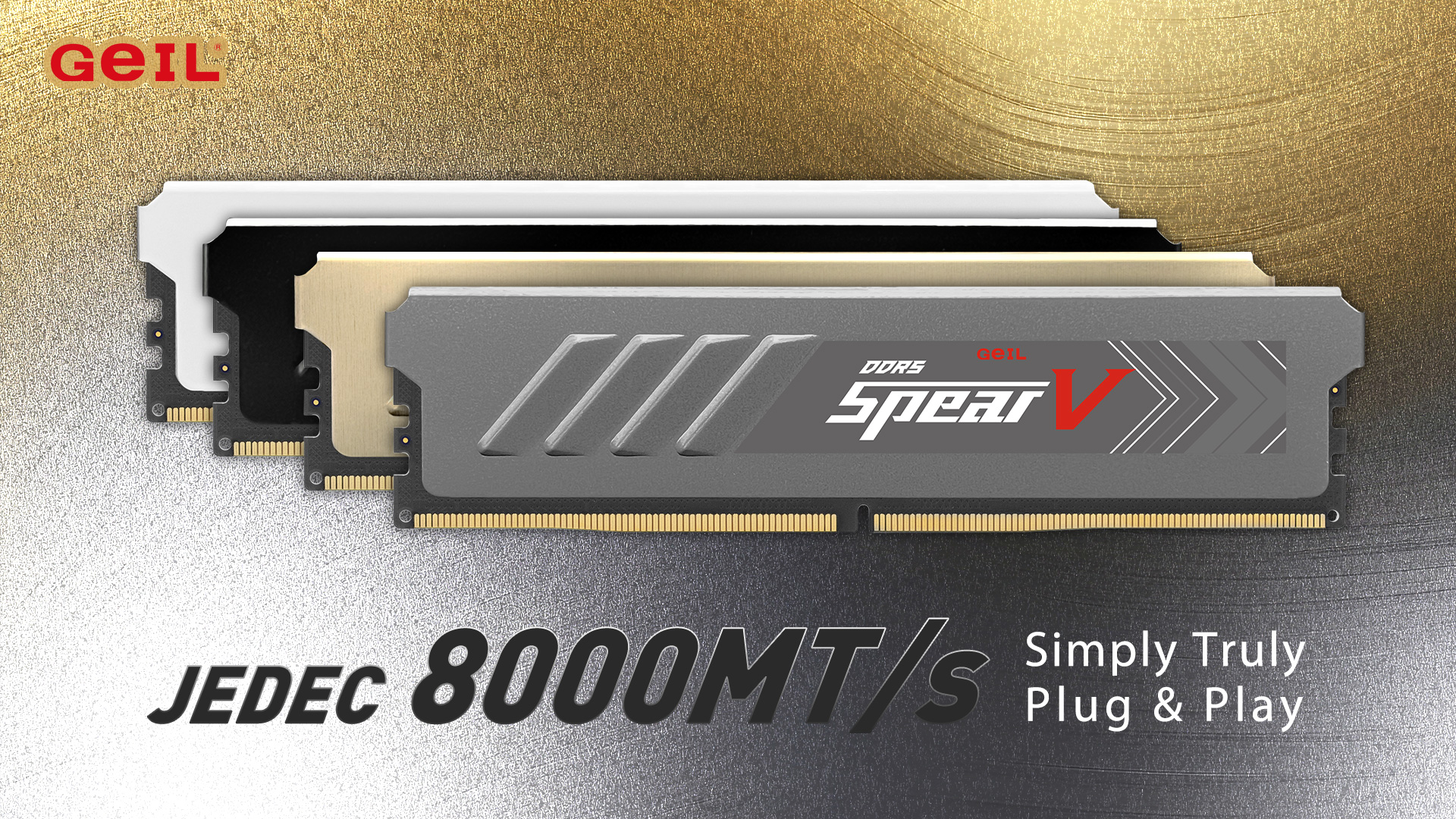
GeIL is making one of the more interesting memory announcements ahead of Computex 2026 with the launch of its new Spear V DDR5 series, a kit the company says can reach 8000 MT/s under official JEDEC specifications without relying on Intel XMP, AMD EXPO, or manual BIOS tuning. That is the real headline here. For years, enthusiasts have associated DDR5 8000 class speeds with profile based overclocking, motherboard tuning, and platform specific trial and error. GeIL is now trying to turn that level of bandwidth into a true plug and play experience on supported systems.
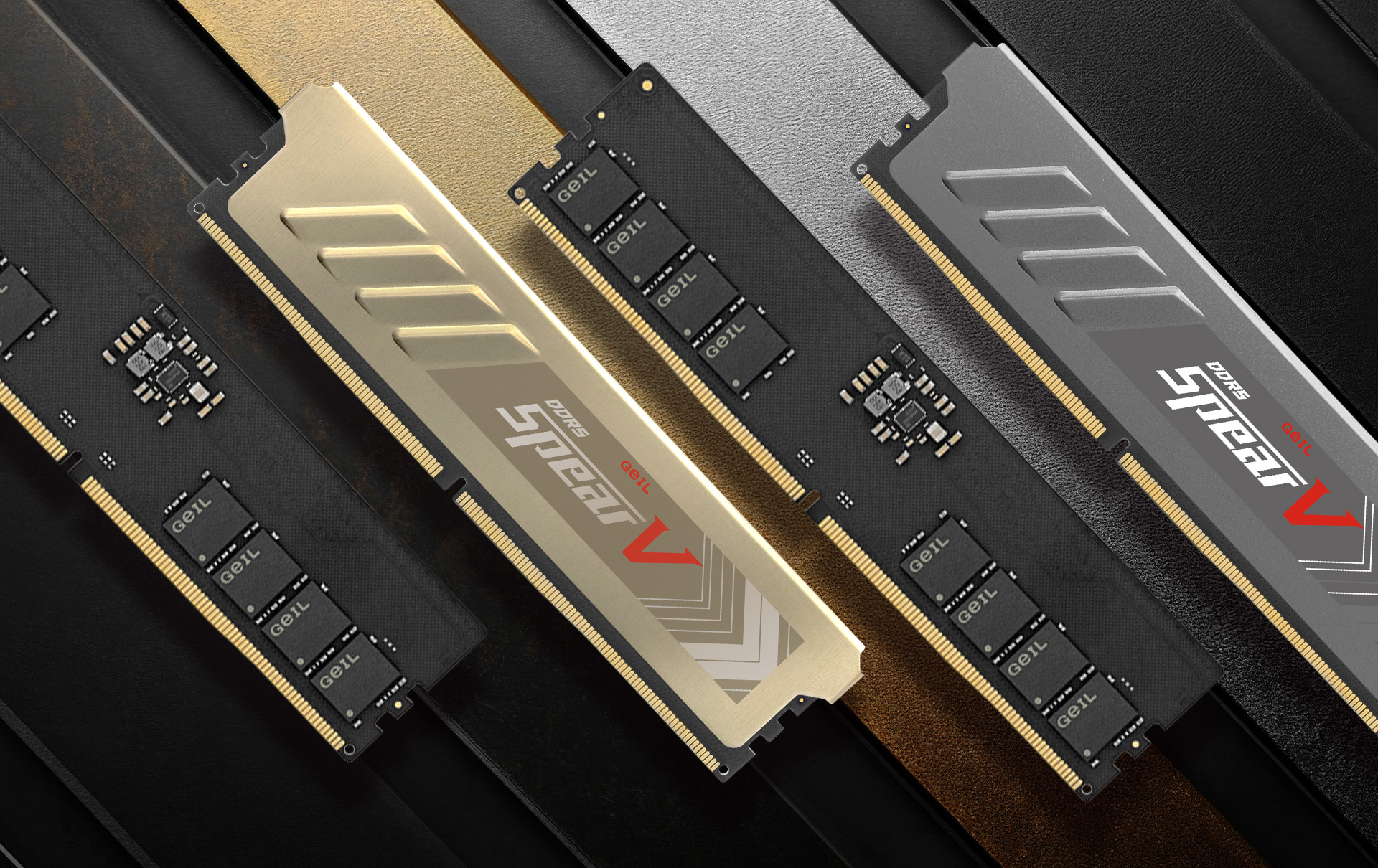
According to GeIL’s announcement, the new modules run at JEDEC standard 1.10V with timings listed at CL64 64 64 128, which clearly shows the company is prioritizing standardization, compatibility, and efficiency rather than chasing the tightest latency numbers possible. In practical terms, this means Spear V is less about replacing enthusiast tuned low latency kits and more about bringing very high memory frequency into a far more accessible tier for users who want bandwidth without the usual overclocking setup process.
That shift could matter more than it first appears. Traditional DDR5 8000 operation has generally lived in the enthusiast segment, where users expect to enable XMP or EXPO, validate stability, and sometimes spend time adjusting voltages and memory training behavior. GeIL’s approach changes the value proposition by baking the speed directly into the JEDEC SPD profile, allowing compatible systems to boot at that specification automatically. If this scales well across retail platforms, it could make high frequency DDR5 feel much less experimental for mainstream buyers and system integrators.
Right now, the strongest platform alignment appears to be on Intel’s latest desktop ecosystem. Reporting based on the announcement says the modules are optimized for Intel Z890 and B860 motherboards and have been demonstrated with Core Ultra desktop processors including the Ultra 7 265K and Ultra 5 245KF. GeIL also said it is working with industry partners to prepare the modules for next generation platforms, though it has not publicly confirmed detailed AMD support, final memory type breakdowns, or a full compatibility matrix yet.
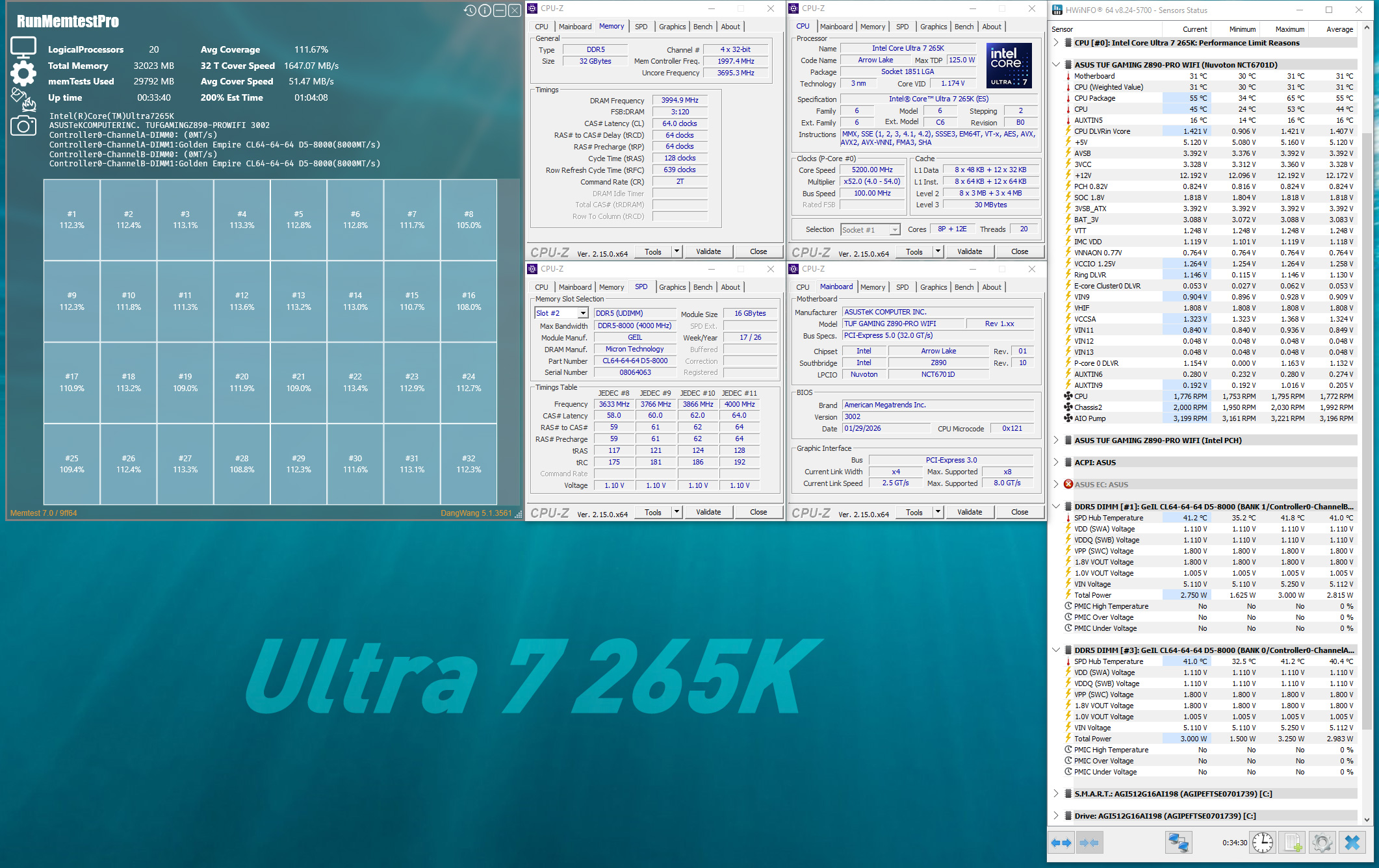
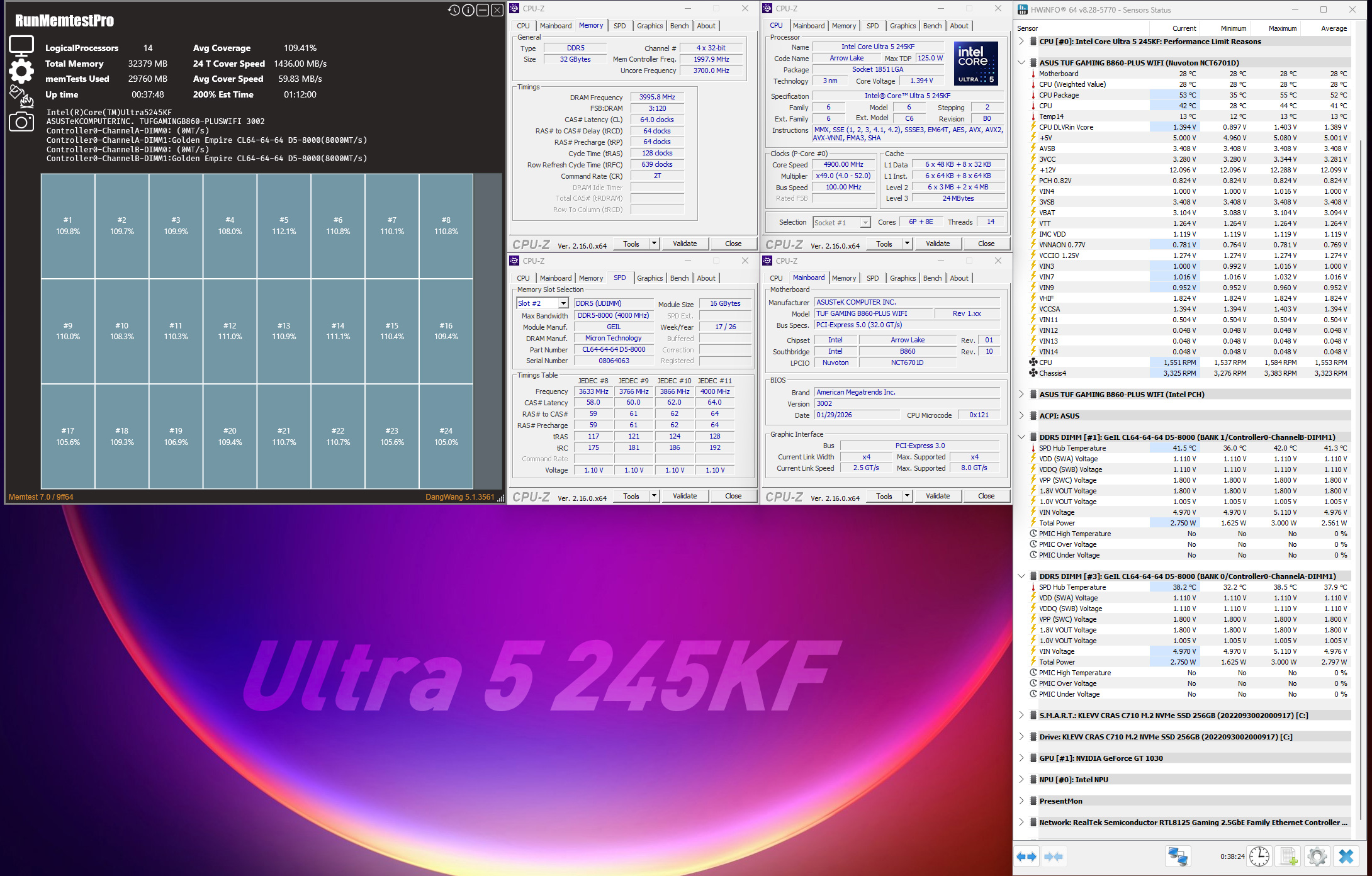
There is also a bigger industry angle behind this launch. If memory vendors can push more performance into official JEDEC territory, the role of XMP and EXPO becomes less central for buyers who simply want fast out of box behavior rather than maximum hand tuned performance. That does not make enthusiast profiles irrelevant, because tighter timings and even higher clocks will still matter for overclockers and performance focused users. But it does suggest the baseline for what counts as standard memory performance is moving up, and that is a meaningful transition for the DDR5 market as platforms mature.

At the moment, GeIL has not disclosed pricing, capacities, or a full retail availability schedule for Spear V, so the market impact will depend heavily on how broadly these modules are rolled out and how well motherboard support holds up outside controlled demonstrations. Even so, the concept alone is a strong signal heading into Computex. Bringing 8000 MT/s into official JEDEC territory at 1.10V is the kind of milestone that reframes the conversation from pure overclocking spectacle to platform level usability, and that could end up being just as important for the next stage of DDR5 adoption.
Do you think JEDEC level 8000 MT/s memory will reduce the need for XMP and EXPO in the mainstream market, or will enthusiasts still prefer tuned kits with tighter timings?
