
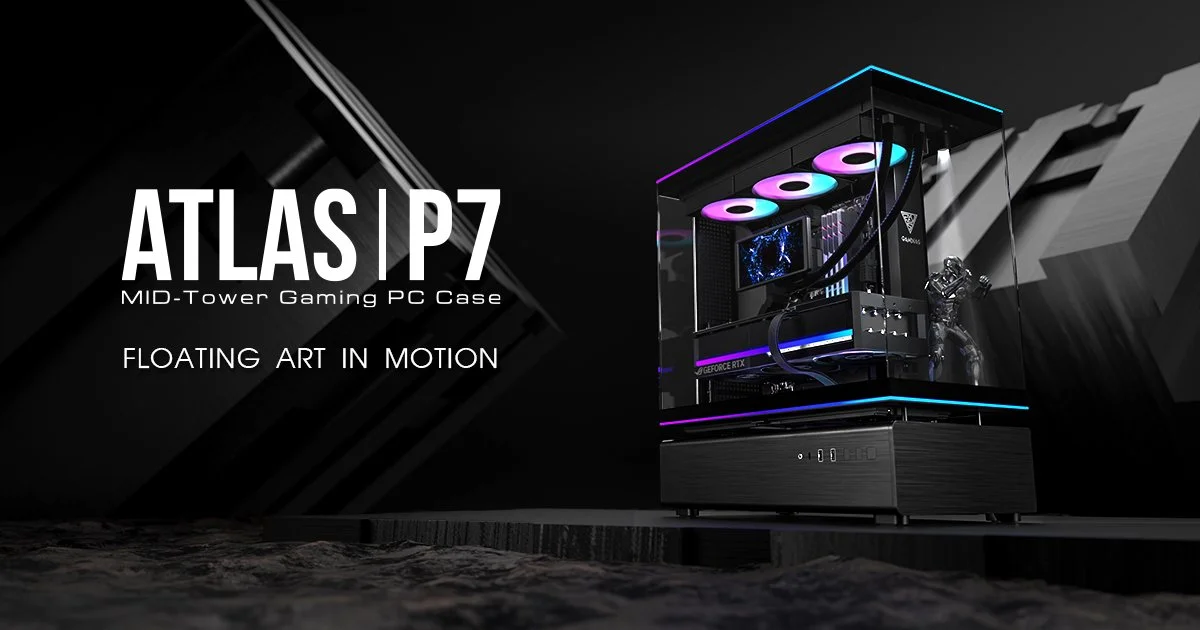
GAMDIAS has officially introduced the ATLAS P7, a panoramic gaming PC case featuring 4 tempered glass panels, a floating chassis design, and a dedicated display stage for collectibles. Priced at $139.90, the new case combines customizable ARGB lighting, chimney style airflow, and extensive hardware compatibility, targeting PC enthusiasts who want to showcase their gaming systems alongside their favorite figures.
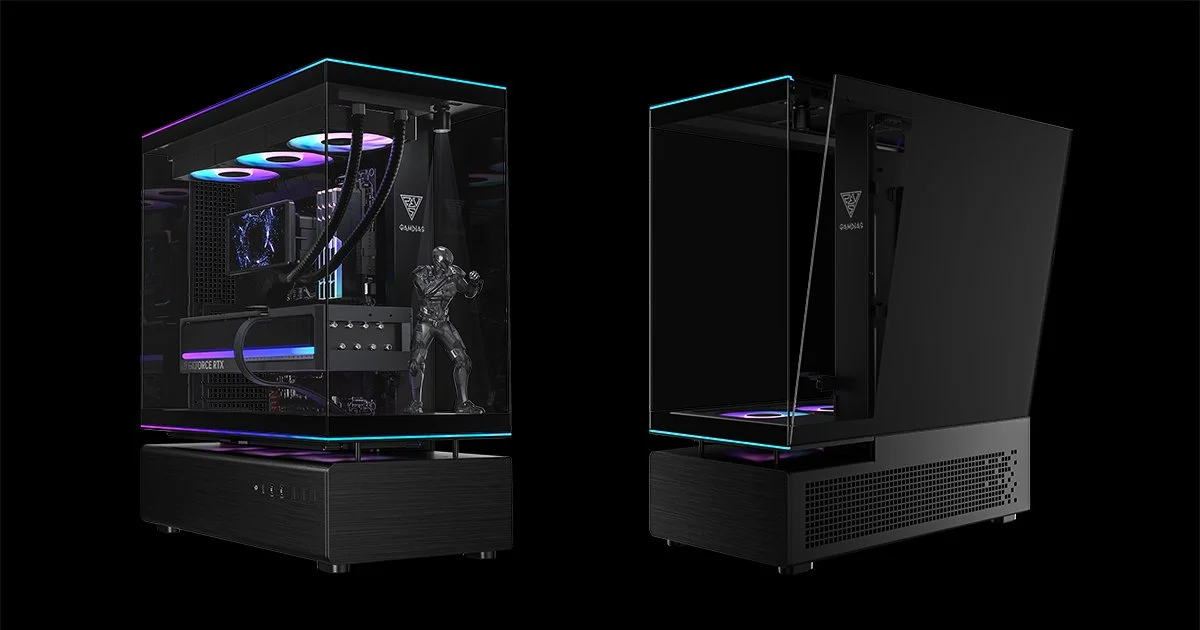
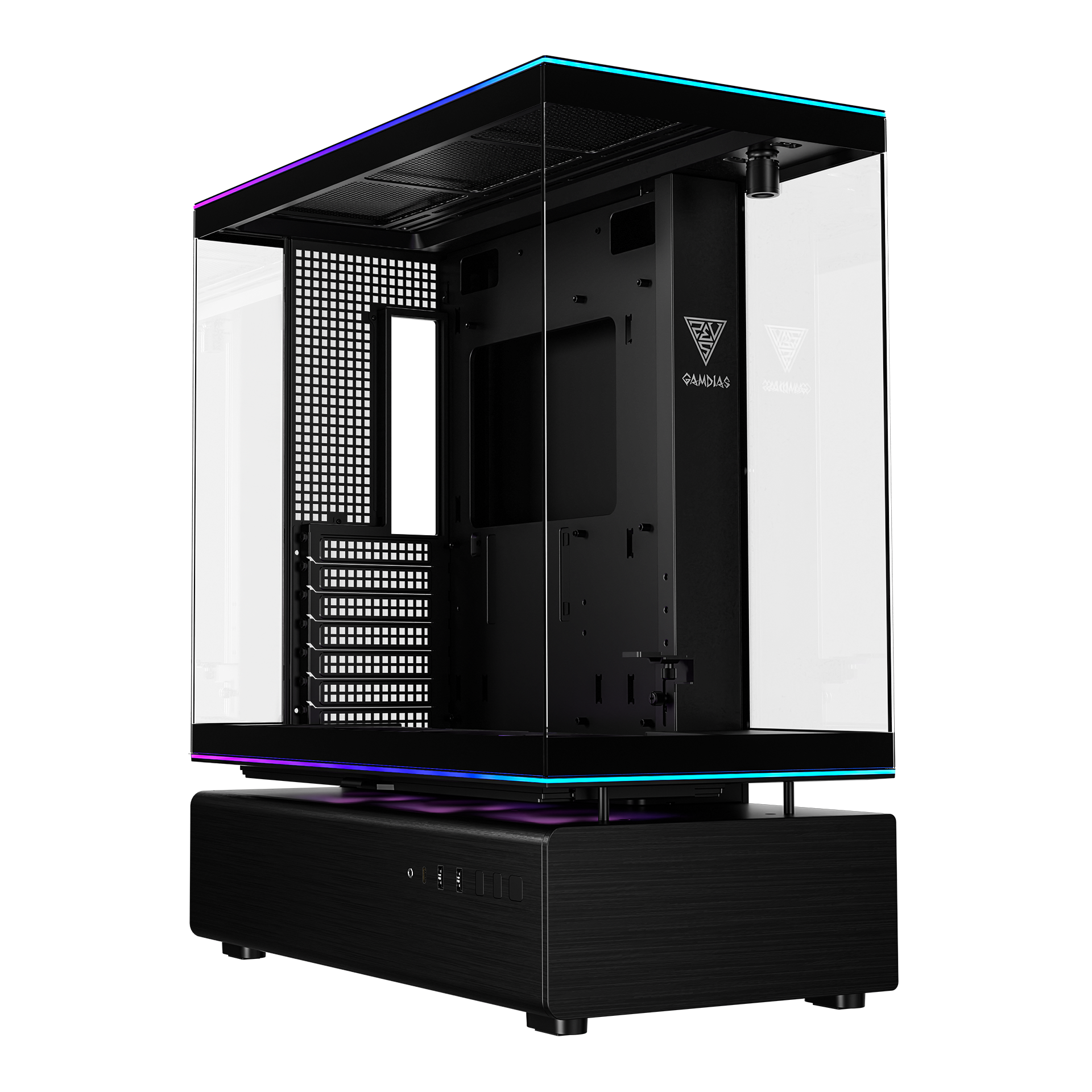
Announced on November 16, 2026, the GAMDIAS ATLAS P7 represents the company's latest approach to immersive PC design under its 2026 AUGMENTED IMMERSION vision. The chassis features a columnless panoramic layout with tempered glass covering the front, left, right, and rear panels, providing an unobstructed view of internal components. A dedicated figure display platform includes an adjustable spotlight, allowing users to illuminate collectibles independently from the system's ARGB lighting. Tool free side panel clasps also simplify hardware access and figure customization.
"This is more than a case; it is a platform that transforms every build into a dynamic showcase."
— Quote by: Stimson Wang, CEO of GAMDIAS.
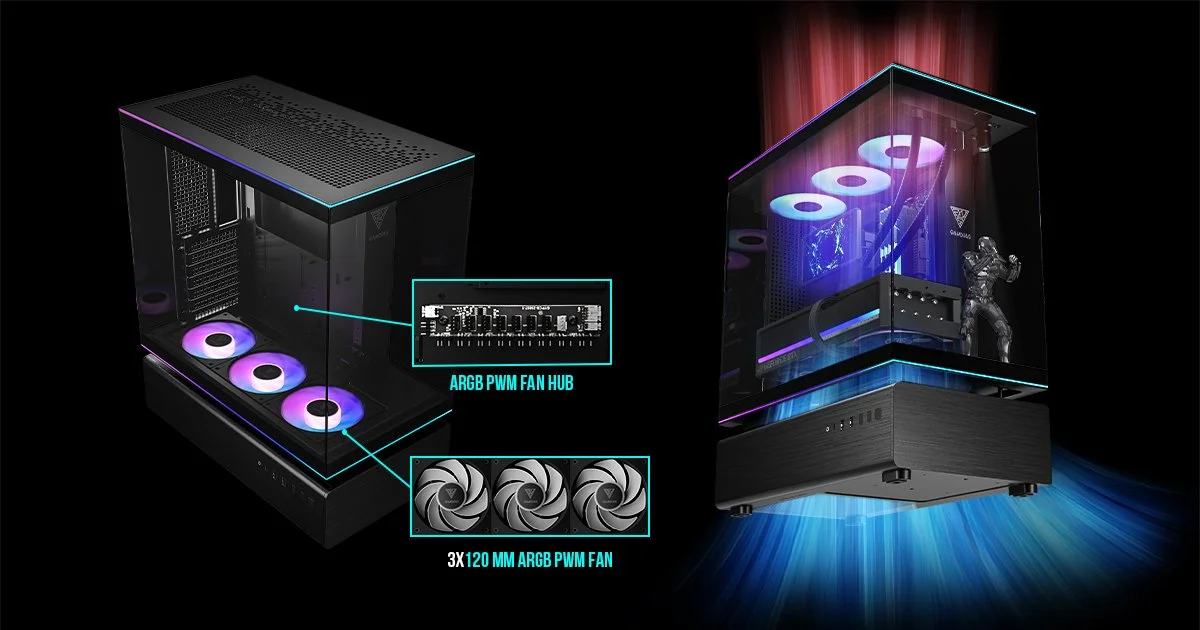
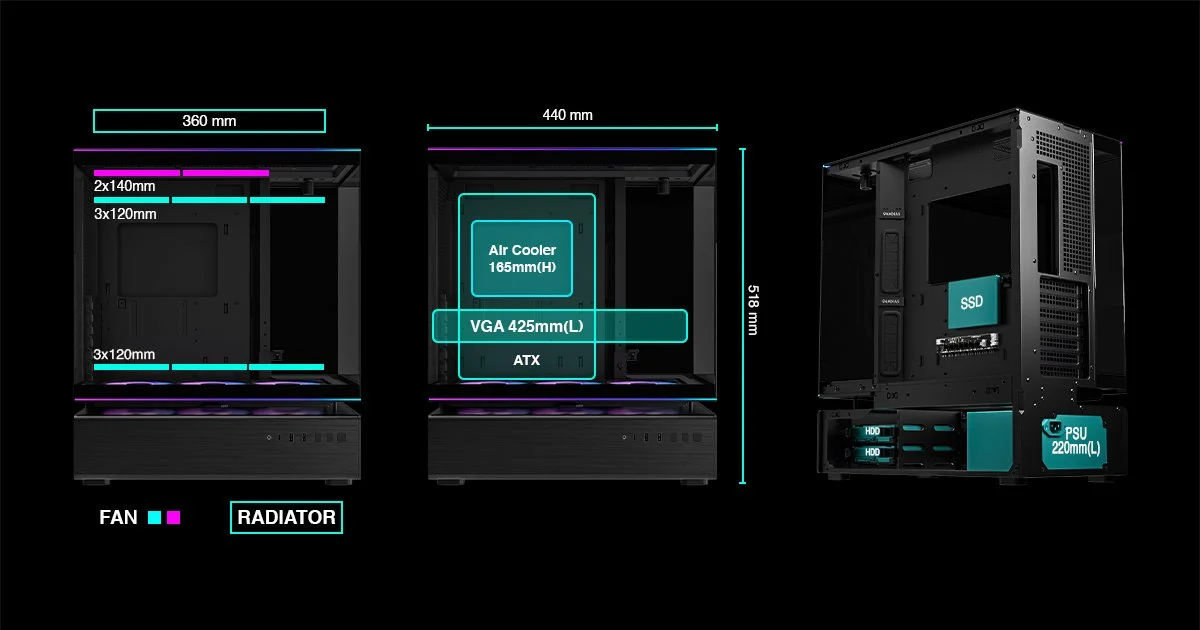
Beyond aesthetics, the ATLAS P7 introduces a floating dual chamber design that separates the power supply compartment from the main system while allowing air to circulate through the chassis. Cooling relies on 3 preinstalled 120 mm NOTUS M1 PWM ARGB fans, drawing fresh air from the bottom and exhausting heat through the top. An included 8 port PWM ARGB hub manages fan speeds and lighting synchronization, while the chassis supports up to 6 fans and a 360 mm radiator.
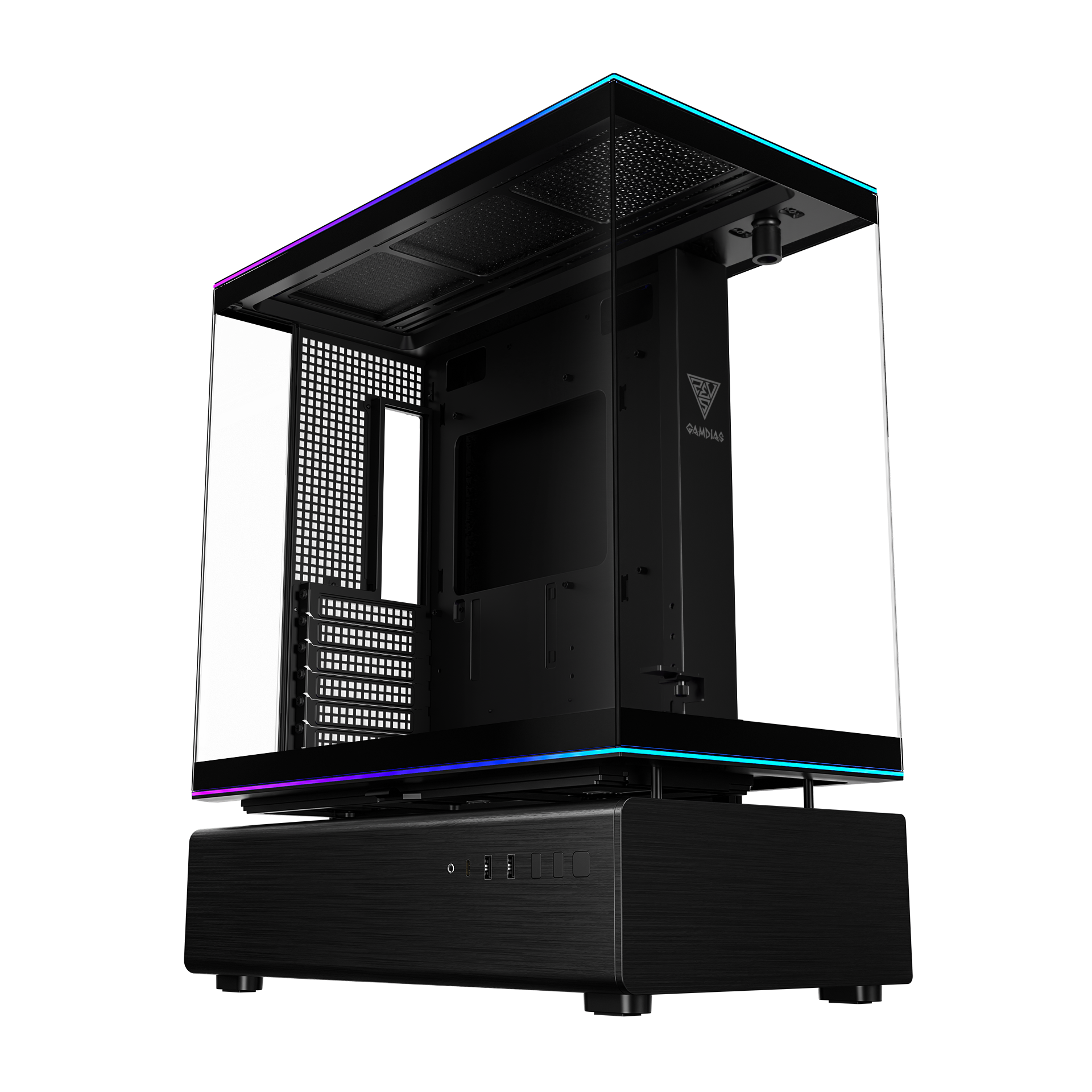
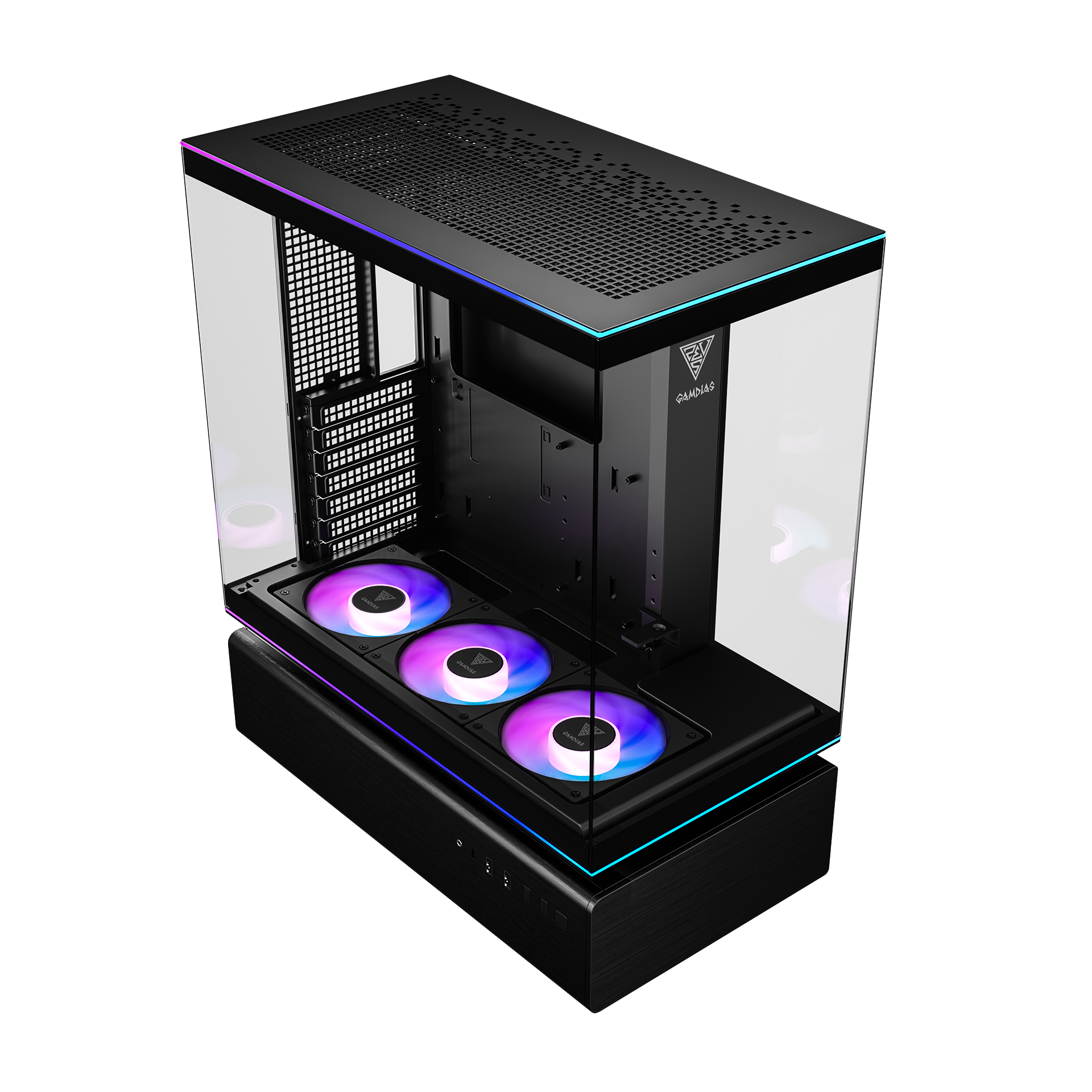
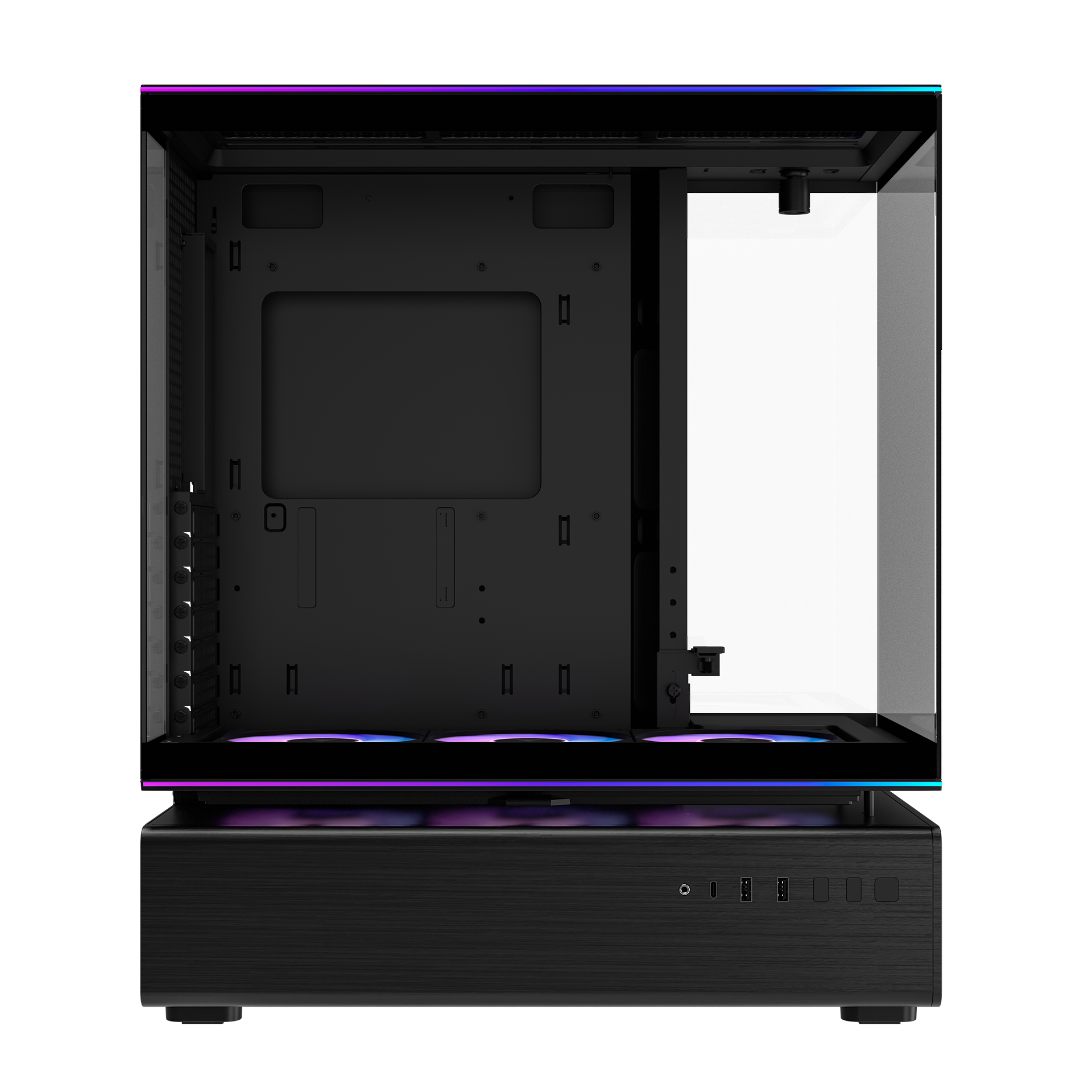
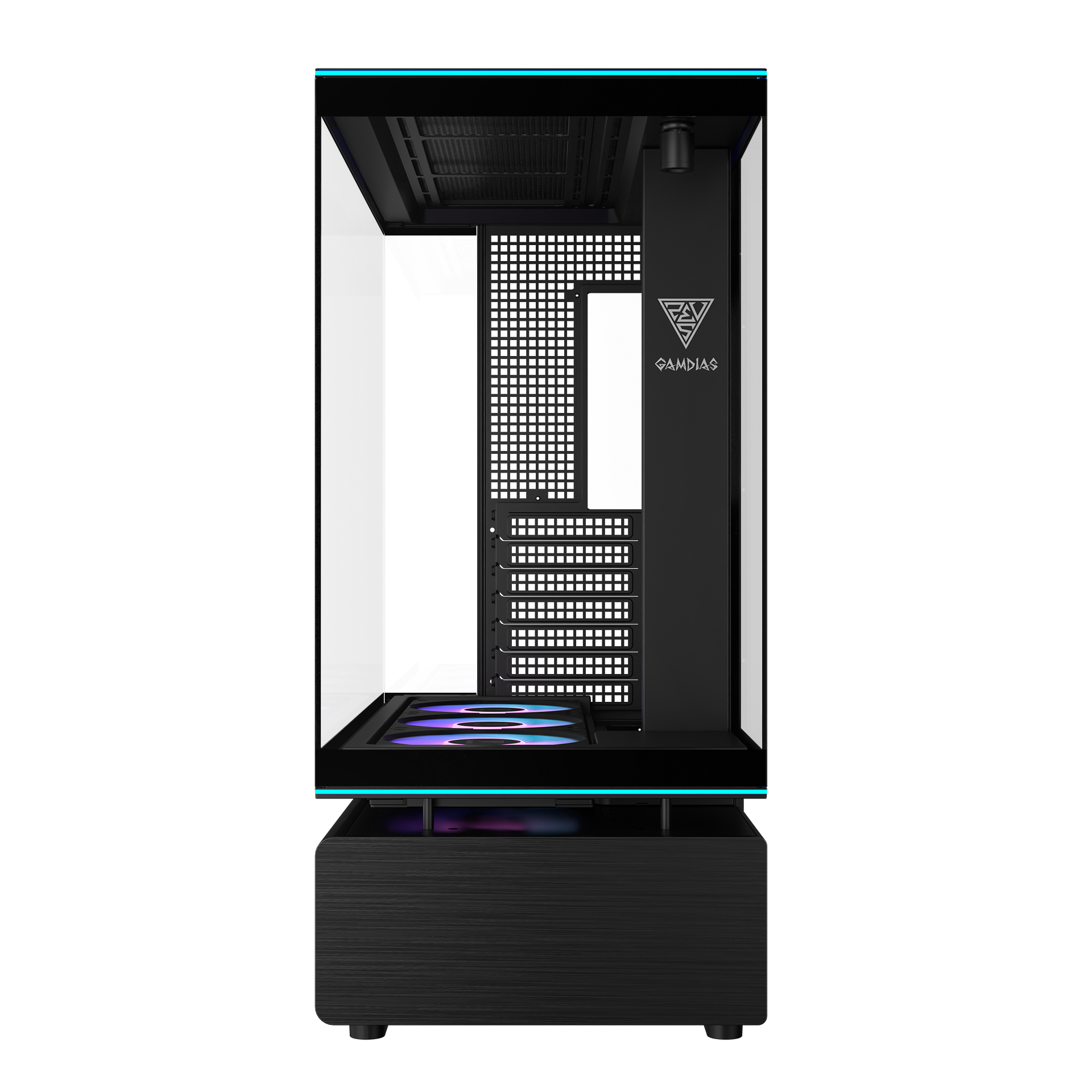
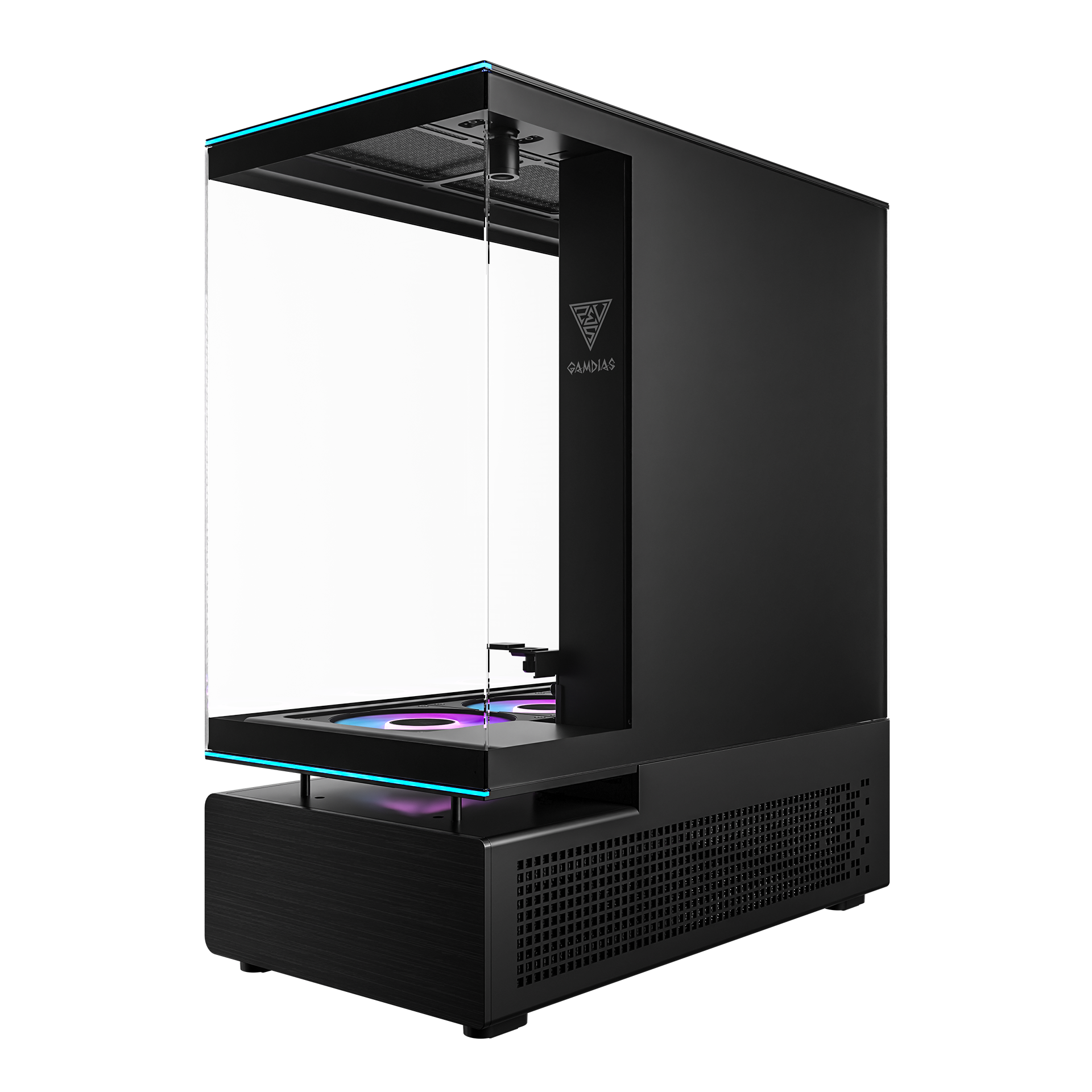
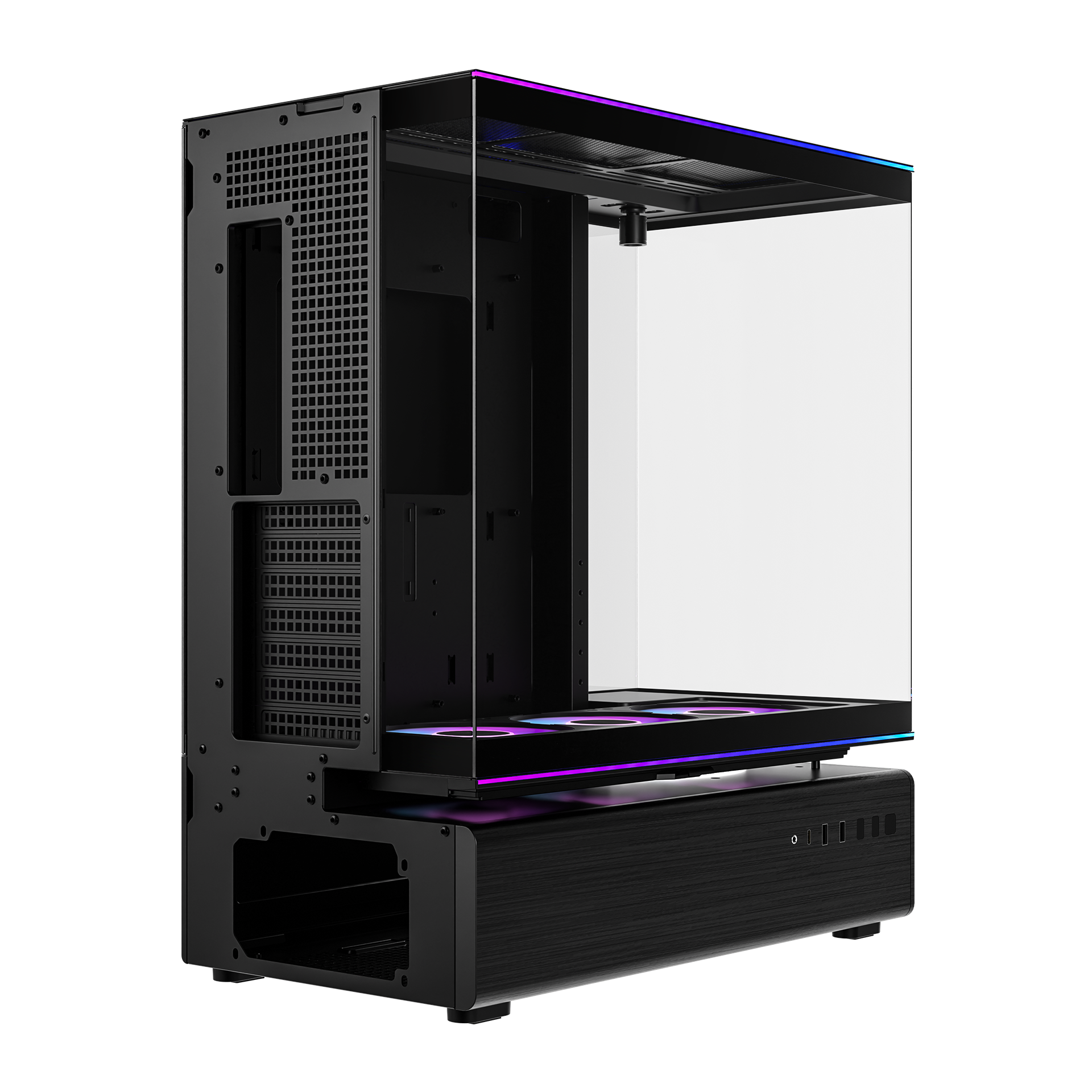
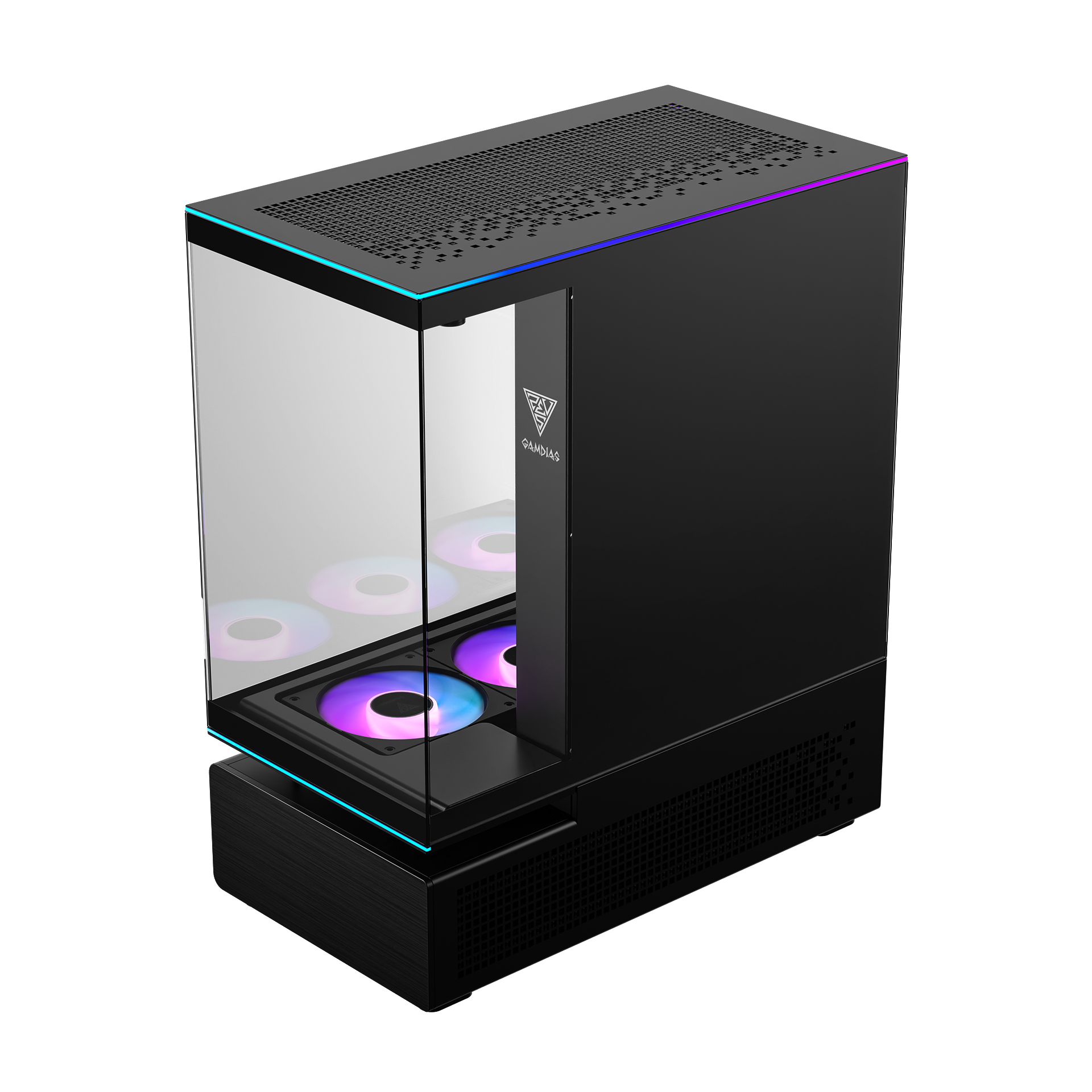
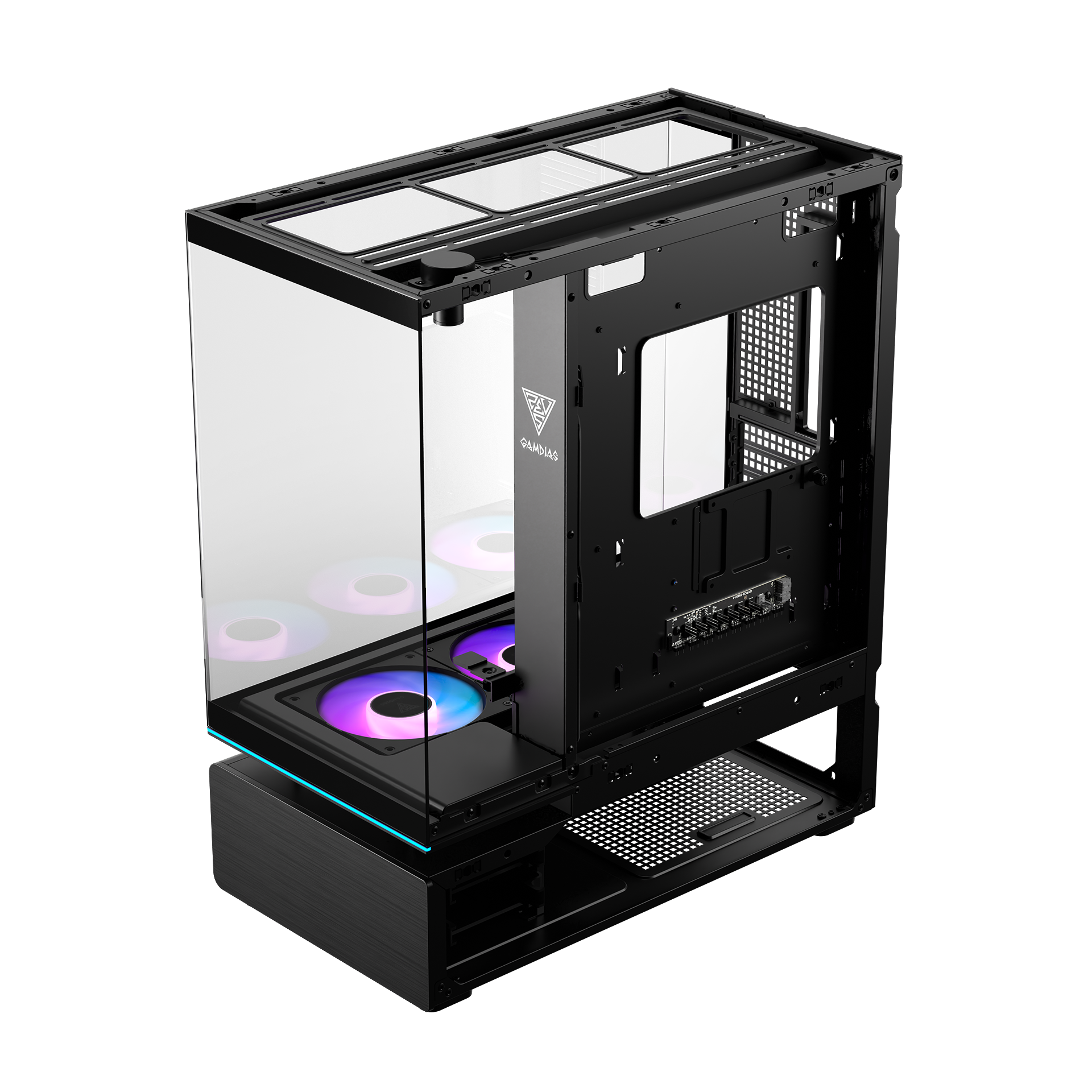
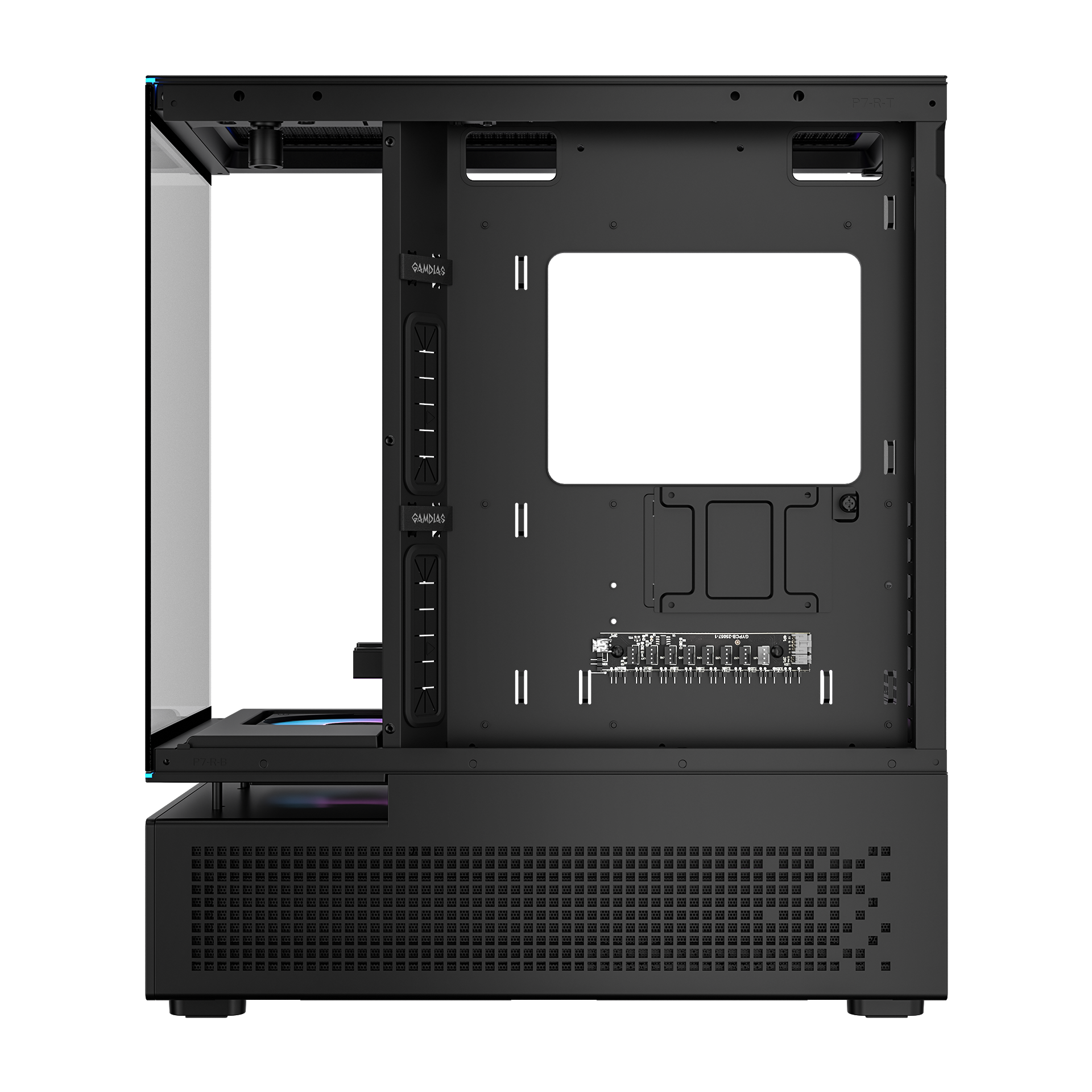
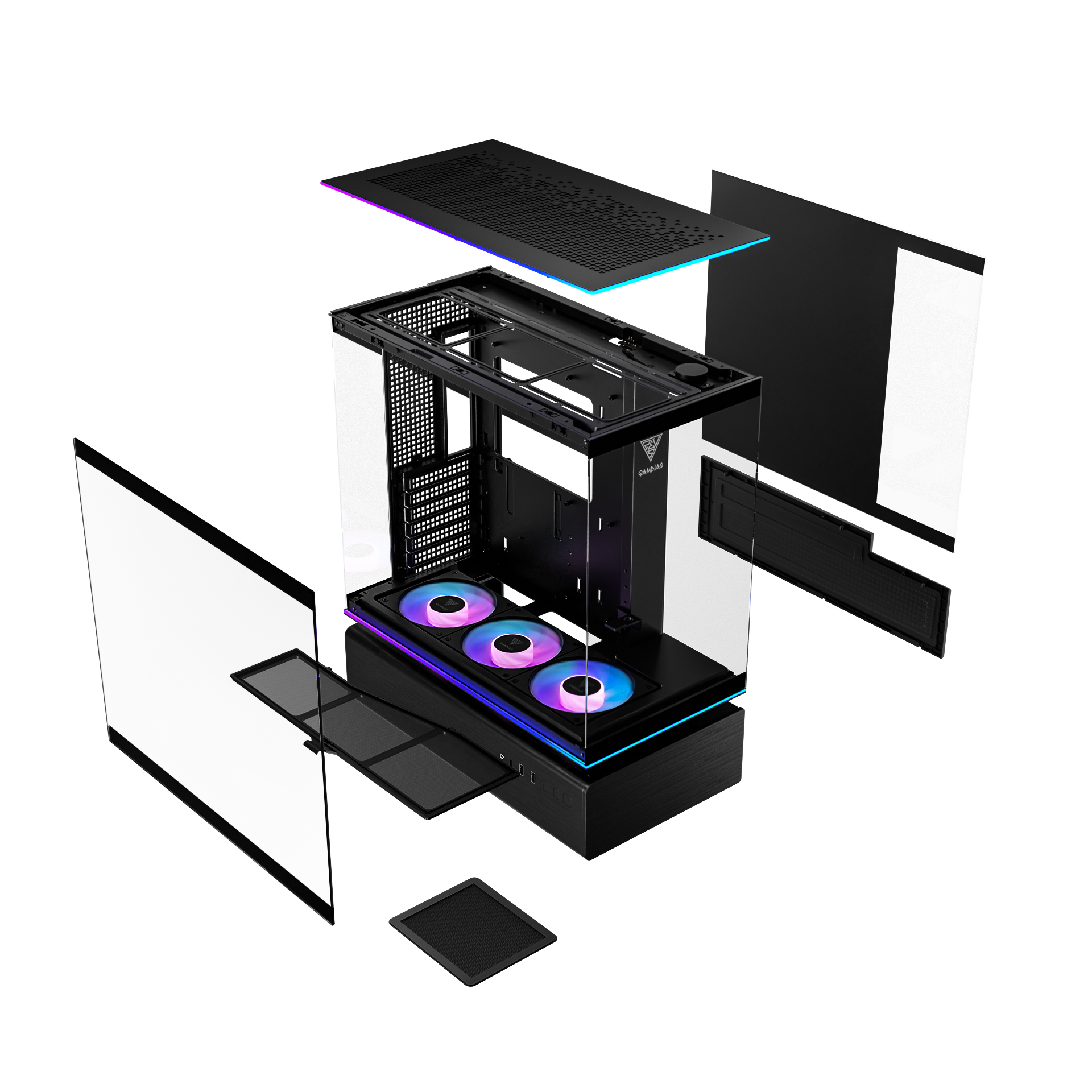
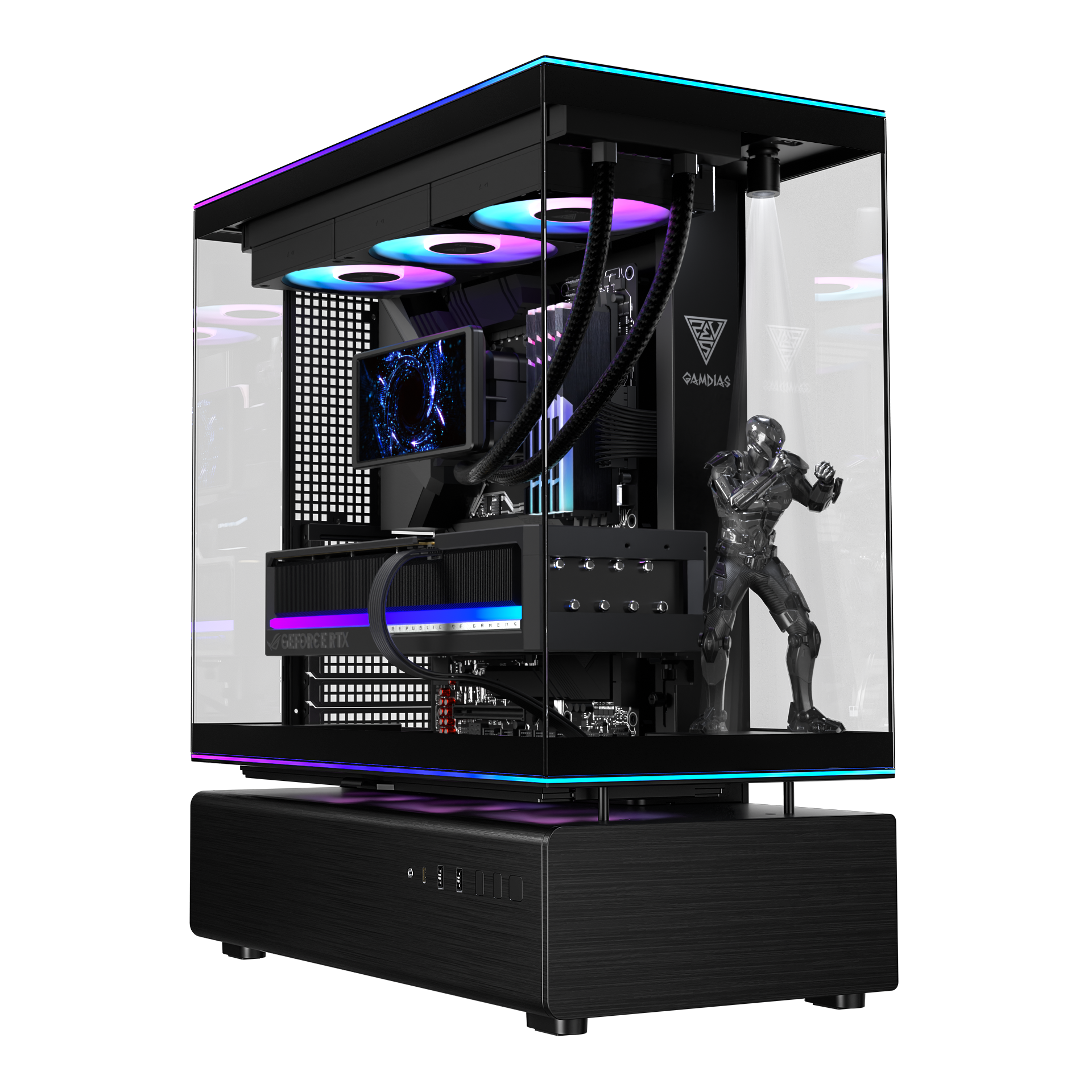
GAMDIAS ATLAS P7 Specifications
| Specification | Details |
|---|---|
| Case Type | Mid Tower |
| Motherboard Support | ATX, Micro ATX, Mini ITX |
| Materials | Steel, ABS, tempered glass |
| Tempered Glass | Front, left, right, rear |
| Dimensions | 518 × 240 × 440 mm |
| GPU Clearance | Up to 425 mm |
| CPU Cooler Clearance | Up to 165 mm |
| PSU Clearance | Up to 200 mm |
| Included Fans | 3 × 120 mm NOTUS M1 PWM ARGB |
| Maximum Fan Support | 6 × 120 mm |
| Radiator Support | Top 360 mm |
| Fan Controller | 8 port PWM ARGB hub |
| Expansion Slots | 7 |
| Front Connectivity | 1 × USB Type C 20 Gbps, 2 × USB 3.0, HD audio |
| Additional Features | Figure display, adjustable spotlight, GPU support bracket, dust filters |
| MSRP | $139.90 USD |
| Expected Availability | Early December 2026 |
The ATLAS P7 continues GAMDIAS's growing emphasis on presentation focused PC cases, following the ATLAS P6 CG with its curved panoramic glass and figure display platform. However, the new model introduces a distinctive floating structure and additional glass coverage, creating a more open showcase experience.
The GAMDIAS ATLAS P7 is priced at $139.90 USD, with retail availability expected through Newegg in early December 2026. Regional pricing and availability have not yet been confirmed.
The ATLAS P7 offers an interesting alternative in the increasingly competitive panoramic PC case market. Its floating design, dedicated collectible platform, and 4 sided glass construction create a distinctive visual identity, particularly for gamers who enjoy integrating figures and themed components into their builds.
At $139.90, the inclusion of 3 ARGB fans, an 8 port controller, and generous GPU clearance strengthens its value. However, cooling performance and noise levels will need independent testing, especially considering the extensive glass coverage and reliance on vertical airflow. For enthusiasts prioritizing aesthetics without sacrificing compatibility with high performance hardware, the ATLAS P7 deserves consideration.
Would you choose the GAMDIAS ATLAS P7 for its floating design and collectible display, or do you prefer traditional airflow focused PC cases?
