
NVIDIA GeForce GTX 10 Pascal Turns 10, and It Still Stands as One of PC Gaming’s Biggest GPU Leaps
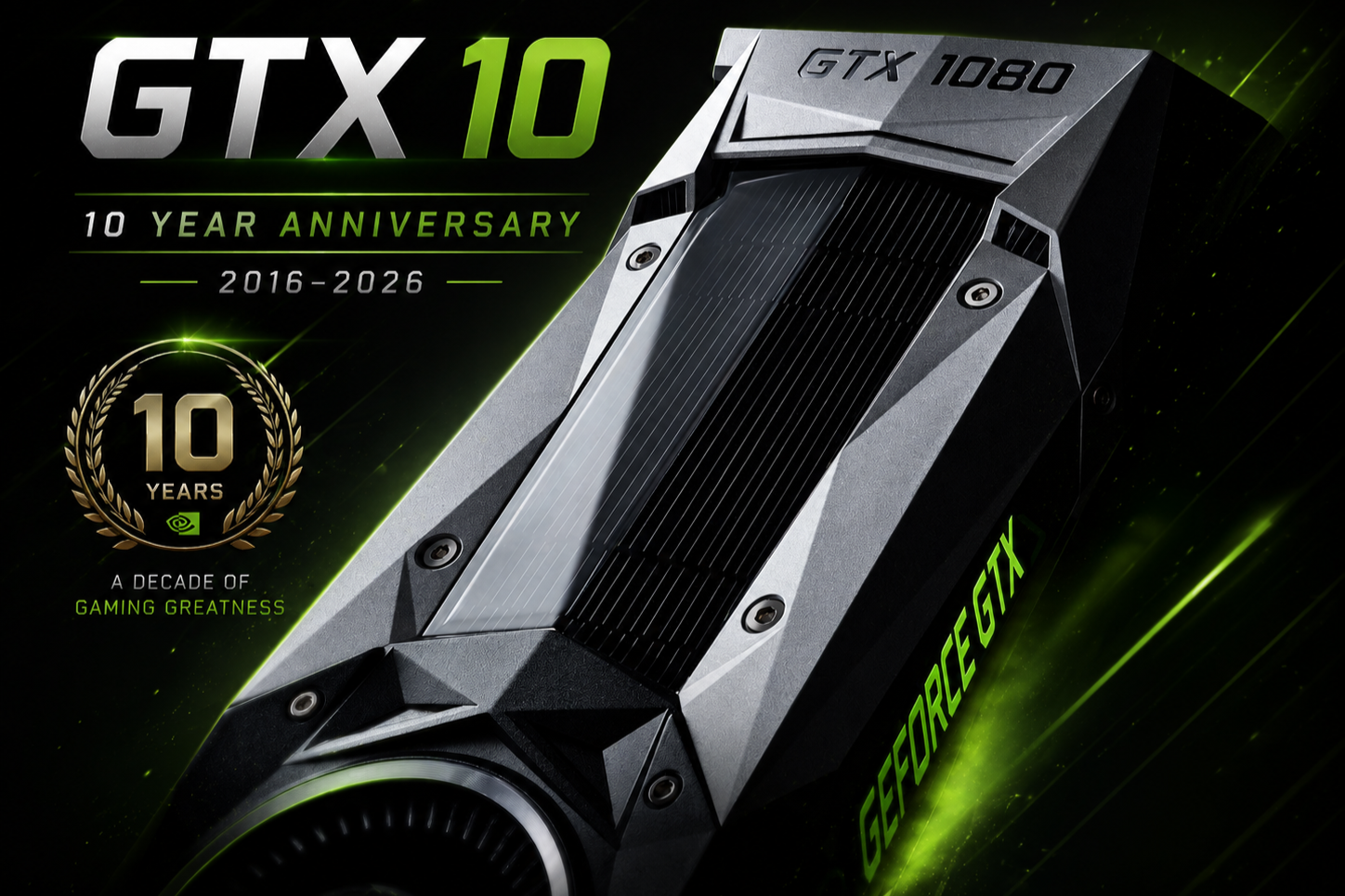
It has now been 10 years since NVIDIA introduced the GeForce GTX 1080 on May 6, 2016, marking the gaming debut of the Pascal generation and the start of one of the most memorable GPU eras in modern PC gaming. NVIDIA’s official launch announcement at the time positioned the GTX 1080 as the first gaming GPU based on Pascal and claimed up to 2x the performance and 3x the energy efficiency of the GeForce GTX TITAN X in virtual reality workloads. Looking back from 2026, Pascal’s reputation is still easy to understand because it delivered a rare mix of performance, efficiency, overclocking headroom, and long term relevance that few generations have matched.
What made Pascal special was not just that it was fast. It felt like a genuine generational jump. NVIDIA paired the architecture with 16nm FinFET manufacturing and pushed the GTX 1080 with headline features such as GDDR5X memory, much stronger efficiency, and clock speeds that made 2 GHz overclocks part of the enthusiast conversation. At a time when 4K gaming, high refresh rate monitors, and VR were all becoming more visible in the premium PC market, Pascal arrived with exactly the kind of raw raster performance that made those use cases feel more realistic for enthusiasts.
The GTX 1080 was already a strong statement, but the GTX 1080 Ti is the card that turned Pascal into a legend for many players. When NVIDIA launched the GTX 1080 Ti on February 28, 2017, it said the card offered up to 35% more performance than the GTX 1080, with 11 GB of GDDR5X memory and pricing starting at 699 dollars. That product did not just strengthen Pascal’s lead. It extended NVIDIA’s dominance in the enthusiast segment and became the card many gamers would remember as the true peak of the GTX era.
That timing also mattered in the competitive landscape. By the time AMD’s Vega challenge reached market, Pascal had already established a very high bar, and the arrival of the 1080 Ti made the gap even harder to close. In hindsight, Pascal became one of those rare generations where the market remembered both the launch moment and the staying power. These were cards that did not just benchmark well on day 1. They remained desirable for years, especially the GTX 1060, GTX 1070, GTX 1080, and GTX 1080 Ti, which stayed relevant through multiple game cycles and even through later periods of GPU shortage and pricing chaos.
Part of the nostalgia around Pascal also comes from what it represented in gaming history. This was the last GeForce flagship generation before RTX branding, before ray tracing became a defining market feature, and before AI assisted upscaling became central to the premium graphics conversation. Pascal was still firmly rooted in the classic formula of pushing more traditional raster performance, better efficiency, stronger memory configurations, and cleaner execution. For many PC gamers, that made the generation feel simpler, even if today’s graphics technologies are far more advanced.
That does not mean Pascal somehow exists above modern GPUs in absolute terms. It does not. Graphics technology has moved dramatically forward in the last decade, especially with ray tracing, DLSS, neural rendering, and much more demanding game worlds. But Pascal’s place in history is secure because it arrived at a moment when a single generation could still feel transformational in the most traditional sense. You upgraded, your frame rates jumped, your power draw looked better than expected, and your card often stayed useful for far longer than anyone initially assumed.
There is also a bittersweet layer to this anniversary. NVIDIA confirmed last year that full Game Ready driver support for Pascal would end in October 2025, with quarterly security updates continuing through October 2028. That means the GTX 10 series has now formally moved into legacy status, even if many of the cards are still remembered with unusual affection. In a way, that support timeline only reinforces how long Pascal stayed relevant. A 2016 architecture receiving security coverage into 2028 is a long run by any consumer GPU standard.
If there is one reason Pascal still gets talked about so fondly, it is because it felt like a complete package. The cards were fast, efficient, well timed, and memorable. The GTX 1080 made a statement, but the GTX 1080 Ti turned that statement into a lasting era. Ten years later, that combination is why Pascal is still one of the first generations people bring up when the conversation turns to the biggest performance jumps in GeForce history.
Did you own a GTX 10 series card, and if so, which Pascal GPU do you still remember most fondly?
