
Epic Games Launches AI Coded Launcher With 1.8x Faster Startup Than Steam and Linux Support
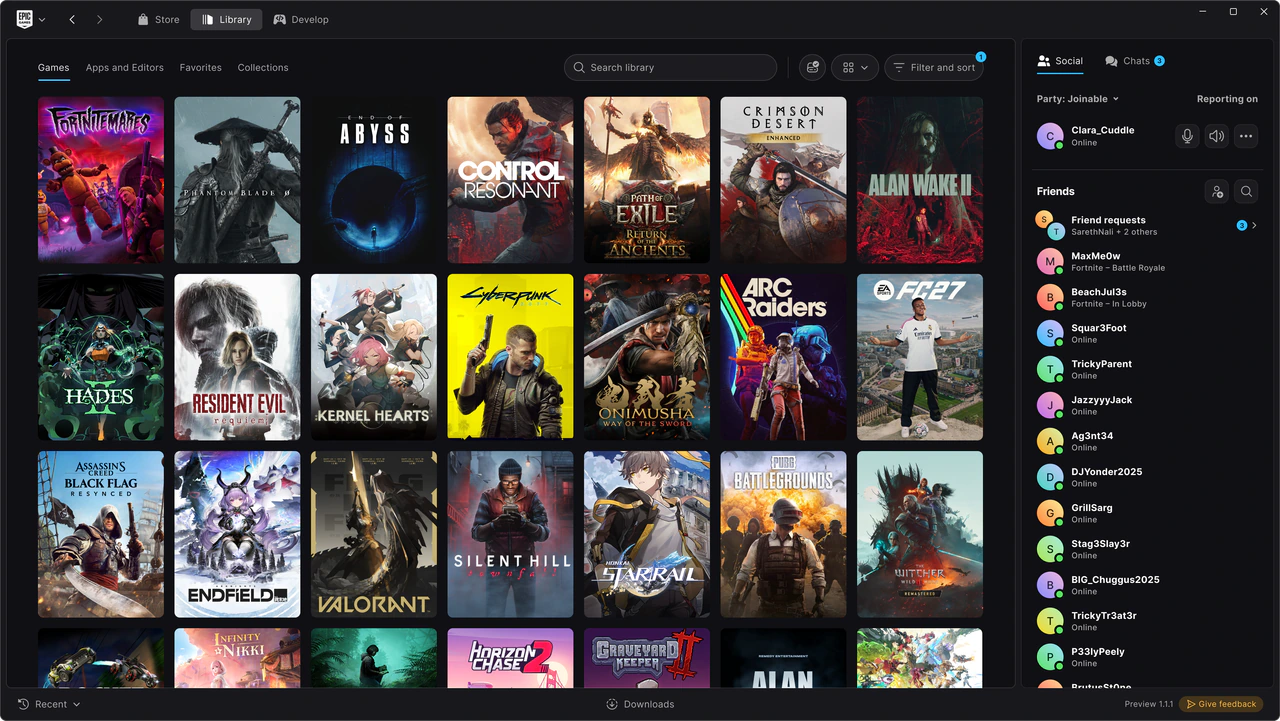
Epic Games has officially released a preview of its completely redesigned Epic Games Launcher, featuring substantially faster startup times, improved library management, Steam game integration, and native Linux support. Developed with extensive assistance from AI coding tools, the new launcher reportedly starts 1.8 times faster than Steam, marking a significant overhaul of Epic's PC gaming ecosystem.
According to Epic Games' official announcement, published on October 14, 2026, the company rebuilt the launcher using a new software architecture rather than continuing to modify its existing application. Epic openly describes the development process as "vibe coding," reflecting its growing adoption of AI assisted programming. Epic Games Store General Manager Martin Keely explained that AI tools helped a small development team write and review new functionality while replacing the previous codebase.
Performance is the primary focus. Independent testing commissioned by Epic and conducted by Keywords Studios recorded a cold startup time of 5.47 seconds, compared with 10.07 seconds for Steam. The results also indicate substantially faster navigation and library loading.
Epic Games Launcher vs Steam Performance
| Performance Metric | New Epic Launcher | Steam |
|---|---|---|
| Cold Startup | 5.47 seconds | 10.07 seconds |
| Background to Library | 0.36 seconds | 0.42 seconds |
| Store Loading | 3× faster | Baseline |
| Epic Library Loading | Up to 30× faster than legacy Epic Launcher | Not compared |
Results are based on October 2026 testing commissioned by Epic Games, averaging 5 runs across each of 13 systems while excluding the 3 lowest performance machines. Actual results may vary.
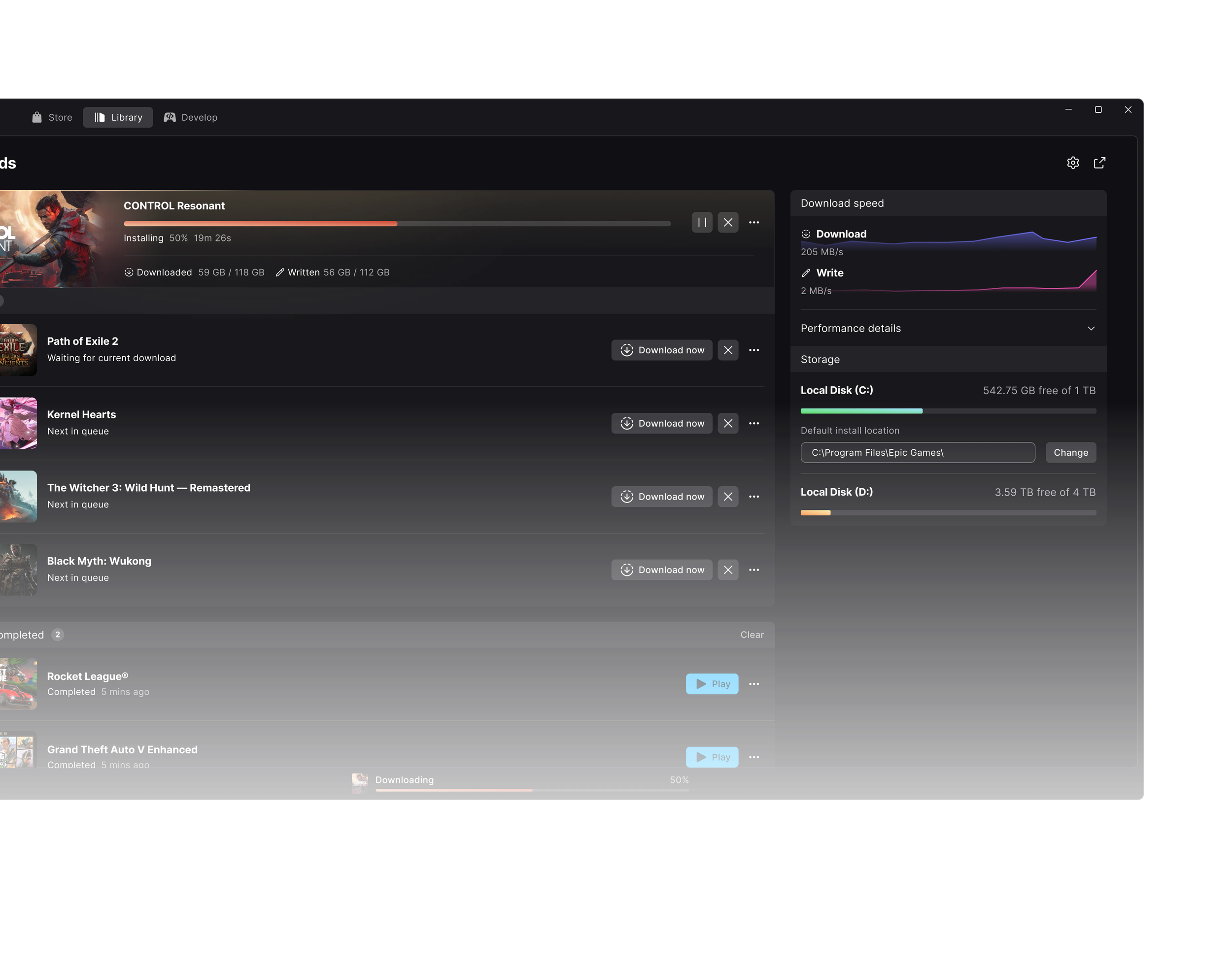
Beyond performance improvements, the launcher introduces dedicated game pages, customizable library collections, faster search filters, and a centralized download manager displaying live download and disk activity. Players can also import shortcuts from Steam and other PC gaming clients, allowing multiple game libraries to appear within the same interface without transferring ownership between storefronts.
Another significant development is native Linux support, making the new launcher officially available on Windows, macOS, and Linux for the first time. Supported Linux distributions include Ubuntu 22.04 LTS, Fedora 43, and Debian 12 or newer, while macOS compatibility is currently restricted to Apple Silicon systems.
Epic is also working to bring Fortnite to Linux through improvements to Easy Anti Cheat, including cooperation with Linux distribution maintainers. However, Fortnite does not yet have an official Linux release, and Windows games may still require compatibility layers.
The new launcher preview is available to download, although several existing social and account management features remain incomplete. Installing it automatically removes the legacy launcher, while purchased games, cloud saves, and account progress remain accessible. Epic has not announced a date for the stable release.
The launch represents the next phase of Epic's broader strategy to rebuild its PC gaming platform and improve competition with Steam.
Epic's decision to rebuild its launcher addresses one of the platform's most persistent weaknesses: performance. Faster startup times, responsive navigation, and better library organization are practical improvements that PC gamers have requested for years.
The use of AI assisted programming is also noteworthy. Rather than simply introducing AI features into its storefront, Epic is applying the technology directly to software development, potentially reducing the resources required for substantial architectural changes.
However, startup speed alone will not challenge Steam's established ecosystem. Community features, game reviews, workshop integration, controller support, and overall reliability remain important competitive advantages for Valve.
Native Linux support could become an equally significant development, particularly if Epic successfully brings Fortnite and its anti cheat technology to the platform. For now, the preview offers promising improvements, but its long term success will depend on feature completeness and stability.
Would a faster launcher with Steam library integration convince you to use the Epic Games Store more frequently, or does Steam still offer features that Epic cannot replace?
