
Divinity Will Be a Turn Based RPG and Aims to Surpass Baldur’s Gate 3 Says Larian CEO Swen Vincke
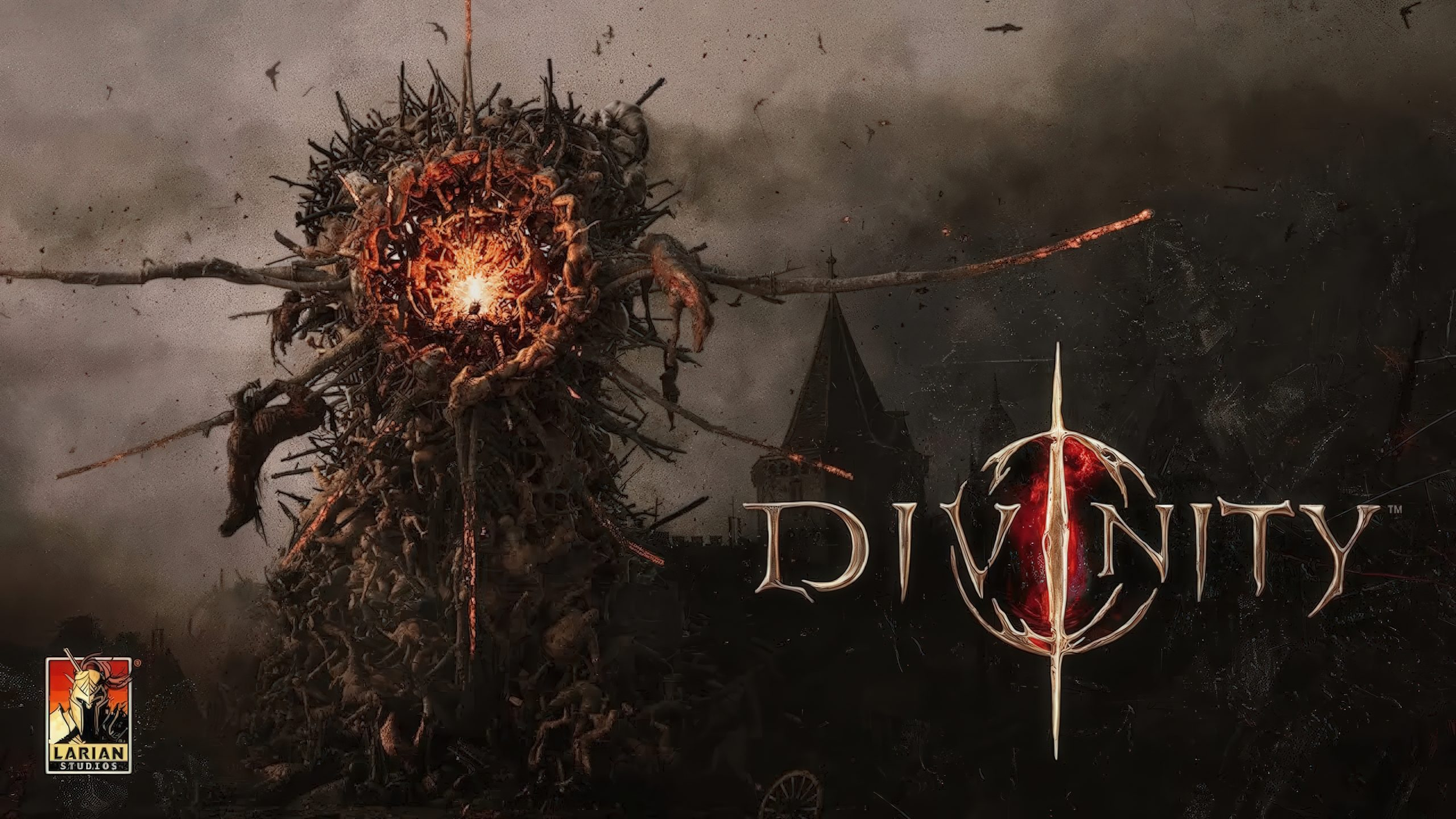
Larian Studios made a bold statement at The Game Awards 2025 with the official reveal of its next major project, Divinity. The announcement followed an elaborate teaser campaign orchestrated with host Geoff Keighley, culminating in a real world statue placed in the Mojave Desert. Shortly after, a European trademark filing confirmed the teaser’s connection to a new Divinity title, and the reveal trailer debuted during the event. While the trailer generated massive excitement, Larian initially remained tight lipped about the game’s core structure, fueling speculation that the studio might pivot toward an action RPG format.
That speculation has now been firmly put to rest. In an interview with Bloomberg, Larian Studios CEO Swen Vincke confirmed that Divinity will be a fully turn based roleplaying game, continuing the design philosophy behind the studio’s last three RPGs, including Baldur’s Gate 3. Vincke emphasized that players will not need prior knowledge of Divinity Original Sin 2 to enjoy the new entry, reinforcing that this is a fresh starting point rather than a direct continuation.
Vincke did not shy away from setting ambitious expectations. According to him, Divinity represents Larian “unleashed,” built as a system designed specifically for a videogame rather than adapting tabletop mechanics. He stated that while Baldur’s Gate 3 was a game he is deeply proud of, the upcoming Divinity aims to go significantly further. Vincke believes the new systems will be easier to understand, more flexible, and capable of generating wildly different player stories, even among experienced journalists covering the same build. He also teased that the game will introduce ideas not previously seen in the RPG genre.
Despite the scale of ambition, Larian is actively trying to shorten its development cycles. Vincke described a three to four year production timeline as far healthier than the six year cycle that defined Baldur’s Gate 3. However, expectations should remain grounded. Early access is still planned for Divinity, but it is unlikely to begin in 2026. Current projections suggest a 2027 early access window, with a full release potentially landing between 2028 and 2029, aligning with Larian’s historical five to six year development cadence.
To support faster iteration, Larian is selectively leveraging generative AI tools internally. Vincke clarified that no AI generated content will appear in the final game. Instead, AI is being used for placeholder text, rapid concept art ideation, and internal presentation workflows, allowing designers and writers to focus more time on high value creative tasks.
The studio itself continues to scale. Larian currently employs around five hundred and thirty staff across seven offices spanning Asia, Europe, and North America. Alongside game development, the team is also building a brand new engine designed to improve streaming performance and avoid technical compromises such as those seen in Baldur’s Gate 3, where the city of Baldur’s Gate had to be split into separate zones and still struggled with performance.
With Baldur’s Gate 3 reportedly surpassing twenty million units sold, expectations for Divinity are understandably immense. If Vincke’s confidence proves justified, Larian’s next RPG could redefine the studio’s own benchmark once again.
Do you believe Divinity can truly surpass Baldur’s Gate 3, or has Larian already set an impossible standard for itself? Share your thoughts below.
