
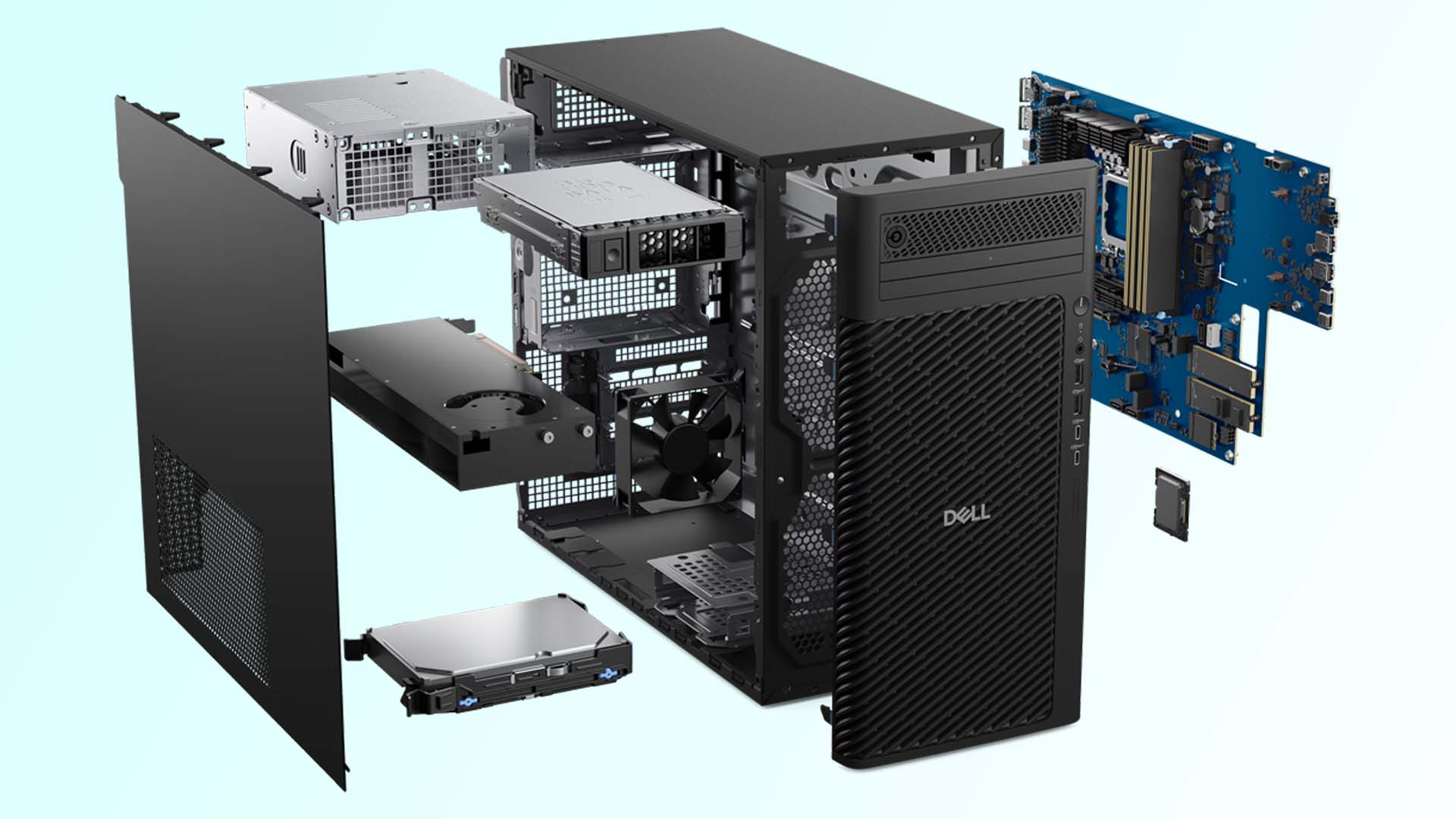
Dell's Pro Max Tower T2 workstation has attracted attention after a buyer discovered that a complete system equipped with NVIDIA's RTX PRO 6000 Blackwell graphics card could be purchased for significantly less than the GPU itself. The configuration, shared by hardware enthusiast def1ant on X, combines NVIDIA's flagship professional GPU with 96GB of GDDR7 memory, an Intel Core Ultra 5 processor, and Ubuntu Linux for a reported final price of $13,395.42, including estimated taxes. The discovery highlights an unusual pricing situation where purchasing an entire workstation can be cheaper than buying its most valuable component separately.
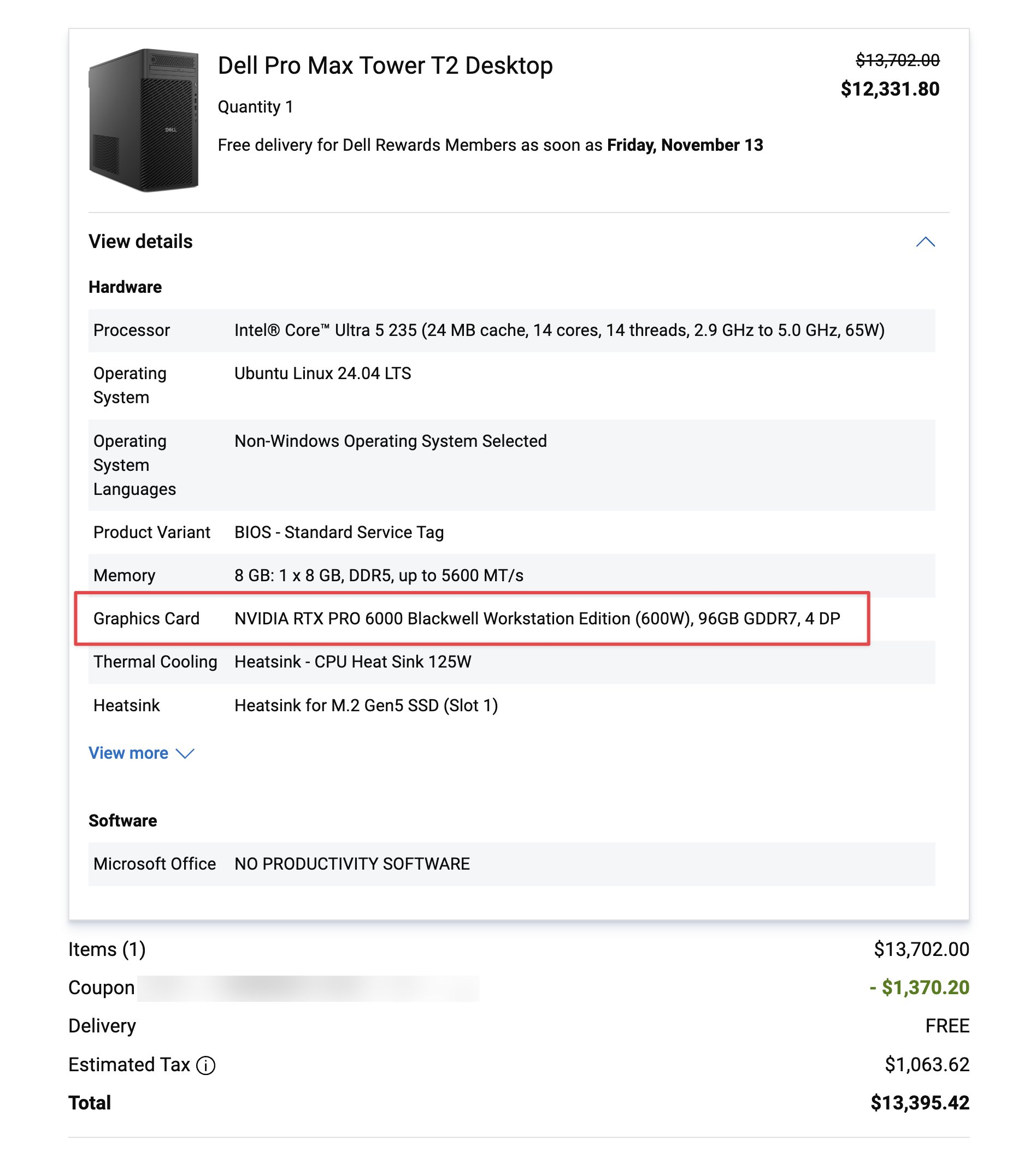
According to the buyer's October 29 order, the Dell Pro Max Tower T2 was initially configured at $13,702. Applying a 10% promotional discount reduced the price by $1,370.20, bringing the subtotal to $12,331.80 before taxes. With free shipping and $1,063.62 in estimated sales tax, the final amount reached $13,395.42, with delivery scheduled for November 14. By comparison, NVIDIA lists the standalone RTX PRO 6000 Blackwell Workstation Edition at $16,000 through its official marketplace, while Micro Center has listed the same GPU above $16,000. This creates a price difference exceeding $2,600 even after accounting for the buyer's estimated taxes.
Dell Pro Max Tower T2 Configuration
| Component | Specification |
|---|---|
| GPU | NVIDIA RTX PRO 6000 Blackwell |
| GPU Memory | 96 GB GDDR7 ECC |
| Processor | Intel Core Ultra 5 235 |
| CPU Cores / Threads | 14 / 14 |
| CPU Boost Frequency | Up to 5.0 GHz |
| System Memory | 8 GB DDR5 5600 MT/s |
| Operating System | Ubuntu Linux 24.04 LTS |
| Original Configuration | $13,702 |
| Promotional Discount | 10% |
| Price Before Tax | $12,331.80 |
| Final Reported Price | $13,395.42 |
The RTX PRO 6000 Blackwell is designed for professional workloads rather than conventional gaming, featuring 24,064 CUDA cores, 96GB of GDDR7 ECC memory, 1,792 GB/s of memory bandwidth, and a maximum power consumption of 600W. According to NVIDIA's official specifications, the GPU targets demanding applications including local AI inference, machine learning, 3D rendering, engineering simulation, and professional content creation. Its substantial memory capacity is particularly valuable for running large AI models locally, where conventional gaming graphics cards may lack sufficient VRAM.
However, the workstation's remaining components are considerably less impressive. The Intel Core Ultra 5 235 is a capable 14 core processor, but the included 8GB of system memory is insufficient for many professional workloads involving large datasets or demanding creative applications. Buyers would likely need additional DDR5 memory and storage to make full use of the GPU. Dell offers higher memory capacities, faster processors, and additional storage configurations, although these upgrades increase the total system cost. The reported 10% promotional discount is also not guaranteed for every customer, and regional pricing, taxes, and availability can vary.
The unusual pricing illustrates how major system manufacturers can benefit from different component procurement agreements than individual consumers. With professional GPUs experiencing substantial demand from AI developers and enterprise customers, pricing differences between standalone hardware and preconfigured workstations can become significant. However, the reported order represents an individual purchasing example rather than a permanent Dell promotion or a broader reduction in NVIDIA workstation GPU pricing.
Dell's pricing creates an interesting opportunity for AI developers who prioritize GPU memory capacity over traditional workstation specifications. Obtaining a 96GB RTX PRO 6000 inside a complete system for less than the standalone graphics card is unusual, especially as demand for high capacity GDDR7 solutions continues increasing. However, the 8GB DDR5 configuration is clearly optimized to minimize purchasing costs rather than deliver a balanced professional workstation. For serious local AI workloads, investing in additional system memory and storage would be essential. More importantly, this example demonstrates how OEM component pricing can occasionally create better purchasing opportunities than the retail GPU market.
Would you purchase an entire Dell workstation just to obtain an RTX PRO 6000 at a lower price, or would you prefer building a custom AI system with more balanced components?
