
Dark Souls 3 Path Tracing Mod Adds DLSS 5 and Targets an End of Year Release
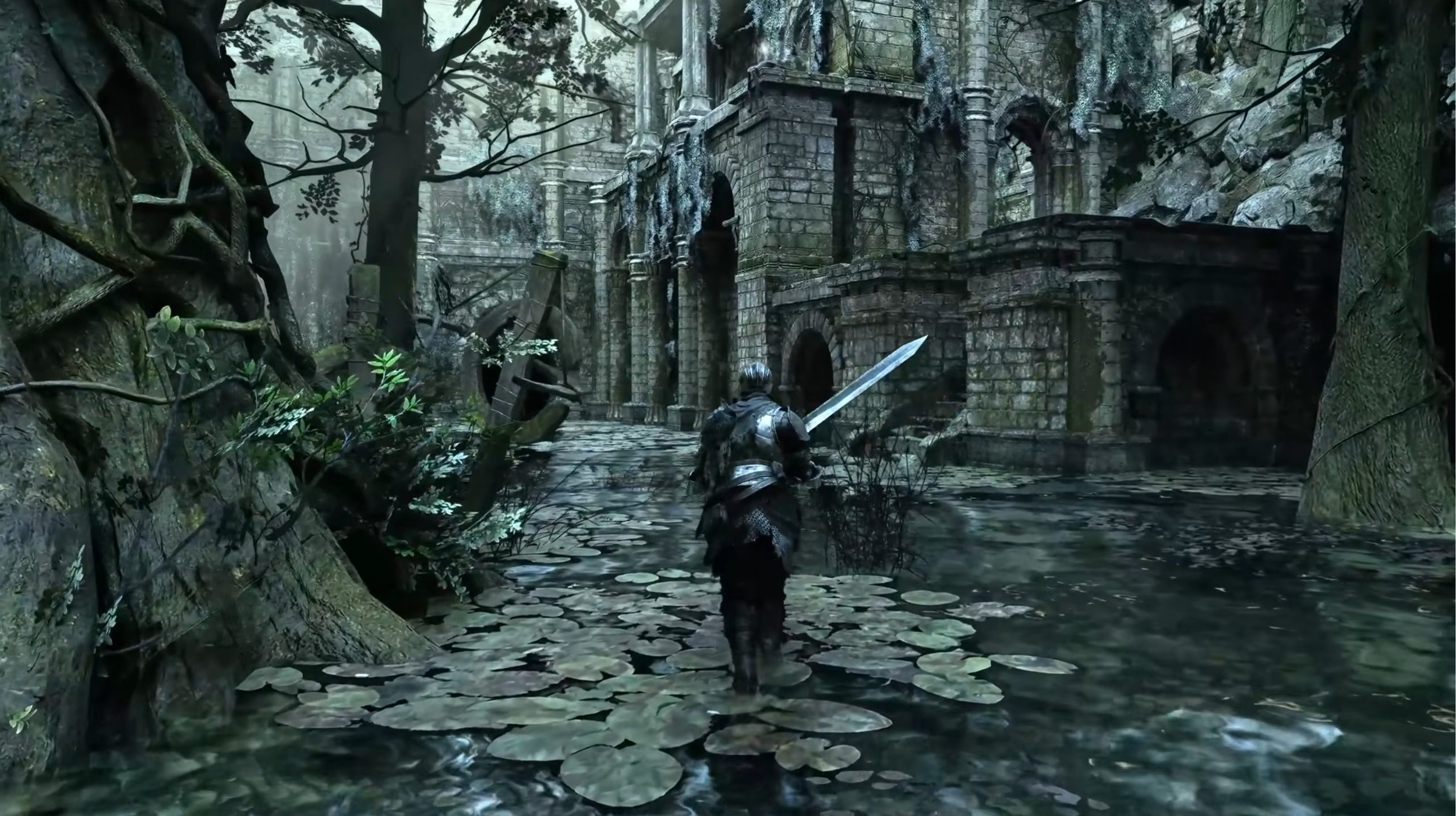
Dark Souls 3 is getting another major visual overhaul from modder Ganaboy, with the latest demonstration of the DS3 Lighting Engine combining full path traced lighting with NVIDIA DLSS 5. The new footage focuses on the Crucifixion Woods and shows how dramatically the lighting model can change FromSoftware's 2016 action RPG without rebuilding its environments or replacing the original assets.
The latest Dark Souls 3 path tracing demonstration builds on the project we previously covered when the first version of the Dark Souls 3 Lighting Engine overhaul appeared in August. This time, Ganaboy is also experimenting with DLSS 5, applying its neural rendering stage before Super Resolution rather than after the final upscale. According to the developer, this approach reduces the processing cost while allowing the neural model to contribute to the final image.
Lighting remains the foundation of the project. DS3LE rebuilds much of the game's illumination around path tracing, changing indirect lighting, shadows, reflections, and the way light interacts with environments. The Crucifixion Woods demonstration is particularly effective because water, vegetation, ruins, and open lighting conditions make the differences easier to see than in a simple interior comparison.
Ganaboy is using an advanced version of NRD SH as the default denoiser rather than relying entirely on NVIDIA Ray Reconstruction. According to the developer, NRD SH can produce comparable results while avoiding the heavier performance cost Ray Reconstruction can impose on GeForce RTX 20 and RTX 30 Series hardware.
Development also appears to be well advanced. More than 80% of Dark Souls 3 has reportedly been incorporated into the mod's BVH structure, which provides the geometry required for ray and path traced lighting calculations. Ganaboy estimates the final installation will require around 3 to 4 GB, with Dark Souls 3 containing roughly 10 times as much geometry as the earlier Dark Souls 2 Lighting Engine project.
Despite that increase in scene complexity, expected performance remains relatively close to DS2LE. The main difference is that players who previously used DLSS Quality with the Dark Souls 2 version may need to move to Balanced mode in Dark Souls 3. Final performance will naturally depend on GPU hardware and the areas being rendered, while additional lighting and post processing changes are still being tested.
The mod is not limited to NVIDIA hardware either. Ganaboy says AMD graphics cards with hardware ray tracing support will also be compatible, although a reasonably powerful GPU will still be required. Compatibility with UXM, ME2, and ME3 is planned, while online and Seamless multiplayer compatibility remains untested.
One important difference from the Dark Souls 2 implementation concerns gameplay visibility. DS3LE may introduce artificial lights in situations where a physically stricter lighting setup could make progression unnecessarily difficult. Torch mechanics therefore will not be prioritized in the default configuration, meaning players should not need to carry a torch simply to navigate the game with path tracing enabled.
Ganaboy currently expects DS3LE to become available toward the end of 2026, although there is no firm release date yet. The project remains community developed and is not an official FromSoftware remaster or graphics update.
The most interesting part of DS3LE is how little of Dark Souls 3 actually needs to change for the game to look significantly newer. The environments, armor, architecture, and material work have aged surprisingly well. Replacing the lighting pipeline exposes detail that was already present rather than trying to redesign the game around modern assets.
DLSS 5 adds another experimental layer. Applying neural rendering before Super Resolution could become especially useful for projects like this where path tracing already consumes a large portion of the available GPU budget. It is still too early to judge the final image quality or performance, but community projects are quickly turning older games into some of the most interesting test beds for modern neural graphics technology.
Would you replay Dark Souls 3 with full path tracing and DLSS 5, or do you prefer the lighting and atmosphere of FromSoftware's original presentation?
