
Crimson Desert Reveals Full PC, Console, Mac, and ROG Xbox Ally Specs With Detailed Performance Targets
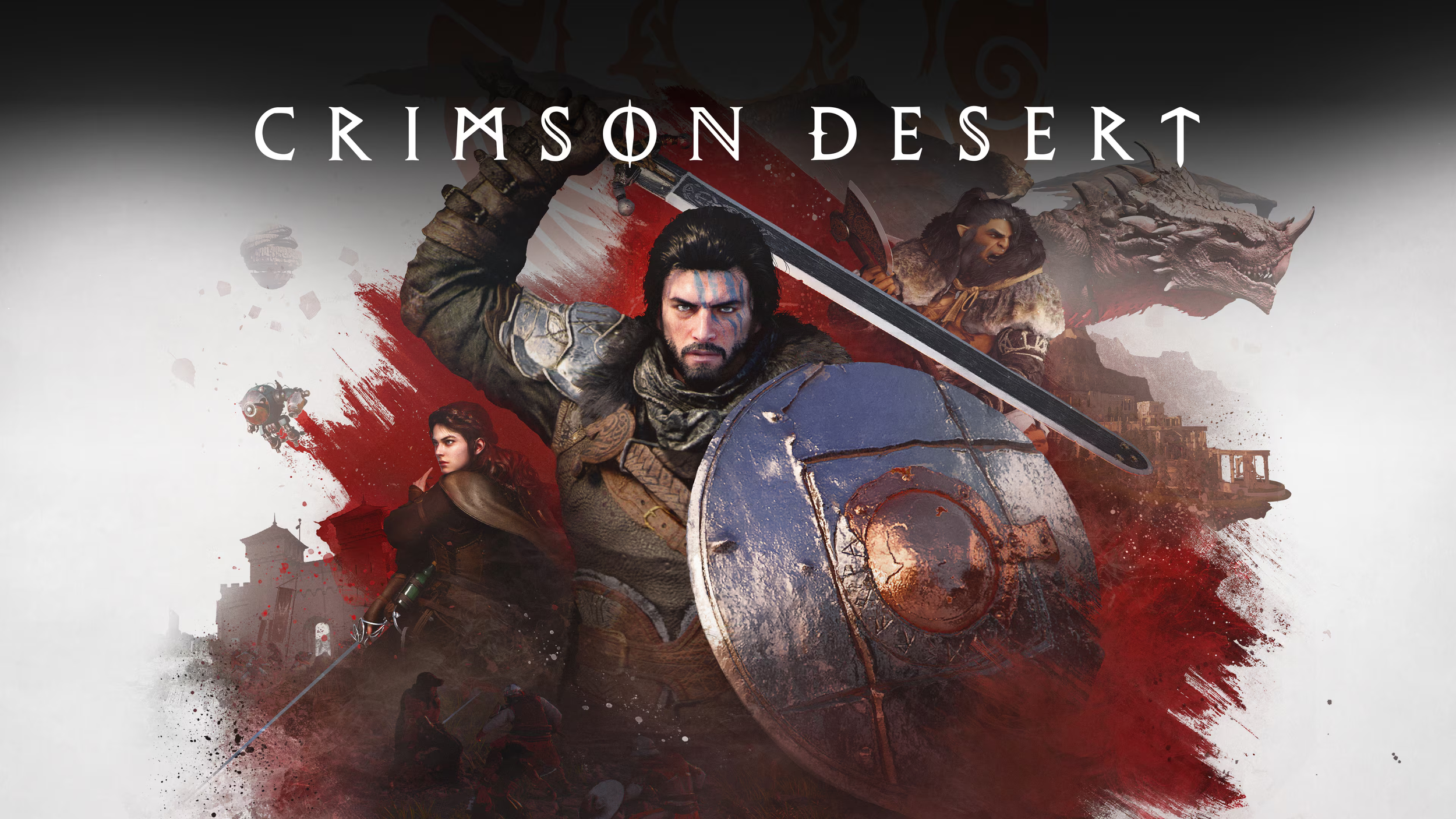
Pearl Abyss has released a much more complete hardware and performance breakdown for Crimson Desert, giving players a clearer look at how the upcoming open world action adventure will run across PC, PlayStation, Xbox, macOS, and handheld platforms. For a title powered by the studio’s BlackSpace Engine, this new information is important because it moves the conversation beyond trailers and cinematic showcases into real platform expectations. It also helps players decide where the game may deliver the best balance of image quality, frame rate, and ray tracing before launch. On PC, the game appears to target a broad range of systems, from older mainstream hardware to modern enthusiast level GPUs.
PC Specifications
| Category | Minimum | Low | Recommended | High | Ultra |
|---|---|---|---|---|---|
| Graphics Preset | Minimum | Low | Medium | High | Ultra |
| Performance Specs | Upscaled 1080p (from 900p) at 30 FPS | 1080p at 30 FPS | 1080p at 60 FPS or 4K at 30 FPS | 1440p at 60 FPS | 4K at 60 FPS |
| GPU |
AMD Radeon RX 5500 XT NVIDIA GeForce GTX 1060 |
AMD Radeon RX 6500 XT NVIDIA GeForce GTX 1660 |
AMD Radeon RX 6700 XT NVIDIA GeForce RTX 2080 |
AMD Radeon RX 7700 XT NVIDIA GeForce RTX 4070 |
AMD Radeon RX 9070 XT NVIDIA GeForce RTX 5070 Ti |
| CPU |
AMD Ryzen 5 2600X Intel Core i5-8500 |
AMD Ryzen 5 2600X Intel Core i5-8500 |
AMD Ryzen 5 5600 Intel Core i5-11600K |
AMD Ryzen 5 7600X Intel Core i5-12600K |
AMD Ryzen 7 7700X Intel Core i5-13600K |
| RAM | 16 GB | 16 GB | 16 GB | 16 GB | 16 GB |
| OS | Windows 10 64-bit (22H2 or newer) | Windows 10 64-bit (22H2 or newer) | Windows 10 64-bit (22H2 or newer) | Windows 10 64-bit (22H2 or newer) | Windows 10 64-bit (22H2 or newer) |
| Storage | 150 GB (SSD required) | 150 GB (SSD required) | 150 GB (SSD required) | 150 GB (SSD required) | 150 GB (SSD required) |
This PC specification sheet shows that Crimson Desert will be demanding at higher settings, but not completely out of reach for players with strong current generation gaming builds. The recommended tier is likely where many enthusiasts will focus, especially because it targets either 1080p at 60 FPS or 4K at 30 FPS, which gives a more practical picture of expected performance than a single preset label. For users aiming at 1440p or 4K with stronger ray tracing performance, however, the higher tiers clearly move into premium GPU territory.
Console details are especially notable because Pearl Abyss has now provided actual resolution and frame rate targets for each mode. On the standard PlayStation 5, players will have access to Performance, Balanced, and Quality modes. Performance targets 1080p at 60 FPS, while Balanced and Quality target upscaled 4K using FSR 3, with ray tracing enabled at different quality levels. This is already a solid showing for a large scale AAA action title, but the biggest technical leap comes with PlayStation 5 Pro.
The PlayStation 5 Pro version supports upgraded PSSR, and this is where Pearl Abyss is pushing more aggressive performance and visual combinations. The system can target 60 FPS with upscaled 4K from 1080p, or 40 FPS with upscaled 4K from 1440p, both with High ray tracing. There is also a native 4K Quality mode at 30 FPS with Ultra ray tracing, which positions PS5 Pro as the strongest console option currently listed for players who want both image quality and advanced lighting features.
PlayStation Specifications
| PlayStation 5 | PlayStation 5 Pro | |||||
|---|---|---|---|---|---|---|
| Performance Mode | Balanced | Quality | Performance | Balanced | Quality | Performance |
| Resolution | 1080p | Upscaled 4K (from 1280p, FSR 3) | Upscaled 4K (from 1440p, FSR 3) | Upscaled 4K (from 1080p, Upgraded PSSR) | Upscaled 4K (from 1440p, Upgraded PSSR) | 4K |
| Target Performance | 60 FPS VSync / 60+ FPS VRR** | 40 FPS VSync* | 30 FPS VSync | 60 FPS VSync / 60+ FPS VRR** | 40 FPS VSync* / 48+ FPS VRR** | 30 FPS VSync |
| Raytracing Quality | Raytracing Low | Raytracing Low | Raytracing High | Raytracing High | Raytracing High | Raytracing Ultra |
On Xbox, the divide between Xbox Series X and Xbox Series S is much more obvious. Xbox Series X receives three display modes, with Performance targeting 1080p at 60 FPS, Balanced aiming for upscaled 4K at 40 FPS from 1280p using FSR 3, and Quality targeting upscaled 4K at 30 FPS from 1440p using FSR 3. Ray tracing remains available on Series X, ranging from Low to High depending on the selected mode.
By contrast, Xbox Series S is clearly the most limited version among the consoles. The published specifications show only two modes, with 720p at 40 FPS or 1080p at 30 FPS, and ray tracing disabled in both. That makes Series S the most compromised platform for players prioritizing image quality or advanced visual features, which is likely to become a major talking point once side by side comparisons begin appearing closer to launch.
Xbox Specifications
| Xbox Series S | Xbox Series X | ||||
|---|---|---|---|---|---|
| Performance Mode | Performance | Quality | Performance | Balanced | Quality |
| Resolution | 720p | 1080p | 1080p | Upscaled 4K (from 1280p, FSR 3) | Upscaled 4K (from 1440p, FSR 3) |
| Target Performance | 40 FPS VSync* | 30 FPS VSync | 60 FPS VSync / 60+ FPS VRR** | 40 FPS VSync* | 30 FPS VSync |
| Raytracing Quality | Raytracing Off | Raytracing Off | Raytracing Low | Raytracing Low | Raytracing High |
**VRR modes require a compatible variable refresh rate display.
Another major reveal is the game’s day one macOS release, which remains rare for a AAA multiplatform title of this scale. Pearl Abyss has outlined detailed Mac requirements ranging from M2 Pro at the lower end to M3 Ultra and M4 Max at the highest tier. The company is also separating expectations by operating system path and feature support, including MetalFX upscaling and frame interpolation on newer macOS versions. The Mac version ranges from 720p at 30 FPS to 4K at 60 FPS, depending on chip class and graphics preset, while still keeping the requirement at 16 GB RAM and 150 GB storage.
This is significant for Apple users because it suggests that Pearl Abyss is not treating macOS as a secondary afterthought. Instead, the studio appears to be positioning the Mac version as a genuine launch day option, which reflects the gradual momentum Apple silicon gaming has been building. The actual user experience will still depend heavily on thermal behavior, frame pacing, and scaling quality, but from a strategy perspective, this is one of the more ambitious Mac launch commitments seen in the AAA space.
macOS Specifications
| Category | Minimum | Minimum (Enhanced) | Recommended | High | Ultra |
|---|---|---|---|---|---|
| Graphics Preset | For this Mac | For this Mac | For this Mac | For this Mac | For this Mac |
| Performance Specs |
macOS 15 MetalFX Upscale 720p @ 30 FPS |
macOS 26+ MetalFX Upscale + Frame Interpolation 720p @ 60 FPS |
900p @ 60 FPS |
1080p @ 60 FPS 1440p @ 30 FPS |
4K @ 60 FPS |
| macOS | 15.0 or later | 15.0 or later | 15.0 or later | 15.0 or later | 15.0 or later |
| Chip | M2 Pro | M3 / M4 | M3 Pro / M4 Pro / M5 | M2 Max / M3 Max | M3 Ultra / M4 Max |
| Raytracing | Off | On | On | Off | On |
| RAM | 16 GB | 16 GB | 16 GB | 16 GB | 16 GB |
| Storage (Steam) | 150 GB | 150 GB | 150 GB | 150 GB | 150 GB |
| Storage (App Store) | 150 GB | 150 GB | 150 GB | 150 GB | 150 GB |
Pearl Abyss also shared performance targets for the ROG Xbox Ally and ROG Xbox Ally X, giving handheld players a better idea of what to expect. The standard ROG Xbox Ally targets 720p at 40 FPS with FSR 3 Frame Generation, while the ROG Xbox Ally X offers more flexibility with options for upscaled 1080p at 60 FPS, upscaled 1080p at 40 FPS, or native 1080p at 30 FPS. For a game of this scope, those numbers suggest that handheld support is being taken seriously, even if visual compromises are still part of the package.
ROG Xbox Ally Specifications
| Category | ROG Xbox Ally — Performance | ROG Xbox Ally X — Performance | ROG Xbox Ally X — Balanced | ROG Xbox Ally X — Quality |
|---|---|---|---|---|
| Resolution | 720p (FSR 3 Frame Generation) | Upscaled 1080p (from 720p, FSR 3 SR + Frame Generation) | Upscaled 1080p (from 720p, FSR 3 SR) | 1080p |
| Target Performance | 40 FPS | 60 FPS | 40 FPS | 30 FPS |
| Storage | 150 GB | 150 GB | 150 GB | 150 GB |
Overall, this specification reveal gives Crimson Desert a stronger technical profile ahead of release. Rather than simply stating that the game will feature multiple graphics modes, Pearl Abyss has provided concrete details on internal resolutions, upscaling methods, ray tracing levels, and frame rate targets across every major platform. That kind of transparency is valuable in a market where players are increasingly selective about platform choice and performance expectations.
From the current numbers alone, high end PC and PlayStation 5 Pro appear to be the strongest choices for players who want the fullest visual experience. Xbox Series X still looks competitive, but Xbox Series S is clearly positioned as the most restricted version. The Mac release stands out as one of the more surprising and forward looking moves, while the ROG Xbox Ally X figures suggest that portable play may be more viable than some players expected. The next major test, of course, will be whether these published targets hold up in real gameplay, especially during large scale traversal, combat intensity, and open world streaming.
What do you think about these platform specs? Are you planning to play Crimson Desert on PC, PS5 Pro, Xbox, or Mac?
