
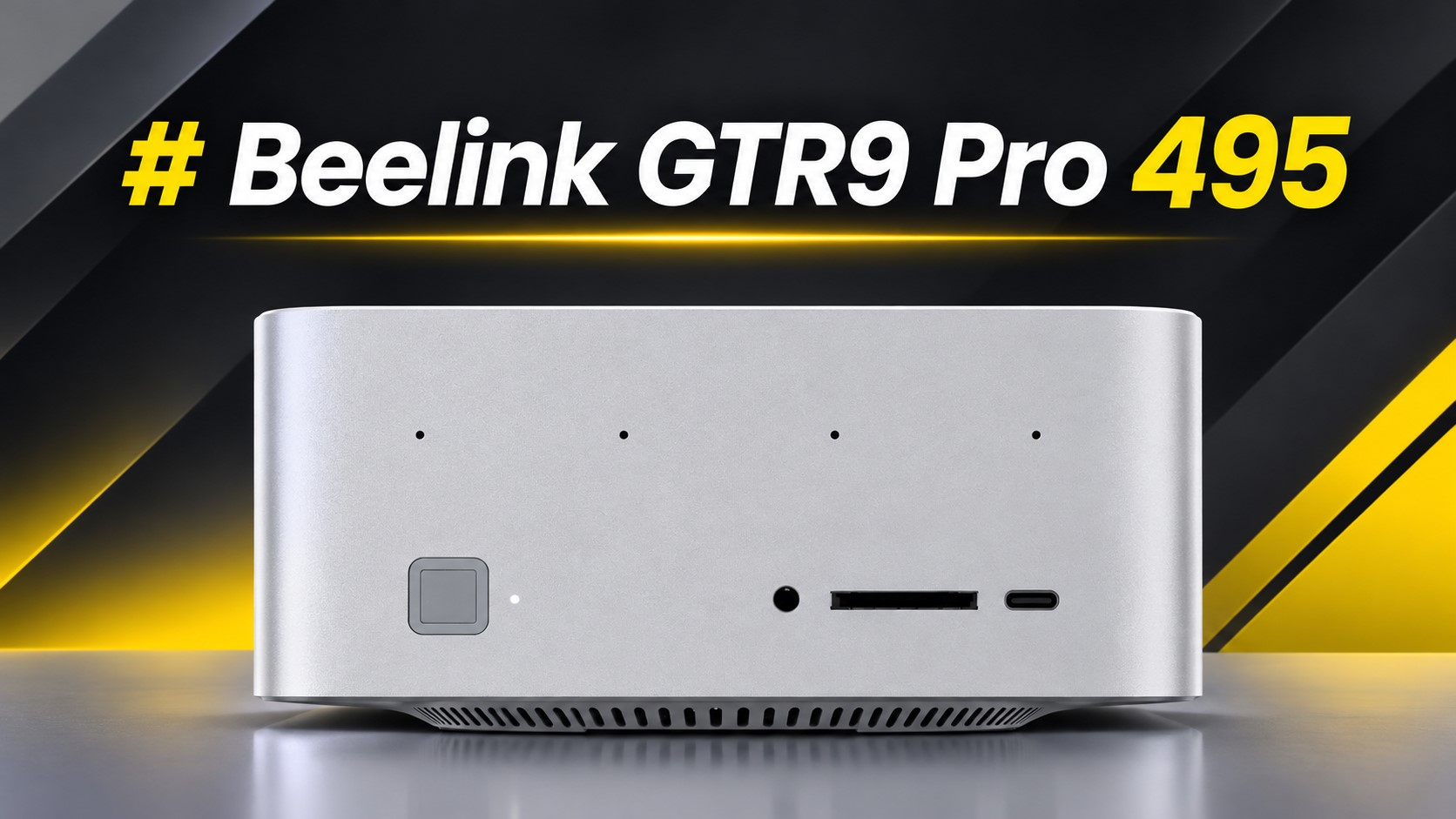
Beelink has expanded its GTR9 Pro 495 mini PC lineup with new configurations featuring 192 GB of unified LPDDR5X memory, targeting local artificial intelligence, professional content creation, and demanding computing workloads. The upgraded system starts at $7,399 globally, while its Chinese market pricing begins at ¥48,999, approximately $7,348. The substantial price increase positions the compact workstation among the most expensive AMD Ryzen AI Max systems currently available, raising questions about whether the additional memory capacity justifies the investment.
The new GTR9 Pro is powered by AMD's Ryzen AI Max+ PRO 495 processor, featuring 16 Zen 5 CPU cores, 32 threads, and Radeon 8065S integrated graphics with 40 RDNA 3.5 compute units. The processor reaches frequencies of up to 5.2 GHz and combines CPU, GPU, and XDNA 2 NPU acceleration for gaming, professional applications, and local AI inference. Unlike traditional systems using dedicated graphics cards, the GTR9 Pro employs a unified memory architecture, allowing its integrated GPU to access a substantial portion of system RAM. With 192 GB of LPDDR5X 8533 memory, up to 160 GB can reportedly be allocated to graphics workloads, providing an advantage for large AI models that would otherwise require multiple high capacity GPUs.
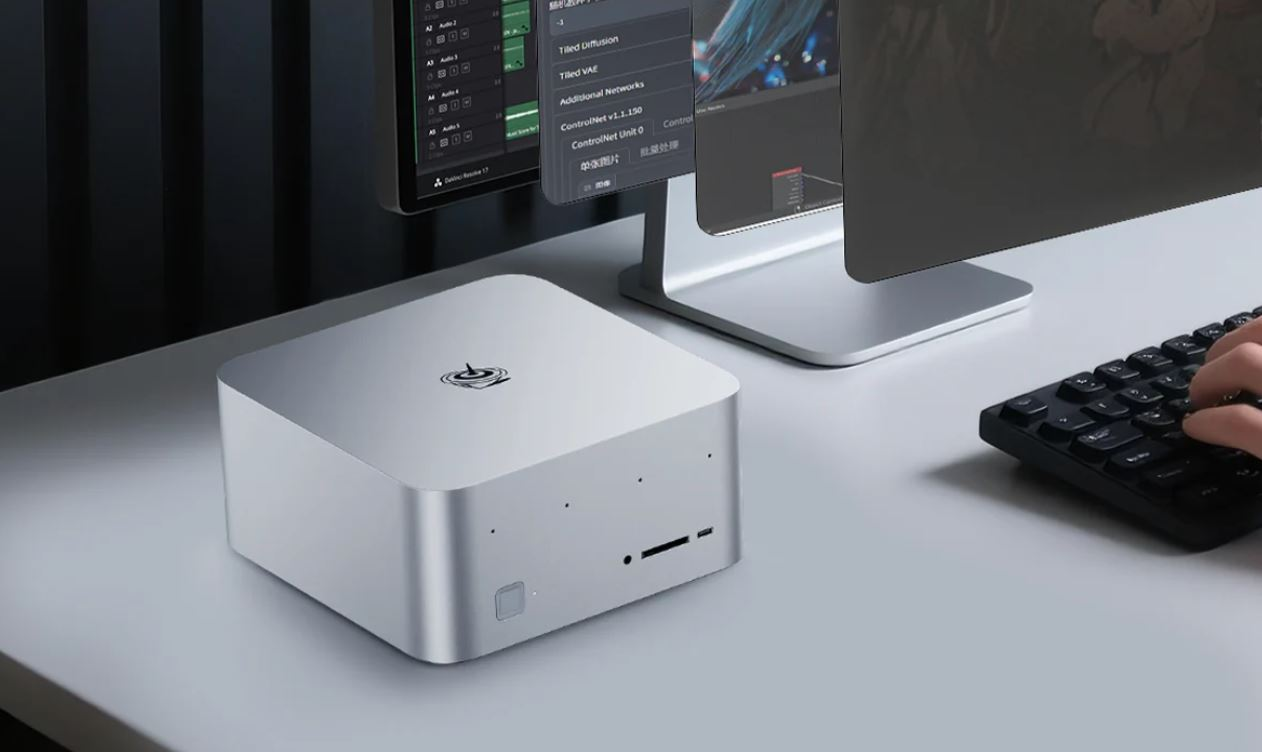
The increased memory capacity is particularly relevant for local AI enthusiasts running large language models, image generation, and other applications where memory availability is a major limitation. However, capacity alone does not guarantee faster processing, as performance remains dependent on memory bandwidth, computational throughput, model quantization, and software optimization.
Beelink GTR9 Pro 495 Specifications
| Specification | Details |
|---|---|
| Processor | AMD Ryzen AI Max+ PRO 495 |
| CPU | 16 Zen 5 cores, 32 threads |
| Maximum CPU Frequency | 5.2 GHz |
| Integrated GPU | Radeon 8065S |
| GPU Architecture | RDNA 3.5, 40 compute units |
| AI Acceleration | XDNA 2 NPU, up to 55 TOPS |
| Memory | 128 GB or 192 GB LPDDR5X 8533 |
| Maximum Reported GPU Allocation | 160 GB with 192 GB configuration |
| Storage | 2 TB or 4 TB PCIe 4.0 SSD |
| Storage Expansion | 2 M.2 2280 slots, up to 16 TB |
| Networking | Dual 10 GbE, WiFi 7, Bluetooth 5.4 |
| Connectivity | Dual USB4, HDMI 2.1, DisplayPort 2.1 |
| Cooling | Dual fans, vapor chamber, up to 140 W |
| Power Supply | Integrated 230 W |
| Operating System | Windows 11 Pro |
Beelink retains the metal chassis and cooling architecture introduced with the original GTR9 Pro featuring the Ryzen AI Max+ 395. The latest model also includes dual 10 GbE networking for high bandwidth connectivity, dual USB4 connections, and 2 PCIe 4.0 storage slots, supporting professional workstations and local AI deployments.
Pricing and Availability
| Configuration | China Price | Global Price |
|---|---|---|
| 128 GB + 2 TB | Not confirmed | $4,799 |
| 192 GB + 2 TB | ¥48,999 | $7,399 |
| 192 GB + 4 TB | ¥49,999 | $7,799 |
The price difference between regions is especially noticeable in the storage upgrades. Chinese customers pay approximately $150 more to move from 2 TB to 4 TB, while global buyers face a $400 premium. More concerning is the $2,600 increase from 128 GB to 192 GB, despite both configurations using the same processor and integrated graphics.
The 192 GB memory is soldered, preventing future RAM upgrades. Beelink currently lists the configurations on its official product page, with international orders shipping from China and subject to applicable import charges.
The Beelink GTR9 Pro 495 demonstrates the enormous potential of AMD's unified memory architecture for local AI, but its pricing is difficult to justify for most enthusiasts. Having 160 GB potentially accessible to the integrated GPU creates opportunities to run large AI models locally without expensive enterprise accelerators. However, $7,399 is workstation pricing, and memory capacity should not be confused with the computational performance of dedicated professional GPUs.
For consumers interested in local AI, the 128 GB configuration or alternative Ryzen AI Max systems could represent better value. At this price, users should also consider desktop workstations that provide greater flexibility for memory expansion, GPU replacement, and long term maintenance.
The technology is promising, but soldered memory and premium pricing undermine the advantages of hardware ownership and upgradeability. Local AI should become more accessible, not another computing segment reserved primarily for expensive professional systems.
Would you invest $7,399 in a compact AI workstation with 192 GB of unified memory, or would you rather build a desktop PC with dedicated GPUs and more upgrade flexibility?
